
Starting Dahlias in a Greenhouse Before Garden Planting
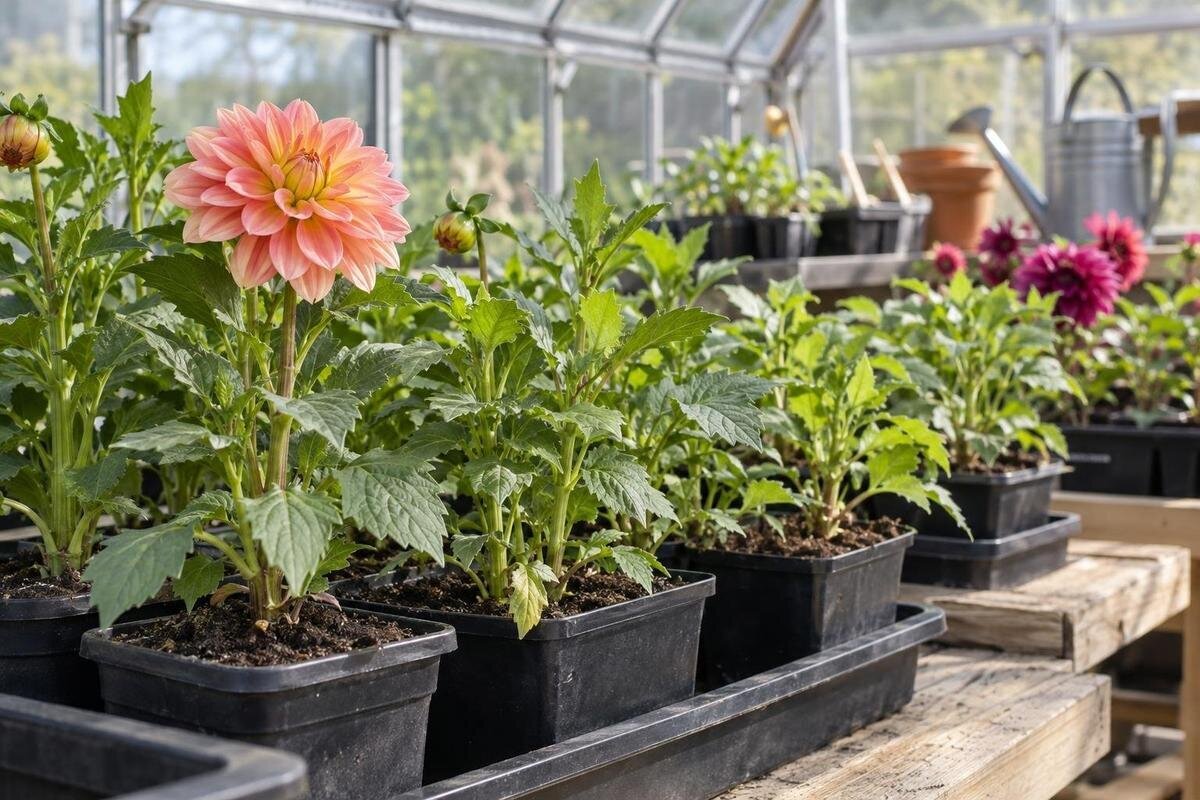
Dahlia growing guide
Starting dahlia tubers in a greenhouse gives them a protected period to root and send up shoots before garden planting. The advantage is a more developed plant at transfer, not a guaranteed earlier flowering date: warmth, light and timing all affect growth. A greenhouse can also become too hot by day or too cold at night, so the pots need observation rather than passive storage. The practical aim is to start only when you can provide bright, frost-protected space, then move the plants outdoors gradually.

01
Why start dahlias under cover?
Starting tubers under cover lets you manage their early growth in pots while the garden is still unsuitable for planting. Compared with setting a dormant tuber straight into a bed, this can give you a more developed plant to transfer later. It is useful when the soil remains cold or wet, or when a late cold spell could damage emerging shoots. The practical trade-off is that every potted tuber needs space and attention until it can go outside. Decide how many plants you can accommodate through that whole period, rather than counting only the pots that fit on the bench at the start. Variety, light, warmth and potting date all affect progress, so use the plants’ development and outdoor conditions to judge timing rather than expecting a particular flowering date.
Work backwards from the likely outdoor planting period and the space you can keep bright and frost-protected. Potting many weeks too early can leave shoots tall, soft or crowded while you wait for garden conditions to improve. An unheated greenhouse moderates wind and rain, but it can still become very cold overnight, so do not treat it as frost-proof. When comparing greenhouse sizes, the T-Model Orangery Greenhouse is listed in versions from 16.52 to 30 m². Check the chosen floor plan: the stated area is not the same as clear bench space or a workable aisle.
How to choose a viable dahlia tuber
A dahlia tuber is part of a clump joined to a crown, and the crown is where the growth eyes form. Look for at least one sound eye with a tuber attached. A swollen root that has become detached from the crown may look healthy but usually cannot produce a stem on its own. The eyes can be small, so inspect the crown carefully rather than judging a tuber only by its size or shape.
Choose tubers that feel firm and have no soft, blackened or foul-smelling patches. Some surface wrinkling does not, by itself, mean a tuber is dead; check the crown and the rest of the piece as well. Do not pot material that is clearly rotting. If dividing a clump, make sure each division retains a healthy section of crown with an eye and an attached tuber. Before separating anything, identify which parts belong together: the important point is to preserve that connection, not to produce as many individual pieces as possible. Label varieties as you sort them, since different plants can look alike before their flowers open. Keep each label beside its tuber until potting is complete, especially when working with several similar-looking clumps.
02
Pots, compost and labels for starting tubers
Use a clean pot with drainage holes and enough room to lay the tuber horizontally, cover it with compost and allow initial roots to develop. The pot does not need to be so large that it takes up unnecessary staging space, but an overly small one can make it difficult to cover the tuber properly. Try placing the tuber in the empty pot first to judge its position, rather than choosing every container by the same diameter. An irregular clump may need a different shape of pot from a compact division. Choose a container that is easy to handle and move; several smaller pots are often simpler to arrange than one crowded tray of mixed tubers. Think about the filled pot as well as the empty one, since you will be lifting it repeatedly during hardening off.
Fresh, free-draining potting compost is easier to manage in a container than heavy garden soil, which can stay wet around a dormant tuber. At this stage, focus on drainage and even moisture rather than adding concentrated fertiliser. Write the variety and potting date on a label, and group pots so that watering and checks are straightforward. If separate storage would help keep supplies off the growing bench, the Aluminium Greenhouses with Storage – Limited Edition listing identifies a built-in-storage version; check the compartment dimensions and the remaining growing area before deciding what it can hold.
Potting a dahlia tuber at the right depth
Part-fill the pot with compost, then place the tuber on its side with the crown and eye facing upwards. If the tuber is irregular, position it so that the crown sits above the main body. Add compost to cover the tuber with a shallow layer, keeping the crown close to the surface but not exposed. Press the compost gently around it so that it is in contact with the tuber without compacting the mix.
Water just enough to settle the compost, then let the pot drain fully. Before shoots appear, check the compost rather than watering automatically: add a little water when it begins to dry, but do not keep it wet. Persistently wet compost can encourage rot. The first watering is also a useful opportunity to check that water can leave the container freely before returning it to the bench. Keep each label visible and leave room to inspect the surface and move pots without damaging emerging growth. The Pyramid Greenhouse page lists sizes from 5.53 to 18.9 m²; use the range as a scale reference only. Sketch the pot positions on the selected floor plan, including the space needed to reach them, before estimating how many plants it can accommodate.

03
Warmth, water and ventilation before shoots emerge
Dahlias sprout in warm conditions, but excessive heat is not a substitute for good growing conditions. Around 15–18°C at pot level is a useful guide for encouraging growth, not a guaranteed threshold for every tuber or variety. Cooler conditions can slow sprouting; a sharp rise in daytime heat can also dry pots quickly. A minimum–maximum thermometer placed near the pots helps show what they experience, rather than relying on a reading at the greenhouse entrance.
Check compost moisture regularly and water only when it is beginning to dry, allowing every pot to drain. Once green shoots and leaves appear, plants will use water more quickly, so adjust to their growth rather than following a fixed schedule. Ventilate on warm, bright days to avoid stale, humid air, but do not expose young shoots to a sudden cold night. If considering a wall-mounted format such as the Wall Greenhouse, assess sun and airflow at the actual site and check the chosen configuration’s openings; the product category alone does not specify ventilation.
Give emerging dahlia shoots enough light
As soon as shoots appear, give the pots bright light. Warmth combined with low light encourages thin, stretched growth that is harder to handle and can struggle when moved outdoors. Place the plants in the brightest suitable part of the greenhouse, with enough space between pots for leaves to receive light and air. If light comes mainly from one side, turn pots periodically so shoots do not lean continuously in the same direction.
Dahlias grow best in a bright position, but a greenhouse in strong sun can heat up quickly. Keep an eye on the temperature and ventilate when needed instead of leaving the structure closed through a hot spell. When arranging pots, consider the light reaching the leaves rather than simply finding an unused patch of bench. A position that was clear when the tubers were dormant may become shaded as neighbouring plants grow. Reassess the arrangement as leaves develop, keeping the dahlias out of the shadow of taller plants where possible. Do not assume that a greenhouse’s floor area tells you how bright the growing position will be: the Aluminium Greenhouses listing covers variants from 3.77 to 28.08 m², but site shade and the selected layout still need to be considered separately.
04
Plan space for pots, access and growing shoots
Count the pots before filling the greenhouse, then allow room for leaves and stems to spread as well as for the containers themselves. Leave a clear route for watering, inspection and moving plants outside; pots pushed tightly together are harder to check and can restrict airflow. A useful layout lets you reach the pots at the back without lifting a tray over tender shoots at the front. Keep the most frequently handled trays within easy reach, and avoid placing them where routine access could knock or bend young growth. If the greenhouse also holds other crops, mark out the space reserved for dahlias before filling the remaining benches. This makes the available capacity clearer than treating every temporary gap as room for another pot.
Think vertically as well as across the floor. A bench can make pots easier to tend, but it also reduces the space above them, so measure from the bench surface to the roof and around any vents. Check the door route and the space needed to move a tray through it. The Bloomcabin Prestige Greenhouse listing names a metal foundation; that description is not a site assessment, so confirm the selected model’s foundation details and compatibility with the intended base before planning benches or staging.
Caring for dahlias as they grow
Once plants are established, check whether their pots still provide enough room for root growth and regular watering. If a plant has filled its container and the compost dries very quickly, move it into a slightly larger pot rather than letting it become cramped while waiting for outdoor conditions. Tall shoots may need a small support; place it carefully near the pot’s edge to avoid driving it through the tuber. If you want a bushier plant, you can pinch out the growing tip after several pairs of leaves have formed. This encourages branching but may delay the first flowers, so it is optional.
Inspect leaves and tender stems while watering, especially beneath leaves and around the base of each plant. Remove fallen or damaged material and keep the staging area tidy so that problems are easier to spot. Compare individual plants rather than assuming that every tuber potted on the same day will develop at the same rate. A slow-growing pot may not need the same watering as a leafy neighbour, and a taller plant may need more space sooner. Keep the labels accessible when rearranging the batch so that varieties remain identifiable. For a large collection, space for inspection matters as much as the number of pots: the Spacious Greenhouse listing gives a range of 47 to 70 m². That is a substantial growing area, so calculate your actual batch and wider garden use rather than choosing by the product name alone.

05
Harden off young dahlias gradually
Greenhouse-grown shoots are used to more sheltered conditions than plants in an open garden. Before planting, acclimatise them over about 7–10 days, allowing longer if the weather is changeable. Begin by placing pots outside in a sheltered spot for a few hours, then increase the time outdoors and the amount of sun and wind they receive. Avoid moving tender plants straight from a protected bench into a full day of strong sun or an exposed, windy position.
Keep the pots watered during this transition, since wind and sunshine can dry them faster than still greenhouse air. Bring them under cover if frost is forecast or conditions turn sharply colder, and continue the process when the weather is suitable again. Keep their sheltered space available throughout hardening off rather than immediately filling it with another crop. You need somewhere to return the whole batch, not just the few pots nearest the door. Arrange the pots so that moving them in and out does not involve brushing stems against one another or carrying awkwardly crowded trays. If comparing greenhouse footprints for this period, the Limited Edition Aluminium Greenhouses page lists versions from 3.77 to 28.08 m². Check the chosen floor plan and door position: the range alone does not show whether there is a clear place to gather pots before moving them outside.
When to plant dahlias in the garden
Wait until the risk of frost has passed and the garden soil is warming and workable before planting. Choose a sunny position with soil that drains well; waterlogged ground is a poor setting for dahlia roots. Water the pot before moving the plant, ease the rootball out carefully and set it at about the same level it was growing in the container. Follow the variety’s guidance for spacing, since mature plants differ in size. Put a support in place at planting time if a tall variety will need one later.
Firm the soil gently around the rootball and water it in, then keep an eye on moisture while the plant settles. Aim for consistent moisture rather than leaving the ground saturated. Check for slugs on young growth and watch the forecast during the first days outside. If cold or frost threatens before planting, keep the plants in their pots under protection and delay the move rather than exposing tender shoots. A successful greenhouse start ends with a steady transition into the garden, not simply the earliest possible planting date.
Frequently asked questions
Can I start dahlia tubers in an unheated greenhouse?
Yes, if conditions are warm enough for growth and the pots are protected from freezing. An unheated greenhouse can become very cold overnight, so check the minimum temperature where the pots are standing. If frost is forecast, move them to a safer frost-free place or wait until conditions improve.
When should I pot dahlia tubers?
Work backwards from when you expect to plant them outdoors. Potting a few weeks ahead can give shoots time to develop, but starting too early may leave plants tall and crowded before the garden is ready. Light, greenhouse temperatures and your local frost risk matter more than a fixed calendar date.
How much water do tubers need before they sprout?
After potting, moisten the compost lightly and let excess water drain. Before shoots appear, the tuber uses little water, so keep the mix just moist rather than wet. Check the compost as it dries and make sure the pot’s drainage holes are clear.
How deep should I plant a dahlia tuber in a pot?
Lay it horizontally with the crown and visible eye facing upwards. Cover the tuber with a shallow layer of compost, keeping the crown close to the surface rather than burying it deeply or leaving it exposed. The exact amount of compost depends on the tuber and pot.
Do I need to harden off dahlias before planting them outside?
Yes. Gradually expose greenhouse-grown plants to outdoor light, wind and temperature changes over about 7–10 days. Begin in a sheltered spot and increase their time outside and sun exposure in stages. Keep them under cover if frost is forecast, and plant them out only when the risk has passed.
A good greenhouse start depends on a healthy tuber, free-draining compost, moderate warmth and enough light for sturdy shoots. Keep the batch small enough to water and inspect easily, and leave room for plants to grow while outdoor conditions catch up. By hardening off gradually and waiting until frost risk has passed, you can move dahlias from pots to the garden with less disruption.
