
Hard Green Shoulders on Greenhouse Tomatoes: Normal or Not?
Greenhouse tomato problems
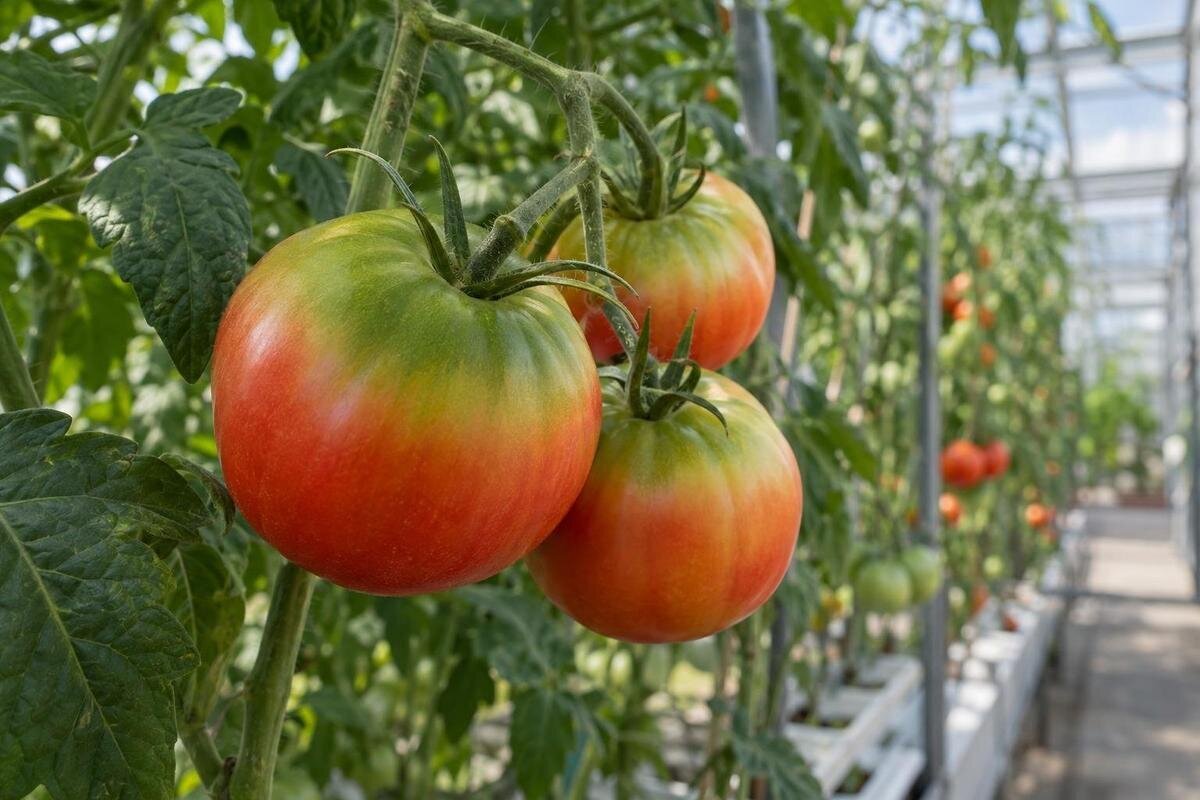
A firm green area at the stem end can be surprising when the rest of a greenhouse tomato colours up. It may be a normal feature of the cultivar, but persistent patches can also reflect heat, strong exposure or other crop conditions. The most useful clues are whether the pattern repeats on one variety, follows a particular part of the greenhouse or appears alongside other symptoms.

01
What a hard green shoulder looks like
A tomato’s shoulder is the area around the stem attachment. A green shoulder is a band or patch that stays green while the rest of the fruit develops its expected mature colour; a hard shoulder feels firmer than the coloured flesh beside it. The blossom end is opposite the stem, so a mark there is a different symptom. Some cultivars retain green at the stem end, while fruit that has not finished ripening can look similar. Colour and firmness offer clues, but neither identifies the cause on its own.
Inspect the whole tomato as well as the stem end. Is the green area a fairly even collar, or is the colour mottled? Is the fruit firm throughout, or only around the shoulder? Look for other changes, such as pale, sunken or cracked areas. Photograph the whole fruit and a close view of the stem end in clear light, and note the cultivar and date. If an internal pale or tough area is suspected, cut one representative fruit and photograph the cut surface too. These records help with comparison, but a photograph cannot confirm a diagnosis.
Some tomato varieties stay green at the stem end
A cultivar’s natural colouring is one of the first things to check. Some red-fruited tomatoes keep a green shoulder as they ripen; in others, the green colour fades more evenly. Green-when-ripe cultivars are a separate case: they may remain mostly green at maturity, with other colour changes helping to signal ripeness. These traits vary between cultivars, so a green patch is not automatically evidence of poor care. Nor does a green shoulder mean that every fruit on the plant will look identical; size, position and ripening stage can make differences more noticeable.
Look up the cultivar description on the seed packet or from the supplier, and compare several fruit of the same variety at a similar stage. If the same firm green collar appears repeatedly while the rest of each fruit ripens normally, a varietal trait becomes more plausible. If fruit of several varieties develop a similar patch in the same part of the greenhouse, growing conditions deserve more attention. These are useful comparisons, not proof: cultivar and environment can contribute at the same time.
02
Compare fruit at the same stage of ripeness
A tomato may be fully formed but still in its mature-green stage, before the first colour change. At that point, a green stem end is not unusual. As ripening continues, the fruit develops the colour expected for its cultivar; the shoulder can lag behind, and individual tomatoes do not all change at the same rate. Compare fruit of similar size and age rather than judging a young tomato against one that has been colouring for several days. A fruit that is green throughout also needs to be assessed differently from one with a green collar and coloured flesh.
For a clearer comparison, identify a few fruit and note their plant, truss (the cluster of fruit) and position in the greenhouse. Revisit those same tomatoes rather than comparing a different selection each time. Record whether the shoulder shrinks, stays unchanged or becomes part of a wider mottled pattern, and whether the surrounding flesh continues to colour and soften. A simple description such as ‘red below, firm green collar above’ is more useful than recording only ‘unripe’. Keep fruit of different cultivars in separate comparisons so that their expected colours do not confuse the result. A sketch of the growing area can help you locate each plant. When planning a future layout, the Limited Edition greenhouse with storage offers a listed area range of 5.52 m² to 28.08 m². Such dimensions help with space planning; they cannot identify the cause of a ripening problem.
How greenhouse heat affects ripening
Sustained high temperatures around fruit can interfere with even colour development, including the development of red pigment. A greenhouse can become hot in direct sun, and conditions at fruit level may differ from those near the door or roof. Heat is therefore a plausible contributor when firm green shoulders appear repeatedly, particularly if affected fruit are in a warm part of the structure. A single warm afternoon is not enough to establish the cause, and heat cannot explain every green shoulder; cultivar traits and other growing conditions still matter.
Use a thermometer near the crop and keep a simple record of readings and dates when fruit starts to colour. Note which doors or vents are in use, and compare affected and unaffected positions at similar times of day. A reading taken beside the entrance on one morning cannot describe conditions around a fruit cluster elsewhere throughout the week. Keep the measuring position consistent when following one area over time, and label any readings taken elsewhere. When reviewing a greenhouse layout, separate the listed construction details from the conditions you observe inside it: the Prestige greenhouse with metal foundation identifies a particular structure, while your crop-height readings describe the heat around your tomatoes. Use existing ventilation as intended. If you adjust how it is used, record the change and follow the fruit afterwards rather than altering watering, feeding and ventilation together.

03
Sun exposure and leaf cover affect the pattern
Strong direct exposure can heat fruit and affect how evenly it colours. It can also lead to sunscald, which usually appears on the side facing intense light as a pale or bleached area that may become dry and papery. That is different from a green collar around the stem, although heat and exposure can occur together. Check whether affected tomatoes are on the outside of the plant, beside a clear panel or in a spot where the sun reaches them for longer. Compare fruit in more sheltered positions before deciding that the whole crop has the same problem.
Leaves provide natural cover, so avoid removing large amounts of healthy foliage while fruit is exposed; sudden exposure can make scorching more likely. Before removing leaves, look at which fruit they shade and whether the affected shoulders face the strongest light. Compare exposed and sheltered tomatoes of the same cultivar and a similar ripening stage. Record where direct sun falls at different times, including any shade from nearby plants or structures. If leaf removal has already taken place, note when it happened rather than assuming that the fruit has always had the same exposure. For larger growing-space plans, the Spacious Greenhouse range lists areas from 47 to 70 m². Mark rows and shaded positions on the proposed layout as well as the overall footprint. This keeps the comparison focused on where tomatoes would sit, rather than treating all the space as having identical light conditions.
Nutrient balance and uneven ripening
Potassium supports normal fruit development, and inadequate availability can be associated with uneven ripening. But a hard green shoulder is not a specific sign of potassium deficiency. Other factors, including cultivar and heat, can produce a similar appearance, while a nutrient imbalance may affect more than one part of the plant. Consider the whole crop: are there other changes to the leaves or fruit, and are several plants showing a similar pattern? These observations can help decide whether a nutrient check is worthwhile, but they do not replace one.
Before adding potassium or another fertiliser, review what has already been applied and, where possible, have the soil or growing medium assessed. Gather the feed names, application dates and amounts used, including any changes made after the first affected fruit appeared. Keep records for beds and containers separate if they have received different treatments. A test can provide information about nutrient levels and pH that a fruit photograph cannot. Extra fertiliser is not a neutral trial: too much can disturb the balance around the roots, and excess nitrogen can encourage leafy growth at the expense of fruit development. When planning beds within a structure such as the Classic aluminium greenhouse, distinguish the total greenhouse area from the area actually planted. The listed range is 3.77 m² to 28.08 m², but the useful record for this problem is what each affected bed or container has received.
04
Uneven moisture can affect nutrient uptake
The roots need access to both water and nutrients for steady fruit development. If the growing medium repeatedly dries out and then becomes very wet, plants can be stressed and nutrient uptake may be affected. Uneven irrigation can also leave plants in the same greenhouse experiencing different conditions. This does not make irregular watering a certain cause of green shoulders, but it is worth checking when the symptom occurs alongside other signs of stress or varies from one plant to another.
Check moisture where the roots are, not just at the surface, and notice whether water reaches each plant consistently. Compare affected plants with nearby plants that are ripening normally, preferably before changing the watering routine. Note whether each is in the ground or in a container, and whether they receive water in the same way. A single routine may not suit every set-up, so do not assume that equal watering times mean identical root conditions. Where a wall forms part of the growing space, include its position in your observations: it may create shade or reflect light depending on the site, but does not automatically keep the crop warm. If comparing a lean-to wall greenhouse with another layout, mark the wall-side plants separately on your plan. Then record actual moisture and light conditions there rather than attributing the symptom to the structure’s name or position alone.
Check for signs beyond the shoulder
The location and appearance of other marks can help distinguish problems. Sunscald tends to affect the exposed side of a fruit, while blossom-end rot appears at the end opposite the stem and is typically sunken or dark. Uneven ripening can also show as irregular mottling rather than a neat green collar. These patterns can overlap, so avoid assigning a cause from one mark alone. If the fruit is discoloured in several places, cut one representative tomato to see whether the flesh is affected as well as the skin.
Look at the plant as well as the fruit. Widespread mottling, distorted leaves or several symptoms appearing together may need a closer assessment than a consistent green shoulder on one cultivar. For advice, take an overall photograph of the plant, a clear view of the affected fruit and, if useful, a photograph of its cut surface. Include a healthy comparison at a similar stage and identify which images belong to which plant. Explain whether the marks are confined to the stem end or extend elsewhere; ‘green shoulders’ alone may not describe everything you are seeing. Keep catalogue photographs separate from this crop record. Images accompanying the Limited Edition aluminium greenhouse range illustrate the structure, whereas your own photographs show the symptoms needing assessment. Naming the cultivar and identifying the affected growing position will make those photographs more useful than supplying a greenhouse model name alone.

05
Record the pattern before changing care
A short crop record can turn an isolated observation into a more useful pattern. Note the cultivar, when the first fruit began to colour, which plants are affected and where they sit in the greenhouse. Include whether the fruit was exposed to direct sun, any unusually hot periods, watering changes and recent feeding. Compare several tomatoes at similar stages, including fruit from another part of the structure if available. If one cultivar is affected everywhere but others are not, that points towards a different set of questions than a symptom limited to one warm or sunny corner.
Use the record to choose one issue to investigate at a time. For example, observe whether the same area repeatedly runs hotter, or arrange a growing-medium test before changing the feed. Give each entry a date and distinguish an observation from an explanation: ‘three affected fruit beside the door’ records what you saw, while ‘heat caused it’ is still an interpretation. When you make a change, note which plants it affects and continue comparing fruit at similar stages. Making several changes together can hide which one mattered and may create new imbalances. A simple plant-position map is enough; it need not be a detailed drawing. For someone planning a T-Model Orangery Greenhouse, the listed 16.52 m² to 30 m² area range provides a starting point for a layout sketch. For an existing crop, label the actual rows, containers and affected plants on that sketch.
What to do with affected tomatoes
If the fruit otherwise looks sound and the shoulder matches the cultivar’s usual colouring, there may be no need to change how you grow the plant. Judge harvest timing from the whole fruit and its expected mature colour, not from the stem end alone. A firm green area may taste less pleasant or have a tougher texture; if the rest of the tomato is ripe, you can trim that part if you prefer. A green shoulder by itself does not mean the fruit has spoiled, but fruit with mould, soft decay or an off smell should be discarded.
For a recurring crop problem, act on the strongest evidence: review heat and exposure if the pattern follows a greenhouse zone, and seek a growing-medium assessment before adjusting nutrients. If the same shoulder colouring recurs only on one cultivar, retain that observation when deciding which varieties to grow again. Ask a local horticultural adviser for help if symptoms spread across cultivars, the flesh is extensively affected or the leaves show additional changes. Bring the comparison photographs and care record together so that the question is about a recognisable pattern rather than one isolated green patch. Keep any decision to replace or enlarge the greenhouse separate from that assessment. A Pyramid Greenhouse area comparison, with listed sizes from 5.53 m² to 18.9 m², can inform future space planning. The immediate decision remains whether the fruit matches its cultivar’s usual appearance or whether the wider crop pattern needs investigation.
Frequently asked questions
Are hard green shoulders normal on tomatoes?
They can be. Some cultivars naturally retain green colour and firmer flesh around the stem end as the rest of the fruit ripens. If the pattern is new or affects several cultivars, check growing conditions as well.
Does a green shoulder mean the plant needs more potassium?
No. Potassium availability can affect fruit development, but a green patch on its own cannot diagnose a deficiency. Check the growing medium and feeding history before changing fertiliser.
Can greenhouse heat cause uneven ripening?
Sustained high temperatures around fruit can interfere with even colour development. Heat is one possible factor, not a certain explanation; cultivar, light exposure and nutrient or water conditions can also matter.
Should I pick a tomato while its shoulder is still green?
Judge the whole fruit and its expected mature colour, not the shoulder alone. Compare it with other fruit of the same cultivar and check whether it is still changing colour or softening.
Can I eat a tomato with a green shoulder?
A green shoulder alone does not mean the tomato has spoiled. The firm area may be less pleasant to eat and can be trimmed. Discard fruit that has mould, soft decay or an off smell.
Check the cultivar and compare fruit at the same stage before considering greenhouse position, heat, light, water and nutrient balance. A green collar that repeatedly appears on one variety is a different pattern from irregular mottling across several plants. Dated photographs and a brief crop record make it easier to choose a sensible check without adding fertiliser or changing several growing conditions on guesswork.
