
Growing Passion Fruit in a Maltese Greenhouse
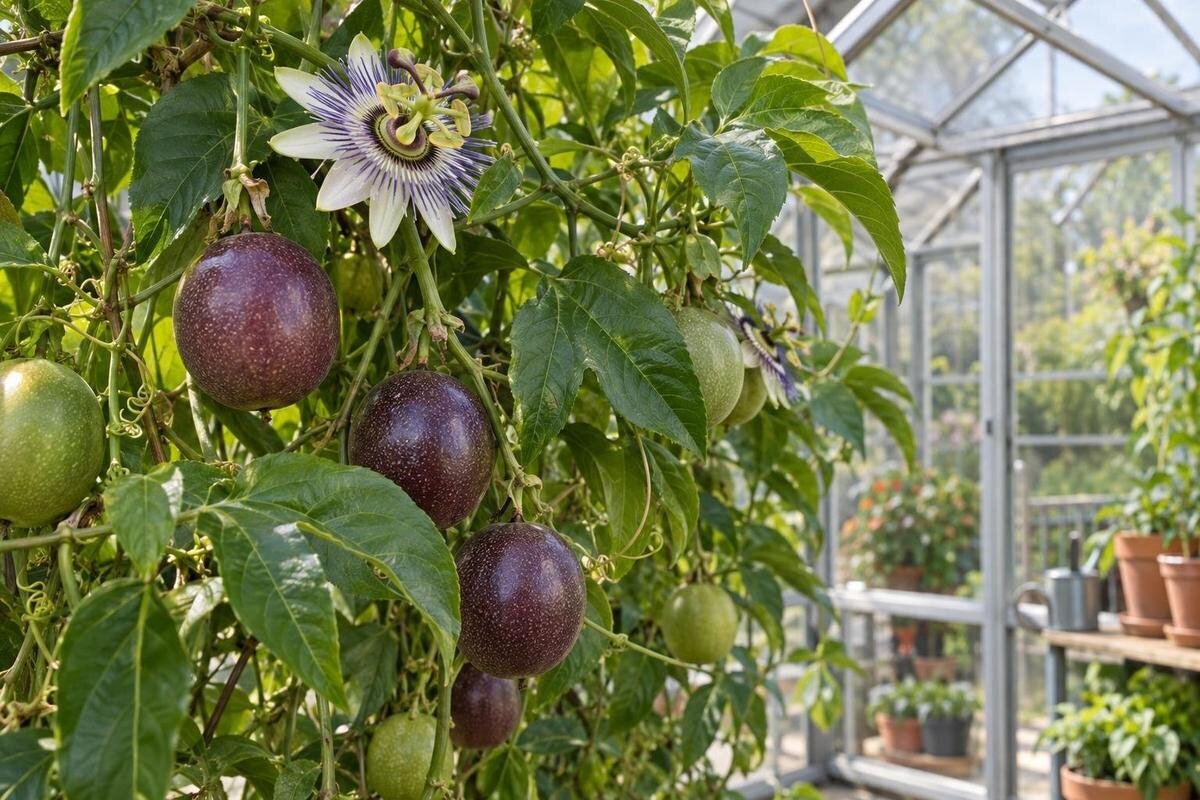
Greenhouse growing guide
Passion fruit (Passiflora edulis) can make a vigorous, decorative climber under glass, but lush leaves alone do not mean a crop is coming. Fruiting depends on a suitable cultivar, warmth across the seasons, successful pollination and room for a permanent vine. In Malta, intense summer sun can make a greenhouse hotter than the open garden, while an unheated structure does not guarantee protection from cold winter nights. This guide separates the needs for flowering from those for fruit set and ripening, and shows what to settle before planting.

What a passion fruit vine needs to produce fruit
Passion fruit usually means Passiflora edulis, grown for its edible fruit. Passiflora is a large group, and a plant sold simply as a passionflower may be an ornamental species or a form selected mainly for its flowers. Check the botanical name and cultivar on the label before buying; ask what sort of fruit to expect as well as whether the plant is likely to crop. A greenhouse can shelter a suitable vine and extend its growing season, but shelter alone will not make an unsuitable plant produce the fruit you expect. Species identification is a more useful first check than leaf size or vigour.
Separate establishment, flowering, fruit set and ripening when judging progress. A young plant may put its energy into roots and a framework before it flowers, and the time required varies with cultivar, plant history and conditions; avoid relying on a fixed first-harvest promise. Flowers without fruit point towards a different issue from a vine that never flowers, while fruitlets that appear and drop call for another check. A canopy of healthy leaves shows that the vine is growing, but not that it has received suitable pollen or temperatures. Keep brief notes on flowering dates, heat, watering and pruning to help identify a temporary setback or a more persistent mismatch.
Warmth in winter and cooling in summer
Passion fruit is a warm-climate perennial: cold slows growth, and frost can seriously damage or kill a vine. A greenhouse without heating may soften exposure, but it should not be treated as frost-proof; overnight temperatures inside can still become too low for a tender plant. Conditions differ between sheltered courtyards and exposed sites, so consider the actual winter conditions at the planting position rather than relying on a national average. If a cultivar needs more warmth than the site can provide, plan suitable protection before planting. Heating needs depend on the structure and site, so get professional advice on an appropriate system rather than assuming glass creates tropical conditions.
Summer has the opposite risk. Sunlight passing through glazing can build intense heat, and heat stress may reduce flowering or interfere with pollen and fruit set. In Malta, cooling and ventilation deserve as much attention as winter shelter. The Aluminium Classic Greenhouse range is listed in sizes from 3.77 to 28.08 m², but floor area says nothing by itself about temperature control. Check the chosen configuration’s ventilation and shading options, and consider whether it can suit the site’s winter lows as well as summer highs before treating it as a growing environment.
Choose a named fruiting cultivar
Ask specifically for Passiflora edulis and compare the named cultivar’s climate tolerance with the greenhouse conditions you can actually maintain. Purple- and yellow-fruited forms are not interchangeable labels for guaranteed performance: cultivars within each type differ, and broad claims about one colour being suitable for every cool or hot site are misleading. Seek guidance from a nursery familiar with passion fruit in comparable conditions, and ask whether the plant is likely to crop in a protected but unheated structure. If the label only says passionflower or passionfruit, request the species and cultivar before relying on it.
Plant history matters as well. A seedling can vary from its parent in vigour, flowering and fruit quality, whereas a correctly labelled plant propagated from a known cultivar is more predictable, though it is not a promise of fruit. Ask whether it is seed-grown, cutting-grown or grafted, what pollination it needs, and whether it has fruited before. Avoid plants with unexplained wilt, damaged stems or mottled growth; ask how they have been kept and whether they are ready for transplanting. If the cultivar needs a second vine, include both plants in your space plan when comparing the Limited Edition Aluminium Greenhouse options, listed from 3.77 to 28.08 m². Allow for the trained canopies and access rather than judging capacity from floor area alone.
Pollination under glass
Passion fruit flowers contain both male and female parts, but that does not mean every cultivar will set fruit with its own pollen. Some selections are self-compatible; others need pollen from a different, genetically compatible vine. A second plant is useful only if it can supply compatible pollen, so two seedlings or cuttings should not automatically be assumed to solve the issue. Before purchase, ask the supplier about the cultivar’s pollination requirement. If more than one compatible plant is not practical, check whether a self-compatible selection is available and whether hand pollination is a realistic option.
Under glass, pollination depends on access as well as genetics. Suitable bees may enter through open doors or vents, but a closed greenhouse cannot be assumed to have reliable pollinators. If hand pollinating, work with open flowers and move fresh pollen from the anthers to the receptive stigmas using a clean, soft brush or similar tool. Use pollen from a compatible plant when the cultivar requires it; hand pollination cannot overcome incompatibility. The Wall Greenhouse range is listed from 3.69 to 14.34 m². That footprint says nothing about access, so check the openings and whether you can reach the flowers before deciding how to manage pollination.

Allow space for a permanent vine
A passion fruit vine is a long-term climber, not a compact annual crop. Give it a permanent position with clear ground around the base and enough room for its trained canopy, then account for people reaching the plant to prune, pollinate and harvest. A vine allowed to sprawl over glazing or across a path will shade other plants, obstruct openings and become difficult to inspect. Sketch the route from soil to support and along the trellis before planting. Include doors, paths, vents and benches; a small nursery plant gives little indication of the space its established framework will occupy.
Base that sketch on the space available for planting and access, rather than the greenhouse’s total floor area. The Spacious Greenhouse range is listed from 47 to 70 m²; those figures describe large product options, not the area one passion fruit vine needs. Check the dimensions of the selected model and account for paths, work space and existing crops before deciding that a canopy will fit. A larger enclosure may leave more layout choices, but it does not automatically provide the right height, light, ventilation or support points. Match the planned vine to a specific layout, not just to a category name.
Plan an independent support system
Provide a separate trellis or support suited to the established vine; stems and foliage spread, and fruit adds weight. Do not assume greenhouse glazing or frame members are rated to carry the plant. If a support needs to be fixed to the greenhouse or a wall, ask the greenhouse supplier or a competent installer to confirm what is appropriate for that structure and site. Guide the plant rather than allowing it to grip seals, gutters, vents or door frames. Check ties as stems thicken, replacing any that become tight or start to rub.
Train a main leader up to the planned support, then distribute side growth so it remains reachable from the path and does not fill every opening. Leave space around the trunk for watering and inspection, and position the trellis so it does not obstruct ventilation. The T-Model Orangery Greenhouse range is listed from 16.52 to 30 m², a footprint reference only; it is not evidence that a vine can be attached to its frame. Check the chosen model’s dimensions and make a separate support plan if needed. This avoids discovering after planting that the trellis, access and crop all need the same space.
Prepare a well-drained root zone
In-ground planting can suit a permanent vine where soil drains well. A large container may be more practical if the plant needs to be moved, but it restricts roots and dries faster. Passion fruit does not thrive with waterlogged roots, so check how quickly water leaves the planting area and avoid a low spot where irrigation collects. Improve the bed with suitable organic matter only when the soil needs it, and do not bury the stem’s base. A container needs ample drainage and enough volume for a vigorous climber; it will also need closer attention to watering and nutrients than a vine rooted in open ground.
Keep the root zone evenly moist during active growth, flowering and fruit development without leaving it saturated. Long dry spells followed by heavy watering can stress the plant and contribute to flower or young-fruit drop. Mulch can slow moisture loss, but keep it away from the stem and make the soil easy to inspect. Feed according to the product label or a soil test rather than adding high-nitrogen fertiliser to chase weak growth; excess nitrogen can favour leaves over flowers. The Aluminium Greenhouse with Storage range includes built-in storage and sizes from 5.52 to 28.08 m². Check how the chosen layout separates storage, planting and access areas.
Manage ventilation and summer heat
Ventilation is an active part of growing passion fruit under glass, not just a feature to consider at purchase. On bright days, monitor the air around the canopy, open available vents or doors as conditions allow, and avoid leaving hot, still air trapped around flowers. Appropriate shading may be needed during the hottest part of the year; too much shade, however, can reduce the light needed for flowering. Aim for moving air without letting the plant dry out. A simple thermometer at canopy height can help show how quickly temperatures rise, especially when greenhouse conditions differ from those outside.
Before choosing a greenhouse, examine the actual openings, their position and whether they will remain accessible after the vine is trained. A model’s name or outline does not tell you how quickly it will cool. The Pyramid Greenhouse options are listed from 5.53 to 18.9 m²; compare the selected model’s ventilation details and usable layout rather than assuming its shape prevents overheating. If you need shade or additional climate equipment, confirm compatibility with the chosen greenhouse and seek suitable installation advice. Keep the main shoots away from vents so growing foliage does not make routine opening difficult.

Prune for access and monitor plant health
Prune to maintain a manageable framework, remove dead or damaged growth and keep access to flowers and fruit; do not cut back hard simply to make the vine fit after it has taken over. Passion fruit bears on new growth from its framework, so removing too much healthy growth can remove future flowering sites. The right pruning point depends on the cultivar and local growing cycle; use the plant’s fruiting pattern rather than a fixed month. Clean cutting tools between plants and clear diseased material promptly. Tie in new shoots before they tangle, and check that pruning has not left the main leader unsupported.
Regular inspection is easier when there is room to reach both sides of the vine. Look beneath leaves and along stems for aphids, scale insects, mites or whitefly, and note leaf spots, unusual mottling, distortion or wilting. A pest or disease problem can weaken flowers and fruit, but similar symptoms can also follow heat, waterlogging or root stress; do not diagnose from one sign alone. The Prestige Greenhouse range is listed from 3.77 to 28.08 m². Compare the selected footprint with the access you need for inspection, and seek local horticultural advice if symptoms persist.
Harvest ripe fruit and diagnose poor set
When a vine fails to crop, identify the stage at which the problem occurs. If growth stays leafy, review plant age, light, excess nitrogen, winter setbacks and pruning. If it flowers but does not set, revisit cultivar compatibility, pollinator access and hot conditions during flowering. If small fruit forms and drops, check moisture swings and heat as well as pollination; fruit drop can have more than one cause. Change one factor at a time and keep brief notes on flowers, watering and temperatures so you can assess whether the change has helped.
When fruit develops, judge ripeness by the cultivar’s normal colour and feel. Many passion fruits fall when ripe, but do not assume every variety follows the same pattern. Harvest fully coloured fruit promptly, particularly when it falls, and remove damaged or split fruit rather than leaving it to decay in the growing area. A greenhouse can provide shelter, but fruit quality still depends on the cultivar and on how the vine was managed from flower to harvest. Successful ripening, rather than vigorous growth alone, is the final measure of whether the growing conditions suit your chosen plant.
Frequently asked questions
Can passion fruit grow in an unheated greenhouse in Malta?
A vine may grow well in one, but that does not guarantee fruit. An unheated greenhouse is not frost-proof, and it can become too hot in summer. Check the conditions at your site and choose a cultivar suited to them; if it needs more winter warmth than the greenhouse provides, plan suitable protection before planting.
Can one passion fruit vine produce fruit?
It depends on the cultivar. Some are self-compatible; others need pollen from a different, genetically compatible vine. Ask the nursery about the specific plant rather than assuming one vine is enough or that any second vine will solve the problem. Suitable pollinators or hand pollination may also be needed.
Why does my passion fruit vine flower but not set fruit?
Check the cultivar’s pollination requirements first, then consider whether suitable insects can reach the flowers or whether hand pollination is needed. Hot conditions during flowering can also interfere with fruit set. Distinguish flowers that never form fruit from fruitlets that form and then drop, and note when this happens before changing several things at once.
Does a greenhouse need a heater for passion fruit?
Not necessarily; the answer depends on the cultivar, site and winter conditions. An unheated structure can provide shelter but does not guarantee warm nights. If a plant needs additional heat, assess the greenhouse and the proposed equipment with a qualified professional rather than relying on a general temperature target.
Can I train passion fruit over the greenhouse frame?
Do not assume the frame is designed to carry a mature vine. Use a separate support unless the greenhouse supplier or a competent installer confirms that a particular attachment is suitable. Plan its route so the vine does not block doors or vents, and leave room to reach flowers, leaves and fruit.
Growing passion fruit under glass is a long-term project, and fruiting depends on more than shelter. Choose a correctly identified, suitable cultivar; plan for its pollination needs and a support system independent of the greenhouse frame. In Malta, pay close attention to summer heat as well as winter nights, and make sure the vine remains accessible as it grows. If it flowers without setting fruit, check compatibility and pollinator access before changing the plant’s feeding or pruning.
