
Growing Turmeric in a Greenhouse in Malta
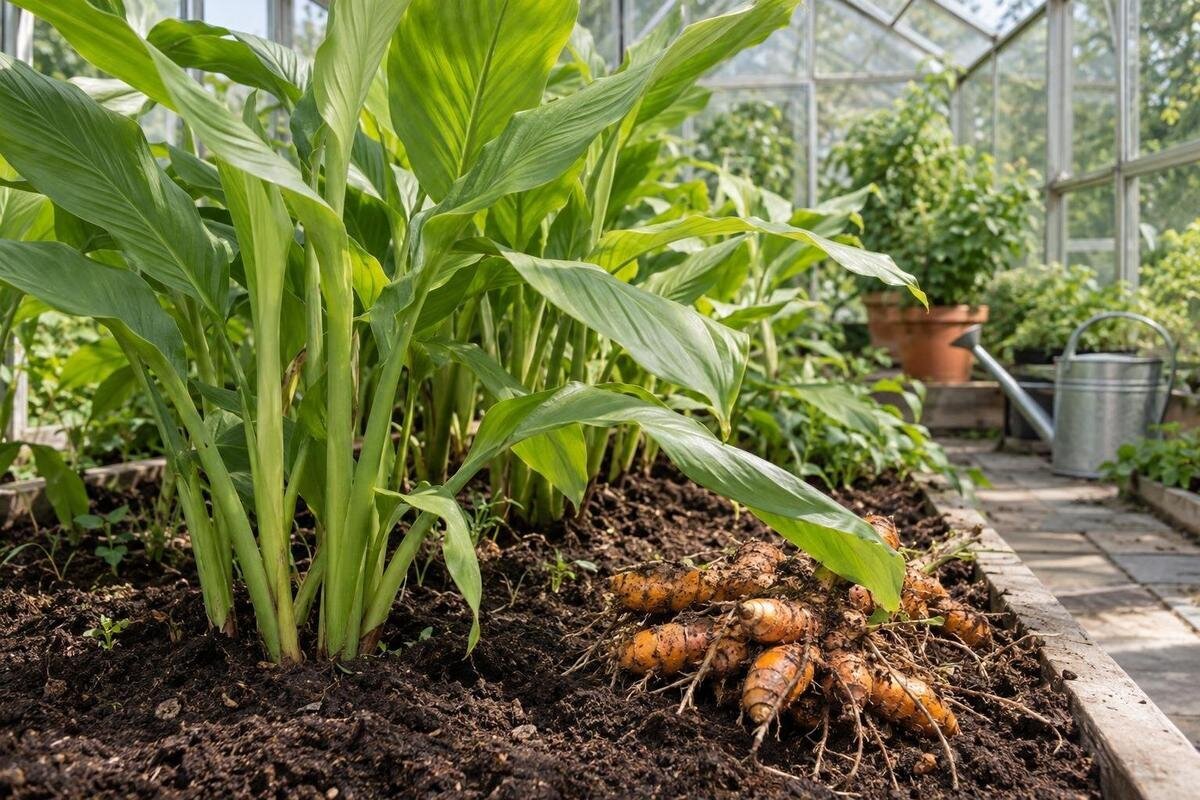
Growing turmeric in Malta
Turmeric can be grown in a Maltese greenhouse, but it is a long-season tropical crop rather than a quick winter harvest. The underground rhizomes need sustained warmth, months of healthy leaf growth and enough room to expand in a container. A greenhouse can protect an early start, yet an unheated structure does not guarantee warm nights; during Malta’s strong summer sun, a closed one can become too hot. Success depends on measuring conditions at the pot, not assuming the enclosure creates a suitable climate by itself.

01
Turmeric needs sustained warmth
Turmeric (Curcuma longa) is grown for its underground rhizomes. It starts and grows most reliably in warm conditions: aim for a root zone in roughly the 20–30°C range during active growth, with warmth sustained for many months. Treat this as a practical range rather than a guarantee at a single reading. Prolonged cool conditions, particularly below about 15°C, can slow growth sharply, and frost can damage the plant. Turmeric needs a much longer warm spell than a quick salad crop, so a sprout appearing in a pot is not evidence that the rhizome is ready to harvest. The leaves must have time to feed the clump below the compost, and repeated cool nights can interrupt that work even when afternoons feel warm.
In Malta, the long, hot part of the year can provide useful growing time, but cooler weather at either end of the season and excessive heat inside a closed greenhouse can limit growth. An unheated structure warms in sunshine but does not ensure mild nights; potting mix can cool after sunset, especially in a small container. Assess the conditions where the pots will stand rather than relying on outdoor daytime temperatures. For an initial size comparison, the Wall Greenhouse range is listed from 3.69 m² to 14.34 m². Consider how much of the chosen layout you can allocate to a crop that will remain there for months.
Choose fresh rhizomes with visible buds
Start with a fresh, firm turmeric rhizome bearing visible buds, often called eyes. Choose one without soft, wet, mouldy or badly shrivelled patches. Ground turmeric is powdered rhizome, not planting material, and dried pieces are unlikely to sprout. A fresh supermarket rhizome may grow, but its age and storage history are unknown, so results are less predictable than with planting stock sold for cultivation. If you are using food produce, favour a plump, undamaged piece and keep it clean while preparing the pot. Several questionable scraps are not a better starting point than one healthy rhizome, and a piece with a clearly visible bud gives you something to check as it begins to grow.
You can plant a whole rhizome or divide a large one. Every division needs at least one clearly visible bud; a section without an eye has no growing point. If you cut it, use a clean blade and let the cut surface dry before planting so a wet wound is not buried in compost. Do not soak the rhizome to force a shoot, or leave it in a sealed, damp bag. Keep it warm and only lightly moist before planting. Sprouting can take time, so avoid disturbing the piece repeatedly to see whether it has started. A slow start is not a reason to keep adding water, particularly while conditions remain cool.
02
Give the rhizomes a wide, well-drained container
Rhizomes spread sideways beneath the plant, so pot width matters at least as much as depth. As a practical starting point, allow one clump a container around 30–40 cm wide and at least 30 cm deep; choose a broader tub if planting several pieces. These are planning dimensions, not a yield guarantee. A cramped pot dries quickly and leaves little room for new rhizomes, while a very large pot can remain wet longer if you water it on the same schedule as a small one. Before filling it, decide where the container will sit: compost and water make even a plastic tub heavy, and moving it later can damage leaves.
Use a good-quality container compost that holds moisture but drains freely, with ample drainage holes at the base. A little mature compost can add organic matter; avoid dense garden soil that stays saturated in a pot. Set the container on a surface where excess water can escape, not in a saucer left full for hours. Leave room around the rim for watering and for lifting the clump at harvest. If you are comparing greenhouse footprints for several containers, Limited Edition Aluminium Greenhouses are listed from 3.77 m² to 28.08 m². Compare actual pot diameters and access routes with the chosen layout rather than counting the whole floor as planting area.
Plant when the potting mix is warm
Plant in spring only when the root zone is warm enough for sprouting. A mix temperature close to 20°C is a useful guide; if it is persistently cooler, waiting is usually better than setting a rhizome in cold, damp compost. Set each piece with its buds facing up and cover it with a few centimetres of mix, roughly 5 cm for a medium piece. Water to settle the compost, then keep it lightly and evenly moist rather than saturated. Once shoots emerge, give them good light and avoid leaving the pot in a spot that overheats in direct midday sun. Do not keep digging down to check for a shoot; that can disturb new roots.
Choose the planting time according to conditions, not a date printed on a general calendar. In Malta, one sheltered plot may warm earlier than another, and a greenhouse can heat rapidly in daytime while the potting mix remains cool at night. Record temperatures for several days before planting, especially if you are trying to get an early start. When planning the space, Aluminium Greenhouses are listed from 3.77 m² to 28.08 m². Allow for the turmeric to remain in place beyond the initial planting period, alongside any other crops you intend to grow. An early start is only useful if the plant can continue growing through the following months.

03
Control greenhouse heat through the season
Once leaves are growing, aim for consistently warm conditions rather than sharp daily swings. A minimum–maximum thermometer placed near the pots shows whether nights are too cool and sunny afternoons are becoming excessive; a thermometer at the door may not reflect conditions in a sheltered corner. Check readings over several days, including before dawn and on sunny afternoons. A soil probe can reveal why a plant is slow even when the air feels warm. If the root zone is cold, adding water will not warm it, so avoid leaving compost wet while waiting for conditions to improve. Moving a container to a warmer, sheltered position may be easier than heating the whole structure.
Ventilate as the greenhouse warms in Malta’s strong sun. Open the available vents or doors in good time, and use suitable shading if direct sun pushes temperatures well beyond the crop’s comfortable range. Never assume a closed greenhouse is safe because the outside air feels pleasant; leaves and containers can heat quickly. In the cooler part of the season, an unheated structure may extend daytime warmth without keeping nights suitable. The T-Model Orangery Greenhouse range is listed from 16.52 m² to 30 m²; its area is not a heating specification. Check the actual ventilation and construction details, and get qualified advice before planning active heating.
Keep the compost moist, not waterlogged
During active growth, keep the compost evenly moist, not waterlogged. Check the top few centimetres rather than watering on a fixed weekly timetable: a large pot, a windy day and a hot greenhouse all change how quickly it dries. When the surface begins to dry, water thoroughly until a little drains from the base, then let the excess run away. If the lower compost remains wet, do not add more just because the leaves look thirsty. Waterlogging deprives rhizomes of air and raises the risk of rot, so free drainage matters in a crop that stays in the pot for months. Adjust the amount to the container and conditions rather than copying another grower’s schedule.
Water use increases as foliage develops, particularly in hot weather, so check containers more often during a heat spell. A mulch layer can reduce surface drying, but keep it clear of stems and do not use it to hide persistently wet compost. Feed only once the plant is actively growing, using a balanced fertiliser suitable for container plants and following its label; extra feed cannot compensate for cold or poor drainage. If a storage-equipped greenhouse is on your shortlist for keeping tools and supplies to hand, Aluminium Greenhouses with Storage – Limited Edition are listed from 5.52 m² to 28.08 m². Check the exact layout and keep plant feed separate from harvested food.
04
Balance bright light with shade and airflow
Turmeric grows well in bright conditions but appreciates protection from harsh, direct midday sun, especially in a greenhouse where leaves and pots can heat quickly. Deep shade is not the answer: weak light can leave foliage sparse and reduce the time available for rhizome growth. Watch the plant through the day; if leaves scorch or curl in the hottest hours, increase shade or ventilation and review how close the pot is to the glazing. In Malta, seasonal sun and the greenhouse’s position matter, so a spot that is mild in spring can be intense in summer. Avoid putting a small container where one side receives much more heat than the other.
Give each plant clearance for its broad leaves and keep vents and access paths unobstructed. Avoid crowding pots against one another: air movement around foliage helps leaves dry after watering and makes heat easier to manage. When comparing a footprint, the Pyramid Greenhouse range offers listed areas from 5.53 m² to 18.9 m², but the number alone does not reveal usable bench space, orientation or openings. Check drawings and dimensions against the actual pot layout, and make sure shading and ventilation can be managed without blocking everyday access. Leave enough room to reach each container for watering and to move it if conditions change.
Allow a long season before expecting a harvest
Expect a long wait. In suitable warm conditions, turmeric commonly needs around eight to ten months from planting to a mature rhizome crop; cool spells, poor light or interrupted growth can extend that period or leave a smaller clump. Count the time from planting into warm compost, not from the day a dormant rhizome goes into a cold pot. A plant that has made several leaves may still be storing energy rather than filling out its rhizomes. If you need a reliable harvest by a fixed date, turmeric is less predictable than a short-season crop that finishes within Malta’s warmest months. Plan for the foliage to occupy its space for most of the year.
Work out whether the likely season is long enough before adding heat. Planting only after spring warmth arrives can push maturity into cooler months, when an unheated greenhouse may slow growth. Starting earlier in a reliably warm place can buy time, but it does not remove the need for light and several months of active foliage. Heating a whole structure for one or two pots may not be worthwhile. Bloomcabin Prestige Greenhouse listings span 3.77 m² to 28.08 m². When comparing sizes, consider how many turmeric containers you intend to grow and which other crops would share the space during the cooler months.

05
Harvest after the foliage dies back naturally
Harvest when the plant has had its long growing period and the foliage naturally yellows and dies back, rather than digging as soon as one leaf changes colour. This seasonal decline signals that growth is slowing and the rhizomes are mature enough to lift. If leaves yellow early while the compost is still warm, check watering, drainage, light and temperature before treating it as harvest time; cold or waterlogged roots can also cause an early decline. Where the clump remains green and healthy, give it more time if the weather and available warmth allow. The condition of the whole plant is more useful than a single discoloured leaf.
To lift a container crop, let excess water drain, tip the rootball onto a clean surface and loosen the compost gently so the rhizomes are not cut with a spade. Separate the new rhizomes from the original planting piece and keep firm, healthy sections with visible buds if you want planting material for another cycle. Handle them gently; damaged or soft pieces are poor candidates for storage. Use the fresh harvest promptly or follow reliable food-storage guidance. For planting stock, keep a few firm pieces in a cool, dry, frost-free place and check them occasionally for mould or shrivelling.
Plan greenhouse space around containers and access
Plan the working area around container footprints rather than the greenhouse’s gross floor area. Include a clear route to each pot, room to turn or lift a heavy container at harvest, access to water, and space for shade or ventilation controls. Keep leaf growth from covering paths or blocking openings. If you expect several crops to share the structure, decide how many turmeric pots you can realistically care for before allocating all the sunny space to them. The long season means those containers occupy their positions for months, not just at planting and harvest.
For a broad mixed-growing project, the Spacious Greenhouse range is listed from 47 to 70 m², but turmeric itself does not require a greenhouse of that size: one well-managed container can be a reasonable trial. Larger footprints make sense only when other uses justify them. Compare product dimensions and layout with the pots you will actually grow, then check the specification for details such as openings and materials. Include the space needed to handle a full container at harvest, not just the area it occupies while standing. This gives you a more useful basis for choosing a size than the number of pots that will fit tightly together.
Frequently asked questions
Can turmeric grow in an unheated greenhouse in Malta?
It can grow during a sufficiently warm stretch, but an unheated greenhouse cannot be assumed to hold suitable temperatures overnight or through winter. A crop that needs eight to ten months may slow before the rhizomes mature.
What temperature should I aim for?
Keep the root zone warm, using roughly 20–30°C as a working range during active growth. Sustained temperatures below about 15°C can slow growth; check the compost temperature as well as the air.
What size pot is suitable for turmeric?
Allow one clump a broad pot around 30–40 cm across and at least 30 cm deep, with drainage holes. Use a larger tub for several planting pieces and make sure excess water can drain away.
When are turmeric rhizomes ready to harvest?
After a long active season, wait for the foliage to yellow and die back naturally. Early yellowing can indicate stress, so check warmth, moisture and drainage before lifting the rhizomes.
Does growing turmeric in a greenhouse require heating?
Not necessarily during the warm part of the year. Heating may be needed to extend growth into cooler months, but compare the cost and safe installation with the expected crop; a greenhouse alone does not provide heat.
Turmeric is a realistic greenhouse project if you can keep the rhizome warm through a long season and give it a generous, well-drained pot. In Malta, the same enclosure that helps in cooler spells needs ventilation in summer, while an unheated structure may not carry a spring-planted crop through winter. Begin with a manageable number of containers and allow time for the rhizomes to develop, accepting that the harvest will depend on the growing conditions throughout the season.
