
Heated Propagator or Heated Greenhouse for Starting Seeds?
Seed starting
Choosing between a heated propagator and heating a greenhouse is chiefly a question of how much space needs warmth, for how long, and what happens after the seeds emerge. A propagator creates a compact warm zone around a limited number of trays; greenhouse heating changes conditions through a much larger volume. The two options need different checks too: tray fit and compost temperature for a propagator, heat loss and usable space for a greenhouse. Neither replaces suitable light, moisture or air. The right arrangement depends on crop-specific guidance, overlapping sowings and where young plants can grow next.

What each heating option warms
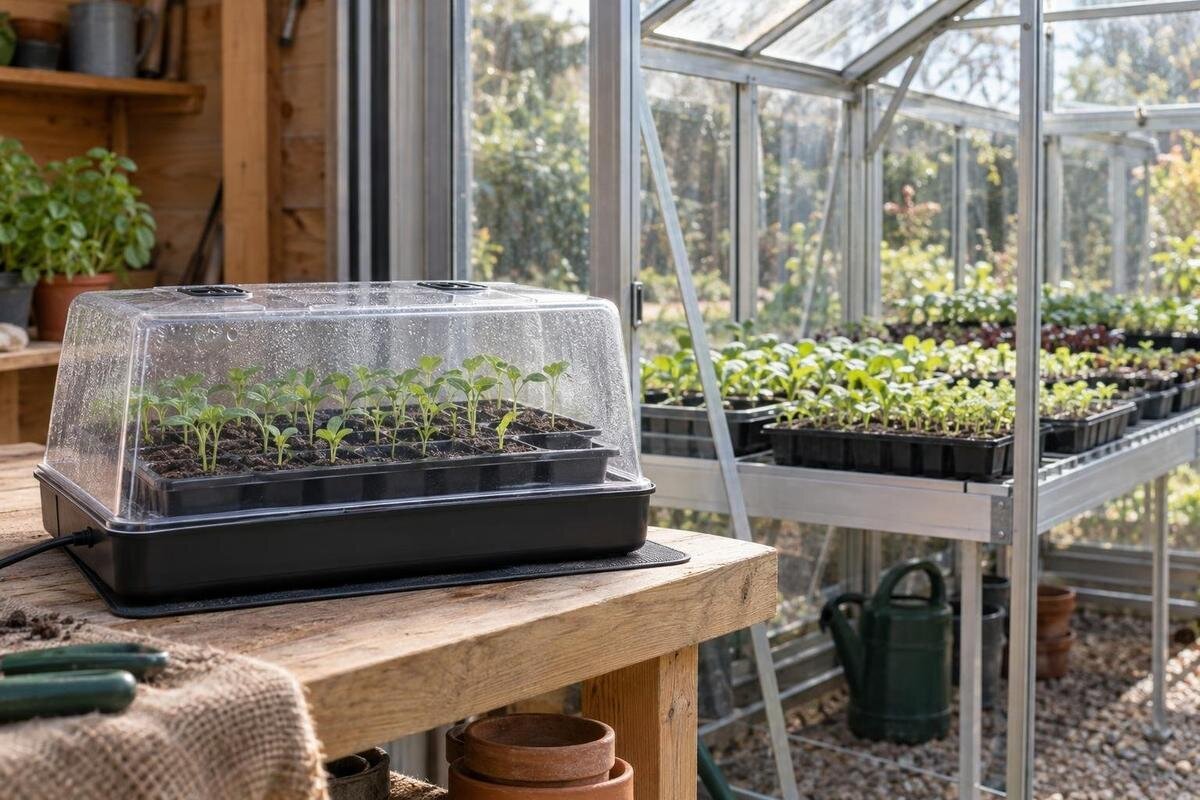
A heated propagator is a compact place for germination. Many designs use a warmed base beneath seed trays and a cover that retains some humidity; models vary in footprint and controls. Its practical advantage is scale: warmth is concentrated around a limited number of pots or cells rather than spread throughout a greenhouse. The propagator cover can also slow evaporation, which changes how often the compost needs checking. A greenhouse heater, by contrast, changes conditions across a much larger air volume. Compost, shelving, pots and air do not warm at the same rate, so a reading beside a heater may not describe conditions at every tray.
These are not simply two sizes of the same appliance. A propagator creates a warm sowing zone, while a greenhouse heater is intended to maintain conditions across a building; the control available depends on the equipment. Some propagators have adjustable thermostats, while others offer fixed or limited control. Greenhouse heaters also vary, and warming the air does not guarantee that compost at bench level is at the temperature required for a crop. Follow the crop and equipment instructions when monitoring temperatures. Readings taken near the trays are more relevant to seed care than a display positioned elsewhere in the greenhouse.
How much space needs warmth?
Begin with the maximum number of trays that will be in use at the same time, not the total you hope to sow over the season. Compare each tray’s actual footprint with the propagator’s warmed surface or internal space. Allow room to close the cover and reach the seedlings without damaging them. If trays vary in size, measure the ones you intend to use rather than relying on a nominal tray count. A propagator that suits one batch may be too small when a second sowing begins before the first plants have moved on. Conversely, heating a greenhouse for a few cells can leave a large space warm without a clear purpose.
Greenhouse size is another part of the comparison. The Wall Greenhouse range lists area figures from 3.69 m² to 14.34 m²; these describe the range, not available bench area, tray capacity or heating performance. For propagation, check the selected size’s internal layout, door access and any staging you plan to use. A tray may fit on a bench but leave too little working room for watering, labelling and checking plants. If seedlings will move out of the heated zone, include a suitable place for them afterwards, rather than planning only for the first days after sowing.
Greenhouse heating depends on heat loss
A greenhouse heater has to replace heat lost through the structure and during ventilation. Demand varies with the building’s construction and exposed area, outside conditions, draughts, the temperature you are aiming for, and how often doors or vents are opened. Floor area alone cannot tell you the heater output needed: height and total volume matter as well. The type and condition of the glazing, and any insulation or thermal screening, also affect the conditions you can maintain. Warmth at one seed tray does not show what it would take to keep the whole greenhouse warm; the two heating scales are different.
The Limited Edition Aluminium Greenhouses range lists area figures from 3.77 m² to 28.08 m². That spread is a reminder that a product name or area figure is not a heating specification. Two greenhouses with similar areas can have different heat-loss conditions, and a heater’s stated output needs to be assessed against the actual structure and growing target. Look for the manufacturer’s information for the selected greenhouse and heater. If you are uncertain about the output required, ask a qualified heating professional rather than trying to size a system from area alone.
Compare energy use and control
Running costs depend on how long heat is needed, the difference between the target and surrounding temperatures, heat escaping from the greenhouse, and the heater’s energy use and controls. A propagator limits the heated space and may be turned down or switched off once the crop no longer needs warm germination conditions. Any saving depends on the unit and how it is used, so do not assume a fixed percentage. Heating the greenhouse may make sense if it serves other plants or later growth too. If warmth is needed only for one short germination period, heating a large space without another use can add energy use and monitoring without adding useful growing capacity.
With sizes from 16.52 m² to 30 m², the T-Model Orangery Greenhouse range illustrates why the intended use of the wider space matters to this comparison. For each option, note when heat will be needed and whether it will serve plants beyond the germination stage. Check the equipment’s published energy-use information and control method, then consider your electricity tariff and likely hours of operation. Distinguish a short period of concentrated propagator use from heating a greenhouse over several weeks. Neither the greenhouse’s listed area nor a description such as ‘low-energy’ is enough to estimate the bill for your growing schedule.

Light, moisture and ventilation still matter
Warmth is only one part of germination. Requirements differ by species, and excessive heat, dry compost or persistently saturated growing medium can cause problems even when the heater is working as intended. Follow the seed supplier’s guidance for temperature, light, sowing depth and moisture rather than looking for one setting for every seed. A cover can slow evaporation and make it easier to overwater, so check the compost instead of misting by habit. If condensation collects on the cover or seedlings, follow the propagator instructions on ventilation and avoid leaving a closed, humid chamber unexamined.
Conditions inside a greenhouse can change with the sun. On a bright day, the air may warm while the heater is set for cooler hours, so check near the trays at different times rather than assuming the temperature stays constant. The Pyramid Greenhouse range lists area figures from 5.53 m² to 18.9 m², but those figures do not show how much sun reaches a bench or how quickly the interior warms. Observe the conditions at the intended site before deciding to heat the whole space. Use ventilation or shading in line with the structure’s instructions and the needs of the crop; extra heat will not make up for inadequate light.
Seedling care changes after emergence
Once shoots emerge, the task changes. A warm, humid, covered propagator may not be suitable indefinitely: seedlings need appropriate light, air exchange and watering, and their growing temperature still depends on the crop. A close cover can restrict airflow, so open, adjust or remove it as the crop and equipment instructions advise. Do not assume that the conditions used to encourage germination should continue unchanged. Some seedlings need a different regime after emergence, while others may continue to benefit from warmth. Monitor their condition as well as the equipment display, especially when several types of seed share a propagator.
Plan where the seedlings will go after emergence before you sow. If the greenhouse is cooler than the propagator, seedlings may need a protected transition rather than an abrupt move; in a sunny greenhouse, temperatures can rise and trays still need monitoring. When comparing the Aluminium Greenhouses with Storage – Limited Edition range, with listed areas from 5.52 m² to 28.08 m², consider where this stage of growth would take place. The relevant space is a position with suitable light and ventilation once the cover is opened. Decide whether different batches can share those conditions, and label them so their care requirements are not confused.
When whole-greenhouse heating is worthwhile
Heating the whole greenhouse is more compelling when warmth is useful beyond the germination stage. You may have several batches in the structure over a longer period, or other plants that need the same protected conditions. In that case, the value of heating is not just whether seeds emerge but whether the space has a role during the following weeks. Keep the stages in mind: germination, early growth and the time before plants leave the protected area may have different requirements. A propagator can still be used for the warmest stage while the rest of the greenhouse is managed differently, provided the equipment instructions allow that arrangement.
The Bloomcabin Prestige Greenhouse range extends from 3.77 m² to 28.08 m². To compare a selected size with a propagator setup, consider how the greenhouse would be used throughout the growing period. Several batches occupying the space for weeks present a different heating decision from a few trays needing warmth only until germination. Check whether those batches need compatible conditions, rather than treating all young plants as one group. A compact propagator may still serve the warmest stage while the greenhouse accommodates subsequent growth. This gives the equipment separate roles instead of assuming that one heating method must handle every stage.
Floor area is not bench capacity
A greenhouse’s listed area can help you judge whether a structure fits the site, but it is not the amount of space available for trays. Internal paths, doors, access around plants, bench dimensions and headroom all affect the usable growing area. The height of the structure also changes the volume of air that a heater would need to warm. Air movement and heater position may mean that conditions differ between locations, so do not assume every bench corner has the same temperature. Before choosing whole-greenhouse heat, sketch the intended layout using the dimensions for the selected structure and allow access to the plants and equipment.
At 47 m² to 70 m², the Spacious Greenhouse range calls for a clear distinction between the overall growing area and the part needed for propagation. A structure at that scale may accommodate activities beyond sowing, but its floor area alone does not establish tray capacity or heating efficiency. If seed starting is the main purpose, mark the intended benches, paths and equipment positions on the layout. Compare the warm space required during germination with the space occupied by later growth. One or more propagators may serve the warmest stage without requiring the entire greenhouse to be maintained at the same setting.

Check equipment and installation requirements
Before buying, list what the equipment needs to do: fit the trays you use, provide the control required by the crop guidance and suit the place where it will operate. Check the instructions for temperature control, sensor position and use around humidity or water. If a unit does not include a thermostat, confirm how its temperature can be monitored and whether it is suitable for the conditions you need. A greenhouse and a heater are separate purchases unless the product details say otherwise, so a greenhouse listing does not confirm that heating is included. Check the connection and installation requirements too. For fixed wiring or work beyond a plug-in appliance, seek advice from a qualified professional.
For the Aluminium Greenhouses range, listed at 3.77 m² to 28.08 m², assess the selected structure alongside the separate heating equipment. The area figures do not specify thermal performance or confirm that a heater is supplied. Consider how you will monitor the setup in use: where the sensor will sit relative to the trays, whether it will be affected by nearby airflow, and how heating and ventilation will be managed together. These details connect the equipment controls to conditions around the seeds. If whole-greenhouse heating cannot maintain the required conditions there, a compact propagator may be simpler for a limited batch.
Choose around the sowing schedule
Make the choice batch by batch. List the crops, sowing dates and warm period indicated by their guidance. If only a few trays need warmth for a short time, a suitably sized propagator may cover that stage. If sowings overlap or young plants will stay in the greenhouse, heating the wider space may serve a longer purpose. Include the period when older seedlings and new sowings occupy space at the same time; otherwise, a setup that appears large enough for one batch may be too small in practice. This schedule helps distinguish a need for more heated capacity from a need for more growing space.
Keep a brief record as each batch progresses: sowing dates, temperatures observed near the trays, control settings, and when covers or heat were changed. Include where seedlings were moved after emergence and whether the next sowing was ready to take their place. Comparing these notes can help distinguish a shortage of propagator capacity from heat loss in the greenhouse or unsuitable conditions after germination. That distinction matters when considering another purchase: more heated space will not necessarily resolve a problem with the later growing stage. The aim is to warm the space and stage that genuinely need it.
Frequently asked questions
Which is better for a few seed trays?
A heated propagator is usually the more focused option if the seeds need warmth and the unit fits your trays. It warms a smaller area than a greenhouse heater, so you do not have to heat the whole structure just for a limited batch. Check the crop’s guidance first: a propagator is not useful if those seeds need different conditions.
Can I use a heated propagator inside an unheated greenhouse?
It can be a practical way to create a warm zone, provided the propagator is intended for that setting and its instructions allow it. The surrounding greenhouse conditions still affect the unit and seedlings, so monitor temperatures near the trays and follow the equipment guidance. The propagator will not warm the rest of the greenhouse.
Do I need a thermostat?
That depends on the propagator and the crop. A thermostat gives you control, but does not guarantee that every part of a tray is at the same temperature. Check whether one is included, follow the seed supplier’s instructions and measure near the compost. If the unit has limited control, use it only for conditions it is suitable for.
Should seedlings stay under a propagator cover after they emerge?
Not indefinitely by default. After emergence, light, air exchange, moisture and the crop’s growing temperature all matter. Follow the crop and equipment instructions on opening or removing the cover, and monitor the seedlings as conditions change. Germination conditions are not automatically the right conditions for continued growth.
Does greenhouse heating use more energy than a propagator?
Heating a whole greenhouse generally involves warming a larger space and replacing more heat lost through the structure. Actual energy use depends on the greenhouse, outside conditions, temperature settings and hours of operation. Compare the equipment’s stated consumption and your likely schedule; a product’s floor area alone is not a cost estimate.
Choose a heated propagator when warmth is needed around a manageable number of seed trays. Heat the greenhouse when the wider space has a clear role beyond germination and its conditions can be assessed and monitored. Before sowing, check crop-specific guidance, equipment capacity and where the seedlings will go after emergence. A combination can be sensible: concentrated warmth at germination, followed by the light, air and growing conditions the plants need next.
