
Growing Hotel Herbs and Edible Flowers in a Greenhouse
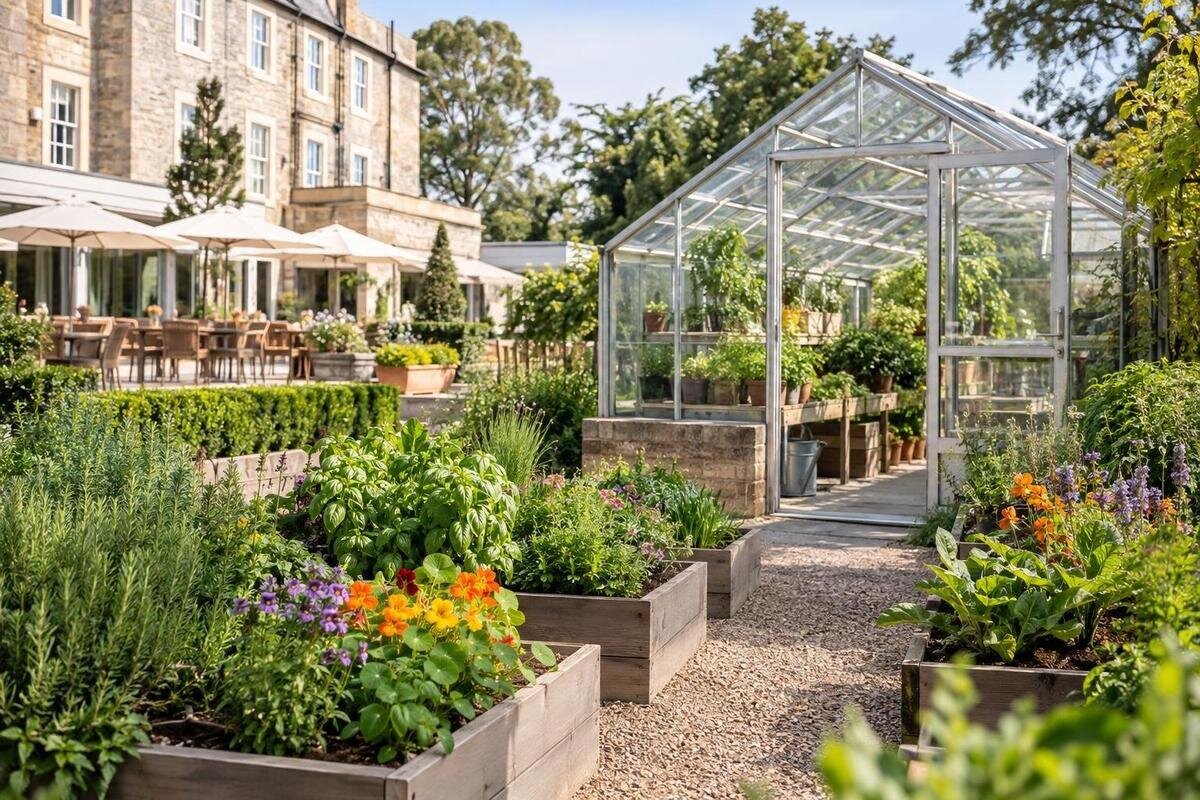
Hotel greenhouse planning
A hotel greenhouse earns its place when it supplies useful ingredients reliably and fits the working day. Herbs and edible flowers may be used in modest quantities, but their identity, quality and timing matter to the kitchen. A workable plan connects menu demand with sowing, daily care, picking, handling and delivery. It also lets guests appreciate the growing space without making the production route part of a busy service. Decide who will grow and harvest, what the kitchen can use, and how visitors will be managed before settling on a greenhouse footprint.

Define the greenhouse’s role in hotel food service
Start with a list from the head chef or food and beverage team: herbs used regularly, the exact edible-flower varieties wanted for particular dishes, approximate weekly quantities and periods when menus change. Distinguish crops needed for regular supply from occasional garnishes or plants grown for demonstrations. A garnish used for a few covers does not justify the same planting plan as a herb used daily. Include breakfast, bar, banquet or room-service menus only when those teams expect to use the produce. Ask which plant parts and harvest stage they need, and whether substitutes are acceptable. Record quiet and peak periods too: occupancy can change demand while crops follow their own growing rhythm. Base the estimate on recent menus and service records, not an optimistic guess.
Give the growing work a named owner, even if several staff share the tasks. Someone must coordinate seed or young-plant orders, sowing, routine checks, crop records, harvest and the handover to the kitchen. Write down who covers watering and crop checks on weekends, during leave and when the hotel is busy; an attractive plan can fail if everyday care depends on whoever happens to be free. Keep the first crop list small enough for the available gardening skill and staff hours. Review actual time and usable harvest after a trial period, then expand only if the rota can sustain the additional sowing, pruning, cleaning and picking.
Keep the harvest route clear of guest and service traffic
Walk the route from the greenhouse to the kitchen with the chef, grower and service lead. It needs to work at harvest time, not just look short on a plan: note thresholds, doors, turning space, carrying distances and a place to set containers without blocking service. Agree where produce passes to kitchen staff and which existing area handles sorting, washing and temporary holding under hotel procedures. A greenhouse is a growing area; do not assume a bench or water point there replaces a kitchen facility. Where possible, keep harvest traffic apart from linen, waste and routine deliveries, and avoid sending staff through dining areas during busy service.
Map the guest route too. If guests can see the greenhouse, provide viewing from outside or a clear path that does not cross harvesting or kitchen movement; reserve a place for a guide to pause with a group. Walk the path carrying the container or trolley staff will actually use, and test doors and turns at an ordinary service pace. If a wall greenhouse is being considered, the Wall Greenhouse listings run from 3.69 to 14.34 m², but the area range does not show whether a candidate site connects conveniently to the kitchen or provides enough working access. Measure the real route before treating location as an advantage.
Match crop choices to the hotel’s menu
Treat the crop list as an ingredient specification. Ask the chef to name the exact herb species and edible-flower varieties, rather than relying on a broad label such as edible blooms. Common names can cover different plants, and an ornamental flower is not automatically suitable to serve. Source seeds or young plants with culinary use clearly identified, and keep source and variety labels with the crop. Agree with the chef and whoever oversees the hotel’s food-safety procedures how harvested flowers and herbs are separated, washed, labelled and handed to the kitchen, including how cultivation products are managed. If identification or growing history is uncertain, leave that crop off the menu.
For the first planting, choose a short list the chef uses repeatedly and that staff can distinguish at a glance. Grow a small trial before multiplying the varieties; note planting dates, harvestable quantities, rejected produce and time spent on each crop. Keep labels visible from the working aisle and use a simple map or bed plan, so a substitute grower can tell crops apart. Plan repeat sowings only after observing how quickly the kitchen uses each crop and how it performs on site. That record helps adjust the menu, the planting area and the staff rota without relying on assumed yields.
Allow for beds, propagation and working space
Draw the usable working footprint, not just the greenhouse outline. Mark beds or benches, aisles, access to both sides of each growing area, propagation trays, a place for potting, clean harvest containers, tools and the route for watering. Work out how staff will turn and carry items without brushing crops or stepping into beds. Leave room for pruning and replanting; filling every part of a drawing with crops can create inaccessible corners. Base aisle and door requirements on the people and equipment that will actually be used, and confirm the specific model’s internal and external measurements before finalising the layout.
Use a scaled plan to compare possible footprints. The Limited Edition Aluminium Greenhouses are listed from 3.77 to 28.08 m², which can help narrow an initial search. That stated area does not tell you how much bench length, clear passage or productive growing space will remain in your particular arrangement. Plot doors, work areas and storage as well as crops, then check that the person harvesting can reach the plants without moving equipment each morning. A less crowded plan may be more useful to the hotel than one that uses every available square metre for planting.

Plan for light, heat and ventilation
Conditions inside a greenhouse differ from those in an open bed, and can vary between the entrance, growing level and areas closer to the covering. Visit the proposed position at different times and note where shade falls, how much direct sun reaches the site and whether nearby structures affect the space. Keep simple records of temperature and crop condition once growing begins rather than relying on how the weather feels outside. On sunny days, heat can build up quickly, so ask the supplier or a horticultural professional what ventilation and shading arrangements suit the proposed design and crop list. Assign a named person to check conditions and respond when they change.
Group crops by their growing needs rather than by display effect: varieties may differ in their requirements for light, air movement and watering, and one bench may not suit all of them. Keep the harvest path open and put demonstration plants where they do not obstruct production or encourage picking. The Pyramid Greenhouse catalogue lists sizes from 5.53 to 18.9 m²; use that area range for an initial comparison, not as evidence of ventilation, temperature control or crop capacity. Check the selected design and proposed layout against the actual crop plan.
Make watering, storage and daily care manageable
Map access to water, the route staff will take when watering and where excess water will go. A hose across a guest path or a wet working aisle can disrupt the hotel’s routine, so plan the route and drainage before planting. If new connections or drainage work are required, ask an appropriately qualified professional to review them. Watering needs vary with the crop and conditions; build plant checks into the rota instead of relying on one fixed schedule for every bed. Name a backup person for absences, and record recurring issues so that the growing plan can be adjusted rather than repeatedly relying on last-minute attention.
Give seed packets, labels and tools a designated place, and store clean harvest containers separately from potting materials and products used for crop care. Keep stored items out of aisles and make sure staff can reach what they need without disturbing the growing area. The Limited Edition Greenhouses with Storage are listed from 5.52 to 28.08 m². This identifies a product range with storage, but does not state its capacity or exact arrangement. Check the details for the specific version and decide whether the space suits the hotel’s supplies, cleaning routine and access needs.
Organise harvesting around kitchen demand
Set harvest times with the kitchen so produce arrives when staff can receive it, rather than during the busiest part of service. Agree who requests each crop, who picks it and where it is handed over. Use clean, designated containers and keep the harvest identifiable by crop and variety; flowers in particular should not be separated from their labels before the kitchen knows what it has received. Record the date, approximate quantity and condition, along with anything rejected. These notes help the chef see what the greenhouse can supply and help the grower spot gaps between planned demand and actual harvests.
Agree in advance what happens when a crop is short, late or unsuitable: the menu may need a substitute or the kitchen may need its normal alternative supply. Do not build a fixed menu promise on a harvest that has not been recorded consistently. The Aluminium Classic Greenhouses are listed from 3.77 to 28.08 m²; compare that range with the area needed for crops and for harvest work, rather than treating listed floor area as a yield estimate. Include sowing, clearing spent crops and cleaning containers in the rota as well as the visible picking task.
Offer guest access without interrupting cultivation
Decide how guests are meant to experience the garden: a view from a path, a short scheduled tour or a separate route through part of the growing area. Make this choice while planning the layout, because visitor movement can affect doors, aisles and the route for kitchen deliveries. Keep normal growing and harvesting possible during a visit. If guests enter the greenhouse, set clear times and boundaries, provide a staff guide where appropriate, and make it clear that production crops are not for unplanned picking. A view from outside may be the simpler option when the hotel cannot assign someone to manage visits.
Where guest and growing areas share a structure, keep visitor movement away from tools, stored supplies and harvest containers. Avoid making the visitor route the only route for staff or deliveries. The T-Model Orangery Greenhouse is listed in sizes from 16.52 to 30 m²; that range is a footprint reference, not evidence that a particular model is suitable for guest entry or mixed public and production use. If guest access is part of the brief, review circulation, supervision and safe operation with relevant project professionals before settling the layout.

Review the site before choosing a greenhouse
Compare candidate positions on the property for their relationship to the kitchen, guest areas and staff routes, as well as for shade and exposure. Check how people, tools and growing supplies will reach the greenhouse and how routine maintenance can be carried out without blocking other work. Consider the ground, drainage and any proposed services with suitably qualified people; do not assume that a base or connection that worked elsewhere will suit this site. Ask the relevant local authority or a project professional whether permissions or other approvals apply to the proposed structure and use, rather than assuming they are unnecessary.
The Prestige Greenhouse with a metal foundation is listed with a metal foundation and in sizes from 3.77 to 28.08 m². Those catalogue details identify an option to compare; they do not establish whether its foundation arrangements suit the hotel’s ground or project. Have the specific site and any required preparation reviewed by qualified professionals. For the final comparison, set the listed area alongside the measured growing space, clear working route, water access and visitor plan. A model that fits on the property may still be a poor operational fit if it is hard to reach or maintain.
Pilot the crop and labour plan before expanding
Before committing to a full crop plan, test the proposed routine against the staff hours available and, where possible, run a small growing trial. Use it to assess the whole workload, from sowing and routine care to harvesting, kitchen handover and clean-up. Record which tasks take longer than expected and whether they coincide with busy service periods. Compare that work with the hotel’s real staffing pattern, including weekends and absences, rather than judging the trial only on a quiet day. A simple crop diary of dates, usable quantities, problems and staff time gives the chef and grower a shared basis for deciding what the team can manage consistently.
Use those records to decide whether to keep the planting list, change the route or allow for more growing area. The Spacious Greenhouse is listed in sizes from 47 to 70 m²; that range is a comparison point, not proof that a larger footprint suits a hotel’s site, team or guest arrangements. Review any proposed model against the actual plan for crops, access, care and kitchen supply. Expand only when staff can maintain the planting and the kitchen has a realistic use for the harvest.
Frequently asked questions
Which crops should a hotel greenhouse start with?
Begin with herbs and edible flowers the kitchen already uses regularly, then keep the first list small enough for staff to manage. Trial the crops on site and record usable harvests, quality and labour before making a regular menu commitment.
Are all ornamental flowers suitable for the menu?
No. A decorative plant is not automatically edible, and common names can be ambiguous. Confirm the exact species and variety, use plants intended for culinary use, and agree handling and kitchen handover procedures with the hotel team.
How much greenhouse space does a hotel need?
There is no useful single figure without a crop and workflow plan. Allow for beds or benches, propagation, tools, storage, harvest containers and clear working aisles. Compare those needs with the listed area and the specific model’s drawings.
Can the greenhouse supply the kitchen all year?
Do not assume it can. Crop timing, site conditions and the greenhouse’s growing environment affect what can be harvested and when. Keep a seasonal record and agree a kitchen alternative for periods when the greenhouse cannot supply the planned crop.
Can guests visit a working hotel greenhouse?
A managed viewing route or scheduled visit may be possible, but a growing space is not automatically suitable for public access. Keep visits separate from harvesting and service traffic, and review the proposed access and operation with relevant project professionals.
Success is measured less by how much ground is planted than by whether the kitchen receives a dependable harvest, daily care fits the staff rota, and guests can enjoy the growing space without disrupting work. A modest first crop list and recorded harvests give the hotel a sound basis for deciding what to grow next. Choose a greenhouse that supports those routines; its size and style are only part of the decision.
