
Reading Stone Capacity When Choosing a Sauna Heater
SAUNA HEATING GUIDE
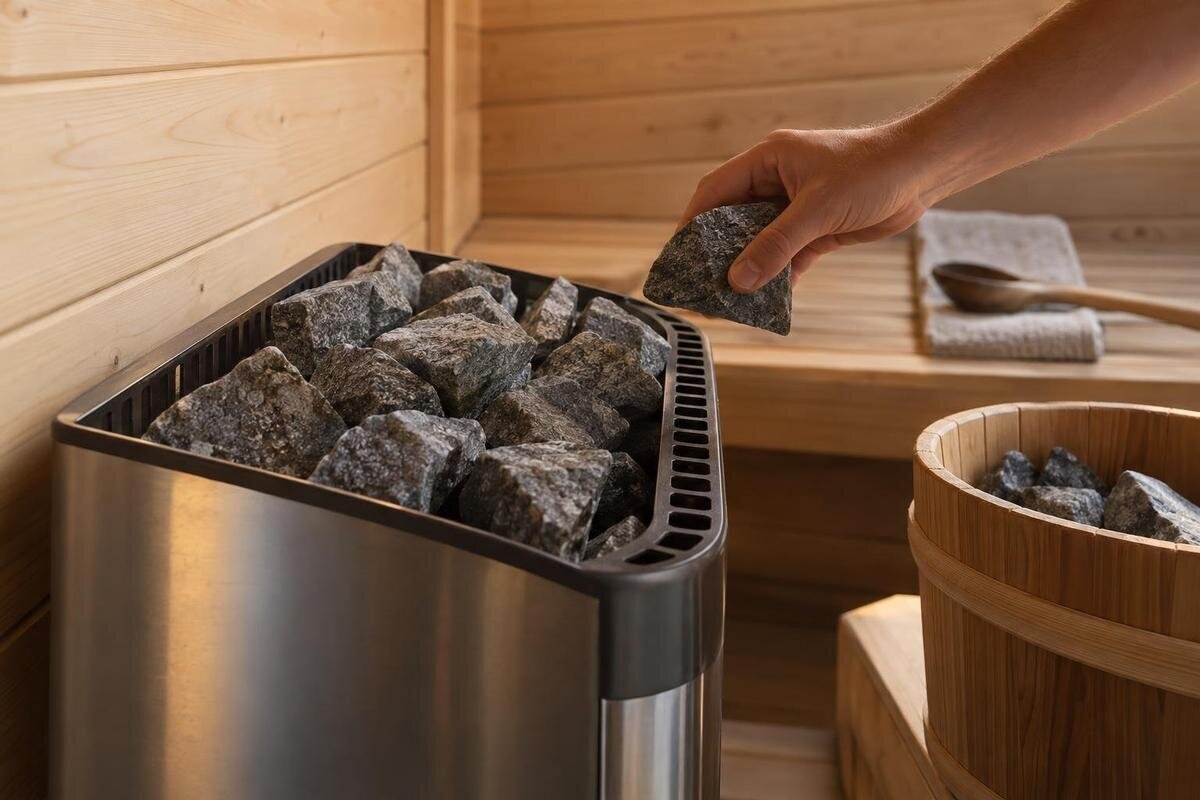
Stone capacity can look like a quick way to judge a sauna heater, but the listed kilograms do not tell the whole story. They describe the stone load according to the manufacturer’s definition. The way that load affects heat and steam depends on the heater’s construction, stone arrangement, output and the sauna enclosure. Read the number with the exact model’s manual and room guidance, then consider whether its design matches the experience you want. Treat capacity as one useful specification, not a stand-alone performance score.
What the stone-capacity figure means
A sauna heater’s stone capacity is the mass of stones the manufacturer says a particular unit is designed to hold or use, commonly stated in kilograms. The definition matters: one maker may publish a maximum load, another a recommended amount or an acceptable range. A catalogue headline can also be mistaken for the quantity of stones supplied with the heater. Check the exact model’s product information and manual to establish whether the figure is a limit, a target or an inclusion. Those meanings are not interchangeable, and the number is useful only when read in the context the maker intended. If the wording is unclear, ask which meaning applies before comparing models.
Mass is not a piece count or a description of the pile’s shape. Stones vary in size and density, so the same weight can occupy different volumes and leave different gaps around the elements. Follow the manufacturer’s stated stone type, size and loading diagram; the heater is designed around that arrangement. The total mass also does not tell you how it should be distributed in a layered design. A basket that looks spacious is not permission to add more, and a load below the stated amount may not be the intended one either. If supplying or replacing stones separately, check that the instructions apply to the exact heater model.
Stone capacity is not heater output
Stone capacity is separate from heater output. Output is stated in kilowatts; the manufacturer also gives a room-size range or other sizing guidance for the unit. The two figures answer different questions: output describes rated power, while capacity describes the stone load. A large stone figure does not show that a heater can serve a larger cabin, and a similar stone load does not mean two heaters have equal output or controls. The temperature setting, where adjustable, is another specification, not a conversion from kilograms. Check the model’s room guidance first, then compare stone figures only between heaters suitable for the actual sauna and specified in comparable terms.
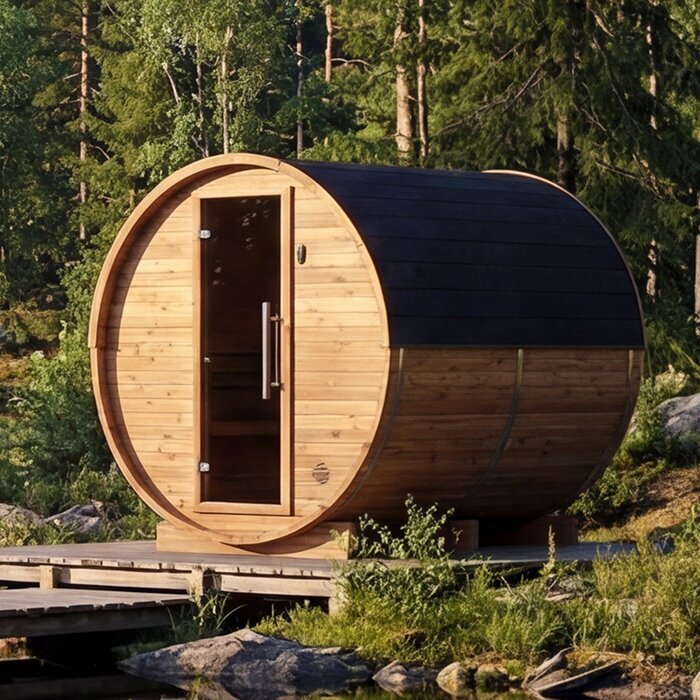
The cabin information is a separate input. The Thermowood Barrel Sauna N-250 page lists an area figure of 5.27 m²; that does not establish internal volume, construction or compatibility with a particular heater. Use the cabin’s confirmed dimensions and construction details with the heater maker’s sizing method, including any adjustments specified for glazing, ceiling height or other features. Do not convert square metres into a stone-load target. If the cabin listing does not give the information the heater manufacturer requires, obtain verified drawings or measurements rather than guessing from a single area figure.
Stone layout matters as well as total mass
Capacity tells you the total stone load, not where the stones sit or how they are exposed. Heater designs differ: stones may be held in a column, arranged around heating elements or contained in another layout. Element contact, exposed surface, gaps for circulation and the depth of the load all influence how a design works. A tall, narrow arrangement and a broad bed can hold similar mass yet present different surfaces. More kilograms in a tightly packed space do not automatically give a better result than a smaller load in a heater intended to expose the stones. Compare the manufacturer’s drawings and loading instructions, not just a capacity line or a photograph that hides the heater’s interior.
Look for a drawing that shows the intended stone position and any areas that must remain clear. The LC-260 Thermowood Barrel Sauna listing gives an area figure of 5.12 m², but cabin area cannot show where a heater may be placed or how its own stones are arranged. Use the sauna layout and the heater’s installation drawing together; they answer different questions. A qualified installer can confirm that the unit’s location, access and required clearances work in the room. Do not move components or alter clearances to make a preferred stone format fit.
What capacity can tell you about water and steam
When water is poured onto hot stones, it creates a brief rise in humidity and the familiar burst of steam. The effect depends on which surfaces are hot and exposed, the amount and placement of water, the heater’s design and the cabin’s ventilation and air conditions. Stone capacity may indicate how much thermal mass is present, but it does not state how quickly water will evaporate, how intense each burst will feel or how much water is permitted. Check the exact heater’s instructions for water use rather than assuming every model has the same rules. A bigger kilogram figure is not a steam-output rating.
When comparing a cabin such as the HCF-300 Thermowood Barrel Sauna, keep its listed area of 6.89 m² separate from the heater’s stone capacity and water instructions. The cabin defines the space in which steam is experienced; the heater manual describes the stone load and permitted operation. If buying the two separately, distinguish information about the enclosure from instructions for applying water to the heater. Ventilation and internal volume help explain the room conditions, while the intended water application concerns the heater itself. Neither set of details can substitute for the other when considering the experience.
Heat-up and recovery depend on the whole system
Warm-up and recovery cannot be inferred from kilograms alone. A greater heated mass can store more heat once it is at temperature, but it also takes energy to heat that mass; the time in an actual sauna depends on heater output, controls, element and stone arrangement, room heat loss, ventilation and starting conditions. The same listed capacity can therefore behave differently across heater designs and cabins. Avoid claims that a higher load must heat faster, take longer or use energy more efficiently. A meaningful comparison needs manufacturer information for the exact unit and conditions, not a ranking by stone weight. Stone mass does not guarantee a particular room temperature either.
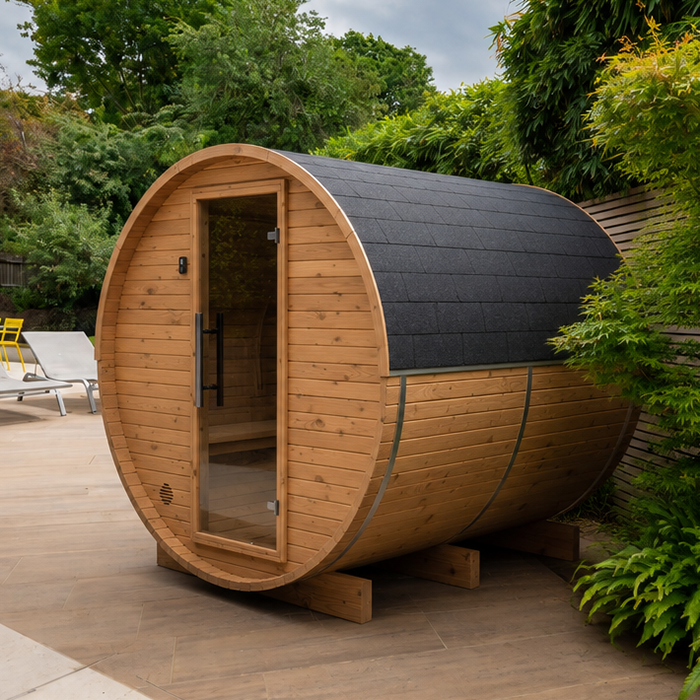
The LCF-300 sauna listing gives an area figure of 6.89 m², not a preheat time or recovery result. When a seller or manufacturer publishes a heating estimate, check which room, starting conditions and operating setup it assumes. An estimate for another enclosure may not transfer to yours, even if the listed floor areas are similar. Keep any quoted estimate alongside those assumptions when comparing heaters, rather than treating it as a result derived from stone capacity. Without model-specific performance information, the stone load remains a design specification, not a basis for calculating warm-up time or energy use.
Match the heater to the sauna enclosure
Match the heater to the actual sauna enclosure using the specific manufacturer’s sizing guidance. The required input may be internal volume, and the assessment can depend on ceiling height, glazing, insulation, door construction or surfaces exposed to cooler spaces. Follow the instructions for the exact model; no single adjustment applies to every heater or cabin. A stated area can help identify a sauna, but it is not necessarily the measure that the heater maker uses. Do not rely on external shell measurements if the manufacturer asks for internal dimensions. If drawings or construction details are incomplete, obtain them and have the proposed pairing checked by a qualified sauna professional. Check room compatibility before comparing stone loads.
For the S-140 Thermowood Barrel Sauna, the listed area of 1.93 m² is one cabin detail to distinguish from the measurements required for heater sizing. Put the confirmed internal dimensions and construction details beside the heater’s stated room range, then consider its permitted placement and clearances. This separates two parts of the assessment: whether the heater suits the enclosure and whether its proposed position meets the installation requirements. Neither question is answered by choosing a larger stone load. Establish the room match before using stone capacity to compare the remaining suitable options.
Check which stones are supplied
Confirm what the purchase includes. Stone capacity may describe the heater’s permitted load, while stones may be listed separately, included as an accessory or covered by a particular kit configuration; the headline may not answer. Find the full model code and check the product description, manual and inclusion list for stone type, size and quantity, as well as whether the published mass is a maximum or an intended amount. If stones need to be bought separately, match them to the maker’s specifications. If the sources omit a detail or appear to disagree, ask the retailer or manufacturer to clarify for that exact model before finalising the order.
If you are considering the HC-150 sauna, its listed area of 2.97 m² belongs with the cabin details, while the selected heater’s stone requirements belong with its own model information. Keep a separate note of the quantity supplied and the quantity required, so that a capacity figure is not mistaken for an inclusion. Check that the manual and inclusion list refer to the same heater model and chosen configuration. For a complete sauna package, read the component list carefully: the cabin name alone does not establish which heater or stones are included in the order.
Load and maintain stones as specified
Correct loading matters after purchase as well as during selection. Follow the maker’s sequence for placing stones, the permitted sizes and any spaces or parts that must remain clear. Do not press extra stones into gaps, use larger pieces to reach a headline weight or rearrange the load to expose more surface unless the manual permits it. The intended layout affects airflow through the heater and the way heat reaches the stones; changing it changes the conditions the manufacturer specifies. Treat installation or safety questions as matters for the heater instructions and a qualified professional, not as an invitation to improvise.
Stones can shift or deteriorate with repeated heating, so use the manual for inspection, cleaning, re-stacking and replacement rather than assuming a universal timetable. Replace them with the type and size intended for that heater, and restore the specified load after maintenance. If your cabin is the HC-225 Thermowood Barrel Sauna, its listed area of 4.4 m² is not a reference for ordering replacement stones. Retain the heater’s exact model number, stone specification and loading diagram together. These identify what you need more reliably than the cabin name or a remembered number of bags.
Choose a stone layout for your preferred experience
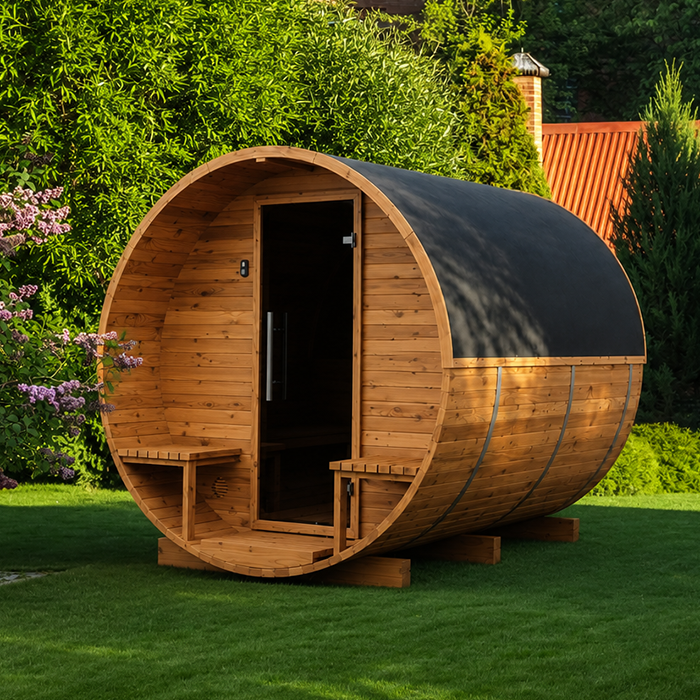
Think about the experience you want in terms of stone exposure and response, not simply the biggest number on a product page. Someone who values an accessible stone surface may prefer a design that presents stones openly; someone prioritising a compact format or a particular placement may have different needs. Those are questions of heater format and layout as well as total mass. Look at the maker’s drawings and operating guidance, because photographs may conceal the depth of a stone load and cannot show how it behaves when used. Capacity can narrow a shortlist only after those design details are clear.
Make your preference concrete with questions for the manufacturer: Is the stated figure a maximum or an intended load? How much of the stone bed is exposed in the designed arrangement? What does the manual say about water use and room range? Can the selected configuration fit the planned space without changing required clearances? A wish for a gentler or more immediate response is not a reliable kilogram formula; ask about the exact heater design and compare documented features. Avoid choosing a heavier load on the assumption that it guarantees a particular sensation in every cabin.
Compare heater specifications side by side
Compare exact heater model codes side by side. Record the stone capacity and its definition, whether stones are included, specified stone type and size, heater output, stated room range, layout drawing, water instructions and installation clearances. Mark which details come from the manual and which are missing from the sales page. Do not rank units by raw kilograms when one figure is a maximum and another is an intended load; those numbers describe different conditions. A clear comparison sheet is more useful than a single capacity column because it distinguishes room compatibility from the design features relevant to your preferences.
For a cabin such as the N-210 Thermowood Barrel Sauna, record the listed area of 4.43 m² with the enclosure details, not in the heater’s stone-capacity column. Keep that cabin information consistent across the comparison so each shortlisted heater is assessed for the same room. Once unsuitable units have been excluded, compare the remaining designs by their documented stone arrangement, loading requirements and operating guidance. Leave an unanswered specification marked as unknown until the retailer or manufacturer clarifies it. A blank entry is more useful than a guessed value that makes one heater appear a better choice.
Frequently asked questions
Does a higher stone capacity make a sauna hotter?
Not by itself. Stone capacity describes the load, while heater output, controls, room size and the cabin’s construction all affect the conditions the heater can achieve. Use the manufacturer’s guidance for the exact model and sauna; kilograms alone do not establish a temperature.
Does a larger stone load always produce more steam?
No. Steam depends on hot, exposed stone surfaces, the amount and placement of water, the heater’s design and conditions in the sauna. Capacity may describe the amount of stone, but it does not set water-use rules or guarantee a particular steam response.
Should I choose the heater with the greatest stone capacity?
Not before checking whether it is suitable for your sauna. First use the manufacturer’s room-sizing guidance, then compare stone layout, permitted load, output and operating instructions. A larger figure does not automatically mean a better match or a more suitable experience.
Are stones included with every sauna heater?
Do not assume so. Check the exact heater’s product information and inclusion list, and confirm whether its capacity figure means stones supplied, stones required or the maximum permitted load. If the details are unclear, ask about the specific model before ordering.
Can I add more stones or use a different size?
Only if the manufacturer’s instructions allow it. Use the specified stone type and size, and follow the model’s loading diagram and stated limits. A basket that appears to have room does not mean that extra stones or a different arrangement are suitable.
A stone-capacity figure is most useful when you know exactly what it measures and how the heater is designed to carry that load. Confirm the included stones, loading instructions and room range, then compare the arrangement and operating guidance for the specific model. That gives the number its proper place in the decision: an important design detail, but not a shortcut to predicting heat-up, steam or compatibility.
