
Choosing Wood for Sauna Benches and Backrests
Sauna buying guide
Bench and backrest timber is the sauna interior you touch most directly, but a description of the outer structure does not tell you what those parts are made from. Species, board grade, surface finish, shape and care instructions need to be checked separately. This guide explains how to compare the contact surfaces, what to ask about finish and maintenance, and why an exterior Thermowood description is not proof of the timber used for seats or backrests. It also shows how to assess a product listing without treating a photograph as a specification.
Buyer checklist 1
Contact surfaces and room lining have different requirements
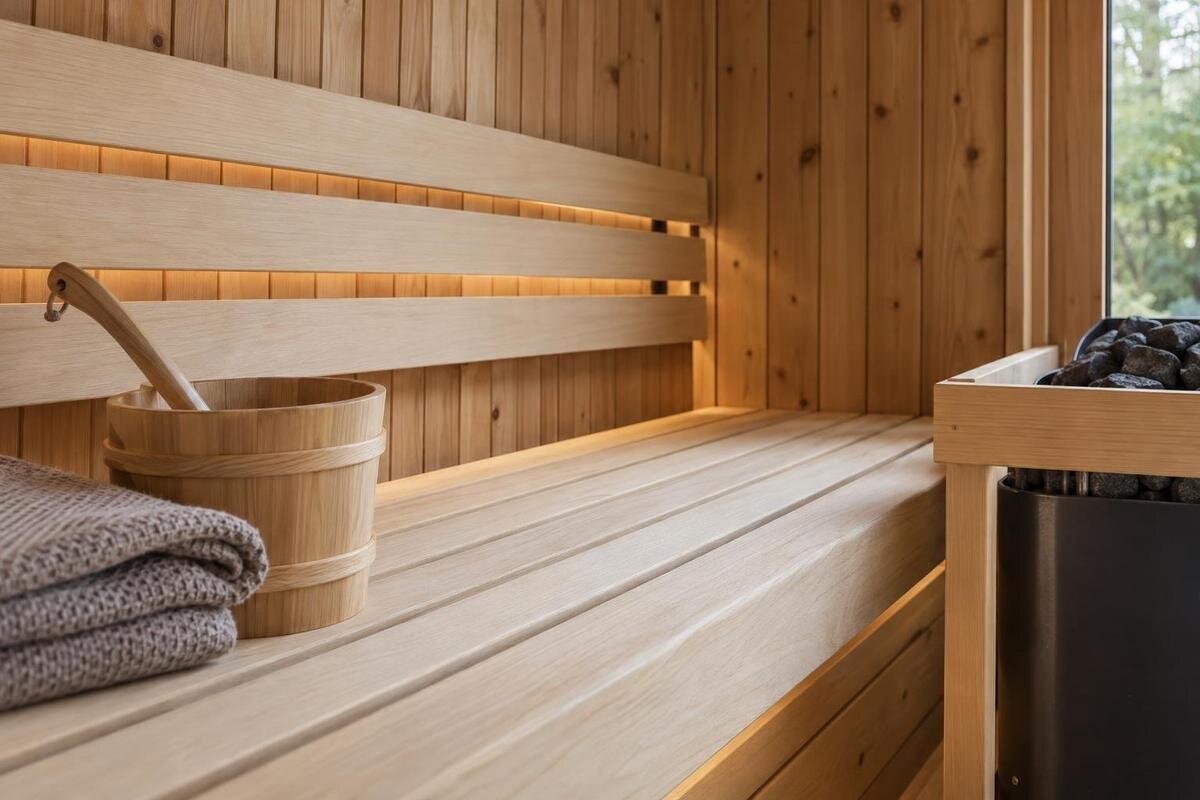
Bench and backrest boards are contact surfaces, so their selection is separate from the timber used for an outer shell or room lining. A person sits, leans or rests a hand on them; they meet heat, moisture, sweat and routine wiping. Look for a material and surface treatment identified specifically for the seating or backrest, rather than relying on a general phrase such as ‘wooden interior’. The useful question is not simply whether a species is described as durable, but whether the actual contact component is documented, smoothly finished and accompanied by clear care guidance. Parts that sit close together are not necessarily chosen or finished in the same way.
Comfort and maintenance are affected by more than species. Board profile, grain, edge shaping, surface smoothness and the way slats are arranged all influence how the surface feels and how straightforward it is to wipe. A photograph cannot establish whether an edge is rough or whether a finish has been applied to the item supplied. When viewing the Sauna LC-260 product page, request a written description of the bench and backrest components specified for that configuration. The product title alone does not establish their species, grade or finish; keep the comparison focused on contact surfaces rather than the cabin’s general appearance.
Bench and backrest timber should be specified separately
The bench and backrest have related but different jobs. Seat boards support a person and have frequent direct contact with skin or clothing; backrests touch the shoulders or upper back and can collect sweat where contact occurs. These differences make it useful to ask about both components separately. A specification that names the internal lining timber may say nothing about the seat, lower footrest, headrest or backrest. The phrase bench wood may not be enough if the product includes several distinct pieces; ask which species and finish apply to each item, including any supports. This avoids carrying a general cabin description over to every interior component.
On the Sauna HCF-300 listing, check whether the specification separates the seat surface from the backrest and any frame or support. If the parts differ, note where each wood is used and whether the finish applies to all of them. Similar colours in photographs do not prove matching species: lighting, natural variation and coatings can make different boards look alike, or make one species look varied. A component list helps you assess whether the materials will give you the coordinated appearance you want. It can also show whether a maintenance instruction applies to only one surface.
Buyer checklist 2
Common sauna woods vary in appearance and character
Among sauna bench timbers, buyers may encounter aspen, alder, spruce, abachi or ayous, and cedar. These names are useful starting points, not a ready-made ranking. Aspen is typically pale; alder can show a warmer pink or brown tone; spruce may have visible knots or resin pockets; cedar is often chosen partly for its distinctive colour and aroma. Abachi and ayous may appear as trade names, so confirm what species the seller means. Individual boards still vary in grain, clarity and finish, and a species label by itself does not explain how a particular surface feels or how it will look beside other interior timber.
Treat words such as light, soft, knot-free or low-resin as descriptions to verify against the actual grade, not guarantees attached to a species name. Ask which timber is used on each contact surface and, where relevant, what selection or grade is supplied. If the product details for Sauna LCF-300 do not name the bench material, do not infer it from exterior colour or from the word Thermowood. Written details, or a sample identified as the same timber and finish, are a sounder basis for comparison than a general impression from product photography. Clarify trade terms rather than assuming they are botanical names.
Check the grain, edges and surface finish
Look at the quality of the finished board, not only the species printed in a specification. Knots, splits, sharp grain changes, resin pockets, rough patches and splinters can affect comfort and cleaning. A clear, well-sanded contact face may matter more to daily use than a small difference in colour. Ask how boards are graded for the visible bench surface and whether the stated grade applies to every slat or only to the room lining. If a sample is available, inspect more than one face and edge; one attractive piece may not show the variation between boards in a completed set.
Edges, joins and spacing deserve a separate look. Smoothly eased edges are generally more comfortable against skin than sharp corners, while slat gaps can influence where dust or debris collects and how easy the bench is to wipe. These details are not answered by the species name, and a close-up photograph may not reveal them clearly. When reviewing the Sauna S-140 product details, request a matching drawing or close-up information if the listing does not show the contact surfaces. Check the profile and edge finish of the seating itself rather than judging them from an exterior photograph.
Buyer checklist 3
Find out whether the contact wood is untreated or coated
Find out whether the bench wood is supplied unfinished or has a factory-applied protective product. An unfinished surface is not automatically a sign of poor quality, and a coating is not automatically an improvement: what matters is whether the treatment is intended for the sauna environment and for direct contact on the named component. Oils, stains, varnishes and other coatings are not interchangeable. A finish can also alter the timber’s colour, sheen and feel, so ask for the product name and which surfaces it covers rather than accepting a general statement that the sauna is treated. The answer should distinguish an exterior treatment from a bench treatment.
Use only finish and maintenance products expressly permitted by the sauna maker for that bench material. A furniture oil or clear coating that seems suitable at room temperature cannot be assumed appropriate on a hot contact surface. If you are considering the Sauna HC-150, establish what finish, if any, is included in the exact configuration, whether the bench is treated at the factory and what care the manufacturer specifies. If you plan to change a finish later, follow the model’s written instructions rather than layering another product over an unknown coating. The finish can affect the correct cleaning method as well as later maintenance.
Care instructions should match the timber and finish
Care instructions should follow the actual timber and finish, not generic advice for household furniture. The manual should explain how to remove ordinary dust and sweat marks, which cleaning products are allowed, and whether the surface must be left untreated or periodically treated. A simple routine stated by the maker is more useful than guessing from a species name: cleaning products and methods can affect the appearance or surface over time. When comparing a model such as Sauna HC-225, ask for a care guide matched to the supplied configuration, since a product listing alone is not a cleaning manual. Keep the instructions with your purchase information for future reference.
Between sessions, follow the manufacturer’s guidance on airing and drying the room and on wiping the bench. Avoid saturating timber or reaching for abrasive pads, bleach, strong solvents or a new oil unless the guide permits them. A dark mark, raised grain or rough spot may have more than one cause; cleaning or sanding it without knowing the finish can make the surface worse. Check the prescribed method first and seek model-specific advice when the instructions do not cover the problem. Care is about maintaining the intended contact surface, not forcing every board to keep a new appearance.
Buyer checklist 4
Treat seat boards, supports and repairs as separate issues
The visible seat boards are not the whole bench. Slats, backrest elements, brackets or frame pieces can be made and finished differently, and the support structure has a different job from the surface that touches the user. Do not infer a bench’s load capacity or repair method from the species name; those are product and installation questions that need the maker’s documentation. Wood can respond to changes in moisture and heat, so check the maker’s inspection and maintenance guidance rather than assuming that every change in colour or fit is a defect. A smooth surface does not, by itself, show that the support is sound.
From time to time, look for splinters, cracks, loose parts, roughness and persistent stains, following the inspection method in the manual. If a seat or support moves, or a board is damaged, do not improvise a structural repair or replace fasteners with a guessed alternative; ask the manufacturer or a qualified professional what is appropriate. For the Sauna N-210 model, ask whether replacement bench parts are specified separately and record the configuration as well as the model name for future reference. Do not assume a generic slat is a like-for-like replacement: the replacement and repair method need to match the particular bench.
Exterior Thermowood does not identify the bench timber
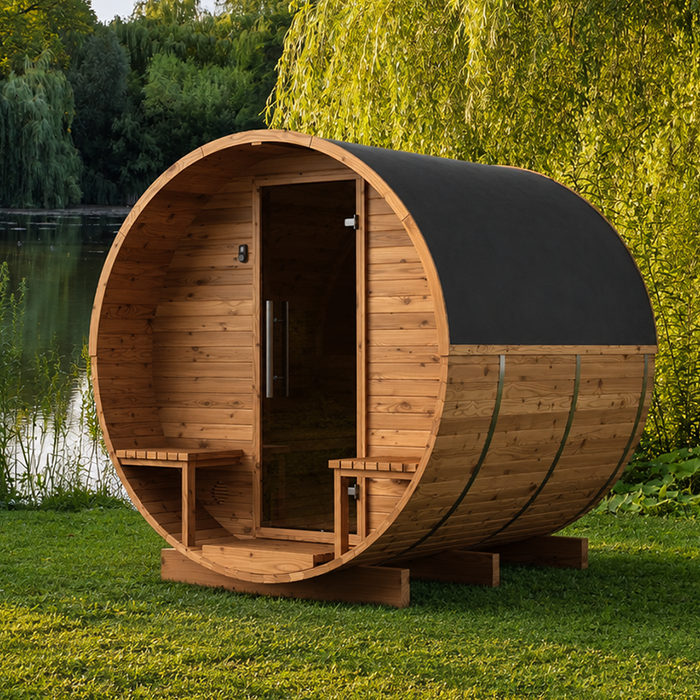
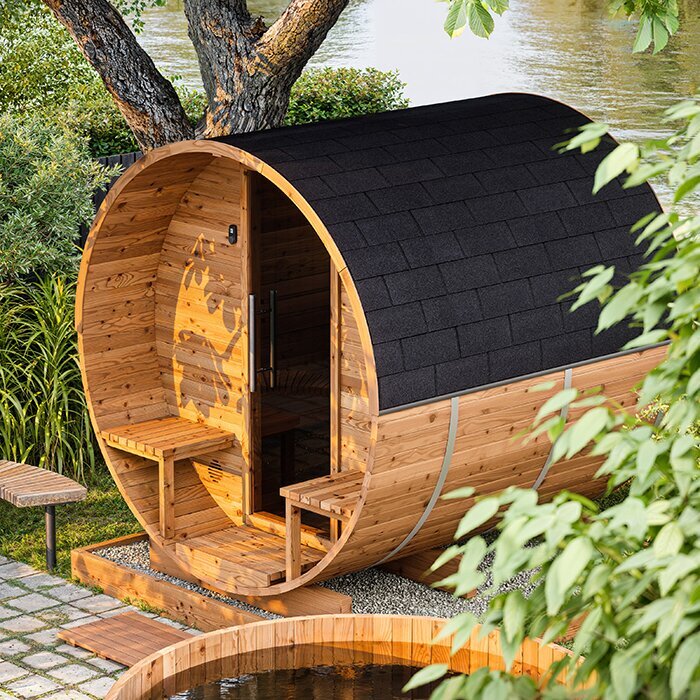
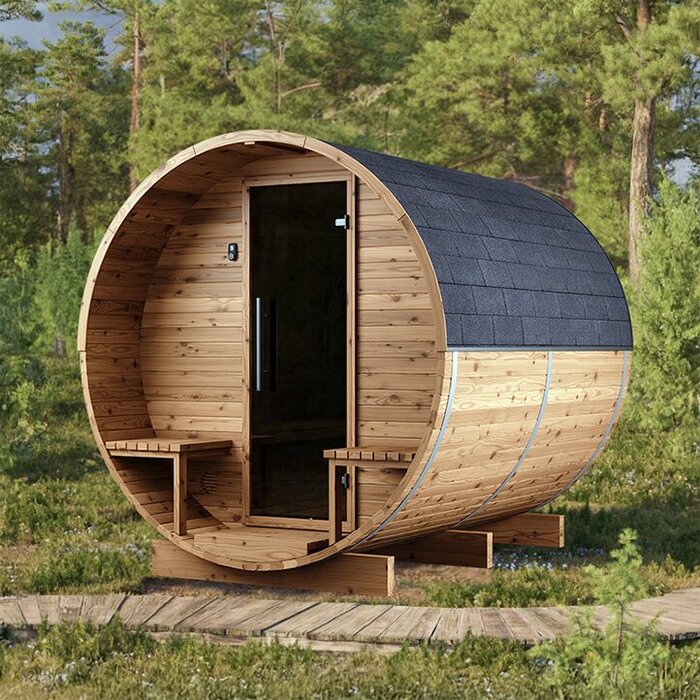
Thermowood refers to thermally modified timber, but the word in a sauna name or an exterior-material description does not answer what the benches are made from. Exterior boards, structural members, internal lining, seating slats and backrests are separate components. A treatment selected for timber exposed outdoors or used in the structure should not be assumed to be the finish or species of an interior contact surface. Even if the same broad timber family appears in more than one part, the component, grade and treatment still need to be identified separately. Do not treat one material label as a full bill of materials.
The distinction also applies to Sauna N-250, listed as a Thermowood Barrel Sauna. That product name does not specify the bench or backrest timber. In the material description, distinguish the exterior cladding or shell from the interior lining, seat boards, backrest and supporting frame. In particular, check which components a reference to thermal modification actually covers. This avoids confusing exterior structural Thermowood treatment with the specification for sauna bench wood. If a description gives only one broad material label, treat the unlisted components as unknown rather than extending the claim to them.
Buyer checklist 5
Ask for a model-specific material schedule
To compare products fairly, ask for a component-by-component material schedule for the exact model and configuration. It should identify which material belongs to the bench, backrest, lining and supports; provide a clear common or trade name, and a botanical name if the trade wording is ambiguous; and state whether the contact surface is bare or treated. If the supplier mentions a grade, ask which components it covers. A general phrase such as natural wood or premium timber is not enough to compare two benches, since it leaves the species, selection and finish unresolved. Keep these details together instead of relying on recollection from a conversation.
Ask for the manufacturer’s drawing and care manual that match the model and version being considered, then check that the listed parts correspond to what is included rather than an optional upgrade or illustration. The documents should tell you how the benches are cleaned and whether any finish needs specific upkeep; product names and photographs may not answer those questions. If information is unavailable, record the timber or finish as unconfirmed. That is more useful than treating a plausible guess based on colour, model name or another sauna as fact. Material names should be consistent across the quote, manual and configuration being supplied.
How a sample can help with the final choice
A sample can help you compare colour, grain, aroma and smoothness, provided it is identified as the same species and finish proposed for the sauna. Examine the face and edges under ordinary light and note whether knots, colour variation or a noticeable scent are acceptable to you. Do not use a room-temperature sample as a test of how a full bench will feel in a heated room; it is for judging appearance and surface character, not predicting operating conditions. If you view a display, ask whether it uses the same material and finish as the model you plan to buy. A sample of a different timber can mislead.
Use the sample to decide which visual and sensory qualities matter to you. You may prefer a particular colour or aroma, or place more value on a coordinated appearance across the bench, backrest and lining. Compare those preferences with the documented materials rather than assuming that every part will match the sample exactly. Then consider the upkeep described in the manual, including any guidance on repairing or replacing contact boards. There is no universal best species; the useful choice is one whose appearance, surface finish and maintenance requirements suit your priorities.
Frequently asked questions
Which timber is best for sauna benches?
There is no single best choice for everyone. Compare the named species and grade, the smoothness and shape of the contact surface, and the care instructions for its finish. A sample can help with colour, grain and aroma, but it does not replace a clear material specification.
Does a Thermowood sauna necessarily have Thermowood benches?
No. A Thermowood description may relate to the model name or exterior timber; it does not identify the wood or finish used on the bench and backrest. Check each interior component separately in the model-specific documentation.
Should sauna benches be oiled?
Only if the manufacturer’s instructions permit it for the particular bench timber and finish. Do not assume that a furniture oil or another household coating is suitable for a sauna contact surface. Check the care manual before applying any product.
Does the backrest need to match the bench?
Not necessarily. The bench and backrest can be specified separately, and a similar appearance does not prove they use the same species or finish. If a matching look matters to you, ask which materials are used on both components.
What should I ask for if a listing does not name the interior timber?
Request a material schedule for the exact model and configuration, identifying the bench, backrest, lining and supports separately. Ask for the applicable finish and care instructions too. Until those details are confirmed, treat the material as unknown rather than inferring it from a photograph or product name.
An exterior timber label is not enough to choose sauna benches and backrests. Compare the documented species and grade, the condition and finish of the contact surfaces, and the care required for those components. A matching sample can help you judge appearance and texture, while the specification keeps exterior Thermowood separate from interior seating materials. Together, these details give you a practical basis for choosing both the look you prefer and the upkeep you are prepared to follow.
