
What an Unheated Greenhouse Can Protect During a Late Frost
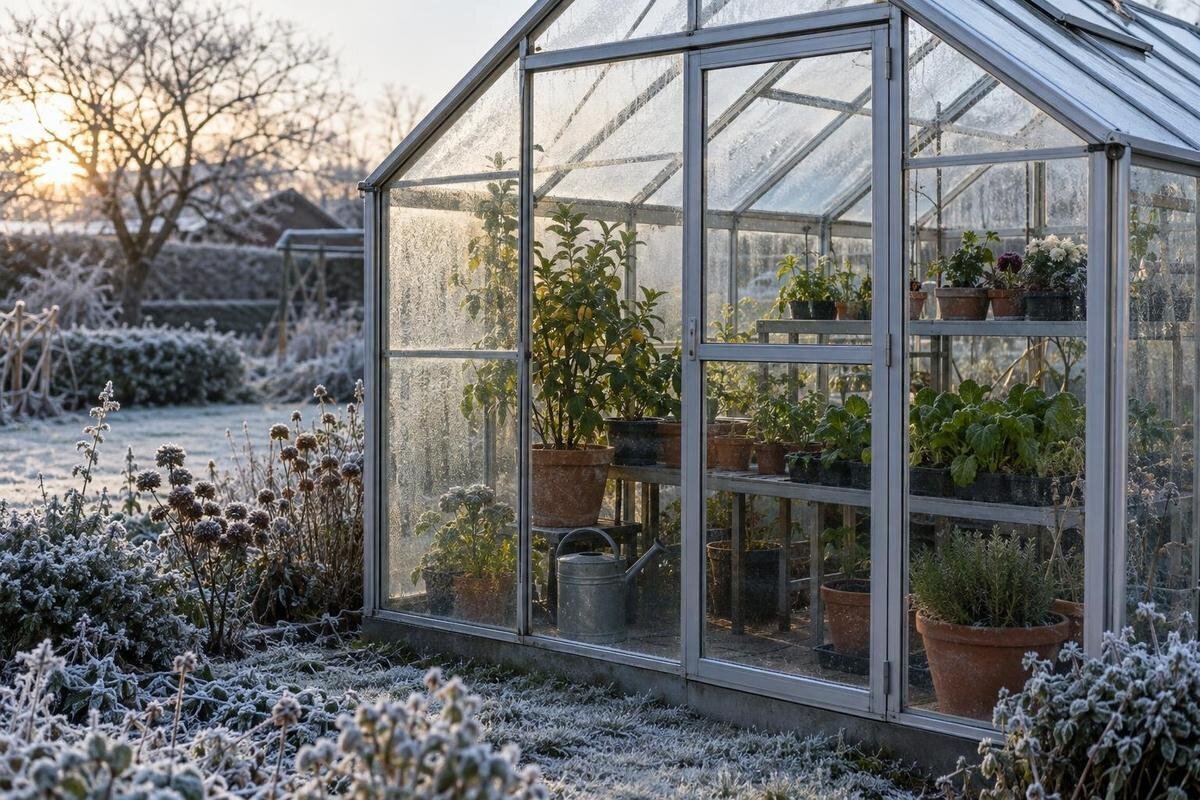
Late frost care
Late frost can catch plants that were started early, moved outside or left in an unheated greenhouse after mild days. The enclosed space may reduce wind and rain exposure, but without a heat source its air can still cool to freezing. Protect the most vulnerable plants first, use temporary covers as an extra layer and treat the forecast as a warning to check conditions, not proof of the temperature inside. The most useful guide is the lowest temperature recorded near the plants, considered alongside their species, growth stage and previous exposure.

How much frost protection does an unheated greenhouse offer?
An unheated greenhouse provides shelter from wind and rain, but it has no source of heat to hold the air at a chosen temperature. Daytime sun may warm the air, floor, pots and benches, and the structure may cool more slowly after sunset; how much this helps depends on the glazing, gaps, ventilation, site and weather. That stored warmth can run out well before dawn. A mild afternoon reading—or a quick check before bed—does not reveal the overnight minimum, so a frost forecast still calls for a plan.
Conditions can differ between the centre, perimeter, door, vents, benches and floor. A thermometer on a shelf may not describe conditions around a leaf beside the glazing, and plant tissue can cool differently from nearby air. This means the space that accommodates your pots is not necessarily equally protective throughout. When comparing Limited Edition Aluminium Greenhouses, consider the exact specification alongside the positions available for plants and temperature monitoring. A product range name does not establish overnight performance at your site. Once the greenhouse is in use, base frost decisions on readings from the growing area rather than assuming every corner behaves alike. A single mild night is not proof that plants will be safe in the coldest conditions.
Which plants need protection first?
Sort plants by cold tolerance, not by how full the greenhouse looks. Tender ornamentals, tropical or subtropical plants, warm-season seedlings, rooted cuttings and recently transplanted plants usually merit early attention. New growth, flowers and fruit can be more exposed than established foliage, but the species and cultivar matter: check the plant label or a trusted growing guide rather than applying one temperature to an entire group. Plants acclimatised to cooler conditions may be less vulnerable than newly moved stock, though hardier does not mean immune. A plant may survive a frost yet still lose tender tips or flowers; a late frost can also damage blossoms or young fruit.
Make a simple list of plants to move, cover or leave in place. Put irreplaceable or high-value plants, tiny seedlings and tender container plants at the top; reserve covers for plants that cannot be moved and attend to more cold-tolerant, established plants last. For mixed crops, a useful layout leaves room to group sensitive pots without blocking everyday access. If you are considering the T-Model Orangery Greenhouse, check the precise variant and usable layout before planning those groups. The model name alone gives no temperature range. Where plant labels state a minimum temperature, compare it with your lowest readings at the intended growing position, rather than treating one reading as representative of the whole greenhouse.
How should you use a forecast and a greenhouse thermometer?
Use the forecast to decide whether to act, not to predict greenhouse conditions exactly. Check the lowest overnight figure and the timing of the coldest hours for your locality, and note any frost warning. A forecast station can be warmer or colder than a small garden site, and a forecast above freezing is not a measurement beside a leaf. Clear, calm conditions can increase radiative cooling at exposed surfaces; wind, cloud and nearby structures alter the result. Treat the forecast as an early warning, then compare it with what the greenhouse actually records. A mild afternoon or a brief spell of cloud does not guarantee a safe night.
Place a minimum–maximum thermometer or logger near vulnerable plants, roughly at leaf height, out of direct sun and not touching glass, frame, soil or a warmed appliance. If one position cannot represent different benches, note where the sensor sits and, if practical, compare locations on separate cold nights. Record the date, forecast, minimum, sensor position, door and vent positions, and whether plants were covered. If your thermometer has a resettable minimum display, note and reset it at a consistent time so readings from different nights are comparable. Humidity readings help explain condensation and damp conditions, but relative humidity alone cannot confirm that leaves stayed above freezing. When planning monitoring positions in a Pyramid Greenhouse, check the selected variant’s vent positions and layout; its shape and name alone cannot tell you where conditions will be coldest.
How to use temporary covers for a late frost
A temporary cover can reduce direct exposure around a plant, but it does not add heat. Horticultural fleece or another material intended for plant protection can be draped over a supported frame inside the greenhouse so it does not press on buds or leaves. Fit it before the coldest part of the night, secure it so it cannot slip, and make sure it can be removed or opened readily in the morning. Follow the material’s instructions, especially for support and whether it is meant to stay in place during daylight. A bulky or soaked cover may weigh on delicate stems, so use a frame to carry it. A cover may help through a brief cold spell; it is no guarantee against a prolonged or severe freeze.
Do not wrap wet foliage tightly in impermeable plastic or let plastic lie against leaves: contact and trapped moisture may cause damage, and the space beneath a sheet left in the sun can warm quickly. If using plastic as an outer shield, support it clear of foliage and remove it when the cold risk has passed; do not seal a plant for an extended period. Keep covers from blocking a door or vent that needs to be operated. Store fleece somewhere easy to reach. If built-in storage is part of your buying criteria, compare the arrangement of the Aluminium Greenhouses with Storage with the growing space and clear access you need for fitting and removing covers.

Why pots and seed trays need extra attention
A plant in a pot may be more exposed than a similar plant rooted in the ground: the root ball is surrounded by the container and can cool from several sides. Small pots and shallow seed trays contain little compost to buffer temperature swings, and a bench near glazing or a door may differ from a more sheltered spot. A greenhouse can protect containers from wind and rain, but the root zone can still freeze. If possible, move the most tender pots to a reliably frost-free place for the night; if none is available, group them in the most sheltered area and add a supported cover.
Keep drainage holes clear when wrapping a pot, and make sure a cover around the container does not hold water at its base. Check pots again the following morning before watering, because cold, wet compost can dry more slowly; do not respond to leaf damage by pouring on extra water. When buying a greenhouse for container growing, distinguish structural details from protection for the plants. For example, the Bloomcabin Prestige Greenhouse is listed with a metal foundation, but that feature does not establish whether pots inside will stay above freezing. Assess their position and the readings near them alongside each plant’s cold tolerance. A foundation description cannot substitute for checking conditions around the containers themselves.
When to uncover plants and ventilate
Plan for the morning as well as the coldest hours. Sun can warm a closed greenhouse quickly, and an inner fleece cover left over all day may hold moisture or raise the temperature around plants more than intended. Check actual conditions after sunrise; remove, fold back or loosen temporary covers when the frost risk has passed and ventilate in line with the crop’s needs. A cover that helped overnight should not be a reason to leave the house shut in bright, mild weather. Recheck before evening, since protection may be needed again if another cold night is forecast.
Vents help control daytime heat and moisture; they do not add warmth. Limiting outside air exchange at night may conserve some warmth already in the structure, but cannot guarantee a frost-free interior. Leave automatic openers and vents adjusted according to their instructions rather than forcing or disabling them. The Spacious Greenhouse has listed area options from 47 to 70 m². When comparing those options, check the vent arrangement for the selected configuration as well as the floor area. Plan how you will reach the vents and remove temporary covers from different crop groups in the morning, and check temperatures where those crops will sit rather than relying on a reading from one end of the greenhouse.
Seedlings, cuttings and recent transplants
Seed trays, cuttings and newly planted seedlings need their own plan because a root system that has barely established has little margin if compost or foliage chills. Keep a tray in a more reliably sheltered place if the crop can tolerate the light and temperature there; otherwise, group trays, cover them on a frame and monitor at tray height. Delay sowing or transplanting tender crops if a frost is forecast and waiting is practical. Once the risk passes, acclimatise plants gradually rather than transferring them straight from a warm room to exposed conditions.
Bench capacity matters: trays need light, airflow and access, and a cover must not make it difficult to open a vent or inspect plants. While comparing a greenhouse for propagation, use the exact variant and its layout—not catalogue area alone—to see whether trays, watering access and cover supports fit. The Aluminium Classic Greenhouse range is listed in sizes from 3.77 m² to 28.08 m², but those figures do not tell you how much usable bench space your arrangement will provide. Label moved trays so you can keep track of the crop and sowing date. If the existing structure is full, moving only the most vulnerable trays may be more practical than crowding every plant together.
How to assess frost damage after a cold night
Do not judge a plant while leaves are still frozen or just after a cold night. Let the tissues thaw naturally, then watch over the following days for limp, water-soaked, translucent or darkened patches; symptoms vary by species and may become clearer only after the initial thaw. Avoid handling brittle leaves or cutting stems immediately, because visible foliage may be damaged while lower stems, buds, the crown or roots remain alive. If a whole plant looks affected, check for firm tissue or new growth before deciding it is lost.
Photograph each affected plant in place, then note its species, location, lowest logged temperature, cover used, and door or vent state. Compare it with a less exposed plant of the same type if one is available; a photograph and temperature log help identify a pattern but cannot prove frost is the only cause. Taking photos from the same angle on later days makes changes easier to see than relying on memory. Leave pruning until the boundary between living and damaged tissue is clearer, then remove only material that is evidently dead with clean tools. Avoid trying to reverse damage with heavy feeding or extra watering; observe the plant and give it care suited to its needs.

When to move plants out of an unheated greenhouse
Move a plant rather than relying on an unheated greenhouse when the forecast approaches or falls below the tolerance for that species, or when earlier readings show that the structure does not protect it enough. A genuinely frost-free indoor or sheltered space can be a better temporary overnight option for portable pots, provided the plant can tolerate that location. Do not assume an unheated shed is frost-free: use readings there too. When the forecast is uncertain, moving the most vulnerable plants before bedtime is preferable to waiting to see frost on the leaves. For plants rooted in greenhouse beds, moving is not an option; use a supported cover where possible and accept that it cannot guarantee survival.
A wall can block some wind, but it should not be treated as a heater; an unheated lean-to can still cool overnight. If you are considering the aluminium lean-to Wall Greenhouse, assess its position beside the building without assuming that the wall will keep tender plants frost-free. Once it is in use, place the logger where the most vulnerable leaves actually sit and compare readings over cold nights before deciding which plants can stay. The apparent shelter of a building is only one factor, especially for tender pots. Keep an alternative overnight location in your plan for plants whose minimum temperature requirements cannot reliably be met there.
A repeatable routine for the next cold night
Make the response simple enough to use on a busy evening. Check the local overnight forecast early; identify the tender plants, trays and small pots; move portable plants to their chosen shelter; fit covers so they do not touch foliage or block access; and check that doors and vents are in their intended night position. Leave the thermometer in place and record its minimum in the morning. If a vent has an automatic opener, follow the equipment manual and do not force the mechanism because the night is cold. Keeping covers ready before a warning appears makes it easier to protect plants without blocking a vent or overlooking a pot.
During daylight, check whether covers need removing and whether the greenhouse needs ventilation; before the next night, decide again from the updated forecast and your logged readings. If the same corner repeatedly records the lowest temperatures or the same plants are injured, change their position or protection plan instead of repeating a routine that failed. Over several cold spells, plant names, photographs and temperature readings—along with humidity records for moisture context—build a useful picture of which plants your particular unheated greenhouse can protect and which need a more reliably frost-free location.
Frequently asked questions
Will an unheated greenhouse stop frost?
No. It may shelter plants from wind and slow overnight cooling, but the air and plant surfaces inside can still reach freezing. A daytime reading or an outdoor forecast cannot tell you the minimum beside a particular plant. Check a thermometer near the foliage and prioritise plants that are less tolerant of cold.
Should I close every vent overnight?
There is no universal setting. Limiting outside air exchange may conserve some warmth already in the greenhouse, but it does not create heat. Follow the vent or automatic-opener instructions, check the temperature after sunrise and ventilate as the space warms rather than leaving it shut all day.
Can I use plastic sheeting over plants?
Use it only with care: support it so it cannot touch leaves, avoid sealing a plant in it for an extended period, and remove it when the cold risk has passed. Horticultural fleece is often simpler as an inner cover. Follow the material’s instructions and keep vents and access clear.
Are pots safer inside a greenhouse than outside?
They are sheltered from wind and rain, but the root ball is exposed around the sides and can still become very cold. Small pots and trays deserve early attention. Move them to a reliably frost-free place if possible, or group and cover them as a temporary measure.
When should I prune frost-damaged growth?
Wait until the plant has thawed and the extent of the damage is clearer. Leaves may look badly affected while stems, buds or the crown remain alive. Photograph the plant and note the lowest reading, then remove only tissue that is clearly dead after observing how it responds.
An unheated greenhouse can reduce exposure and may delay cooling, but it cannot promise frost-free conditions. Prioritise tender growth and exposed pots, add a supported temporary cover where useful, and use the lowest reading near the crop to judge what actually happens. After each cold night, record the result and adjust your plan. The right choice depends on the plant’s tolerance and the coldest conditions measured in your own growing space.
