
Misshapen Greenhouse Strawberries: Pollination or Stress?
Greenhouse crop troubleshooting
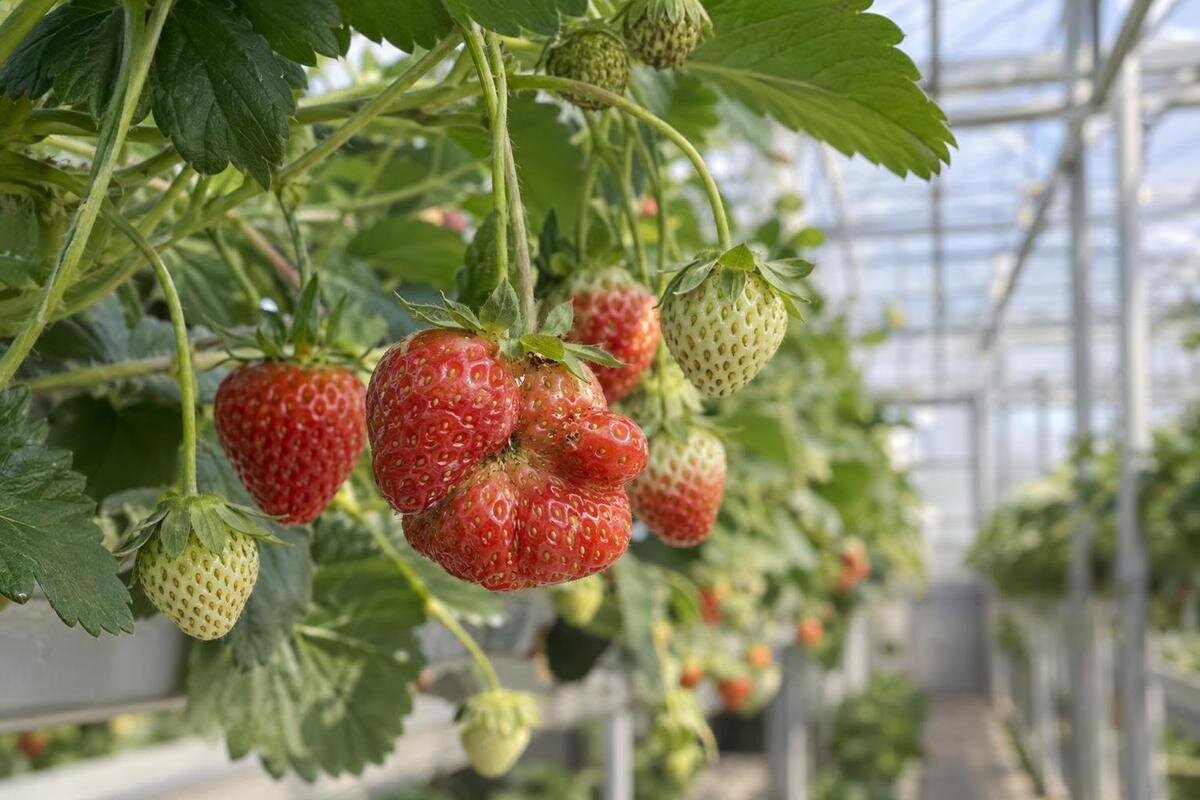
Greenhouse strawberries can develop unevenly for several reasons, and the ripe fruit alone rarely identifies which one. Incomplete pollination is a common possibility because each flower contains many separate reproductive structures, but cold or heat around flowering, uneven watering, pest injury and variety differences can produce overlapping symptoms. The useful evidence lies in the flower, the pattern across plants and the conditions during flowering—not in a lopsided berry by itself.

Why strawberry shape is decided early
When a strawberry flower is pollinated, pollen must reach the stigmas of many tiny pistils arranged across its centre. Each fertilised ovule develops into an achene—the small, seed-like fruit visible on the surface—while the flower’s receptacle enlarges into the fleshy part we eat. If some ovules are not fertilised, or their tissues are damaged, the nearby receptacle may grow less. A patch can remain shallow or narrow while the rest of the fruit expands, leaving a lopsided outline, a pinched tip or an uneven shoulder. The visible strawberry is therefore a record of many small events, not one single fruit-forming point.
Fruit shape is largely determined during flowering and the first stages of fruit set. Once the receptacle has expanded unevenly, later watering or fertiliser cannot fill a section that never developed. Conditions after fruit set still affect final size, firmness and ripening, so a berry can be both misshapen and undersized for more than one reason. That timing is why today’s weather is not necessarily relevant: use the dates when the flower was open and the young fruit began to grow. It also prevents a common mistake—trying to correct a ripe berry instead of investigating the flowering period that produced it.
Patterns that can point to incomplete pollination
Incomplete pollination becomes more plausible when fruit repeatedly has localised flat or narrow areas, sometimes alongside a patch of small, pale or poorly developed achenes. Different berries can vary in how much tissue is affected because each flower contains many pistils; fruit on the same truss may therefore differ in shape. One side being smaller can fit this pattern, but it cannot prove it. Cold or other damage to part of a flower can also limit growth in particular areas, so note what the flowers looked like as well as the ripe fruit.
Compare berries of the same variety, from a similar flowering period and at the same stage of development. Describe the shape precisely: is the whole berry small, or is one area narrow while the rest has filled out? Note whether the achenes look different in that area, and photograph the affected side rather than recording only the overall outline. Varieties differ in their usual shape, so a pointed or ridged fruit is not necessarily a new problem. These observations make comparisons more useful without treating any single feature as a diagnosis.
Photograph open flowers and young fruit
Photograph the flower before relying on ripe fruit. Take a clear image of a fully open flower from above, then a closer image that shows its centre. Label each with the date, variety, plant and greenhouse position. If possible, follow the same marked flowers as they become small green fruit and later ripen. Photograph an unaffected flower from a nearby plant for comparison, rather than relying on a general picture of the bed. Include the petals and centre in the frame, since they may show injury or pest activity. Keep the labels consistent so that you can match each later fruit photograph to its flower. A phone photograph is a useful record, but it cannot show every detail needed to identify the cause.
Look for browning or blackening in the centre of a flower that was open around a cold spell; this can be consistent with cold injury, especially if flowers in one exposed area were affected more than others. Also note damaged petals, missing parts or insects, while allowing for natural changes as flowers age. Record each plant’s position on a simple greenhouse sketch, including flowers you cannot easily reach or photograph. This can reveal practical access needs when planning benches. If you are comparing the T-Model Orangery Greenhouse, listed in sizes from 16.52 to 30 m², mark planting positions and access routes on the plan for your chosen size. Consider whether you could photograph flowers at the back of each bed, rather than using floor area alone to decide how many plants to accommodate.
How pollination works under glass
Most common garden strawberry flowers are self-fertile: pollen from the same flower can fertilise it, so a second variety is not usually required. Self-fertile does not mean that every stigma is automatically pollinated. Pollen still has to move from the anthers to many receptive stigmas across the flower. Insects can help by visiting and vibrating or brushing against flowers. Air movement may also move some pollen, but a greenhouse with air movement is not automatically providing complete pollen transfer.
Watch flowers while they are open and note whether insects actually touch them. Look more than once and in different parts of the greenhouse; one quiet observation period does not show that pollinators are absent all day. Bees outside are not evidence that flowers inside are being visited. To test pollen transfer, gently brush the centre of a few open, dry flowers with a clean, soft brush, mark them, and leave similar flowers untreated. This also shows how much room you need to work without disturbing nearby blooms. When considering the Pyramid Greenhouse, listed in sizes from 5.53 to 18.9 m², include that working space in the proposed planting arrangement. Check where you would stand and which flowers you could reach; a model name or floor area does not establish how well the crop would be pollinated.

Check temperature, moisture and plant condition
Cold and heat can both affect flowers, though they leave different clues. Cold or frost may injure the centre of an open flower; high temperatures around flowering can interfere with pollen or stigma function and raise the plant’s water demand. Measure conditions near the flowers rather than relying only on an outdoor forecast, and record both daytime highs and overnight lows around the flowering dates. Temperatures can vary between positions and times of day, so a single reading taken later may miss the relevant conditions. There is no one reading that identifies the cause for every variety and setup.
Check moisture where the roots are growing, not just at the surface. Repeated drying or waterlogging can stress roots and affect flower and fruit development; wilting or generally weak growth may support that possibility, although neither sign is specific. Nutrient imbalances can also affect development, but a misshapen berry alone does not identify a deficiency. Avoid adding trace nutrients or extra fertiliser without better evidence. When planning the workspace, distinguish the planting area from equipment storage so that routine root-zone checks remain practical. The Aluminium Greenhouses with Storage – Limited Edition listing identifies a model with built-in storage and sizes from 5.52 to 28.08 m². Compare the arrangement of the particular size you are considering, including where equipment would be kept and how you would reach the pots or beds. Overall area alone does not show how those uses would fit together.
Check for pest injury before changing feed
Inspect the centre of open flowers, the undersides of petals and the surfaces of young fruit for insects or feeding marks. Some plant bugs, including tarnished plant bugs where they occur, can damage developing fruit and leave it uneven or catfaced. The insects may be small, and their activity can be brief, so check more than one flower and take close photographs of anything unusual. A single insect, mark or misshapen berry does not establish that a pest is responsible; look for a repeated association between the damage and the fruit affected.
Also note whether the flower or fruit has other visible injury. A darkened flower centre after a cold spell, chewed petals or soft, mouldy patches are different clues and may indicate more than one issue. Do not apply an insecticide simply because fruit is misshapen: identify the pest first and use any treatment only as directed for that pest and crop. If damage seems confined to one area, check whether you have inspected the less accessible plants as closely as those beside the path. For a future bench-layout comparison, the Limited Edition Aluminium Greenhouses listing gives sizes from 3.77 to 28.08 m². Sketch the intended rows within the size being considered and allow for inspecting both sides of the plants, including flowers at the back of a bed. Base the inspection route on the planting arrangement, not just the empty footprint.
Compare varieties and greenhouse positions
Compare the affected fruit with other fruit from the same variety and flowering period before deciding that its shape is abnormal. Some varieties naturally produce more pointed, ridged or irregular fruit than others. If one variety is affected while nearby plants of another variety are not, that difference is worth recording; it still does not tell you whether the cause is inherited shape, plant condition or a difference in flowering. If several varieties show similar changes at the same time, review shared conditions as well as pollinator activity.
Map where affected flowers and berries occur: near a door or vent, along an edge, in a shaded area or in the centre. Conditions can differ across a greenhouse, so a cluster in one zone may point to a local exposure or management difference rather than a whole-crop problem. In a large growing area, compare zones instead of averaging them together. The Spacious Greenhouse is listed in sizes from 47 to 70 m². If you are considering a structure of this size, divide the proposed planting plan into clearly named areas that you could use in crop notes. Keep observations separate for each area and leave room to reach it. A useful plan should let you identify where each affected group grew, rather than recording all the plants as one undifferentiated crop.
Keep a record from bloom to harvest
A short record is more useful than trying to remember what happened weeks later. Note the date flowers opened, their variety and position, whether insects visited them, and when the fruit first appeared uneven. Add any unusual temperature readings, watering interruptions, visible pest signs or changes in plant condition. Mark a manageable group of flowers so you can follow the same cohort through fruit development. Include healthy flowers from a nearby position for comparison. The aim is not to collect every possible measurement, but to link the eventual fruit shape to the conditions that occurred while those particular flowers were open.
Compare records from affected and unaffected groups, and avoid combining different varieties or flowering periods into one average. If an environmental event coincided with several affected flowers, that is useful evidence; if only one plant differs, investigate its immediate conditions as well. Keep the same position labels throughout the record, even if pots or benches are moved, and note the date of any move. If you are also comparing greenhouse sizes, keep those plans separate from the current crop map. The Aluminium Greenhouses listing covers sizes from 3.77 to 28.08 m². Use a separate sketch for each proposed arrangement and retain the original record of where the affected plants stood. This keeps observations distinct from purchasing plans and lets you compare the intended layout without losing the history of the crop.

Test one change during the next flowering period
Choose an adjustment that matches the evidence rather than changing several things at once. If limited pollen transfer seems likely, compare a small marked group of gently hand-pollinated flowers with untreated flowers. If the record points to repeated drying, aim for more consistent moisture around the roots rather than flooding the plants. If heat or cold coincided with damaged blooms, review how the existing greenhouse is managed during those conditions. Keep other care as steady as practical so the next flowering group gives you a clearer comparison.
Judge the fruit produced by flowers that experienced the change, not berries that were already developing beforehand. Allow that group to reach the same stage as the comparison fruit and note any difference in shape. One improved cluster supports the idea that the change helped, but it may not prove a single cause; weather and pollinator activity can also vary. Apply the same care when interpreting results alongside a proposed move to a wall-adjacent structure. The Wall Greenhouse listing gives sizes from 3.69 to 14.34 m². Compare where plants, the access route and observation points would sit in the proposed arrangement. Keep the results of the current trial attached to the flowers and conditions actually observed, rather than assuming that a different position would reproduce an improvement.
When to seek a closer crop assessment
Ask a horticultural adviser or other qualified local growing specialist for help if the problem repeats across flowering periods, affects many plants, or appears alongside persistent plant damage or signs of pests. Share photographs of open flowers, young fruit and ripe berries, plus the variety names, position sketch and notes on temperature and watering. That context is more informative than sending a single misshapen strawberry. If a pest or disease is suspected, clear photographs of the affected plant parts can help with identification before any treatment is considered.
A repeated pattern across the crop may justify a closer look at shared environmental or growing conditions, while a problem confined to a few plants may have a more local explanation. Neither pattern alone establishes the cause. Avoid treating fruit shape as proof of a nutrient problem or as a reason to replace a greenhouse. If a separate structural comparison is already under way, the Bloomcabin Prestige Greenhouse listing identifies a model with a metal foundation and sizes from 3.77 to 28.08 m². Assess those purchasing details against your requirements for planting space and access, separately from the crop assessment. Keep two distinct questions in view: what the flower and fruit records suggest about the current problem, and whether the proposed structure accommodates the layout you want.
Frequently asked questions
Does a lopsided strawberry prove that pollination was incomplete?
No. Unevenly developed areas can fit incomplete pollination, especially when achenes in that area also look small or poorly developed. Cold injury, pest feeding and natural differences between varieties can produce similar fruit. Compare the flowers, plant positions and conditions during flowering before settling on a cause.
Do greenhouse strawberries need a second variety for pollination?
Most common garden strawberries have self-fertile flowers, so a second variety is not usually needed. Pollen still has to move from the anthers to the many stigmas in each flower, however. Insects can help with that transfer, and limited activity inside a greenhouse may be worth investigating.
Can I hand-pollinate strawberry flowers?
You can test the idea on a small, marked group of fully open, dry flowers. Lightly brush across the flower centre with a clean, soft brush, or gently vibrate the flower, then compare those fruits with similar untreated ones. Avoid rough handling, and remember that this trial will not address temperature, moisture or pest problems.
What does a black centre on a strawberry flower mean?
Cold or frost injury can damage the centre of an open flower, and a darkened centre after a cold spell is a useful clue. It is not proof on its own. Compare the timing of the cold weather with the flowers affected, and check whether damage is more common in particular greenhouse positions.
Are misshapen strawberries safe to eat?
An unusual shape alone does not mean a strawberry is spoiled. Check each fruit for rot, mould or other visible deterioration, and discard fruit that is mouldy or decaying. Shape can help with diagnosing how a fruit developed, but it is not a test of freshness.
A misshapen strawberry is a clue about how a flower and young fruit developed, not a verdict on one cause. Compare the affected berry with its flower photographs, other fruit from the same variety and the greenhouse position where it grew. When you test a likely adjustment, follow a comparable group of flowers through to harvest. A consistent change is useful evidence; mixed results mean the diagnosis remains open. Keep natural variety differences in view, and do not let one unusual berry prompt a correction that the wider crop does not support.
