
Can an Outdoor Sauna Move with You?
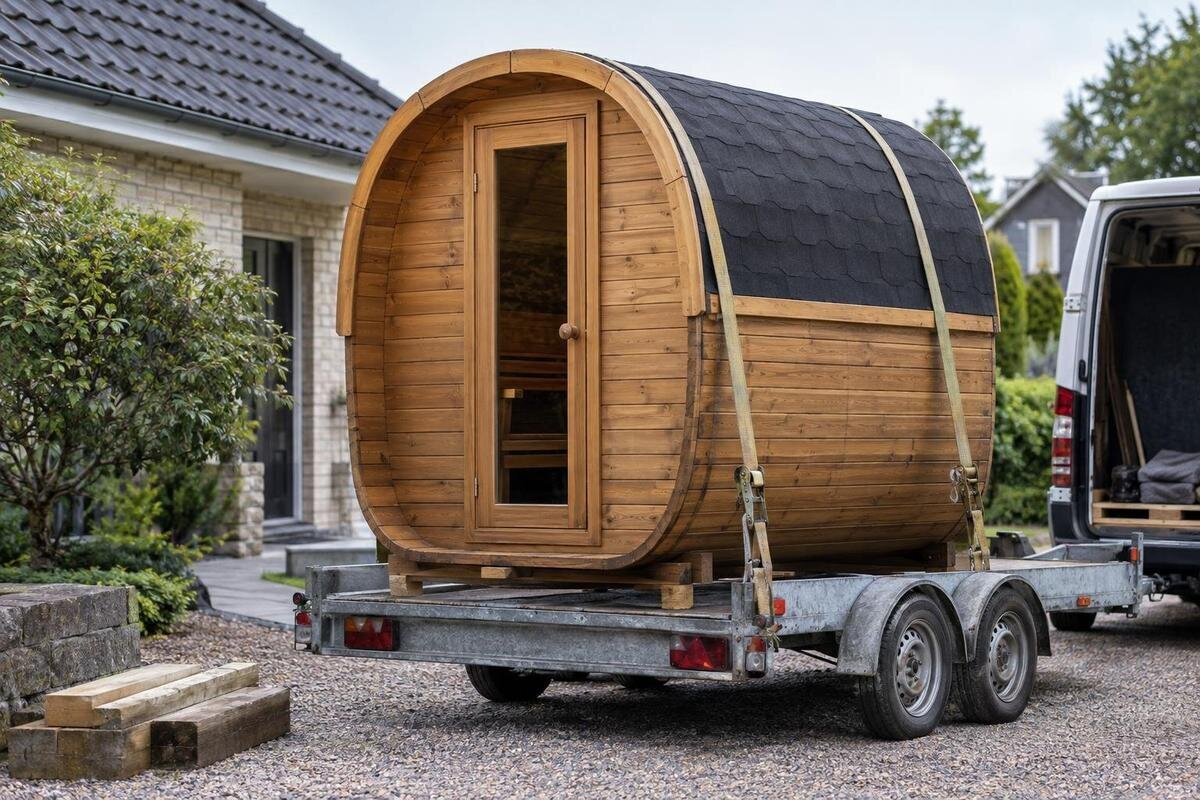
Outdoor sauna relocation
Moving an outdoor sauna to a new home may be possible, but its appearance or location alone cannot tell you whether the job is supported. The answer depends on the exact model, the manufacturer’s relocation and reassembly instructions, the unit’s present condition, access for lifting and transport, and readiness of the destination site. Treat it as a structure that must be removed and installed again; confirm that the maker permits the proposed method before booking a contractor.

Can your outdoor sauna be relocated?
An outdoor sauna is not automatically portable. ‘Outdoor’ describes its intended setting; it does not confirm that the unit can be lifted in one piece or dismantled and rebuilt. The manufacturer may approve a particular relocation method, require a specialist to take it apart and reassemble it, or state that relocation is unsupported. A structure that arrived in parts or stands separately from the house is not, on that evidence alone, designed for a second installation. Handling can also stress joints differently from normal use, so suitability depends on the exact model and its installed configuration. A successful first delivery does not prove that it can be moved again.
Treat moving it as removal followed by reinstallation. The job may involve disconnecting services, protecting loose parts, transporting the shell or individual components, and preparing a suitable base at the new home. A carrier’s ability to load the sauna does not establish that it can be reassembled or used at the destination. Confirm the manufacturer’s position first, then ask the relevant mover and installer to assess the actual unit, route and sites. If any part of that chain remains unresolved, pause before paying for lifting or dismantling. A short journey raises the same handling and setup questions as a longer one.
Identify the exact model and configuration
Find the model or serial plate if present, the invoice or order confirmation, the manual, assembly drawings and any instructions from the seller or installer. Photograph the sauna as it stands, including all sides, the interior, the heater area and any alterations. Record when it was installed, who assembled it, and which components have been repaired or replaced. Check whether the paperwork describes the configuration you can see today. If a plate is missing, report that rather than guessing from appearance. These details help the manufacturer and mover assess the actual unit, not just a broad product category.
If your documents identify the Thermowood Barrel Sauna N-250, use that exact name in your enquiry. A catalogue entry can help cross-check a model name, but it does not establish what is installed at your home, its condition or whether it may be relocated. Ask for the model-specific manual and drawings that match the installed configuration, including any changes you have recorded. Do not use another model’s paperwork because its name or appearance seems close. If the manufacturer needs a serial number or photographs to identify the unit, provide those as well. Keep the information together so that everyone quoting for the move works from the same description. Where an invoice, plate and manual appear to disagree, flag the discrepancy rather than choosing whichever document seems most convenient.
Get the manufacturer’s relocation instructions
Ask the manufacturer whether relocation is permitted for the exact model and setup, and whether the sauna must travel assembled or may be dismantled. If dismantling is allowed, ask which parts can be removed, whether particular fasteners, seals, supports or fittings have to be replaced, and who is qualified to do the work. Confirm whether a second installation needs a specific inspection and what record the installer should provide. A general assembly guide may explain the first installation without covering removal, so request an answer that addresses the proposed move and method.
Describe the proposed method rather than asking only whether the sauna is movable. For an enquiry about the LC-260 barrel sauna, for example, state whether you are considering transport in one piece or dismantling followed by reassembly, and include photographs and details of any changes. Ask the manufacturer to address that proposal specifically. Keep the reply with the manual and pass it to the dismantler, carrier and reinstaller. Each contractor should understand which work the reply covers and whether any questions remain unanswered. If no clear method is confirmed, treat that as an unresolved issue, not permission to improvise. If the proposed method changes after an access survey or quotation, return to the manufacturer with the revised plan rather than relying on an answer given for a different approach.
Check the sauna’s condition before moving it
Before booking, make a dated record of the sauna’s current condition. Photograph each side, the interior, joints, floor or supports, roof covering, doors and any glazing. Note leaks, staining, loose or cracked components, corrosion, swelling, repaired areas, or doors and windows that bind where fitted. Describe what you can see rather than diagnosing it: photographs can show visible damage but cannot establish whether a hidden connection is sound. Record when a problem appeared and whether repairs have been made. Do not force a stuck fitting or remove panels simply to improve the inspection.
Send the condition records to the manufacturer or a competent installer and ask whether the sauna is suitable for the proposed lifting and reassembly, or whether repairs or an on-site assessment are needed first. Handling may place different stresses on weak or altered connections, so a clean exterior is not a complete condition assessment. For a Thermowood HCF-300 sauna, keep the assessment tied to your individual unit and its repair history. Include known leaks and repairs in the mover’s information, and get any required remedial work confirmed before scheduling transport. Keep condition photographs separate from catalogue images: the people assessing the move need to see the sauna they will actually handle. Retain the dated record for comparison after unloading, so any newly noticed damage can be described against a clear starting point.

Agree the lifting and transport method
The approved method should determine whether the sauna travels assembled, in sections or as separate components. Ask the manufacturer for the relevant dimensions and weights, approved lifting or support points if specified, and any handling or packing guidance. Do not estimate these from a photograph or assume that a wall, roof or base is a lifting point. Give the manual, drawings, current photographs and alteration history to a mover experienced with similar structures. The mover should assess the specific unit and proposed equipment before collection, rather than deciding how to handle it when the vehicle arrives. Resolve any gap in the manufacturer’s handling guidance before booking.
Request a written scope showing who is responsible for each stage: approved dismantling, packing, lifting, loading, protection in transit, unloading, reassembly and any inspection. For a quotation concerning the LCF-300 barrel sauna model, give the mover the matching manufacturer documents alongside the condition record. Confirm whether lifting equipment or a particular access arrangement is included or assumed, and who provides it. Ask how a delay or temporary storage would be handled, and what cover applies while the sauna is with each contractor. List loose parts and accessories so their handling is accounted for. Check where one contractor’s work ends and another’s begins, especially if the transport quote excludes reassembly. A quote for collection and delivery should not be mistaken for a complete removal and reinstallation service.
Check access at both properties
Survey the route at the old and new homes before confirming a quote. Measure gates and door openings, turns, stairs, path width, overhead clearance and changes in level. Check access for the transport vehicle and any lifting equipment, including where it could be positioned. For an approved intact move, compare the documented dimensions of the complete unit with the route; for approved dismantling, check the largest and longest components or packages, not just the sauna’s footprint. Consider any temporary storage location too. A straight line on a map does not prove that the load can pass, so ask the mover to verify tight access in person.
The handling method matters as much as the route. When discussing access for the S-140 outdoor sauna, request the manufacturer’s relevant measurements rather than estimating clearance from product photographs. Ask the contractor to verify both ends and record restrictions before collection, including corners and the approach from the street. Identify which measurements relate to the sauna itself and which relate to its transport packaging or handling equipment, so the route assessment uses the appropriate figures. If the unit will not pass assembled, ask the manufacturer whether approved dismantling is possible. Do not let a route problem become a reason for the carrier to take it apart without permission. Confirm any agreed access arrangements with the people responsible for each property, and make sure those arrangements will still be available on the moving date.
Prepare the new site for reinstallation
Prepare the destination before removing the sauna. Compare the correct installation drawing with the usable area, access, base or support surface, required clearances, door opening and maintenance space. Check the manufacturer’s requirements for the ground, foundation, drainage and ventilation where they apply, and ask a qualified installer or building professional to assess anything that needs technical judgement. Do not assume an existing pad or platform can be reused simply because it held a sauna before; the new position, model, condition or installation details may differ. Confirm that the site is ready before transport.
For the Thermowood Barrel Sauna HC-150, provide the matching installation documents to whoever is assessing the new site. Ask the installer to state what must change at the destination and which work must happen before the removal date. Separate work needed before arrival from work that can only be completed once the sauna is in position; this gives the mover and installer a practical sequence to agree on. Check the route from the unloading area to the final position too, rather than treating delivery to the property boundary as the end of the job. Confirm who will tell the carrier that the site is ready. This avoids leaving an unloaded sauna waiting while access, the base or service points are corrected, particularly where different contractors are responsible for those tasks.
Plan disconnection and reconnection of services
Make a separate inventory of equipment and services attached to the sauna. Depending on its actual configuration, that may include a heater, controller, lights, wiring, ventilation parts, chimney or flue components, and accessories. Distinguish original equipment from later additions. Ask the manufacturer and the relevant qualified electrical or heating professional how each item should be disconnected, handled, checked and reconnected. Do not assume that a connection at the new home is compatible or that equipment should simply be plugged back in. The new setup needs its own professional review against the maker’s instructions, with these tasks clearly assigned rather than left to the moving crew by default.
When arranging advice for the HC-225 barrel sauna, provide the actual heater and control details as well as the sauna’s identity. Distinguish equipment that will travel with the structure from anything being removed, replaced or left behind. Agree who disconnects and reconnects each item and which records will be kept. Ask for service-related work and checks to be completed by the appropriate professional before the sauna is used again. Include these appointments in the moving schedule rather than assuming that unloading means the sauna is ready for use. If different professionals work at the two properties, make sure the person reconnecting the equipment receives the relevant information from the disconnection. Keep the resulting records with the manual, and do not ask a transport crew to make electrical or heater changes outside its role.
Confirm warranty and responsibility in writing
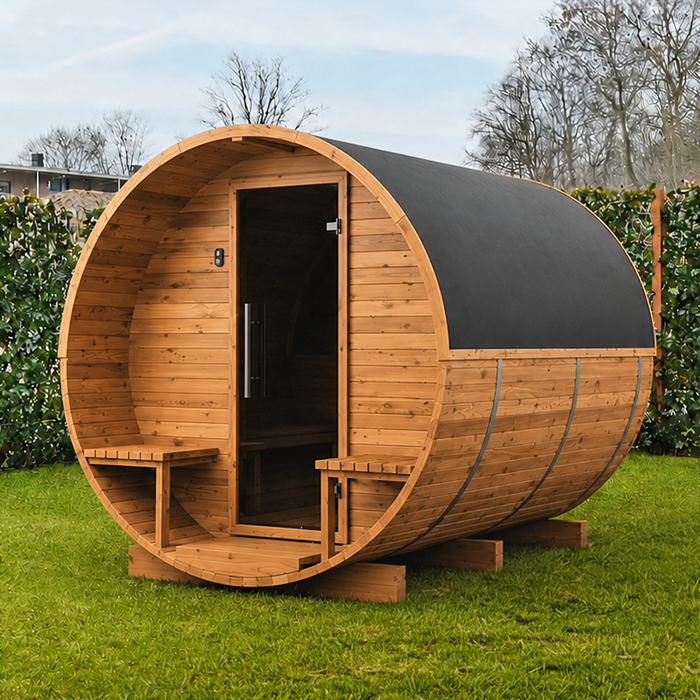
Do not assume relocation will leave the warranty unchanged or automatically cancel it. Before work starts, ask the manufacturer or seller in writing whether cover or support differs if the sauna is moved assembled, dismantled and reassembled, transported by a contractor, or installed by someone else. For a Thermowood N-210 sauna, identify the unit and describe the proposed work rather than asking for a general warranty answer about the range. Ask whether specified replacement parts or a post-move inspection are required, and which receipts, photographs or service records to keep. Make sure the response addresses your proposed method and the people carrying it out. Keep it with the manual and move documents, and share any stated conditions with the contractors before accepting their quotations.
Set out who is responsible for removal, packing, transport, unloading, reassembly and reporting damage, including when responsibility passes between contractors. Ask the mover and your insurer what cover applies to the sauna and loose parts during handling or storage; do not presume that household cover includes contractor transport. If the sauna is part of a sale, rental or shared-property arrangement, confirm ownership, permission to remove it and access dates with the people concerned before booking. Save written agreements and dated photographs, and check that the responsibilities in the quote match the plan you have agreed.
Compare relocation and replacement costs
Once permission, condition, route and site requirements are understood, compare complete scopes. Request separate figures for inspection, approved dismantling, repairs or replacement parts, packing, lifting, transport, storage if there is a gap between homes, unloading, reassembly, service work and any post-move check. Not every job will need every item; written inclusions and exclusions make it easier to see what has been left out. Ask whether the quote could change after an on-site assessment. Compare the full relocation plan with a replacement quotation that includes the new sauna’s configuration, transport and installation requirements, rather than comparing transport alone with the cost of a product.
Moving is worth considering only when the manufacturer confirms a permitted method, the current condition is suitable for it, qualified contractors agree on handling and reinstallation, and the new site and services meet the instructions. If the manual or maker’s answer is unclear, the condition is uncertain, access cannot be resolved, or reinstallation cannot be supported, pause and investigate repair, replacement or disposal before committing. There is no universal answer by sauna type or distance. Decide from model-specific information and written assessments, and agree the collection and installation sequence so dismantled parts are not left waiting unnecessarily.
Frequently asked questions
Is every outdoor sauna designed to be moved?
No. Whether relocation is permitted depends on the exact model and its installation. Ask the manufacturer for instructions covering your sauna; do not assume that it can be lifted intact or dismantled because it stands outdoors.
Can an outdoor sauna be transported in one piece?
Possibly, but only if the manufacturer permits that method and a qualified mover confirms the handling plan and access. Ask for the relevant dimensions, weight and lifting guidance. If an intact move is not approved, ask whether dismantling is permitted.
Will moving the sauna automatically cancel its warranty?
You cannot assume either that the warranty will remain unchanged or that it will automatically end. Ask the manufacturer or seller in writing about the exact model, the proposed method, who does the work and any required post-move checks.
Can I reuse the existing base and utility connections?
Not without checking. Have an installer compare the new site with the sauna’s installation requirements, and ask the relevant qualified professional to assess existing connections and the new setup. A base or connection that worked at the old home is not automatically suitable at the new one.
What if I cannot find the sauna manual?
Contact the manufacturer or seller with the model or serial number, order documents and photographs. Ask for instructions that match the installed configuration. Do not use a manual for a similar-looking model as permission to dismantle or relocate your sauna.
Moving an outdoor sauna is realistic only when the exact unit has a manufacturer-supported method and the people handling it can carry that method through to reinstallation at the new home. Condition, access, services and a prepared site matter as much as the journey. If those points cannot be confirmed, delay the move and compare a repair or replacement plan before dismantling begins.
