
New or Second-Hand Outdoor Sauna: What to Compare
Outdoor sauna buying guide
Choosing between a new and a second-hand outdoor sauna means comparing the exact unit and the work around it, not just two asking prices. A used sauna may suit a buyer who can verify its condition, history and completeness, but removal and reinstallation can add cost and uncertainty. A new option may make its intended configuration easier to identify, yet the quotation still needs to say what is supplied and what remains to arrange. Compare equipment, records, inspection, transport, site requirements and after-sale support. Where information is missing, mark it as unknown and account for the risk before committing.
The full cost of purchase and installation
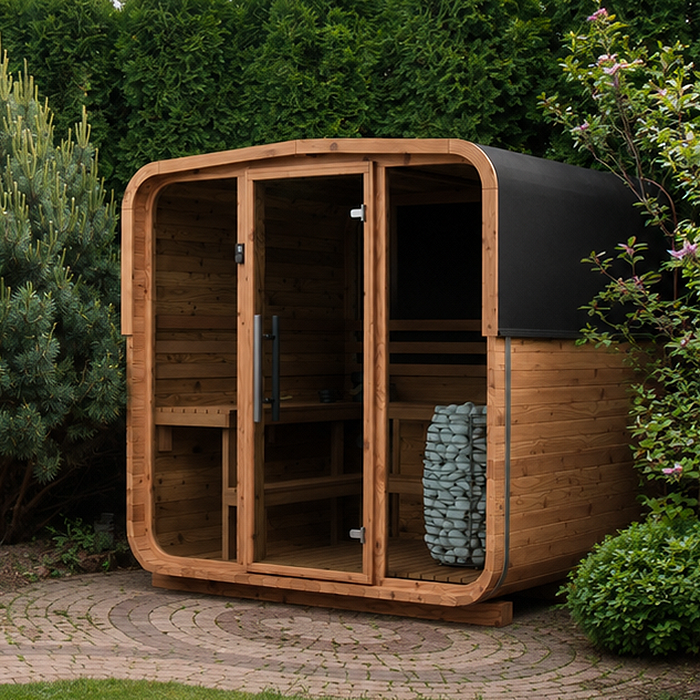
Put both choices on the same written cost sheet. For a second-hand sauna, include the asking price plus removal, handling, transport, unloading, reassembly, inspection, replacement parts, repairs and finishing. If limited access, storage or separate appointments could mean extra visits, ask for those costs too. For a new option, request an itemised quotation for the building or kit, delivery, assembly or installation, and any site or service work left to arrange separately. These are items to verify, not inclusions to assume. If you use the Thermowood Barrel Sauna S-140, listed at 1.93 m², as a new-price reference, record the configuration and quoted services alongside the price so that you know exactly what you are comparing.
Write each line as included, excluded, confirmed but unpriced, or awaiting a quote. Add an allowance only when you have a reasonable basis for it; do not enter zero for work nobody has priced. Compare the same endpoint for both choices: a sauna delivered to an access point is not equivalent to one placed and assembled at the intended site. Separate repairs needed before use from optional improvements you might choose later. If you plan to do some work yourself, account for time and equipment as well as any professional checks still needed. Comparing the final setup gives a fairer picture than setting one advertised figure against another.
Inspect the cabin's structure and signs of moisture
Arrange the viewing in daylight and leave time to inspect more than the front. Look over roof covering, joints, corners, base, floor and interior for damage, movement, gaps, cracks, distortion, soft-looking timber, corrosion on visible fittings, and marks that may indicate repeated moisture. Check the door and glazing for visible damage and whether they close without forcing them. Photographs can conceal the underside or areas behind stored items, so ask to see those surfaces where it is safe. Note which conditions you have actually seen and which remain uncertain. Do not pry apart the sauna or climb onto it just to inspect it.
Treat paint, sealant and a seller's account of routine care as context, not proof that a repair was made well. Ask what caused any water mark, when repairs took place, which parts were replaced and whether there is a receipt or report. Establish the unit's identity before comparing its condition with a new model. For example, the Sauna HC-150 is listed at 2.97 m², but a resemblance to its product photograph does not confirm that a used sauna is the same version. Compare the seller's description with a model plate, purchase record or appropriate manufacturer drawing, and record the age separately.
Make an inventory of every included component
Ask for an itemised inventory rather than accepting phrases such as 'complete' or 'everything in the photo'. List the cabin sections, floor and roof pieces, door and glazing, benches, backrests, ventilation parts, fasteners, heater, controls, stones if applicable, lights, keys and accessories as relevant to that particular sauna. Mark each line as included, absent, damaged, not inspected or retained by the seller. A missing control, fixing pack or structural part may affect whether the unit can be assembled as intended. Do not infer that an item is included simply because it appears in a photograph or was present during a viewing.
Compare the inventory with the seller's order documents or an exact manufacturer parts list, not with a generic photograph of a similar model. Ask whether dismantled pieces are stored elsewhere, whether the heater and accessories are included in the sale, and how they will be identified at collection. If you are also considering the Sauna HC-225, listed at 4.4 m², obtain a separate inventory for the new quotation. Keep the two lists side by side to identify omissions or replacements rather than assuming that similarly described packages contain the same equipment. Photograph labelled pieces and keep a copy of the agreed inventory with your purchase records.
Assess the heater and controls separately
Find out exactly what supplies heat. Ask for the heater's manufacturer, type, model and serial details, along with information about its controls and related components. Ask how long it has been in service, whether it has been repaired or replaced, and what records support the answer. Confirm that a heater is included rather than assuming it comes with the cabin. For a wood-fired system, establish which flue-related parts are present; for an electric system, identify its control and connection requirements from the correct documentation. Keep the heater's identity separate from the sauna's model when comparing condition and cost.
Ask a qualified service professional to assess the heater and controls, especially if their condition, compatibility or service history is unclear. Do not open electrical covers or alter wiring, and do not treat a brief seller demonstration as a full check: it only shows what happened at that moment. Keep a separate heater entry in each comparison, including a new option such as the Sauna N-210, listed at 4.43 m². That area describes the cabin, not the heating equipment. Record the proposed heater model, what the quotation includes and its written requirements, so that repair, replacement and connection costs remain visible within the overall budget.
Match manuals and service records to the exact unit
Request the manual for the precise model or version, assembly and dismantling drawings, heater and control instructions, parts list, and any care guidance. Ask for proof of purchase if available, receipts for repairs and replacement components, and records of servicing or inspection. Compare model numbers, names and dates across the documents; a manual for a visually similar sauna may not apply to this version. If the owner has no paperwork, write that down and ask the manufacturer or retailer whether the exact identity and relevant instructions can still be confirmed before treating them as settled.
Useful service records say when work took place, what problem was addressed, which parts were changed and who carried it out. A general claim that the sauna was regularly maintained is less helpful if it cannot be connected to any particular repair or inspection. Use a precise model reference when requesting missing documents: for example, the Sauna N-250 is listed at 5.27 m², but those catalogue details alone do not establish a used unit's service history. Ask whether the records relate to the original equipment or to a later replacement. Keep documentary evidence distinct from the seller's recollection, and note gaps rather than filling them with assumptions.
Plan removal and transport before paying
Ask how the sauna is expected to leave its current site and who will assess the method. Do not assume that it can be moved intact, or that dismantling and rebuilding it will be straightforward. Construction, age, condition, previous modifications and access may all affect the options. Have an experienced removal or sauna professional assess the particular unit before you commit, especially if it is assembled, difficult to reach or has visible damage. A seller saying that it was moved before does not establish that the same method is suitable now or that the building will remain sound.
Ask for exact drawings, component dimensions and weights where available, and give the transport provider accurate information about access at collection and delivery. Get a written scope covering any disconnection, dismantling, packing, lifting, loading, transport, unloading and reassembly required; arrange relevant work with qualified professionals. This also helps you compare removal costs with delivery of a new model such as the Sauna LC-260, listed at 5.12 m². Its area is not a packing or transport measurement: use the relevant dimensions and weights when discussing handling arrangements. Clarify who will label and account for the pieces during removal, and who will check them on arrival.
Check the new site and reinstallation scope
Assess the destination for both a used sauna and a new one. Compare the exact manufacturer's drawings with the intended footprint, access route and space available for delivery and assembly. An area figure is not a substitute for the full dimensions needed to check a route or site. Ask a suitably qualified building professional to assess the proposed base and site conditions, and have an electrician or relevant installer review any required services. Do not rely on the previous owner's arrangement or a nearby installation as proof that the same setup is suitable for your location.
Ask each seller or provider to state what happens after delivery: who places the sauna, assembles it, checks the completed work and handles any outstanding service connections? Clarify which tasks are included, which require separate appointments and which remain yours to organise. When considering the Sauna HCF-300, listed at 6.89 m², obtain the drawings for the exact configuration before making site arrangements. You still need its external dimensions and base requirements, together with a clear description of the work required at your location. Compare those requirements with the proposed second-hand installation so that neither option leaves essential destination work outside the budget.
What a professional inspection should cover
When condition or compatibility is unclear, arrange an inspection by a suitably experienced sauna professional before committing. Agree the scope in advance: it may need to cover the cabin, visible roof and floor areas, door and fittings, heater and controls, and any concerns about removal or reassembly. A general viewing and a specialist assessment are not the same thing, particularly when important surfaces are hidden or technical equipment is involved. Provide the inspector with the seller's inventory, model details and available records so that the assessment relates to the unit being offered.
Ask for written findings that distinguish observed condition from anything not tested or accessible. Have the report identify repairs or further checks to obtain, rather than relying on a broad statement that the sauna looks fine. If useful, request a separate quotation for work that has been identified, then add it to your comparison. An inspection cannot turn missing history into a complete record or guarantee how a unit will perform after moving. If the seller will not allow reasonable checks, keep the unresolved points visible in your decision instead of treating them as passes.

Verify parts, service and after-sale support
Ask what support is available for the exact model and version, and who would handle a technical question after purchase. Check whether manuals, replacement parts or service can be obtained, without assuming that they are available simply because the sauna has a recognisable name. For a new offer, request the actual warranty terms and ask which components and conditions they cover. For a used unit, ask whether any cover remains and whether it can transfer; get a clear written answer rather than relying on a general promise. Record the model and serial details that any future enquiry would need.
Use the same questions when comparing a used sauna with a catalogue alternative such as Sauna LCF-300. A product name gives you a specific model to ask about, but does not establish which support terms apply to a separate second-hand unit or whether any cover transfers. Ask the retailer or manufacturer about the exact version you are considering, and compare their written response with the seller's records. If parts or service cannot be confirmed, note that uncertainty alongside the likely cost and time of resolving it.
Set clear conditions for going ahead
Before deciding, mark each important point as confirmed, requiring a check, unknown or unacceptable. Include structural condition, the component inventory, heater identity and assessment, matching documentation, service history, removal plan, destination work, full cost and support. A second-hand sauna becomes a more credible option when the important unknowns have been resolved and the move and reinstallation have been professionally assessed. If one concern remains, state what evidence or quotation would settle it and what it could cost. This makes the decision depend on information rather than on a reassuring description or a low first figure.
A new option also needs a clear comparison: verify its exact configuration, written inclusions, delivery and installation scope, applicable support and local availability. It is not automatically complete or free of site work. Choose second-hand when its documented condition and total project cost make sense to you; choose new when the available written details and scope better fit your priorities. If neither option can be assessed fairly, pause rather than treating an unpriced risk as a saving. There is no universal winner—only a better-evidenced purchase for your circumstances.
Frequently asked questions
Is a second-hand outdoor sauna always the cheaper choice?
No. Add the purchase price to removal, transport, inspection, repairs, missing parts and reinstallation, then compare that total with a written quotation for a new option on the same basis. If important work has not been priced, record it as an unknown cost rather than assuming it will be negligible.
Can an assembled sauna be moved as one piece?
Do not assume so. Whether it can be moved intact or needs to be dismantled depends on its construction, condition and access at both locations. Ask an experienced removal or sauna professional to assess the particular unit and provide a plan before agreeing to buy.
What documents should I ask the seller for?
Ask for the exact model and version, the matching manual and drawings, a list of included parts, and any purchase, repair or service records. Request the heater and control documentation as well. Compare model details across the papers; instructions for a similar-looking sauna may not apply to this one.
Is a seller's demonstration enough to check the heater?
No. A demonstration is not a substitute for an assessment of the heater, controls, condition and compatibility with the proposed installation. Ask for the heater's identifying details and arrange a check by a suitably qualified professional if anything is uncertain. Do not open covers or alter wiring yourself.
When is buying new the more sensible option?
A new option may be easier to compare when its exact configuration, inclusions and support terms can be confirmed in writing, while the used unit has unresolved questions about condition, parts or transport. New is not automatically complete or risk-free: check the quotation, installation scope and applicable support before deciding.
A second-hand sauna is worth considering when its condition, contents, records and professional move plan can be checked and priced. If important questions remain unanswered, compare it with a documented new quotation rather than letting the asking price decide. New or used, the stronger choice is the one whose scope, costs and remaining uncertainties you can clearly explain.
