
Overwintering Oleanders in a Greenhouse
Oleander winter care
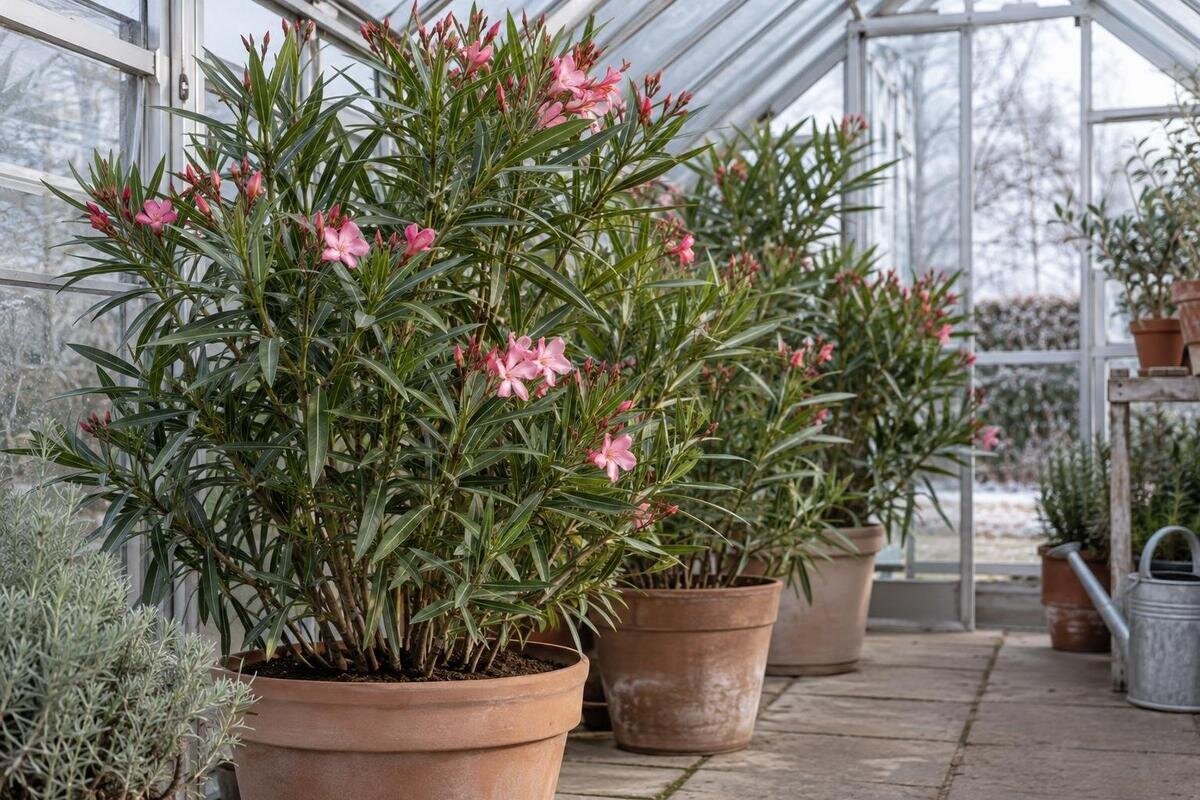
An oleander (Nerium oleander) can spend winter in a greenhouse if the space remains bright, cool and frost-free. As growth slows, it needs less water and little or no routine feeding, but it still needs fresh air and regular checks. The main risks are a greenhouse that overheats on sunny days, a wet root ball, unnoticed sap-feeding pests and careless handling of the plant and its sap. This guide covers winter light and temperature, watering, pest checks and safe handling, along with the greenhouse details to verify before relying on one for a potted shrub.

What winter shelter should provide
Treat greenhouse overwintering as a period of reduced growth, not an attempt to keep an oleander flowering through winter. Nerium oleander is an evergreen Mediterranean shrub, but a container-grown plant commonly slows as temperatures and daylight decline. In cool conditions it uses water more slowly; if kept warm without strong light, it may produce weak, soft shoots. Even when growth pauses, retained leaves still need good natural light. The aim is to protect the plant from prolonged cold and saturated compost while avoiding forced growth in a dim space. A greenhouse is shelter, not a promise of frost-free conditions.
Before bringing the pot under cover, note recent night temperatures, whether new growth is still appearing and how quickly the compost dries. Move it before cold stress is evident rather than waiting for damaged leaves. Inspect foliage, stems and the pot rim first, so pests are not carried into a sheltered growing area. Plan for the plant’s full canopy, the container and a route for watering and inspection. The Wall Greenhouse options list floor-area choices from 3.69 to 14.34 m²; check the product details for usable space and access rather than choosing by floor area alone.
Bright light and cool, frost-free conditions
Place the oleander in the brightest suitable part of the greenhouse; winter rest does not mean it can be kept in deep shade. Natural light helps an evergreen retain its foliage and supports compact growth when new shoots appear. A sunny position can be useful, but glazing may let a greenhouse heat up quickly even when the morning began cool. Check the plant and the thermometer during bright spells, and use ventilation to moderate heat rather than moving the pot to a dark corner. The brightest position still needs to be one where you can keep an eye on temperature.
A practical guide for a mature potted oleander is a bright, frost-free winter space around 5–10°C, a range commonly used for cool overwintering. Treat it as a working guide, not a guaranteed safe minimum for every cultivar or condition: acclimatisation, root-ball moisture and the length of exposure all matter. Container roots are less insulated by surrounding soil than roots in the ground, so avoid frost and prolonged cold. When considering Limited Edition Aluminium Greenhouses, check the intended site’s light, glazing and ventilation details for the chosen configuration. A product name or floor-area figure cannot predict the temperature at your plant.
Temperature swings and ventilation
An unheated greenhouse has no fixed winter minimum. It can warm quickly in bright weather and cool sharply overnight, so judge the plant’s conditions by readings inside, not the outdoor forecast. Place a min–max thermometer near canopy height, shaded from direct sun and away from cold glass; record both the overnight low and the daytime high. Check readings over clear and cloudy days, particularly after moving the plant in, and adjust its position if it is consistently hotter or colder than expected. A thermometer in direct sun may not represent the air around the leaves, and a closed greenhouse does not guarantee frost protection.
On mild, sunny days, use available vents or a door to release excess heat and stale, damp air, then reduce the opening before temperatures fall. Aim to renew the air without leaving the plant exposed to a cold draught for hours. Keep foliage clear of openings and make sure you can reach and operate them without moving the pot. The T-Model Orangery Greenhouse listing covers floor-area options from 16.52 to 30 m². Check which openings are specified for the configuration you are considering, where they are positioned and whether your planned arrangement of plants would leave them accessible for daily use.
Watering as growth slows
Water less often once growth slows, but do not stop watering altogether. An oleander in a cool greenhouse uses water more slowly than during active, warm-season growth; persistently wet compost can deprive roots of air, while a completely dry root ball can also damage the plant. Check the mix before watering: feel the top layer and lift the container if its weight is a useful guide. In a large pot, the surface may be dry while lower compost is still damp, so test rather than judging by appearance alone. When the compost has begun to dry, water enough to moisten the root zone, then let the pot drain fully and empty any saucer.
Do not follow a fixed weekly schedule: pot size, compost, temperature, ventilation and new growth all affect how quickly moisture is used. A cool plant may need only occasional watering, while one warmed by winter sun and actively growing may dry sooner. Check again after watering to learn the pot’s pattern, and remember that a roofed greenhouse keeps rain off the container. Leave the pot accessible so you can check it without shifting branches. The Pyramid Greenhouse range spans 5.53 to 18.9 m²; use the product details to assess access for watering and whether there is enough room to inspect the pot and surrounding space.

Pruning, feeding and moving the plant under cover
Before winter, remove fallen leaves and dead or broken material, and inspect each stem. A major cut is not required simply because the plant is moving into a greenhouse. Heavy pruning removes foliage and may remove shoots that would otherwise carry flowers; timing depends on the plant’s flowering cycle, so avoid an unnecessary hard prune just before winter. If a branch is damaged or needs to be removed for access, make a considered cut with clean tools and collect the material at once. Leave routine shaping for a suitable point in the growing cycle rather than treating it as part of winter storage.
Do not feed routinely while the plant is cool and making little or no growth. Fertiliser cannot compensate for poor light, cold roots or waterlogged compost; correct those conditions rather than adding nutrients. Resume feeding when active growth returns, following the fertiliser label for container plants. Avoid moving an oleander straight from a bright outdoor position to a dark, enclosed corner if a gradual change is practical. The Limited Edition greenhouses with storage listing is one configuration to review; check its product details to distinguish growing space from any storage area and keep the plant clear of access routes.
Pest checks before and during winter
Inspect the oleander before moving it inside and at least weekly during winter. Look under leaves, around veins, at soft tips, along stem joints and near the pot rim; pests can remain hidden among dense foliage. Examples worth recognising include oleander aphids clustered on new growth, scale insects that resemble small fixed bumps, mealybugs with white cottony deposits and spider mites that leave fine stippling or webbing. Sticky leaves or dark, sooty-looking residue may accompany sap-feeding insects. These signs are clues, not a reason to spray immediately: identify what you see and check neighbouring plants as well.
Keep new or recently outdoor plants apart from the collection until they have been checked, and clear dead leaves where insects can hide. If you find a pest, isolate the pot if possible and choose a control only after identification. Use a product labelled for the plant and setting, follow its directions, and do not spray in an enclosed greenhouse unless the label allows it and you can follow its ventilation instructions. When comparing structures, consider whether you can reach the undersides of leaves. Use the Bloomcabin Prestige Greenhouse details to plan the pot’s position, allowing access to stems and foliage rather than fitting plants tightly together.
Safe handling of the plant and cuttings
Every part of oleander is toxic if eaten, and the plant’s milky sap can irritate skin and eyes. Wear gloves and eye protection when pruning, handling broken stems or clearing fallen leaves; avoid touching your face, then wash your hands and tools. Keep children and pets from chewing or carrying away leaves, flowers, seeds or cuttings. Place the plant where routine work can be done without brushing against it. A greenhouse does not reduce the plant’s toxicity, so make sure anyone sharing the growing space knows what it is.
Put pruned material straight into a container instead of leaving it on the floor, bench or path, and do not burn oleander cuttings; smoke from burning plant material can be hazardous. Dispose of waste according to local guidance for garden refuse, especially where pets or livestock could reach it. If a tall or heavy container must be moved, check the door and internal route before choosing a structure. The Spacious Greenhouse range lists options from 47 to 70 m², but that area figure alone does not establish door width, access or whether a particular pot can be moved safely.
Space for the pot, canopy and inspection
Position the pot where light reaches the foliage and air can move around it, with enough room to inspect the plant on all sides. Keep it clear of doorways, vents and the path to other plants; dense foliage pressed against a pane or neighbouring leaves is harder to check and may stay damp. Avoid placing the container directly against cold glazing or where it is repeatedly hit by a cold draught when the door opens. Leave room to water without pulling branches aside, and make sure the pot drains onto a surface that does not leave it standing in water.
Measure the plant at its present height and spread, then allow for the pot, expected seasonal growth and the space needed to reach the top of the canopy. Headroom matters as well as floor space: foliage should not block an opening or an inspection route. In a compact greenhouse, one plant in a corner may still shade other pots or obstruct a vent. The Aluminium Classic Greenhouse range lists floor-area options from 3.77 to 28.08 m²; check the full product details for clear height and ventilation, because area alone does not show the usable space around your oleander.

Preparing the greenhouse before the plant arrives
Get the greenhouse ready before moving the oleander in. Clear old leaves and plant debris, make sure the planned position does not leave the pot standing in water, and check that doors and vents can be used without moving the plant. Set out a thermometer where it can be read near canopy height, but out of direct sun. Decide where you could separate a plant if pests appear and where pruning waste will go. Having these arrangements ready makes routine checks easier and avoids rushed handling during a cold spell.
Check the container and drainage holes before winter. If roots are congested or the compost has broken down, do not automatically combine repotting with the move into a cool space: disturbing roots when the plant is barely growing can make recovery slower. Unless there is a clear problem that needs attention, keep the root ball intact through the rest period and plan routine repotting for a more suitable active-growth period. Take temperature readings for several days before relying on that position, noting the coldest night as well as the warmest afternoon.
Leaf changes and the return of growth
A few older leaves may yellow or drop as growth slows, but rapid or widespread leaf loss deserves investigation. Check minimum and maximum temperatures, compost moisture, light and signs of pests before adding water or fertiliser. Prolonged wetness, a dry root ball, a sharp chill or a warm spell followed by poor light can all affect the plant. Look at the whole pattern: note whether changes are limited to older leaves or are also affecting new shoots, and inspect leaf undersides and stems. If the cause is not clear or the problem persists, seek advice from an experienced local horticulturist.
As daylight and temperatures rise and fresh growth becomes clear, increase watering to match the plant’s use of moisture; do not switch to summer watering while the compost is still slow to dry. Resume feeding only when growth is active, and continue checking for pests before regrouping plants. If the oleander is returned outdoors, allow it to adjust to the new light and conditions rather than leaving it in a closed, warm greenhouse until the weather is already hot. Use actual conditions, not a calendar date, to judge when to make the change.
Frequently asked questions
What temperature should an oleander be kept at over winter?
For a mature potted oleander, a bright, frost-free space around 5–10°C is a useful guide for cool overwintering. It is not a guaranteed safe minimum for every plant or greenhouse. Check the actual overnight low near the foliage, and do not rely on the greenhouse alone if frost is possible.
How often should I water an oleander in winter?
There is no dependable weekly interval. Check the compost and water when its upper layer has begun to dry, then let excess water drain away. Pot size, daytime warmth and new growth all affect how quickly it dries. Do not let the root ball dry out completely or leave the pot standing in water.
Does an oleander need light while it is resting?
Yes. Keep it in the brightest suitable place; reduced growth is not a reason to put an evergreen oleander in deep shade. Winter sun can heat a greenhouse quickly, so combine a bright position with temperature checks and ventilation on mild days.
Which pests should I check for on a wintering oleander?
Look for oleander aphids on soft growth, scale insects on stems, white cottony mealybugs, and fine stippling or webbing from spider mites. Check leaf undersides and stem joints, as well as neighbouring plants. If you find insects, identify them before choosing a treatment.
Is it safe to touch or prune an oleander?
All parts are toxic if swallowed, and the milky sap can irritate skin and eyes. Wear gloves and eye protection when pruning, wash your hands and tools afterwards, and keep children and pets away from leaves and cuttings. Do not burn oleander waste.
Successful greenhouse overwintering depends on a few connected conditions: bright light, cool but frost-free temperatures, watering adjusted to slower growth, and enough ventilation to limit daytime heat spikes. Check the plant and the greenhouse rather than relying on a fixed calendar, and inspect for pests before problems spread. Because oleander is toxic, handle it and its pruning waste with care. A good winter position protects the plant while leaving it accessible for temperature checks, watering and safe inspection.
