
How Long Does an Outdoor Sauna Last? Factors to Assess
OUTDOOR SAUNA DURABILITY
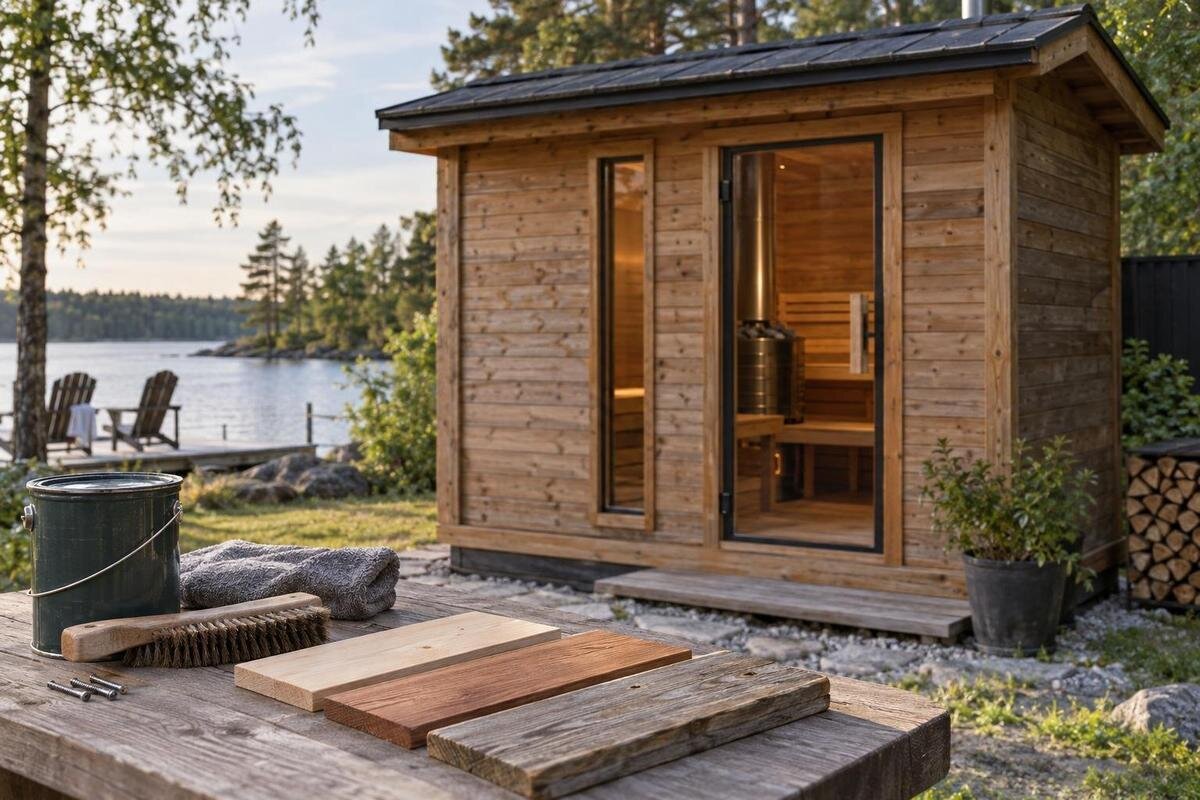
An outdoor sauna has no dependable, universal lifespan. Its cabin, roof covering, fittings, finish and heater-related parts may age at different rates, while the site, weather exposure, use and maintenance all affect the outcome. A good buying comparison looks beyond a material name or product photograph: it checks construction and assembly information, how water is managed, what support the maker requires, how the cabin is ventilated and dried, and what care is approved. Warranty cover is a separate question. Its term and conditions describe what may be covered under stated circumstances; they do not predict when a sauna will need repair or replacement.
Why a single lifespan figure can mislead
An outdoor sauna does not age as one indivisible object. The cabin structure, roof covering, door hardware, finish and heater-related parts can have different repair needs. A surface coating may need attention while the structure remains serviceable; hidden moisture or movement at a joint may cause a more serious problem before the exterior looks badly worn. It helps to define what “lasts” means: continued safe operation, dependable use, acceptable appearance, or the point at which repairs are no longer worthwhile. These are different thresholds, and one broad lifespan figure can obscure them.
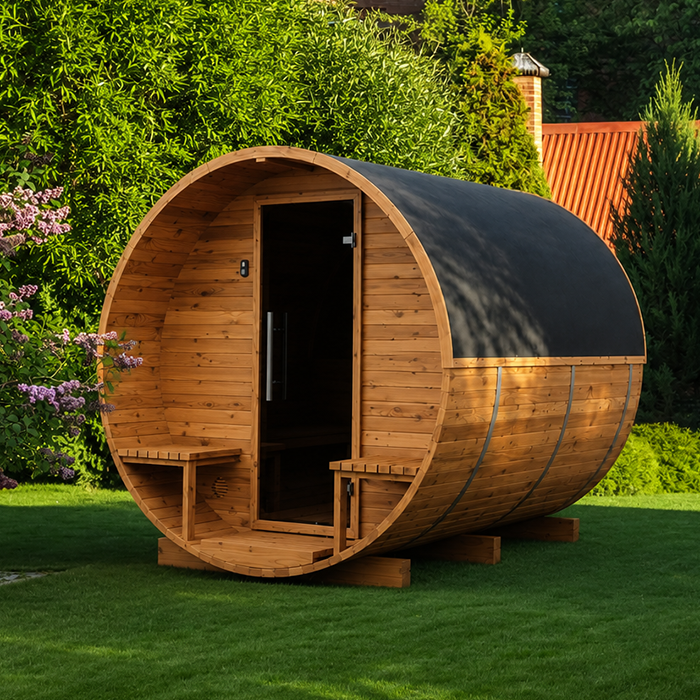
Any estimate is meaningful only when its assumptions are clear: expected use, installation, site exposure, routine care and which components it covers. If a seller gives a figure, ask what evidence supports it and whether it refers to the cabin, a replaceable part or the complete sauna. The catalogue entry for the HCF-300 Thermowood Barrel Sauna identifies a model; its name is not a longevity estimate. Request the available drawings, material details, assembly guidance and maintenance instructions, then compare like with like. A sheltered site and one exposed to sun, wind-driven rain or sea air do not present identical maintenance conditions.
Construction quality and joints
Timber construction involves more than the species or treatment named in a listing. The grade and preparation of the boards, their profiles, the way they meet at corners and openings, and the fastening method all affect how the assembly fits and responds as conditions change. Wood can move as moisture levels change, so the design and assembly of joints matter. End grain and gaps deserve attention because they may provide routes for moisture to enter or remain. Metal fittings also need to be considered in relation to the actual exposure, particularly at a site close to the sea. These are points to investigate, not proof that a product will fail.
Ask which parts are timber, what finish or treatment is supplied, whether it needs renewal, and which care products the maker approves. A drawing or assembly guide can show details that a photograph cannot, including joints, openings and parts that may be replaced. For Thermowood Barrel Sauna LCF-300, request the material and construction information for the exact model; its title alone does not establish a treatment method, timber specification or durability rating. If details are not in the product information, ask for them in writing. A clear specification is more useful than assuming one material label answers every question about construction and upkeep.
Where water can enter
Rain reaches a sauna through more than the broad surface of a roof. Edges, seams, the junction between roof and wall, doors, windows and other openings all need to be considered in the design and assembly. The covering matters, but so do its terminations, fixings and the routes that direct water away. A photograph cannot establish whether every junction is weather-tight or show how often a covering should be checked. Use the installation drawings and manual to understand the intended arrangement, and ask which parts are supplied and which, if any, need separate finishing or routine renewal.
From safe, accessible positions, look for recurring damp patches, stains, swelling, lifting finish or water collecting where it should drain away. A stain may appear some distance from the point where water enters, so do not assume its location identifies the cause. Repeated signs deserve investigation; avoid climbing onto a roof or dismantling panels to look for a leak. Ask how the covering should be checked, repaired or renewed without affecting adjoining parts. For the S-140 Thermowood Barrel Sauna, check the documents for the exact configuration before making assumptions about roof construction or weather protection.
How the site affects weather exposure
Exposure varies from one garden to another. Direct sun can weather exposed finishes; rain driven against a wall can reach places that see little water in calmer conditions; and airborne salt near the sea can accelerate corrosion of metal that is not adequately protected. Splashback from paving or soil can keep the lower part of a cabin damp, while vegetation may restrict airflow or access. Trees can provide shade, but a shaded, crowded position may stay damp or make checks difficult. Shade alone does not guarantee better protection, and a sheltered corner is not automatically a dry one.
Before deciding where a sauna will go, note the hours of direct sun, the direction from which rain reaches the site, where water stands after rainfall and whether you can inspect and clean around the cabin. Consider future access for maintenance as well as the view from the house. When considering Sauna HC-150, use these observations to ask about the finishes and fittings specified for your intended location. Confirm how the maker's installation and care requirements apply to that position, including any areas that would be difficult to reach once the sauna and surrounding landscaping are in place.
Support, drainage and access
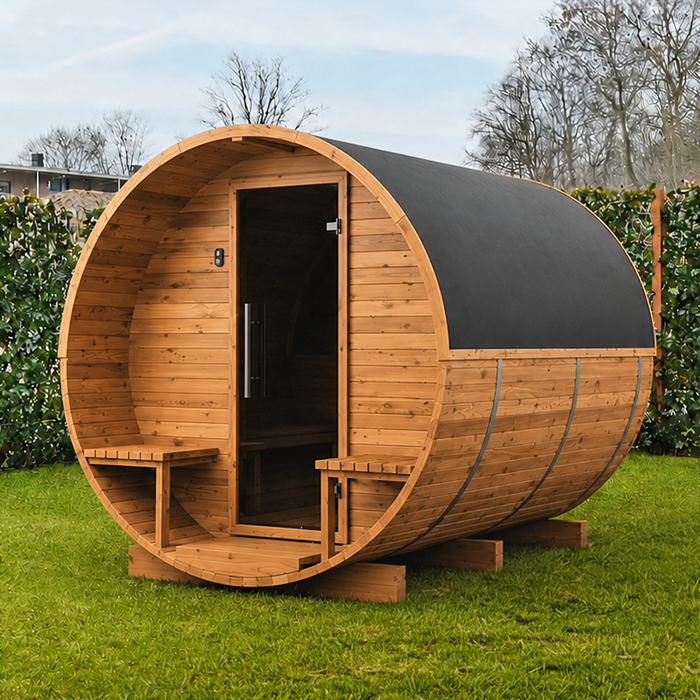
The base and support arrangement can affect whether the cabin stays aligned and whether its lower surfaces are exposed to standing water. Follow the manufacturer's drawings for the exact model; a photograph, footprint or generic platform description does not show what the ground must provide. Movement or poorly matched support can put strain on joints and doors, while persistent damp around the base can encourage deterioration. If the site is sloping, soft, prone to pooling water or otherwise uncertain, have the ground and proposed support assessed by an appropriate local professional rather than improvising a solution.
Think about service access at the same time. Checks, cleaning and maintenance should be possible without dismantling nearby structures or reaching awkwardly over planting. Ask whether any ground clearance or access requirements are shown in the manual, and avoid hiding areas that need routine inspection behind permanent landscaping. Before ordering the HC-225 Thermowood Barrel Sauna, obtain the current installation information and confirm the support arrangement it specifies. Easy access can make regular checks more practical, but it cannot compensate for inadequate support or poor drainage.
Ventilation and drying after use
Use brings moisture into the cabin as well as heat. Damp towels, cleaning and changes in temperature can leave surfaces wet, and conditions may vary between the floor, benches and less ventilated corners. The ventilation openings and air paths intended for the cabin are part of its care requirements; do not block or alter them without guidance. Follow the maker's directions for ventilation during and after use, since layouts and heater arrangements differ. Ask where moisture is expected to go and what the manual says about drying the interior between sessions.
After use, follow the specified airing and cleaning routine, and remove standing water if the instructions call for it. Avoid leaving wet textiles inside or closing the cabin in a way that traps damp when the manual advises it should be aired. Do not seal a vent or introduce an unapproved coating to address condensation. A persistent musty odour, recurring dark marks or soft timber should prompt investigation of the source, not just a cosmetic refresh. For the N-210 Thermowood Barrel Sauna, request the operating and care instructions so you can understand the required drying routine and judge whether it will be practical between sessions.
Maintenance must match the finish
Maintenance depends on the finish and the surface. Exterior cladding, interior boards, benches, doors and metal fittings may have different requirements, so one cleaner, sealant or coating is not automatically suitable throughout. Heat-exposed interior surfaces can have restrictions that do not apply outdoors; use only products and methods approved by the manufacturer for each area. Do not assume that timber described by a particular treatment name needs no care, or that adding more preservative will extend its life. Follow the stated cleaning and renewal schedule, and note which products were used.
Routine checks can reveal finish lifting, gaps that are changing, damage around openings or water marks. The right response is not always to tighten, fill or repaint; the manual may specify who can repair a part and which materials are compatible. Use the N-250 sauna listing to identify the model when requesting its approved maintenance instructions, rather than guessing an interval or treatment from the name. Keep dates, invoices and photographs of repairs. That record can help distinguish an old mark from a recent change and show whether a recurring problem has been addressed.
Use frequency and wear
How often a sauna is used affects the pattern of heat, moisture, door movement, cleaning and wear, but the number of sessions alone cannot predict how long it will remain serviceable. An infrequently used cabin in a damp or exposed location may need more attention than one used frequently but properly installed, ventilated and maintained. Long gaps between sessions do not remove the effect of weather exposure. Heavy or guest use may also differ from the use for which a product was designed, so ask the manufacturer to confirm whether the expected level of use is suitable and whether any restrictions apply.
Describe your likely pattern before buying: who will use the sauna, how use may change by season, and who will carry out cleaning and checks. Ask whether parts likely to show wear can be inspected and replaced, and whether the required care remains practical at the expected level of use. When considering LC-260 Thermowood Barrel Sauna, compare its operating and maintenance instructions with that pattern. Clarify any restrictions on guest or commercial use before including it in your shortlist. A realistic maintenance plan is part of assessing long-term ownership, not an optional extra.
Warranty cover is not a lifespan estimate
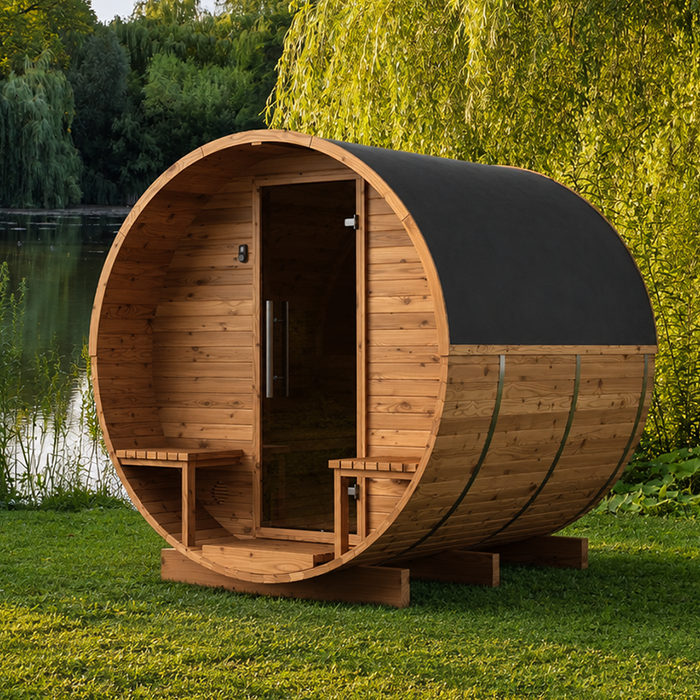
Durability describes how a sauna performs and holds up over time. Warranty cover describes the conditions under which specified faults may be addressed during a defined period. The warranty term is therefore not a promised service life: a sauna may remain usable beyond it, or need attention within it for a cause the terms do not cover. Cover can differ between parts, and the terms may distinguish a defect from ordinary wear, exposure, maintenance, assembly or later modification. Do not assume that every component has the same period or is covered in the same way; read the document for the exact product.
Read the warranty alongside the manual and ask for unclear terms in writing. Check when cover begins, which components are included, how long each is covered, what remedy is offered, and whether labour, transport or replacement parts are treated separately. Note any conditions relating to site exposure, intended use, assembly, cleaning or maintenance, as well as the evidence required for a claim. Find out whether repairs must be arranged through a particular service channel, and keep the paperwork and maintenance record. A shorter warranty does not by itself prove poor durability, just as a longer one does not mean upkeep will be unnecessary.
When to inspect, repair or replace
Changes in condition are more useful than guessed years when deciding what needs attention. Peeling finish, repeated leaks, dark patches that return after drying, soft timber, widening joints, corrosion or movement at the support are reasons to investigate. A small surface mark may be cosmetic, so do not diagnose structural failure from appearance alone; consider whether the damage is spreading, recurring or linked to moisture. If the cabin seems unstable, a joint is failing or water may be reaching concealed areas, arrange an assessment by a professional familiar with the relevant building or sauna components.
Before buying, ask which parts can be replaced separately, whether compatible replacement components and finishes can be obtained, and who is qualified to carry out repairs. Availability can change, so confirm it rather than treating it as guaranteed. A repairable panel or fitting may extend useful service, but repeated repairs, difficult access or damage in several connected areas can make replacement the more sensible comparison. There is no universal age at which that point arrives. Base the decision on an inspection, the repair scope, product guidance and the cost and disruption of keeping the existing sauna in service, not on its age alone.
Frequently asked questions
Can an outdoor sauna be expected to last a set number of years?
There is no reliable figure that applies to every sauna and site. Construction, weather exposure, support, use and care all affect its condition. If a seller gives an estimate, ask what it covers and which assumptions it depends on.
Does a timber or treatment name guarantee a longer life?
No. A name alone does not describe every part of the construction, the quality of the joints, the finish or the exposure the sauna can handle. Ask for material details, assembly guidance and the approved maintenance instructions.
Is the warranty period a guide to the sauna's lifespan?
No. Warranty terms set out what may be covered, for which parts and under what conditions during a stated period. They are not a forecast of when the sauna will need attention or replacement.
How often should an outdoor sauna be inspected?
Follow the schedule in the manual for the exact model. A regular visual check can help you notice changes, and it is sensible to look for signs of water entry after unusually wet or windy weather. A general interval should not replace the manufacturer's instructions.
Which signs should be assessed by a professional?
Recurring leaks or damp patches, soft timber, widening joints, corrosion or movement at the support merit investigation. A mark may be cosmetic, but repeated or spreading damage needs more than a fresh coat of finish. Ask a suitable building or sauna professional to assess the cause.
Think of useful life as the result of a particular construction at a particular site, used and maintained in a particular way. Compare the assembly details, water management, support, ventilation and care instructions, then read the warranty for the cover it actually describes. Keeping records and responding to changes in condition gives a more practical basis for judging durability than relying on a single number.
