
Growing Pak Choi in a Greenhouse in Malta
Malta greenhouse growing guide
Pak choi is a quick-growing, cool-season brassica, so a greenhouse in Malta is most useful for autumn and winter sowings, not as a way to carry the crop through summer. Under cover, bright sunshine can lift daytime temperatures quickly, while nights remain cool; a closed house can therefore push plants towards flowering rather than steady leaf growth. The practical approach is to sow in small batches once the site has cooled, ventilate whenever it warms, and harvest plants while compact. Conditions vary with exposure and ventilation, so use readings at the bed rather than a fixed calendar alone. This guide covers timing, bolting, watering and the space a crop needs.

Is a greenhouse useful for pak choi in Malta?
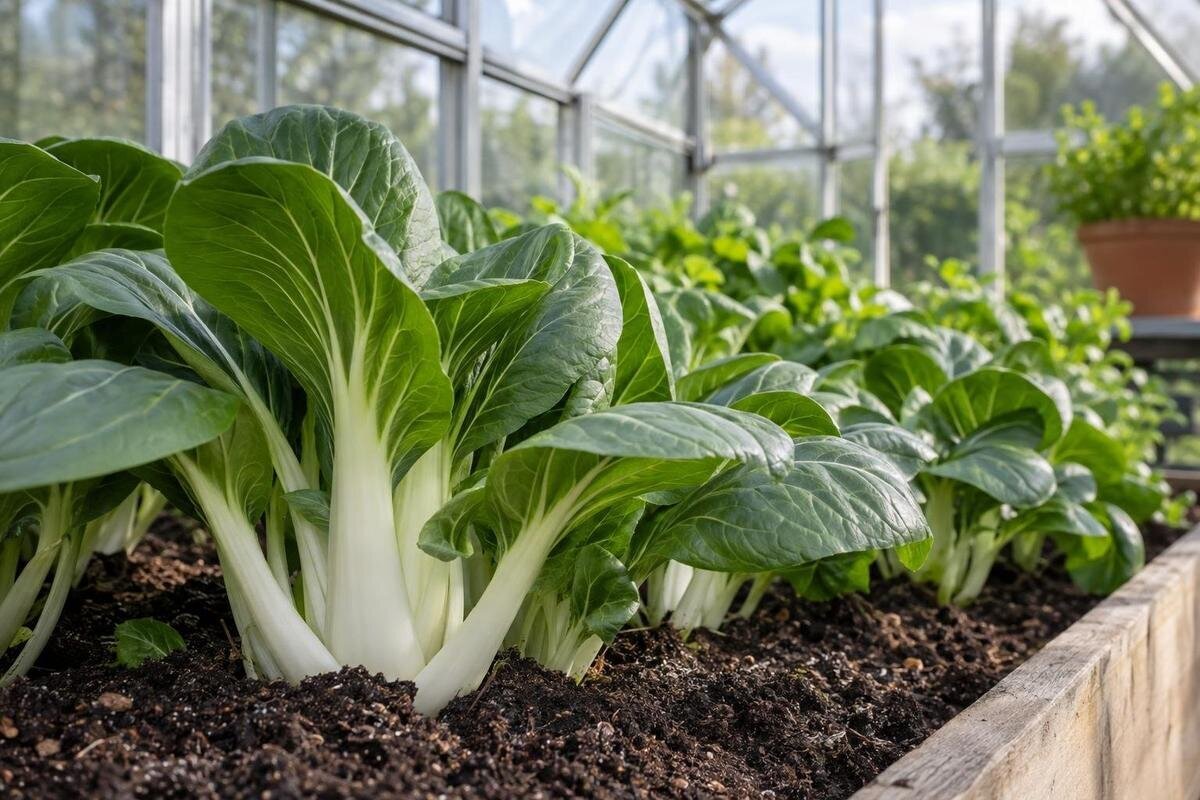
Pak choi (Brassica rapa subsp. chinensis) is a fast-growing leafy brassica that forms its best tender leaves and stems in cool conditions. For Malta growers, an unheated greenhouse is most useful as shelter for sowings in the cooler part of the year. It can keep rain and wind off seedlings, but it also concentrates solar heat: a clear day may make the inside much warmer than the garden. At night, an unheated structure does not maintain a fixed temperature. Treat it as a way to moderate exposure, not to create a controlled climate or grow the crop in every month. Compare temperatures inside and outside before sowing; if the house remains hot, an outdoor bed may be preferable for that period.
Before choosing a bed, watch the proposed site in the morning and afternoon. Note direct sun, shade from a wall or tree, and whether doors and vents can be opened without blocking the path. For a wall greenhouse, check the wall’s orientation and nearby shade; these can make its growing conditions quite different from those in an open position. The Wall Greenhouse sizes from 3.69 m² to 14.34 m² are a size reference, not evidence of a suitable microclimate. Count only the bed area left after allowing for paths and access, and confirm that you can ventilate the structure on warm days.
When to sow pak choi in Malta
Use a condition-based window rather than copying a sowing calendar from a cooler country. In Malta, plan the main crop for late autumn through winter. An October sowing may suit a cool, well-ventilated site, while a warmer, exposed greenhouse may need to wait until later in autumn. Sow a small batch once sunny days no longer leave the house persistently hot. Late summer can still be too warm under cover, even when the calendar says autumn. A late-winter sowing may also work if conditions remain moderate, but consider how quickly the greenhouse will warm and how much time plants have to grow before spring. Pause sowing as heat and increasing day length make bolting more likely.
Keep a record of sowing dates, germination, temperature readings, harvests and which parts of the bed receive sun. Notes from your own greenhouse are more useful than a rigid date because shade, ventilation, bed position and the weather all affect its temperature. Begin with a small batch and repeat only if it grows steadily. The Limited Edition Aluminium Greenhouses, in sizes from 3.77 m² to 28.08 m² illustrate why it is worth comparing floor area with the number of batches you plan; extra space does not extend the cool season. Use the seed packet’s recommended sowing period as a guide, then adjust it to conditions at your site.
Temperature, daylight and variety affect bolting
Bolting—the premature development of a flower stem—is influenced by the variety, the plant’s age, its temperature history and day length. Pak choi is a biennial crop, and some cultivars can respond to a period of cold followed by lengthening days. Warmth and other stresses can also move plants on quickly. The trigger is not simply one hot afternoon or a lack of water, so a single adjustment cannot guarantee a leafy harvest. Choose seed described for autumn or winter sowing in mild conditions, and prefer a slow-to-bolt type if one is offered. Choosing a suitable variety can reduce the risk, but no variety is immune to unsuitable timing; check whether packet guidance refers to direct sowing or transplanting.
Measure conditions where the crop sits. A maximum–minimum thermometer placed at leaf height and out of direct sun can show how warm the greenhouse gets and how cool it becomes overnight. Check it on clear and cloudy days, and note daytime peaks as well as minimums; they are easy to miss if you visit only in the morning or evening. Open vents or the door before the house overheats rather than waiting for plants to wilt. The Aluminium Classic Greenhouse, in sizes from 3.77 m² to 28.08 m² provides an area comparison only. Glazing, opening arrangements, orientation and exposure affect conditions, so check those details for any model and site you consider.
How to stagger sowings and harvests
Staggered sowing spreads the harvest and reduces the chance of having a whole bed ready at once. During a suitable cool spell, sow a small row or tray every two to three weeks; treat that as a practical starting point, not a rule. If the first batch is developing slowly in cold conditions, wait before sowing more. If it bolts early or grows poorly in heat, pause and change the timing rather than repeating the same conditions with another batch. Keep the sowing interval only while readings and the forecast suggest that plants can mature. A few modest rows are easier to adjust than a full bed sown at once.
Plan each batch for the way you intend to eat it. Baby leaves can be picked sooner than whole plants; a closely spaced stand may be harvested young rather than left to form large plants, while wider spacing uses more bed area but gives easier access. The Pyramid Greenhouse has listed sizes from 5.53 m² to 18.9 m², although its shape and the usable bed layout matter as well as its stated area. Mark each row with its variety and sowing date, and leave room to reach it from the path. Scale each batch to the amount you can use: a small, regular supply is less likely to mature all at once.

Starting from seed: direct sowing or modules
Direct sowing suits a prepared bed where moisture and pests can be managed, and it avoids disturbing roots during transplanting. Follow the packet for sowing depth, then thin seedlings while they are small; pulling out larger plants can disturb the roots of those left in place. Modules let you raise a small batch while greenhouse bed space is occupied. Sow and thin according to the packet, and place trays where seedlings receive good light without overheating. Transplant young plants before they become root-bound, handling the rootball gently and watering it in. Long delays in small cells can check growth and leave the batch uneven.
Label each tray with the variety and sowing date. Keep seed packets in a cool, dry place as directed on the label rather than leaving them in a hot greenhouse. The Limited Edition Greenhouse with built-in storage has listed sizes from 5.52 m² to 28.08 m². Inspect the product details to see whether the storage layout suits the supplies you want to keep and how it fits your growing plan. Do not assume a storage area is suitable for seed packets unless its conditions are stated. Whether you sow in the bed or in modules, aim for sturdy seedlings that are growing evenly, not pale, stretched or crowded plants.
Plant spacing and usable greenhouse area
Space pak choi according to the final size you want and the variety’s instructions. Baby-leaf sowings can be denser than plants intended to grow to full size, but crowding makes it harder to reach the crop, inspect leaf undersides and keep foliage from staying damp. Use short rows or a small block beside a path so you can thin and harvest without stepping into the bed. Keep neighbouring batches distinct by date; this makes it easier to clear a mature row and gives younger plants room. In pots or troughs, provide drainage and enough root space for the chosen plant size. Containers dry more quickly than beds and need closer checks.
Sketch the greenhouse footprint and mark beds, paths, the door opening, any storage and the space needed to reach and operate vents. The floor-area figure is not all plantable area. The Prestige Greenhouse is listed with a metal foundation and sizes from 3.77 m² to 28.08 m². Compare these with your plan, but do not assume the listing establishes whether the foundation suits your site or how much bed area remains once space for access is set aside. Check the model-specific foundation information and seek qualified help if the site or base raises a structural question. For pak choi alone, work out how many small batches you can tend and use rather than planning around the largest size in a range.
Ventilation and even soil moisture
Pak choi grows more evenly when the root zone does not swing between very dry and saturated. Check below the surface before watering: a dry top layer can hide moisture lower down, while a container may dry through quickly in a sunny, ventilated greenhouse. Water enough to reach the root zone, then let excess drain; do not leave roots sitting in water. Where practical, water at soil level, particularly if dense foliage is slow to dry. The right frequency depends on the bed, container size, plant growth and weather, so use regular checks rather than a fixed daily routine.
Ventilation helps limit hot daytime peaks and damp, still air around the leaves. Open doors or vents early on a bright day and adjust them as the air cools; keeping the greenhouse closed to retain warmth can lead to overheating at midday. The T-Model Orangery Greenhouse, with listed sizes from 16.52 m² to 30 m², is another option to compare if you are planning several crops. Its floor area alone does not indicate ventilation capacity or the temperatures it will reach at your site. Check the model’s opening arrangements and make sure you can reach them with beds in place. Stored equipment, pots or mesh should not obstruct airflow.
How to recognise and reduce bolting
Look for a central stem beginning to lengthen, leaves becoming smaller or more upright around the centre, and eventually flower buds. A plant stretching towards a light source may also have a long stem, so check whether it is forming buds and whether neighbouring plants show the same change. Once a plant begins to bolt, harvest it promptly if it is still usable rather than waiting for it to become compact again; the change will not reverse. Inspect frequently during a warm spell and as daylight lengthens, because the useful leafy harvest window can close quickly.
Reduce avoidable stress by choosing a season-appropriate, slower-bolting variety, sowing after the greenhouse has cooled, keeping moisture reasonably even and not holding seedlings in small modules for too long. These steps may delay bolting but cannot override the plant’s genetic response. A cold period followed by longer days can prompt some types to flower, while warmth can accelerate growth and expose poor timing. If several plants bolt together, note their sowing dates, variety and temperature pattern. Adjust the sowing window or variety next season; increasing water alone is unlikely to solve the problem if temperature or day length is the main trigger.

Harvesting, pests and bed turnover
Harvest at the stage you planned. Take outer leaves only if the variety and planting method suit repeat picking; otherwise, cut whole young plants or mature plants at the base when they reach a useful size. Packet guidance gives an estimate, but cold weather can slow growth and warmth can shorten the time before flowering, so judge the crop by its appearance as well as the calendar. If a plant starts to stretch or produce buds, harvest it while usable rather than waiting for maximum size. Clear the row promptly after cutting so the next batch has light and access.
Inspect new leaves and their undersides for aphids, and look for small holes or chewed edges that may point to flea beetles or caterpillars. Check around the bed for slugs and snails too. Cover does not mean pest-free: insects can enter through doors, vents or brought-in seedlings. Fine mesh may exclude some insects where suitable, but it must not block airflow. Remove badly damaged leaves, clear crop residues and clean trays between batches. Pak choi is a brassica, so where rotation is possible, avoid following it immediately with another brassica in the same bed; changing plant families can help limit recurring pests and soil problems.
Choosing greenhouse space for a cool-season crop
Pak choi occupies greenhouse space for a relatively short period, so choose a structure to suit the whole planting plan rather than one sowing. Estimate the bed area after allowing for paths, doors and watering access, then decide whether you need a few successive rows or a mixed winter growing area. Count the harvests you can use, not just the plants you can fit. A large structure is difficult to justify for one small pak choi planting unless you have other planned uses for the space. The Spacious Greenhouse, with listed sizes from 47 m² to 70 m², provides a comparison at the larger end of the range; consider how much area you can ventilate, maintain and harvest in the cooler season.
Site conditions come before product names. Check sun and shade through the day, water access, ground drainage and room to open doors and vents. Verify the chosen model’s overall dimensions, glazing, opening arrangements, foundation details and siting requirements; a product title and floor-area range cannot answer those questions. If a proposed greenhouse heats sharply on clear days and cannot be ventilated effectively, an outdoor bed in a cooler, partly sheltered position may suit pak choi better. An unheated house also cannot guarantee uniform temperatures overnight, so do not plan on it as a climate-controlled growing room.
Frequently asked questions
When should I sow pak choi in a greenhouse in Malta?
For many sites, late autumn through winter is the useful window. An October trial may work in a cool, well-ventilated greenhouse; exposed or sunny houses may need to wait until later. Continue only while conditions remain moderate, and use a small sowing to test your own site.
Why is my pak choi bolting?
Bolting is influenced by variety, plant age, cold history, lengthening days, warmth and general stress. It is not always caused by one hot day or dry soil. Harvest plants as stems elongate, and adjust the sowing time or variety for the next batch.
Can pak choi grow in an unheated greenhouse?
Often, yes. Pak choi can grow in cool weather, but growth may slow during cold spells. An unheated structure does not guarantee stable overnight temperatures and may overheat during the day, so ventilate it and monitor conditions at plant level.
How often should I water pak choi under cover?
Keep the root zone evenly moist rather than following a fixed daily schedule. Check below the dry surface, water enough to reach the roots and allow excess to drain. Container plants and crops in warm, sunny conditions usually need closer checks than plants in a larger bed.
Can I grow pak choi in a greenhouse all summer in Malta?
Usually not reliably. Summer heat and long daylight can push pak choi to flower quickly, and a greenhouse may become hotter than the garden. Wait for autumn cooling; a cooler, partly sheltered outdoor bed may be a better place for a summer trial.
For Malta, the dependable pattern is a series of modest sowings after the greenhouse has cooled, with the last batch timed before longer, warmer days close the harvest window. Keep notes on the conditions where each batch grew and pick promptly when plants are ready. If the greenhouse runs hot, a cooler, partly sheltered outdoor bed may be a better place for pak choi.
