
How to Plan a Greenhouse for Cacti and Succulents
Greenhouse growing guide
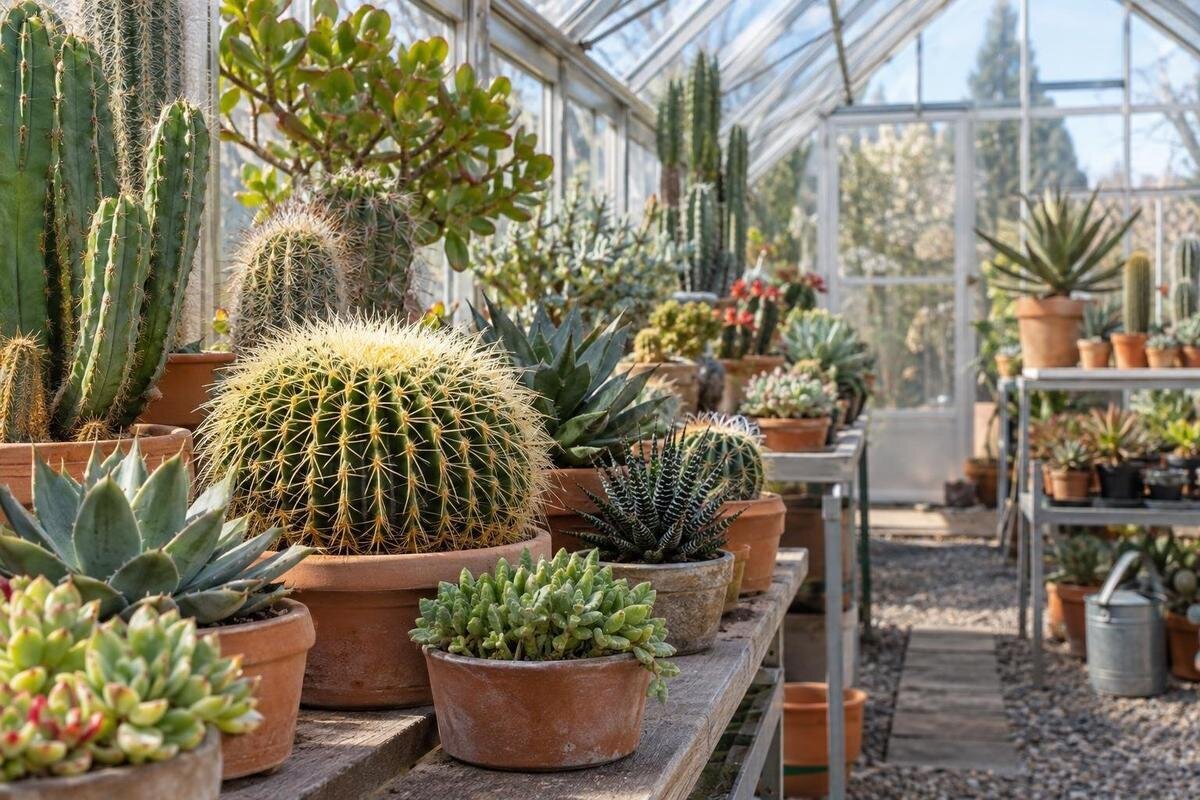
Planning a greenhouse for cacti and succulents is less about creating one warm, dry environment than about controlling different conditions within the same space. Desert cacti, forest cacti and varied succulents can differ in their needs for light, moisture and winter temperatures. In Malta’s strong summer sun, ventilation and adjustable shade deserve as much attention as planting area. Start with the plants you own, then plan a layout that lets you care for each group separately.

Identify the plants before setting conditions
The first planning document should be an inventory, not a target temperature. ‘Succulent’ describes a water-storing habit found across many plant families; it does not mean every plant wants desert conditions. Cacti also come from varied habitats. For each pot, record its botanical name, source, likely growth season, preferred light, watering pattern and documented minimum temperature. If a label says only ‘cactus’ or ‘succulent’, identify the plant more closely before assigning it a permanent position. Photograph incomplete labels and note the current position, so later changes in growth or colour can be compared with its light and watering history. Give each pot a reference number that matches its entry in the inventory, particularly where several plants look similar. Keep observed conditions separate from care requirements: a plant’s current position is not necessarily its best position. Mark uncertain entries clearly rather than filling gaps with assumptions. This makes the inventory useful when dividing the collection into care groups and shows which plants still need identification before you settle the layout.
Named examples show why. Many desert cacti need strong light and longer dry intervals than an epiphytic forest cactus such as Schlumbergera, which generally suits bright filtered light and more regular moisture while actively growing. Echeveria usually benefits from abundant light but can scorch after an abrupt move into intense sun. Sempervivum and some Sedum tolerate colder conditions than many Echeveria or Crassula ovata. These are starting points, not guarantees: species, cultivar, acclimatisation and pot conditions matter. Plants sold together in a mixed succulent tray may still need different winter and watering routines. Use reliable plant-specific guidance, and keep unidentified plants separate until their needs are clearer.
Map sunlight before placing benches
Map sunlight at bench height before deciding where plants or shelves will go. Observe the proposed site in the morning, around midday and late afternoon; repeat at different times of year if trees, buildings or walls cast moving shadows. The greenhouse covering, its cleanliness, angle, condensation and any shade all affect the light reaching leaves. In Malta’s strong summer sun, a spot that seems gentle in cooler weather can become intense at midday. Make observations from the position where the plants will sit, not only from outside the greenhouse, and mark bright and shaded areas on a simple plan. Record the date and time beside each observation so that a morning shadow is not mistaken for an all-day condition. If you are comparing two possible sites, use the same observation times for both. On the proposed bench plan, distinguish positions with prolonged direct sun from those receiving shorter periods or filtered light. You can then match those positions to the care groups in your inventory rather than describing the entire greenhouse as sunny.
Place plants with higher light requirements where they receive the strongest suitable exposure, but do not move shade-grown plants straight into unfiltered sun. Acclimatise them gradually and watch for bleached or scorched patches. Echeveria and many desert cacti generally need bright conditions, while Schlumbergera is better suited to bright filtered light. Removable shade gives more flexibility than permanent heavy shading: you can reduce harsh exposure when needed without leaving the whole collection short of light for the rest of the day. Recheck the pattern when you add benches or taller plants, since they may shade smaller pots.
Plan ventilation and shade for summer heat
An enclosed greenhouse can heat quickly in bright, still weather, so airflow is a daily control rather than a winter-only feature. Consider whether the planned layout allows air to enter and leave across the benches. High openings can help release rising warm air, while openings on another side may encourage through-flow. Keep the route clear of tall shelving and check that you can reach and operate the openings from the aisle. Ventilation also helps clear damp air after watering, but it cannot make persistently wet growing medium suitable for drought-adapted plants.
For a wall-adjacent site, the catalogue lists the Wall Greenhouse in area options from 3.69 m² to 14.34 m². Use the exact model plan to check its opening arrangement and how the greenhouse will sit beside the wall: a nearby wall may shade one side or affect the route for air. The product name and floor area do not establish those details. Plan adjustable shade as well as ventilation. Shade reduces direct solar exposure, while airflow helps move heat and moisture; one is not a substitute for the other.
Size the greenhouse for benches and access
Do not choose a greenhouse by floor area alone. Draw the internal plan and include the door opening, bench depth, central aisle and places where you will water, inspect and repot plants. Leave room to move an awkward pot without shifting its neighbours, and reserve floor positions for specimens that are too large for a shelf. Check clear height above benches as well as overall area: shelving can obstruct plants, inspection and access to vents. Allow for future growth too. A layout that fits the collection today may become difficult to use when small plants grow wider or taller.
The catalogue lists Limited Edition Aluminium Greenhouses from 3.77 m² to 28.08 m², which gives a range of sizes to compare. Use the dimensions of the specific model rather than treating its total area as usable growing space. Mark benches and walkways on the plan, then check the door position, headroom and access to openings against the plants you intend to keep. If your collection includes tall or broad specimens, allow for their mature size rather than basing every decision on the pots that are easiest to move now.

Manage rainfall, condensation and damp work areas
Shelter from rain makes watering more deliberate, but it does not make a greenhouse automatically dry. Water may blow in through an open door or vent; spills, damp trays and evaporation from wet growing medium also add moisture. Watch for condensation and slow-drying corners after watering, not just for rain on the floor. Use pots with clear drainage, empty standing water from saucers and avoid keeping wet compost beside plants that need a long dry rest. A short record of watering, wet weather and ventilation can help you notice where moisture lingers.
Make space for wet tasks, such as filling pots or cleaning trays, away from the driest benches. This can be a practical separation rather than a sealed room: choose a work surface that is easy to clean and avoid wetting nearby plants unnecessarily. The T-Model Orangery Greenhouse is listed from 16.52 m² to 30 m². Use the specific floor plan to decide whether you can separate growing and potting areas; the listed area alone does not show where openings sit or whether a chosen spot will stay dry. Ventilate after watering when conditions allow.
Separate plants with different light and moisture needs
Arrange benches around care groups rather than putting every plant in size order. Keep sun-demanding desert plants together and reserve an area with bright, filtered light for forest cacti or plants prone to scorching. Group plants with similar watering and winter needs near one another, so you can care for them without treating a whole shelf as identical. The groups do not need separate compartments: shelf position and spacing may be enough. Avoid placing a tall plant where it will shade sun-demanding specimens, and leave room to lift out a pot without brushing neighbouring spines or leaves. Draw the boundaries of each group on the bench plan and check where their requirements overlap. Plants may share a suitable light position without needing water at the same time, so keep individual labels readable within each group. Leave an accessible place for pots whose identity or care needs remain uncertain. These arrangements organise routine care; they should not be mistaken for independently controlled climates. If two groups need incompatible winter conditions, a different shelf position alone does not resolve that difference.
Use a bench map or durable labels to make each group’s needs clear, but do not label a zone simply ‘succulents’. A label that includes the plant name and its care notes is more useful when you are watering or adjusting shade. The catalogue lists Pyramid Greenhouse options from 5.53 m² to 18.9 m². Compare the exact internal plan with your intended bench arrangement, especially if you want distinct bright and filtered-light positions. The listed floor area does not show how shelves, mature plants or their shadows will affect light distribution.
Water according to the plant and pot
Water according to root-zone moisture and active growth, not a fixed weekly or monthly schedule. In a rain-protected greenhouse, pots may dry at a different rate from those outside; pot size, material, growing medium, ventilation and heat all matter. Check below the surface or lift a pot to judge its weight rather than relying only on a dry-looking top layer. When the plant’s needs indicate watering, moisten the root ball evenly and let excess water drain through the holes. Do not leave pots standing in full saucers, where roots may remain wet after the surface appears dry.
Adjust the approach by plant group and season. Many desert cacti and dry-grown succulents need a drier rest when growth slows, while an actively growing Schlumbergera has a different rhythm; species-specific guidance should determine the change. Keep dates and observations in a notebook, including unusually hot periods or a move to shade. Water pots individually when their conditions differ rather than applying the same routine to a whole shelf. The Aluminium Greenhouses with Storage – Limited Edition listing identifies models with storage and areas from 5.52 m² to 28.08 m²; check the actual storage space before planning to keep particular watering tools there.
Set winter protection by cold tolerance
Cold tolerance varies more than common names suggest. Many Sempervivum and some Sedum tolerate winter cold when grown in suitable conditions, while many Echeveria, Crassula ovata and tropical Schlumbergera are more frost-sensitive. These are broad examples, not a guarantee for every species or cultivar; acclimatisation, dampness and the length of a cold spell also matter. A plant that survives outdoors in the ground may be more exposed in a pot, where its roots have less surrounding soil. Check each plant’s identity and published cold limit instead of assigning one winter temperature to the whole collection.
An unheated greenhouse is not automatically frost-free or held at a stable temperature. If winter survival matters, measure the lowest temperature near the plants with a min–max thermometer and compare it with reliable species-level guidance. Include the condition of the growing medium in your decision: cold and wet can be particularly damaging to many dry-climate plants. The Bloomcabin Prestige Greenhouse is listed in areas from 3.77 m² to 28.08 m²; its name and area do not establish winter temperatures. Decide separately how to move or protect tender pots when conditions approach their documented limit.

Make the layout practical for routine care
Leave work space for more than plant display. A small potting surface, a place to set trays and an unobstructed route to the door make watering, inspection and repotting easier. Keep labels and frequently used tools accessible, but not where drips from recently watered pots will soak them. Put heavy or awkward containers where they can be reached without lifting them over spiny plants, and allow room to turn a pot for inspection. A clear aisle also helps you spot fallen leaves, pests or standing water before they are hidden by crowded pots. Test the proposed arrangement by tracing a routine task from beginning to end: reaching a pot, setting it down, inspecting it and returning it to its place. Include somewhere to put the watering can while handling plants. A bench that can only be reached by moving several neighbouring pots will make individual care cumbersome. Check access to the back row as carefully as the front, and keep frequently handled plants within comfortable reach rather than filling every available shelf.
For a collection that needs a separate work area, the Spacious Greenhouse is listed from 47 m² to 70 m². Those figures describe the model range, not a guaranteed bench or storage layout. Draw the route from the door to the benches and include the space needed to carry a tray, then compare it with the exact dimensions and access points for the model under consideration. Decide whether growing medium, spare pots and watering equipment belong inside or elsewhere; storage should not narrow the route or reduce light for the plants.
Compare greenhouse specifications with the collection
Make a comparison sheet before choosing a greenhouse. Include the site’s sun and shade, usable ventilation openings, how they are operated, clear internal height, door position, bench area and access for maintenance. Check which covering and opening configurations apply to the exact size you are considering; a product image or family name does not guarantee identical fittings across models. If plants will stay through winter, look for information relevant to temperatures at your site rather than assuming the greenhouse is heated or frost-free. For a base or fixing arrangement that depends on your ground, follow the product instructions and ask a qualified installer to assess site-specific needs.
The catalogue lists Aluminium Greenhouses from 3.77 m² to 28.08 m². Compare a specific size and configuration with your plant plan, not just the category name or total area. In the final layout, check that every care group has a suitable light position, a way to ventilate and enough access for watering and inspection. Keep a note of any unanswered detail, such as opening positions or clear height, and confirm it against the exact model information before deciding. This keeps the choice centred on what your collection needs rather than on size alone.
Frequently asked questions
Can cacti and succulents share one greenhouse?
Yes, if the layout lets you group plants with similar light, watering and winter needs. A desert cactus and a forest cactus, for example, may need different positions and watering routines. Keep care groups identifiable and avoid assuming that one greenhouse climate suits every pot.
Do cacti need full sun in a greenhouse?
Many desert cacti need bright light, but full, unfiltered sun is not right for every cactus or every plant that has been raised in shade. Increase exposure gradually and watch for scorching. Forest cacti such as Schlumbergera generally suit bright, filtered light.
Does a greenhouse keep succulents dry?
It can reduce direct rainfall on pots, but it does not guarantee dry air or dry growing medium. Watering, damp trays, condensation and rain entering through open doors or vents can all add moisture. Drain pots well and ventilate after watering when conditions allow.
How often should I water succulents under cover?
There is no reliable schedule for every succulent. Check the growing medium below the surface and take account of the plant’s growth phase, pot size, heat and airflow. Water plants whose needs call for it, let excess drain, and do not leave pots standing in water.
Will an unheated greenhouse protect tender plants from winter cold?
Not necessarily. An unheated greenhouse is not automatically frost-free, and its temperature depends on the site and conditions. Check the cold tolerance of each identified plant and measure the lowest temperature near the pots. Move or protect tender specimens when conditions approach their documented limit.
A useful plan gives each group an appropriate light position, a watering routine based on its own needs and a winter approach tied to identified cold tolerance. It also leaves enough room to ventilate, inspect and reach every pot. When those conditions are clear, desert cacti, forest cacti and other succulents can share a greenhouse without being treated as interchangeable plants.
