
Rain Shelter or Greenhouse: What Do Crops Need?
Growing under cover
Rain shelters and greenhouses are sometimes treated as interchangeable, but crops experience them differently. A roof-only shelter mainly reduces direct rainfall; an enclosed greenhouse also changes airflow, exposure to wind and how quickly heat and moisture build up. The right choice depends on the problem, the crops' needs and how much daily management you can provide. This comparison explains what each cover can and cannot do, and what to consider before choosing.

What to check before choosing 1
Rain shelters and greenhouses provide different levels of cover
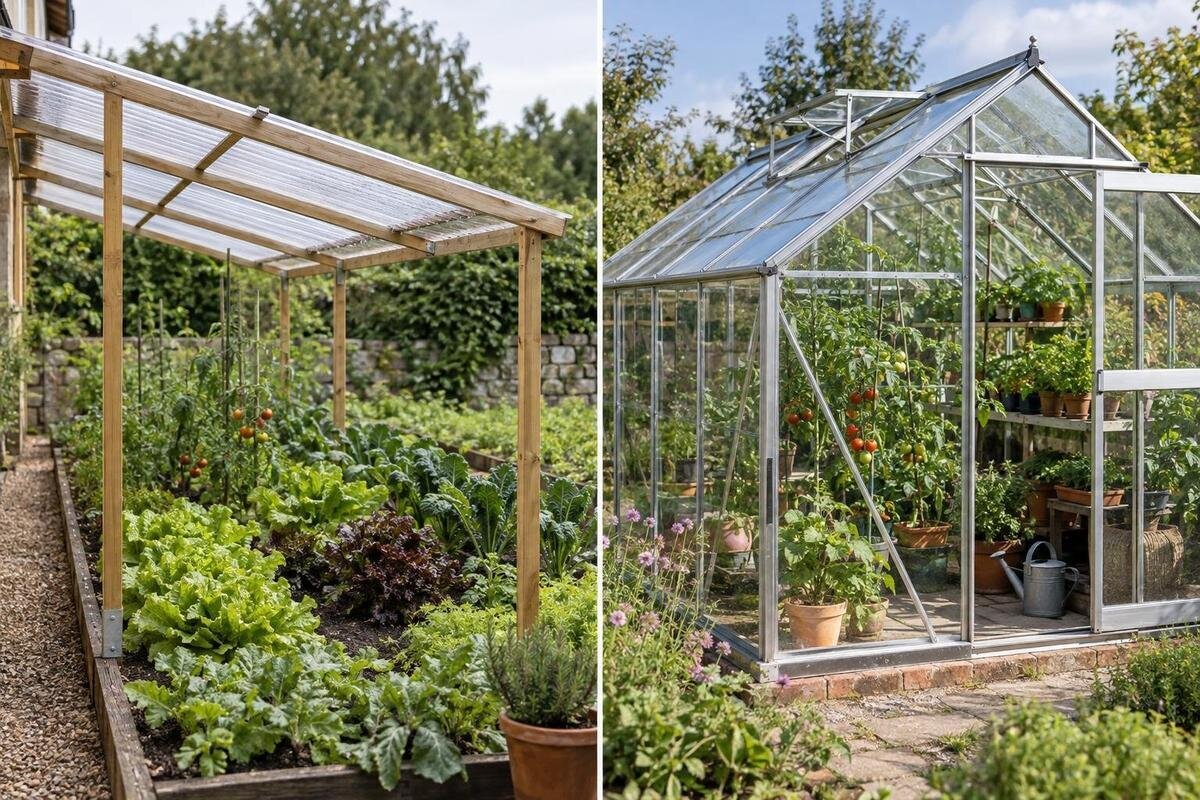
A rain shelter and a greenhouse both put a cover above crops, but they create different growing environments. In common use, a rain shelter has a roof over a bed or row while leaving the sides largely open. It reduces direct rainfall without separating plants fully from outdoor air. A greenhouse has walls and a roof, so, when closed, it usually offers more shelter from rain and wind and gives the grower more scope to manage air exchange. Designs vary: some shelters have side panels, while greenhouse doors or vents can be opened. Compare the actual configuration, not the label alone.
The practical distinction is the scope of the problem. If repeated direct rain is the main concern and the crop otherwise suits outdoor temperatures and exposure, a shelter may be enough. If you also need a more protected place for raising seedlings or growing plants to maturity, a greenhouse may be more useful. That wider role brings more responsibility: an enclosed space can heat up, hold humid air or cool down at night, so ventilation and watering still matter. Consider how you will manage those conditions, including when you cannot check them. Neither structure sets ideal growing conditions automatically; its design, site and daily operation affect the result.
Which crops benefit from direct-rain protection?
Consider crops whose foliage, flowers or fruit are affected by repeated direct wetting. Tomatoes are a familiar example: a roof can reduce rain landing on leaves and ripening fruit, which may matter where rain-related damage is a recurring problem. Some soft fruits and other crops with delicate harvests may also benefit. These are candidates, not automatic recommendations: variety, growing method, weather and crop stage all affect the decision. A cover can reduce one source of wetting, but it does not make the surrounding air dry or remove all disease and pest risks.
Before covering a row, note what is actually going wrong. Is rain damaging fruit, keeping foliage wet, washing soil from a bed or interrupting work? A shelter is easier to justify when the problem is specific and recurs at a predictable stage. Consider light as well as rain; a roof can reduce the light reaching plants, depending on its covering and condition. Where crops rely on pollinators, check whether insects can reach the flowers or whether pollination needs to be managed another way. Keep mature plant height, spacing and access for picking in view.
What to check before choosing 2
When a rain shelter is enough
A rain shelter may be the simpler answer when crops already grow well outdoors and only need direct rainfall intercepted. That could mean covering one row during fruiting or protecting a bed while leaving its sides open for tending. It avoids enclosing a larger volume that you would then have to ventilate and water separately. A clearly defined goal also helps you judge how much coverage is needed: identify which plants need protection and for how long, rather than covering the whole growing area by default. If the concern is limited to one crop or stage, a narrower cover may meet it.
Do not expect a roof-only structure to control temperature or block all weather. Rain can blow in from the sides, while wind and cold remain relevant; an unsuitable covering may also cast too much shade. The edges affect where water reaches the ground, so check where runoff falls and whether it could collect beside beds or paths. If these limits are unacceptable and an enclosed option is under consideration, the Classic Aluminium Greenhouse listing shows area choices from 3.77 m² to 28.08 m². Use the range as a footprint reference; the drawing for the chosen configuration is needed to judge beds and access.
What a greenhouse adds beyond rain protection
A greenhouse changes more than rainfall exposure. Its walls and roof create a more sheltered volume in which the grower can manage how much outside air enters and how quickly warm air leaves. That can be useful for raising young plants, holding tender crops or maintaining a longer sequence of crops, where the design and local conditions allow. It is not a climate-control system by definition: sunlight can warm the space quickly, while night temperatures may fall. An unheated greenhouse cannot be assumed to protect every crop from cold, and a more enclosed space needs suitable ventilation.
Think about the intended task as well as the crop name. Will you use the space for seed trays and young plants, for plants that stay there to maturity, or for a mix that changes through the season? Each use affects the floor space you need and how often you must reach the plants. For footprint comparison, the Lean-to wall greenhouse range lists areas from 3.69 m² to 14.34 m². That information gives a sense of listed scale only; inspect the chosen layout and check whether the site, access and openings match your plans.

What to check before choosing 3
Ventilation and humidity change the day-to-day work
Air exchange is one of the clearest differences in daily care. With a typical open-sided shelter, air can pass through without the grower opening a door, although still or hot weather can still create challenging conditions for plants. In a greenhouse, airflow depends more on the openings provided and whether they can be used as intended. Closing an enclosure changes its protective effect and can also trap heat and moisture. A crop's tolerance for heat and humid air should therefore influence the choice alongside its tolerance for rain.
Check the position and size of doors, vents or other openings in the actual greenhouse configuration, and consider whether you can reach and operate them as conditions change. Humid air and condensation can occur in an enclosed space; protection from rain does not by itself prevent leaf wetness or crop disease. A rain shelter is not guaranteed to be cool or dry either, because plants and soil release moisture and air movement varies. The Limited Edition Aluminium Greenhouses are listed across 3.77 m² to 28.08 m²; that area span is not ventilation data, so check the openings for the particular configuration.
Rain exclusion changes how you water
A roof excludes some natural rainfall, so water still has to reach the growing medium. This applies under an open shelter as well as inside a greenhouse, although the amount of rain entering from the sides varies. Do not use the cover as a reason to follow a fixed watering timetable: crop, growth stage, soil and weather all affect demand. Plan how water will reach each growing zone and make sure the route is practical during routine care. In an enclosed space, include plants set away from the entrance rather than assuming every bed will be equally easy to reach.
Also consider the water intercepted by the roof. Depending on the design and site, it may leave at the edges or at particular points, with drier ground beneath and wetter patches outside. That runoff should not be confused with irrigation. The T-Model Orangery Greenhouse range is listed from 16.52 m² to 30 m². When comparing a greenhouse at this scale, include water access and the route for roof runoff in your site plan; the published area does not describe either. Note where water already collects and keep regular access away from routes that become muddy.
What to check before choosing 4
Seasonal use depends on temperature as well as rain
The length of the growing season depends on temperatures, not just rainfall. A rain shelter leaves most exposure to outdoor air unchanged, so it is most useful where the crop already suits the season and direct rain is the main obstacle. A greenhouse can create a more sheltered space and may allow earlier starts or later harvests, but the result depends on crop requirements, outside conditions, light, glazing, ventilation and any heating. An unheated greenhouse is not a guarantee against frost, and a sunny enclosed space may become too warm for some crops. Match expected conditions to the crop rather than relying on the word greenhouse.
Write down the months or growth stages when protection is needed: seedling establishment, flowering, fruiting or late-season holding. Then distinguish a need for less rain from a need for warmer or more stable conditions; these call for different specifications and management. The Pyramid Greenhouse listing gives area choices from 5.53 m² to 18.9 m², which can help compare footprint, not seasonal performance. For any shortlisted model, check the selected configuration's stated covering and openings against reliable growing guidance for the crop. If you are not planning to heat the space, be cautious about cold-weather expectations.
Plan for mature crops, paths and usable area
Measure the crop zone, not only the outer footprint. Under a rain shelter, the protected bed must fit beneath the roof with enough coverage for the way rain arrives, while leaving room to tend, pick and move equipment. In a greenhouse, the floor area is shared by beds, paths, staging and any storage; a large floor plan can still feel cramped if access is poor. Estimate mature plant height and spread, not just the size of seedlings, and mark doors and walking routes on the drawing. Usable planting area and listed floor area are not the same measure.
The product label can also indicate a different space allocation. The Limited Edition greenhouse with storage is listed from 5.52 m² to 28.08 m². Since this is a storage version, inspect the drawing for how the chosen layout divides space between storage and growing, and where paths and the entrance fall. Do not assume every square metre is available for crops or that all sizes share the same layout. When comparing options, sketch the same beds and routes in each; leave practical access for watering, harvesting and cleaning.

What to check before choosing 5
Compare the configuration, not just the model name
Use like-for-like drawings and written specifications when comparing a simple shelter with an enclosed greenhouse. For a shelter, check the area covered, how open its sides are, the covering's stated light properties and where roof water goes. For a greenhouse, check outside dimensions, floor area, door and vent positions, glazing or covering options, and what is included in the selected configuration. Ask how the space will be used before comparing details: a propagation area and a space for mature crops may need different layouts. Confirm that area figures refer to comparable measures; a catalogue name or headline area is not a substitute for a configuration drawing.
The Prestige greenhouse listing with metal foundation covers area options from 3.77 m² to 28.08 m². The name identifies a foundation version, but it does not confirm that a particular layout suits your ground or that every part you expect is included. Check the specification for the exact size and components, and ask the supplier or a qualified professional about site compatibility where the base or exposure is a concern. Do not compare one product's outside footprint with another product's usable planting area as though they were the same measure.
Choose a cover for each crop group
Make the choice crop by crop. Group plants by the problem they face: crops that mainly need direct rain intercepted may suit a rain shelter; crops that need a more protected environment or an earlier start may justify an enclosed space if you can manage it; crops that need neither can stay outside. Think about whether you want to tend all plants in one area or separate tasks. Some gardens may have a clear reason to use both types of cover for different crops, but each should address a real need. Choosing one structure for the most demanding crop can create unnecessary work for the rest.
If you need a larger growing area, judge an enclosed option by its internal plan and the work it creates, not just its headline area. The Spacious Greenhouse listing shows area choices from 47 m² to 70 m²; that range indicates scale, not suitability for every crop. Sketch the beds, paths and working area you would actually use, then compare that plan with a smaller cover or separate crop-specific protection. This can reveal whether the additional enclosed area solves a genuine growing need.
Frequently asked questions
Does a rain shelter keep plants dry in heavy rain?
It blocks rain from above, but wind-driven rain can reach plants through open sides. Splashing and roof runoff can also wet the ground. How much protection it provides depends on the cover, its position and the weather; an open shelter is not a sealed rain barrier.
Is a greenhouse warmer than a rain shelter?
A greenhouse can warm quickly in sunlight because its enclosure changes how heat moves through the space. It can also cool at night or become too warm if ventilation is inadequate. A rain shelter follows outside air more closely. Neither structure guarantees a particular temperature, so consider the crop's needs and the exact design.
Can tomatoes grow under a rain shelter?
A shelter can be worth considering when the aim is to reduce direct rain on tomato foliage or fruit, provided light, airflow, irrigation and access are suitable. It does not remove humidity, pests or every cause of crop damage, so treat it as rain protection rather than a complete growing solution.
Will plants under either cover still need watering?
Yes. A roof keeps most direct rainfall out, so water still needs to reach the growing medium. An open shelter may admit some rain from the sides, but that is not a reliable watering plan. Check the crop and soil rather than relying on a fixed schedule.
Which option is more useful for a longer growing season?
A greenhouse offers more scope for a sheltered growing environment, but any season extension depends on the crop, outside temperatures, glazing, ventilation, heating and management. An unheated greenhouse is not a guarantee against frost. A rain shelter mainly limits direct rain and leaves much of the weather unchanged.
Before choosing, name the crop, the weather problem and the stage when it occurs. If the answer is only direct rain on a particular row, a rain shelter may address it without enclosing the entire growing area. If wind, temperature variation, earlier starts or a longer growing period also matter, assess a greenhouse as a working environment that needs ventilation and water management. Let the crop's needs and your routine determine the cover; neither label is a guarantee of suitable conditions.
