
Ready-Made Sauna or Build from Scratch?
Sauna buying guide
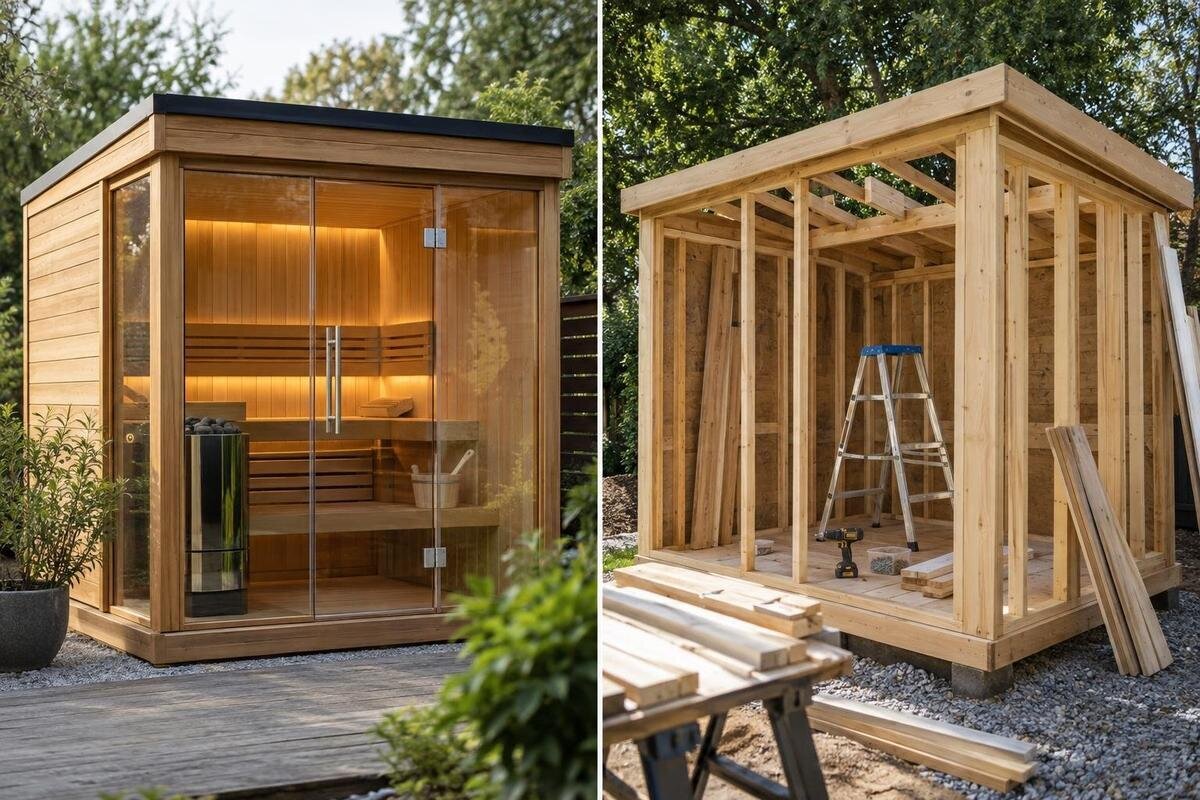
Choosing a ready-made sauna or building one from scratch is mainly a decision about who owns the design and coordination. A supplier-defined model limits some choices but gives you a concrete specification to assess. An independent build offers more control while making you responsible for the brief, material sourcing, compatibility checks and project sequence. A supplied kit is a third route: its design and components are already selected, even if you do the assembly. Compare written scope, remaining site work, time and responsibility rather than relying on labels such as “complete” or “ready-made”.
Ready-made, kit or independent build?
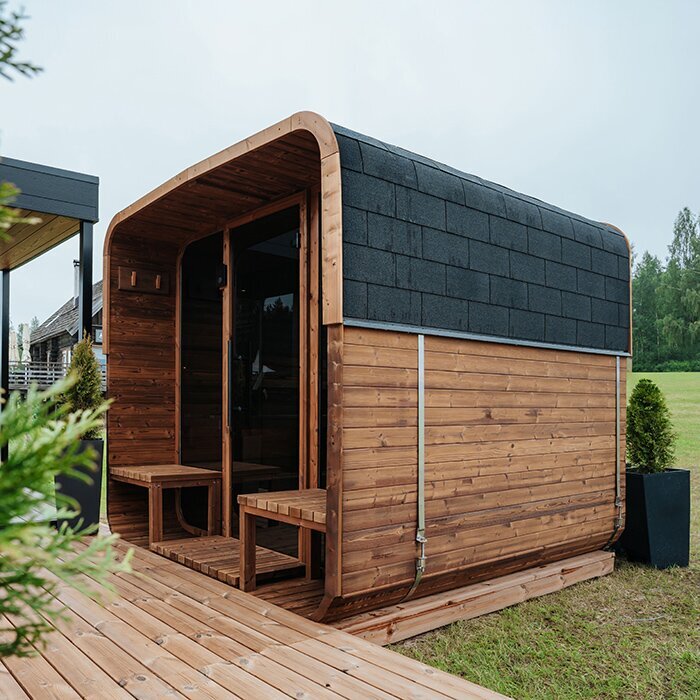
A ready-made sauna begins with a design that a supplier has already defined. You choose among the models and options actually offered instead of specifying every part from a blank page. That gives you a concrete product to assess, but the label “ready-made” does not establish whether it arrives assembled, needs kit assembly, includes a heater or controls, or requires separate work on the site. It does not settle what a particular quote covers either. Treat the current model specification and written scope—not a category label, photograph or short headline—as evidence of what you are buying. If more than one configuration is available, ask the seller to identify exactly which one is quoted.
An independent build begins with your requirements and a design that must be developed, checked and turned into a sourcing list. You may do some tasks yourself or hire a designer and tradespeople; “from scratch” describes how the specification and procurement are managed, not whether you personally handle every tool. A supplier kit sits between the two: its design and components are selected in advance, while assembly may remain yours or an installer’s. The important distinction is not simply DIY versus professional. It is who makes or approves design choices, finds compatible parts, handles changes and coordinates unfinished work. A kit can require considerable assembly without becoming an independently designed build, while a bespoke sauna can be professionally constructed under your brief.
What a ready-made sauna package includes
When a seller describes a sauna as complete, ask which exact configuration that word refers to. Request an itemised list of the structure, interior elements, seating, doors, heater and controls if applicable, and every other component covered by the quote. Do not assume a heater, accessories or finishing materials are included simply because they appear in a photograph; an image is not a package inventory. Ask what is optional, what is excluded, and whether assembly or installation is separately priced. If model choices exist, have the selected options identified in writing. Compare the same scope, not one headline product figure against a fully developed project estimate.
Clarify the form of supply and the point where the supplier’s responsibility ends: is the offer a finished unit, a kit, a product requiring assembly, or a design-only package? Establish who arranges transport, moves components into place, prepares the base, organises service connections and completes finishing work. These are questions, not assumptions about any one model. Request any relevant drawings and instructions, and check that they match the configuration in the quote. Confirm current availability for your location and ask for written notice of items you must source separately. The answers show where your own project planning begins and help prevent tasks from being left unpriced or unassigned.
Design choice and the limits of a standard model
Choosing a defined model trades some design freedom for a concrete starting point. You can assess its documented layout against intended users, available space, appearance, access and the room needed around the entrance. If it fits, you avoid commissioning every design decision; if it does not, forcing a standard option into the site can create compromises. An independent brief should identify what genuinely matters: who will use the sauna, how people will enter and move around, the preferred arrangement, and how the design should sit in its setting. Write these priorities before selecting finishes, so visual preferences do not obscure practical requirements.
Customisation can affect several decisions at once. A layout change may alter the structure, components to source, site plan and trades involved; ordering materials before the design is checked can lead to unsuitable parts or rework. Separate essentials from optional details, then ask a competent designer or supplier which choices depend on one another. Use an existing product such as the LCF-300 sauna alongside your bespoke brief to identify which requirements each proposal would meet. Record where you would accept a standard arrangement and where you need a different solution. The useful question is whether greater design freedom solves a real need.
Sourcing materials for an independent build
For an independent build, procurement starts with the checked design, not a trip to a timber yard. Turn the specification into a bill of materials that identifies each item, quantity, intended use, acceptable alternatives and the documentation needed to approve a substitute. Ask suppliers to confirm that timber and internal finishes are suitable for the conditions for which they are specified; appearance and a broad product description are not enough. Fixings, insulation, doors and heater or control components also need to fit the design as a system. Have a competent designer or relevant specialist review choices affecting structure, heat or electrical safety rather than improvising from separate product descriptions.
Purchasing from several sources brings different lead times, delivery arrangements, minimum quantities and returns terms. A late substitute may not match the design or its documentation, so keep a dated materials schedule and record which alternatives have been approved. Note each supplier, expected arrival and who will check the goods. Allow for offcuts and replacement items, but wait for checked quantities rather than guessing. To compare this workload with buying a defined product, consult the S-140 product details and ask which components the supplier provides together. List anything you would still need to source separately. This makes the procurement comparison about actual orders and outstanding tasks rather than an assumed complete package.
Checking the site before choosing a design
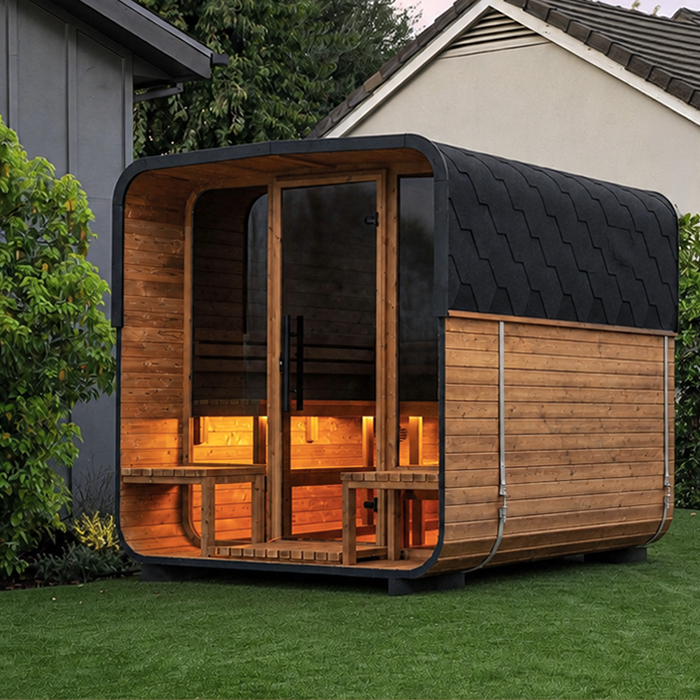
Site planning matters for either route, but the information available differs. For a defined model, request its dimension drawing and instructions before reserving a position. Check the overall space required, the route for bringing components into place, room to open the entrance and the clearance needed for normal movement. Ask what any listed area or measurement represents rather than assuming it includes access space. For an independent design, put those limits into the brief before selecting a layout or ordering materials. Finding out late that the location is difficult to reach or too restricted may mean revising the design and the sourcing plan.
Have the proposed location assessed if ground support, a building structure, electrical supply or other specialist work is involved. A sauna intended for outdoor use still needs a site suited to the product and its instructions; garden placement alone does not confirm that the base, exposure or services are appropriate. Ask who will assess each part of the site and arrange any work. If considering the HC-150 model, use its dimension drawing to discuss the proposed position and access route with the supplier or installer. Resolve site constraints before choosing between a standard model and a bespoke design. If permissions or property restrictions may apply, check with the relevant local source before committing.
How project time differs
Time estimates are easy to misread because product lead time, site preparation and construction cover different stages. A ready-made design may save the time needed to develop a specification and source each component separately, yet you still need a confirmed supply date, access plan, prepared site and any assembly or specialist work arranged. Ask the seller to state what event marks the end of its responsibility and what has to be ready beforehand. Separate time spent waiting for supply or trades from the hours you will spend making decisions and coordinating work. A generic estimate may leave out both site preparation and other people’s availability.
An independent build adds research, design reviews, procurement and coordination; some tasks can overlap, while others depend on earlier decisions being settled. Make a schedule with milestones for an approved design, confirmed supply, site readiness, trade bookings, assembly and final checks. Record who is responsible for each milestone and what could delay it, including missing information or a changed component. A supplied kit reduces some component-selection work, but it still needs time for site preparation and assembly. When requesting a schedule for the HC-225 sauna, distinguish the supplier’s delivery estimate from the date when all work would be complete. Compare that full sequence with the independent build schedule.
Comparing the full project cost
Compare complete project totals rather than the headline product figure. For a ready-made offer, list the exact configuration, delivery, unloading, assembly or installation, equipment and controls if not included, site preparation, service work, finishing and applicable professional fees. Put a price beside each confirmed item and mark unknowns as open questions, not zero. Ask whether optional features change the quote or schedule. If requesting a quote for the N-210 sauna, keep the selected options beside the cost breakdown so you can see exactly what the total covers. Use the same cost headings for the independent build, even where different suppliers or tradespeople would provide the work.
For a self-managed build, include each purchased component, freight, tool hire or purchase, consumables, expected waste, replacement material, specialist advice and trades. Include your own time in the comparison even if you do not assign it a cash value: research, collection, assembly and fixing errors all displace other work. Building independently is not automatically cheaper, just as a designed product is not automatically better value. Compare matching scope and requirements, keep any allowance for unexpected costs separate from confirmed quotes, and update your estimate when the design or source changes. If totals differ, check whether both include the same finishing and connection work.
Who takes responsibility for design and installation
The ready-made route can give you clearer points of contact, but it does not automatically transfer every project duty to the seller. Establish in writing who specifies the sauna, supplies each item, prepares and inspects the site, assembles the product and arranges any professional service work. Ask which manuals apply to the exact model and configuration, and whether changes made on site affect the instructions. Keep the quote, drawings, instructions and agreed variations together. Do not assume an unanswered detail is included or that a catalogue page defines the installer’s responsibilities.
With an independent build, someone needs to coordinate design decisions, procurement and the work shared between trades, even if different specialists do the physical work. Electrical connections, structural support and fire-safety questions call for suitably qualified professionals; do not improvise them from general online instructions. Agree who reviews the plan, who checks completed work and who provides documents relevant to future maintenance before work starts. For a supplier-defined option such as the N-250 model, establish who handles questions about the product and who handles installation issues. Knowing whom to approach matters particularly when a change affects both the supplied components and work arranged separately.
Choosing the route that fits your priorities
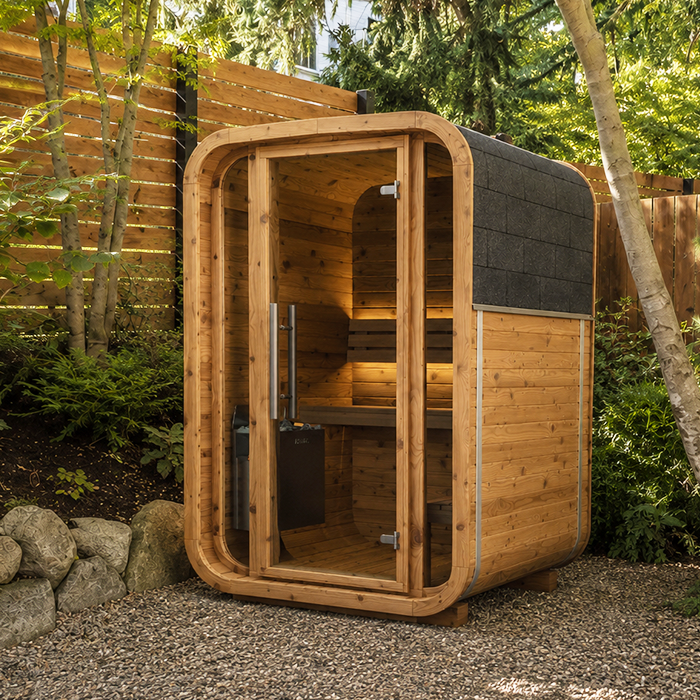
A ready-made model may suit you if you want to choose from a defined range, prefer a bounded set of decisions and can accept a design that is not fully tailored to the site. It can also reduce the amount of material sourcing you manage. That does not remove the need to verify fit, configuration, supply terms and work left to arrange. An independent build may suit a site with particular constraints or a clear design brief, provided there is enough time, expertise or professional support to develop and coordinate it. Custom design is most useful when it answers a specific requirement, not simply because more choices are available.
Before choosing, list your three most important requirements and the tasks you are willing to take on. Weigh design freedom against a more defined scope, then decide who can take responsibility for technical reviews and coordination. If adapting a standard design would require a chain of unverified changes, ask whether a qualified bespoke design would provide a clearer solution. If your changes are optional, compare them with the supplier’s actual choices before commissioning a full design. You could assess the LC-260 sauna option against that requirements list, noting which points are essential and which are preferences. This helps you judge whether the extra work of an independent build is justified.
A written comparison for both routes
Make a side-by-side sheet with one column for the defined model and one for the independent design. Record drawings and their versions, package contents, exclusions, dimensions, site preparation, delivery, assembly, professional services, expected schedule stages and the person responsible for each. Mark items as confirmed, quoted, estimated or unknown so assumptions stay visible. Ask for a current written answer to each unresolved point, especially what happens if an item is unavailable or the site requires a change. This gives you a firmer basis for comparison than a photograph or a single advertised figure.
For an independent route, do not order materials until the people responsible for the design and specifications have checked them. For a ready-made route, confirm the exact model and configuration, current availability and what the supplier will deliver or arrange. If the HCF-300 catalogue model is on your shortlist, enter the quoted configuration in the comparison rather than using a general description of a ready-made sauna. Give the independent proposal an equally clear design reference. Keep unresolved items visible instead of treating either option as complete while important decisions remain open. You can then compare two specific proposals and the work each leaves you to manage.
Frequently asked questions
Does “ready-made” mean the sauna arrives fully assembled?
No. The term can describe a supplier-designed product, but it does not establish how that product is supplied. Check whether the specific offer is for an assembled unit, components or a kit, and whether unloading, assembly and installation are included. Confirm the details for the exact model and configuration rather than relying on a category title.
Is assembling a sauna kit the same as building from scratch?
No. With a kit, the supplier has already defined the design and selected the components, although assembly and site preparation may still be your responsibility. An independent build also requires someone to develop or commission the specification, check that components are compatible and organise sourcing. Either route can involve hired professionals.
Can building a sauna from scratch cost less?
There is no reliable general answer without comparing the full scope. Include materials, transport, tools, waste, specialist advice, trades and your own time, as well as any work excluded from a ready-made quote. A lower product price is not the same as a lower project cost, so compare like with like.
How long does an independent sauna build take?
There is no single timeframe that applies to every project. Separate calendar time from the hours you will spend planning and doing the work. Design reviews, supplier availability, site readiness, trade bookings and changes can affect the schedule. Set milestones and note who is responsible for each before relying on an estimate.
Who should handle electrical and structural decisions?
Use suitably qualified professionals for work or decisions involving electrical connections, structural support or fire safety. Establish who will review the design, arrange the relevant work and provide any applicable documentation before you commit to a product or begin a build. Do not treat a general product description as an installation plan.
Ready-made and independent builds do not differ simply in who assembles the sauna. The main distinction is between choosing a defined product and managing the design, sourcing and coordination yourself. A kit can leave you responsible for assembly without requiring you to develop the design. Choose by comparing the work each proposal includes, the decisions still to be made and the time you can commit. Greater design freedom is worthwhile when it meets a genuine requirement and you are prepared to manage the work it brings.
