
Compact Premium or Larger Basic Sauna: Budget Priorities
SAUNA BUYING GUIDE
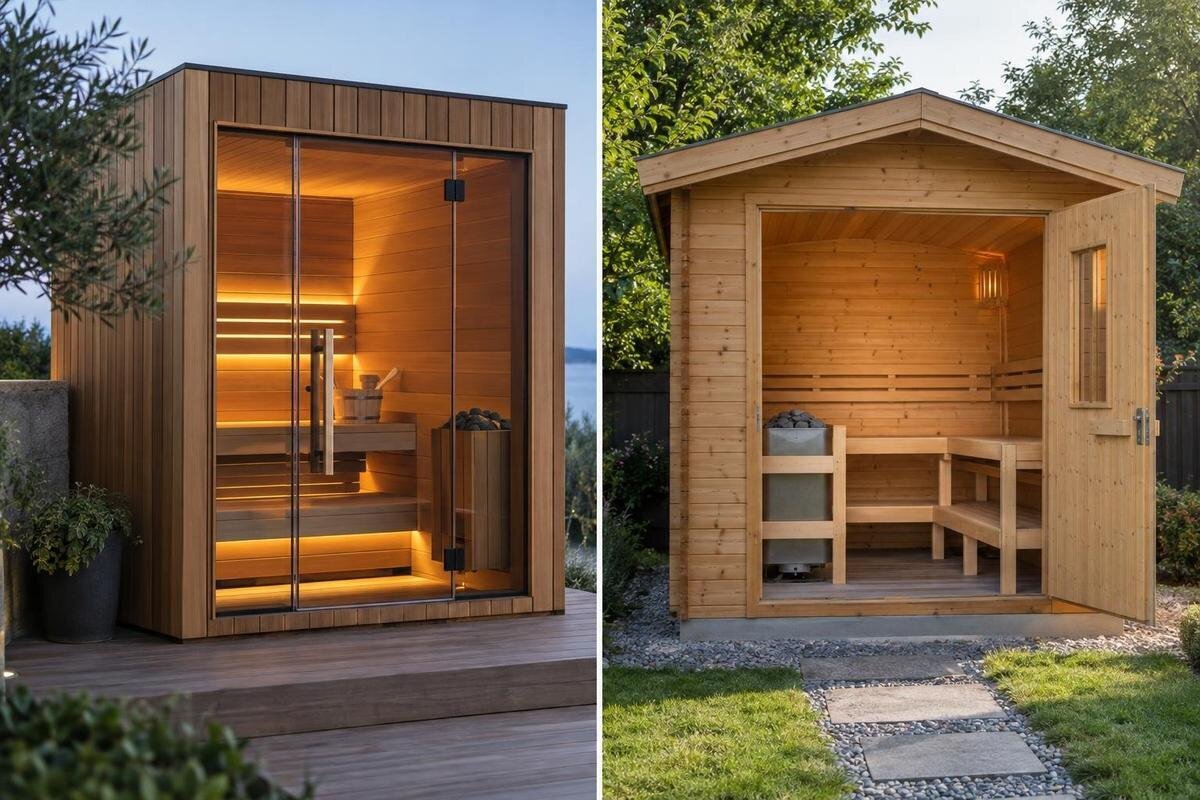
With a fixed sauna budget, neither a compact premium model nor a larger basic one offers better value in every case. The choice depends on which matters more to you: particular construction and comfort features, or extra usable room. Compare both on the same project scope, using dimensioned drawings, written inclusions and a clear list of must-haves. Model labels and headline area figures cannot settle the decision.
Decide what the sauna must do
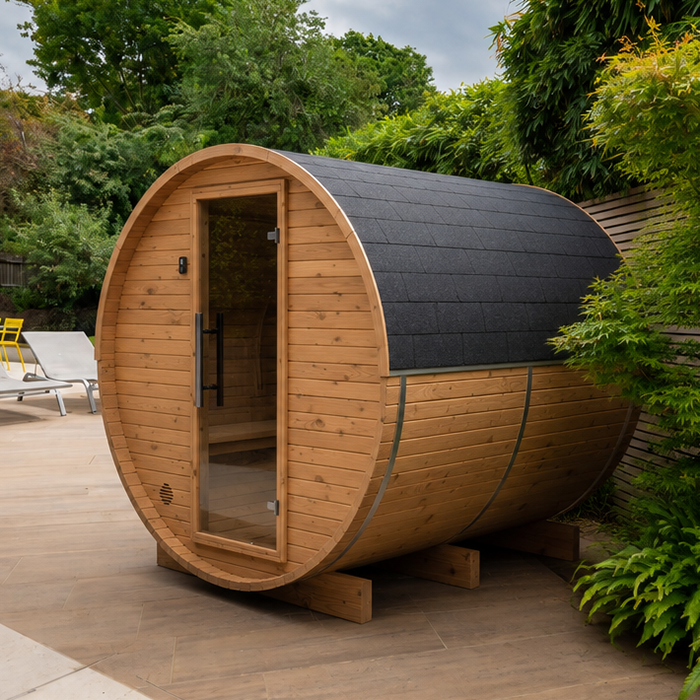
A fixed budget does not make “compact premium” and “larger basic” directly comparable categories. Before looking at models, describe the use the sauna must support: how many people will usually use it, whether they will sit together or take turns, how often you expect to use it, and whether solo or shared sessions matter more. Those answers set minimum requirements for both space and comfort. A larger cabin adds little if you rarely need the space; a compact one may be frustrating if regular users cannot sit as planned. Separate your usual routine from occasional plans to host guests. Decide whether accommodating those guests together is essential or whether taking turns would be acceptable. Neither choice is inherently better, but it changes how much of your budget you should devote to room that may otherwise go unused. Treat “premium” and “basic” as buying descriptions, not standard technical grades.
Write two lists before browsing: non-negotiables and preferences. Non-negotiables might include enough bench space for your regular users, a layout the supplier confirms is compatible with your intended heater, and a site that can accommodate the cabin. Preferences might include extra room to stretch out, a particular bench arrangement or optional fittings, once the specification confirms them. A listed area is useful as an early filter, not as a capacity figure: the Sauna S-140 listing shows 1.93 m². Check how that area is measured and compare the drawing before deciding whether the room suits your routine. A model name or photograph cannot settle that question.
Compare the same complete budget
Treat your budget as the amount available for a complete, usable project, not simply the cabin price shown in a listing. For each option, check whether the quote includes the heater, controls, benches, floor, lighting, door, assembly, delivery and any installation work; do not assume any item is included. You may source some components separately, but record who will supply each one and whether the manufacturer confirms compatibility. Keep necessary site work and professional installation estimates in view. This is not a full installation budget: it is a way to prevent the larger cabin looking more affordable only because its quote covers less.
Compare both choices on the same scope, then mark each cost as essential, optional or not yet priced. Leave a reserve based on actual quotes and site requirements rather than choosing an arbitrary percentage. Ask for written detail about the exact model and configuration, because a model name does not define the package. The Sauna N-210 page lists an area of 4.43 m²; that figure does not say what is included or what the finished project will cost. If one quotation covers the cabin only and another includes equipment or services, align their scope before judging which uses the budget better.
Read area figures alongside drawings
Area helps narrow a shortlist, but first establish what the figure describes. Is it the external footprint, the floor area or another stated measurement? Does a quoted room figure represent clear interior space? Ask for a drawing for the exact model and configuration, showing inside and outside dimensions, bench positions, the door position and any protruding components. A room’s shape can affect how a given area works: space occupied by benches and the route in are not interchangeable with open floor. Do not infer usable space from a headline number or photograph; use documentation that matches the option being quoted.
The Sauna N-250 listing, for instance, gives an area of 5.27 m². Treat that as a prompt to check what is measured, not as proof of a particular amount of sitting or standing room. Compare the same dimensions on both drawings and check the cabin in its intended orientation. Include space for the door to open, access to the heater and the route people need to use. If a supplier provides only an area figure, ask for a dimensioned drawing before deciding that the model fits. A larger listed area is not, on its own, evidence of a more useful layout.
Match the bench layout to your users
More floor area does not automatically mean a better seat. Compare the number and arrangement of benches, the usable length and depth shown in the drawings, and whether everyone who regularly uses the sauna can sit in the way they prefer. Where the information is available, ask whether dimensions refer to the bench itself or to the surrounding room. Consider where people will enter and sit, and whether the layout leaves them enough room to settle without having to rearrange their position. If a listing mentions maximum occupancy, do not treat that figure as a substitute for checking the benches.
The LC-260 product listing shows an area of 5.12 m², but that does not reveal whether its benches fit your household. Review the drawing for bench lengths, depth and height where these are specified. Be clear about the positions you want to accommodate: sitting upright together and allowing one person to stretch out are different layout requirements. If stretching out is a priority, compare the usable bench length with that need rather than relying on the cabin’s overall length. Also consider whether someone occupying that bench would prevent another regular user from sitting comfortably. Decide whether changing clothes or setting down items is part of your routine, and whether that needs space inside the cabin or elsewhere. These are separate needs: a larger sauna may not be the only way to provide space around it. If the layout details are missing, request them before treating the model as a match.
Judge construction by documented details
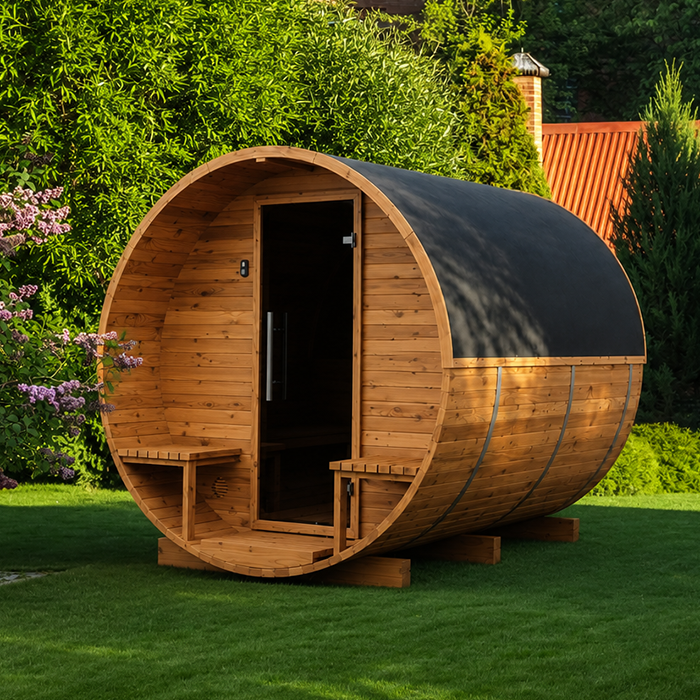
“Premium” is not a technical specification on its own. Look for precise information about the wall, roof, floor and door construction; the timber and any stated treatment; how components join; weather protection; and maintenance instructions. Ask for model-specific manuals and drawings, then identify which elements are standard and which are priced options. A higher price does not by itself prove better durability, insulation, finish or lower maintenance. These are distinct claims that need comparable evidence. In a side-by-side review, record the documented feature you value and why it matters, rather than awarding points simply for a premium label.
“Basic” may refer to fewer included features or simply be a seller’s shorthand; it does not tell you which. The HCF-300 product listing gives an area of 6.89 m², but that number is not evidence about joinery, timber quality or weather protection. Compare the product documents and written configuration, not model names or photographs. Note gaps such as unspecified materials or unclear care instructions, and ask how the manufacturer’s guidance applies to the exposure at your site. If the supplier cannot document a detail that matters to you, keep it marked as unknown instead of assuming that either option is better.
Choose comfort features by daily use
Comfort features are worth paying for when they matter in everyday use. Decide which details would make a real difference to you: heater choice and controls, bench layout, back support, lighting, ventilation arrangements and ease of access. Check that the controls you want work with the proposed heater, rather than treating them as unrelated upgrades. The heater must be confirmed as suitable for the exact cabin configuration, and its selection can affect project costs and installation requirements. Ask the seller what is included and have a suitably qualified professional confirm service requirements. Do not infer included equipment from a photograph or a broad category name.
The Thermowood Barrel Sauna LCF-300 page gives an area of 6.89 m², but an area figure does not identify its heater, controls or comfort fittings. Put possible upgrades in three groups: features you will notice each time, additions you can do without, and later changes the supplier confirms will remain compatible. This helps prevent attractive extras from displacing a necessary bench arrangement or site work. For electrical and other specialist services, use a qualified professional to confirm the appropriate installation; a sales description is not a technical plan.
Identify what each upgrade adds
Once the quotations cover the same essentials, look at what you would gain by spending more on a particular configuration. Separate additions that change the usable layout from those that change the finish, equipment or appearance. For each optional feature, write down the problem it solves and its quoted cost. If several upgrades are bundled together, ask whether they can be priced separately; do not assume that they can. This makes it easier to distinguish a feature you actively want from one you would accept only because it comes in the package. If a premium configuration exceeds the budget, identify which of its benefits would actually be lost by choosing a simpler specification. Apply the same test to a larger cabin: name the activity or seating arrangement that its extra space would allow.
Keep the Sauna HC-225 listing, which gives an area of 4.4 m², alongside the written offer so that your notes refer to the exact model. Build a short comparison of the extras you would retain and those you would remove from each option, using supplier-confirmed choices rather than imagined modifications. A feature included in one package is not automatically valuable to you simply because it costs extra elsewhere. Equally, deleting every optional item may leave you with a sauna that meets the budget but misses the comfort you wanted. Compare the resulting configurations as complete purchases. Confirm current availability and the exact specification before ordering, especially if your preferred combination differs from the standard offer.
Confirm that the site and access work
Check the site as well as the cabin dimensions. Compare the full external footprint, access to the door and the route for bringing components to the intended position against the plot and available access. Note the existing surface, ground levels, drainage, nearby structures and exposure at the site, then ask the supplier which preparation and clearances the exact model requires. A drawing can show whether the sauna fits in plan; it cannot confirm whether access, a base or site work is suitable. Do not treat a product’s headline area as a site plan or assume every model needs the same foundation.
The Sauna HC-150 product page lists an area of 2.97 m². Use its model-specific drawing to check external dimensions, access and intended placement; the area figure alone cannot answer these questions. Have a qualified professional assess any base, electrical connection or other work that requires specialist judgement. Ask who is responsible for preparation not included in the supplier’s quote. If the choice depends on an assumed route, clearance or service arrangement, obtain confirmation before committing to the model.
Separate purchase costs from ongoing use
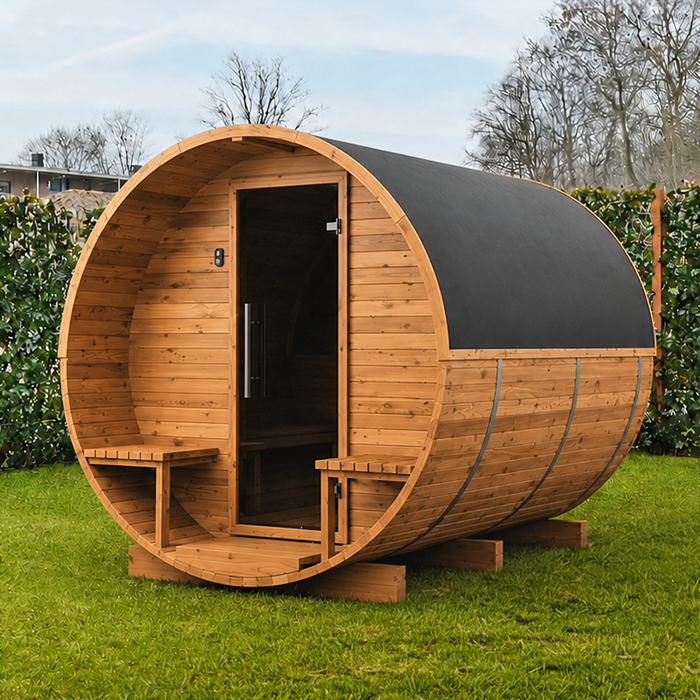
Once you have confirmed the fit and configuration, consider ongoing commitments separately from the purchase. Ask what maintenance the manufacturer specifies for the actual construction, exterior treatment and site exposure, and whether any parts need periodic attention. For the heater and controls, check the operating and care documentation for the selected equipment. Do not infer service life, energy use or maintenance effort from the labels “premium” and “basic”: the evidence needs to relate to the exact sauna and equipment. If a long-term cost matters to your decision, request an estimate based on the selected configuration and the way you expect to use it.
Keep the initial purchase and ongoing use in separate columns in your comparison. A bigger cabin does not automatically cost more or less to run: equipment, specification and usage all matter, so size alone is not enough to predict energy consumption. Similarly, a higher initial price cannot be treated as a saving on maintenance without evidence. Record known costs, missing information and estimates distinctly. If a reliable figure is not available, do not present a guess as a saving; revisit the comparison when the relevant equipment data and local tariff are known.
Weigh the final trade-offs
With the comparison complete, rule out any option that misses a genuine non-negotiable: it does not fit the site, its usable layout cannot support your regular use, or a necessary item cannot be included within the budget. For the remaining choices, rank the three factors you care about most, such as usable bench space, documented construction details and a comfort feature you will use often. Score both options against the same factors using drawings, written inclusions and manuals. Keep a brief explanation beside each score so that a strong preference is not mistaken for a confirmed product advantage. You can also compare the options without numbers: write what you gain and what you give up with each purchase. Then ask which compromise would bother you more during your usual routine. Do not count the same benefit twice under different headings, such as both room size and seating space, unless they address separate needs. The score is a personal aid, not an objective quality rating; a close result simply means your priorities may not separate the models clearly.
Choose the compact premium option when its documented construction or comfort advantages address priorities you genuinely value and the drawings show enough usable room for regular users. Choose the larger basic option when its extra clear space solves a real seating or movement constraint, while its confirmed specification still meets your minimum standard. If neither fits the budget and requirements together, remove optional extras, compare a different configuration or wait rather than stretching for a label you cannot verify. Make the compromise explicit before you commit.
Frequently asked questions
Does a compact premium sauna always offer better value?
No. “Premium” is not a uniform technical grade, so compare documented construction, included features and the complete quote. A compact model may suit you better if its confirmed details matter and its layout meets your needs. More room may be the priority if it solves a genuine seating constraint.
Is a larger sauna automatically more comfortable?
No. Extra floor area does not tell you how the benches are arranged or how much usable seating they provide. Check the drawing for the bench layout and dimensions, then compare it with the way you expect to use the room.
How should I compare the area figures in product listings?
Ask what each figure measures and request a dimensioned drawing for the exact model and configuration. Compare interior and exterior dimensions, bench positions and the space needed for access. An area figure alone does not establish usable seating or capacity.
Should the heater be included in the sauna quote?
Do not assume it is included. Ask whether the quote covers the heater and controls, and whether the manufacturer confirms they suit the exact cabin configuration. Check any separate equipment or installation costs before comparing the total with another offer.
What if a supplier cannot confirm an important detail?
Mark it as unknown and request the relevant drawing, manual or written clarification. Do not treat missing information as proof that either option is better. If the detail affects fit, comfort or the complete budget, wait until you can compare it fairly.
Neither option is automatically the better purchase. A compact sauna may be the better fit if its documented features matter to you and its layout meets the needs of regular users. Extra room deserves priority when it resolves a real seating or movement constraint. The strongest choice is the one whose compromises you can comfortably accept: less space without losing the seating you need, or fewer optional features without giving up the comfort you value.
