
What Can Increase Sauna Delivery and Crane Costs?
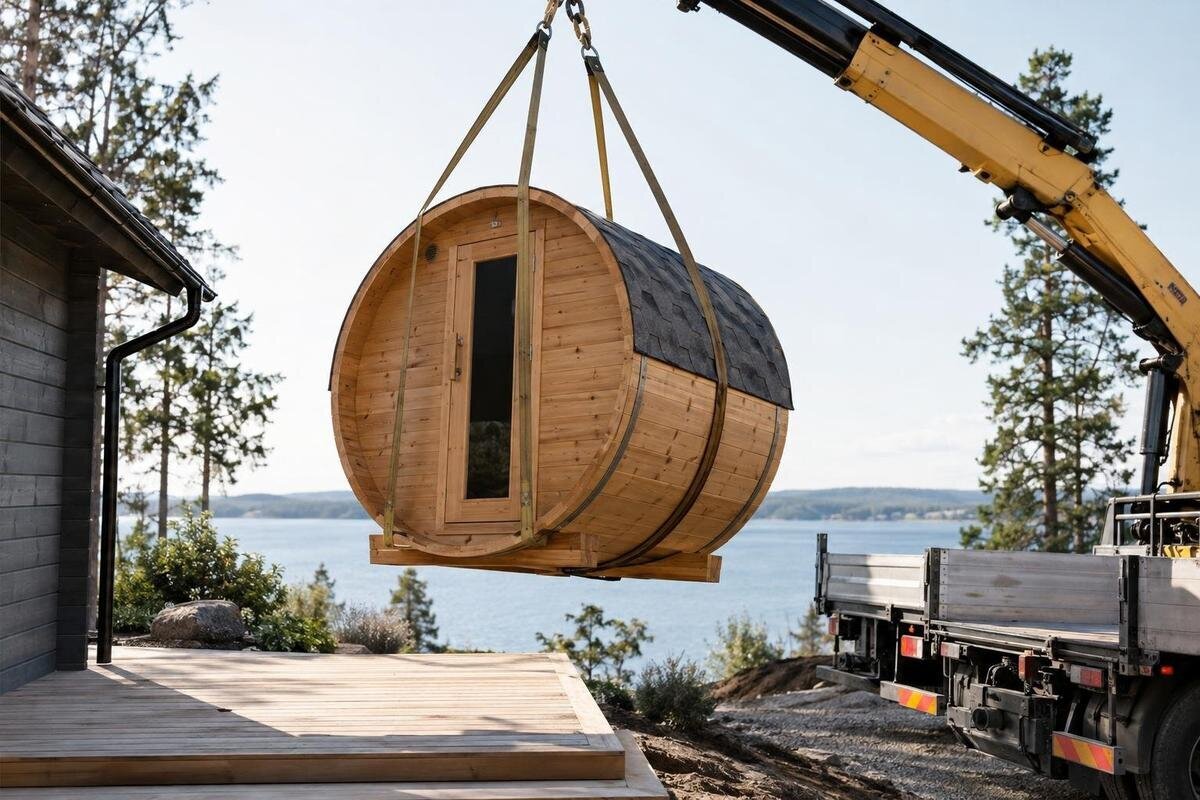
Sauna delivery planning
A sauna delivery quotation depends on more than the distance travelled. Freight, unloading, property access and the route from the vehicle to the agreed handover point can all affect the plan. A crane or other lifting arrangement may be a separate cost, and a difficult approach or unclear destination can change what a provider needs to arrange. Give the seller or carrier accurate site and load information, and confirm what the quotation includes. Do not assume delivery is free, reaches the prepared base or includes crane work.
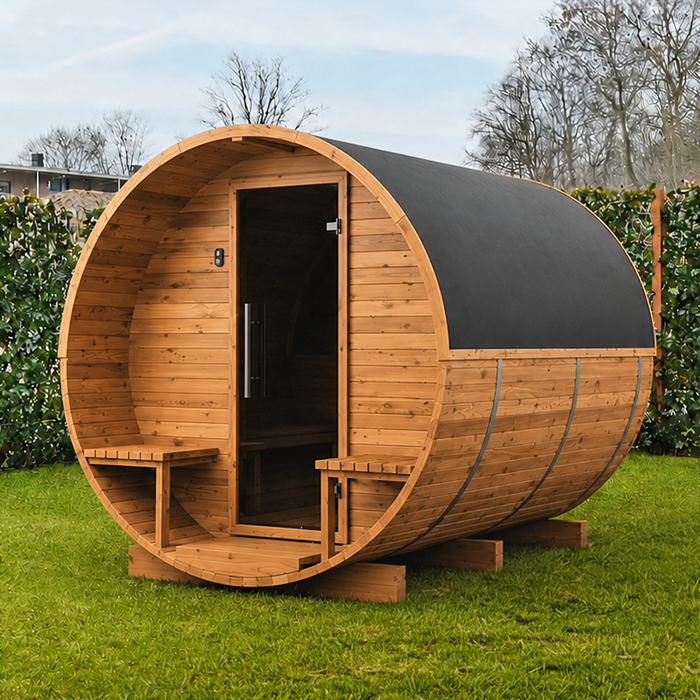
How a sauna delivery quotation is built
A sauna delivery quotation is best read as a set of logistics tasks rather than a simple charge for distance. A provider may price the journey, the vehicle required for the load, unloading, movement from the vehicle to a handover point, lifting equipment, an operator or extra crew, and time on site as separate lines or as one package. Waiting, a second trip or a changed booking can also affect the final amount if the terms allow it. Freight still matters, but a difficult final stretch from the road to the drop-off point can alter the arrangement too. Ask which tasks the total covers, which are excluded and what assumptions sit behind the figure.
Put the exact product identity on the enquiry, then ask the seller to confirm the version and delivery format being quoted. A catalogue reference such as Thermowood Barrel Sauna HC-225 identifies a listing; its name alone does not tell a carrier the packed dimensions, weight or number of packages. Those details can influence the vehicle, unloading method and whether a lift needs to be considered. Ask the supplier for current transport information rather than estimating from a photograph or product title. That gives each provider the same load to assess and reduces the chance that a basic freight figure is mistaken for the complete delivery cost.
What the quoted delivery service includes
The word delivery does not define the handover point. A quotation might cover transport to the property entrance, a vehicle-accessible area or another agreed location; it may not include carrying the sauna to its prepared base, positioning it or assembly. Nor should unloading be assumed to be part of the service. If access stops the vehicle before the destination, the quote needs to say who moves the load the remaining distance and how that is arranged. A seller’s product price and a carrier’s service scope are separate things, so ask for the delivery boundary in writing rather than relying on a general description.
Even when the order identifies Thermowood Barrel Sauna N-210, ask the seller or carrier to name the exact handover point and spell out unloading responsibility. Is the driver leaving the item where the vehicle can stop, or are a crew and equipment included for movement to a specific area? Does the quote cover lifting from the vehicle, positioning, or only transport? Record exclusions too: a lower total may omit the part of the job that matters at your property. If more than one provider is involved, establish who coordinates the handover so the freight and any separate lift are based on the same assumptions.
Vehicle access along the full approach
Describe the route from the road to the vehicle’s stopping point, not just the entrance gate. Note narrow sections, tight turns, changes in level, slopes, surface conditions, overhead branches or cables, steps and places where parked vehicles could restrict access. Measure relevant clearances and state where the measurements were taken; the provider can say which dimensions matter for its proposed vehicle. Do not guess that a large delivery vehicle can reach the property because a car can. If it cannot reach the intended stopping point, say where it can stop and what lies between that point and the handover area.
An enquiry naming Thermowood Barrel Sauna N-250 still needs a clear access description. Send photographs from the vehicle’s approach, at tight turns and at gates, alongside measurements and any known restrictions on access times. Mention shared entrances or areas that need to be opened, and say if the stopping place depends on someone else’s permission or availability. Ask the carrier to assess the route and confirm the vehicle it proposes, rather than choosing one yourself from a photo. If the route is uncertain, find out whether the provider needs more information or a site visit before treating the price as final.
Unloading space and the final handover point
Unloading space is not simply the patch where the sauna will stand. The delivery vehicle may need room to stop, position unloading equipment and move the load towards the agreed handover point. Describe the distance from the stopping place to the destination, the narrowest part of the route, changes in level, steps, doorways and corners. Note walls, covered passages, gates or other obstacles between the two points, and photograph the whole route rather than only the destination. If there is nowhere for the vehicle to turn or wait, mention that in advance so the provider can assess another stopping point or transfer arrangement.
Mark two points on a simple site plan: where the vehicle can stop and where you want the delivery left. For a quotation concerning Thermowood Barrel Sauna LC-260, that distinction helps the provider assess the transfer instead of assuming direct access from vehicle to base. Add any locked doors or shared areas along the route, and say who can open them and when. A route shown on a plan but unavailable at the booked time can cause delay or extra handling. Ask whether the set-down area needs to be clear or prepared before the vehicle arrives, and confirm who is responsible for that preparation.
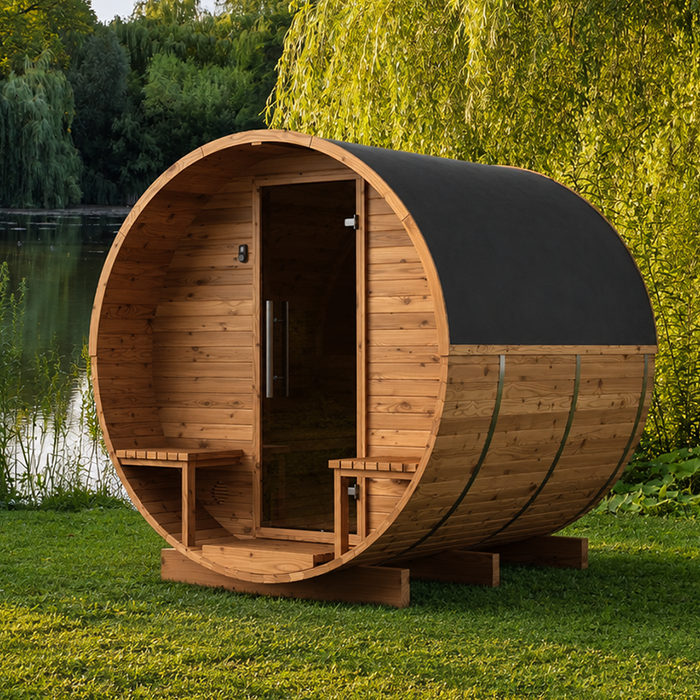
Packed dimensions, weight and delivery format
Ask the supplier for the transport details of the exact sauna being quoted: packed dimensions, weight, number of packages and how it will be delivered. Do not estimate these from a product photograph, a catalogue title or a floor-area figure. Find out which item is the largest or heaviest, whether the delivery consists of one load or several, and whether the provider is pricing a complete unit or a packaged product for later assembly. These facts can affect vehicle choice, unloading and lifting arrangements. If the supplier’s information is incomplete, tell the carrier what remains unconfirmed instead of filling the gap with an estimate.
For an order referencing Thermowood Barrel Sauna HCF-300, request current packing information from the seller or manufacturer and pass it on with the access details. Confirm whether all packages are due together and whether they must pass through the same gate, doorway or narrow route. If different parts have different delivery or handling arrangements, ask how each is covered in the quotation. The provider needs to assess the load it will actually transport, not just the name of the sauna. Keeping the product information and the site information together also makes it easier to spot when a revised configuration requires a new freight or lifting assessment.
When crane work can add to the cost
Crane work is not automatically included in sauna transport. Ask whether the quotation covers the equipment, operator, mobilisation, set-up, lifting accessories and time on site, or whether any of these are separate. If a different company supplies the lift, establish who coordinates it and whether the transport crew will wait for the handover. A line that simply says crane may leave important details unclear. Find out who confirms the proposed arrangement against the load and site, and what happens if the planned set-up area is unavailable when the vehicle arrives.
The lifting provider needs confirmed load information and a description of the lift route before it can assess an arrangement. The required reach, the proposed position for the equipment, obstacles and time on site may all affect the quotation; distance from the delivery vehicle is not the only consideration. When asking about Thermowood Barrel Sauna LCF-300, request a written description of the proposed lift and what its price includes, rather than treating crane work as a standard extra with a universal rate. Leave equipment selection and assessment to the provider, and make sure any separate lifting quotation refers to the same load and destination as the transport quotation.
Crane position, obstacles and the lift route
The place where lifting equipment can stand may differ from both the vehicle’s arrival point and the sauna’s final position. Describe the path of the lift as well as the access route on the ground: walls, trees, neighbouring buildings, balconies, overhead services and changes in height can all matter to the provider’s assessment. Photographs from several angles are more useful than a single view of the destination. State where the equipment could potentially be positioned, but do not assume that a clear-looking space is suitable. The lifting provider must confirm what can be used and whether the proposed movement is feasible.
If the intended destination is elevated or on a roof, say so at the outset. A crane’s ability to lift an item does not establish that the destination or supporting structure is suitable for it. Do not assume a sauna intended for a garden is rated for roof placement; ask the manufacturer for the relevant product information and have a qualified structural professional assess the supporting structure. The lifting company can assess the delivery arrangement, but its quotation is not a structural approval. These are separate checks, and resolving the destination before booking avoids pricing a lift to a location that has not been confirmed as suitable.
Waiting time, access changes and return visits
A delivery can take longer than planned if the vehicle cannot stop, a gate is locked, the route is blocked or the agreed set-down point is not ready. Whether waiting, a failed delivery or a return visit adds a charge depends on the written terms, so ask about these possibilities before confirming the booking. Check how the provider treats delays, a missed slot, storage, cancellation and rebooking, and whether a second journey is priced separately. These conditions are especially important when transport and lifting are provided by different companies, because a delay to one part of the arrangement may affect the other.
Keep the final access information with the order and booking. For a delivery of Thermowood Barrel Sauna S-140, for example, record any changes to the route or set-down point alongside the order reference so the carrier can identify the affected booking. Tell the carrier promptly if a gate, parking arrangement, building work or destination changes, and ask whether the revised plan has been accepted. Reconfirm who will be present to open access and receive the load. A small change can matter when vehicle position or lifting equipment has been planned around the original information.
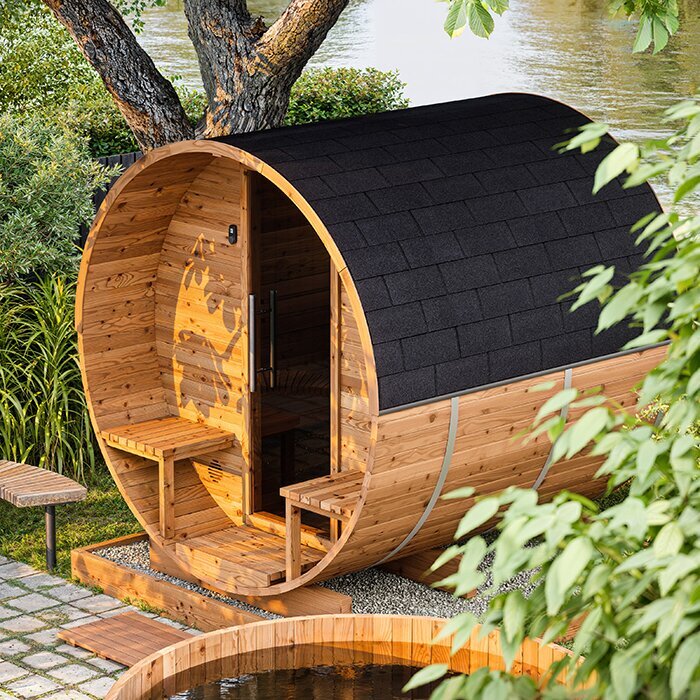
How to compare transport and lifting quotations
Compare quotations only after checking that they describe the same product, route, delivery boundary and handover point. For example, a quote for transport to a property entrance is not equivalent to one that includes unloading and a crane-assisted set-down at a named location, even if both use the word delivery. Ask providers to separate freight, unloading, lifting and other relevant services where possible. Check whether time on site, waiting and a second journey are included or excluded. This makes differences in the totals easier to understand and helps reveal whether one quote leaves a key part of the delivery to be arranged separately.
For an enquiry using Thermowood Barrel Sauna HC-150, give each provider the same confirmed product reference, packing details, route information and intended handover point. Ask whether the amount is firm or conditional on a site assessment, and which changes could alter it. If transport and crane work appear on separate quotations, confirm that both describe the same load, timing and destination. Keep any exclusions beside the total rather than relying on a verbal explanation. When a quotation leaves an item unclear, treat it as an open question, not as a service that is included.
Ways to avoid preventable delivery costs
The most useful way to control the delivery budget is to reduce uncertainty before a booking is made. Prepare one set of information with the exact order reference, supplier-confirmed packed details, route measurements, photographs, stopping point, destination and known access restrictions. Say who will open gates or receive the load, and mention any time limits that could affect arrival. Ask whether the provider needs a site visit or additional measurements before confirming the quotation. Clear information gives the carrier a better basis for planning and makes it less likely that a missing detail will be discovered only after the vehicle has been booked.
Before delivery, make the agreed route and handover point available as described, and tell the provider if that is no longer possible. Do not assume that a smaller vehicle, manual carrying or a different lifting arrangement will be acceptable simply because it appears cheaper; the provider needs to assess the load and route. Keep the written quotation and final access notes together so that changes can be checked against the agreed scope. A realistic delivery plan accounts for the whole journey from vehicle to handover, not only the distance travelled on the road.
Frequently asked questions
Does sauna delivery normally include crane work?
Do not assume that it does. Ask whether the quotation includes the crane, operator, set-up, lifting equipment and time on site, or whether these are excluded or arranged separately. Have the provider confirm the arrangement for your load and access.
What information should I send to get a delivery quote?
Give the exact model and configuration, supplier-confirmed packed dimensions and weight, the delivery address, route measurements, photographs, access restrictions, unloading point and intended handover location. Mention obstacles and any limits on when a vehicle can arrive.
Can a provider quote without visiting the property?
That depends on the provider and the details available. Clear measurements and photographs may help with an initial assessment, but ask whether the figure is firm or conditional on a site visit or further checks. Do not treat a provisional estimate as a confirmed total.
Can I book the crane separately from the sauna transport?
Possibly, but confirm how the transport and lifting arrangements will work together. Establish who supplies the lift, coordinates the timing and manages the handover, and whether the transport crew will wait. Separate bookings should use the same confirmed load and site information.
What happens if the delivery vehicle cannot reach the agreed point?
The outcome and any extra charge depend on the written terms. Before booking, agree the alternative handover point and ask about waiting, return visits and rebooking if access is blocked or the unloading plan cannot proceed.
The final sauna delivery price can reflect the road journey, unloading and any onward movement to the agreed handover point. Clear load details, a confirmed access route and an explicit lifting scope make quotations easier to compare. Check how waiting or a return visit would be charged, so both the quoted total and the circumstances that could change it are understood before booking.
