
Sauna Planning for Small Hotels and Guesthouses: Use and Commercial Suitability
SAUNA PLANNING
Adding a sauna to a small hotel or guesthouse changes the buying question. Guests may share sessions, use the equipment repeatedly and expect it to be available during stated hours; staff may need to manage access and clean between bookings. That operating pattern differs from occasional private use, but a product name or square-metre figure does not show whether a model is suitable. Define how the amenity will work, estimate peak demand, allocate supervision and maintenance, then seek written manufacturer approval for the exact model and configuration.
Define the guest service before selecting equipment
Decide whether the sauna is reserved for one room or party at a time, booked in successive slots by several guests, or available throughout stated opening hours. These options change peak demand, the number of starts, the time available for changeover and the level of staff involvement. Restricting access to overnight guests does not automatically make use light; several parties may want the same evening period. Include day visitors or groups only if your actual offer allows them, and do not base the operating plan on average occupancy alone. Note whether the sauna is included with a stay or booked separately, since this shapes what guests will expect.
Write a short service brief before looking at models. State who may book, how many parties might use the sauna in a day, whether users share it, whether staff start the equipment and what hours are promised. Add the busiest realistic day, such as a full weekend or holiday period, rather than relying on an annual average. Consider late arrivals, cancellations, cleaning intervals and the time staff need to reset access. A clear brief helps the manufacturer assess the real use case and prevents a description such as guest-only use from obscuring a demanding operating pattern.
Describe the sauna’s duty cycle in writing
Describe the duty cycle in terms the manufacturer can answer. Record the planned opening window, expected start-ups, the length and spacing of bookings, preheating time and any interval set aside for cleaning or other required pauses. Use timings confirmed in the manual or by the supplier rather than assumed figures. A guest appointment is not the same as the period the heater is operating, and a daily guest count alone cannot describe the workload. Ask what operating limits apply, how they are defined and whether they cover the exact heater and control configuration being offered.
Make a sample schedule for an ordinary weekday and a peak day. Mark the first requested use, clusters of evening bookings, likely gaps, staff handovers, closing time and any periods when the sauna would remain available between guests. Compare that schedule with written operating guidance, not just the advertised session length. Include the time needed to prepare and reset the space; otherwise, bookings may overlap in practice even when the calendar looks tidy. Distinguish time reserved for guests from time reserved for staff tasks, and show which gaps could actually be offered for another booking. An empty slot is not necessarily spare operating capacity if it is needed for the prescribed routine. This gives reception a practical basis for accepting an extra request without disrupting the rest of the day. Revisit the profile if the property extends its hours, adds more users or changes its booking system, since each change can increase the frequency or length of use.
Check seating capacity and usable space
Do not convert a catalogue’s square-metre figure directly into a guest count. The figure may not identify internal usable floor area, bench arrangement, seating capacity or the space needed to enter and leave. Ask for a dimensioned plan and manufacturer-stated capacity for the exact version, then compare those details with your actual group sizes and access route. If the manufacturer does not state a maximum number, do not fill the gap by dividing an area or estimating from a photograph; ask for written clarification before setting a booking limit. Confirm whether the quoted area refers to the inside, outside or another measurement.
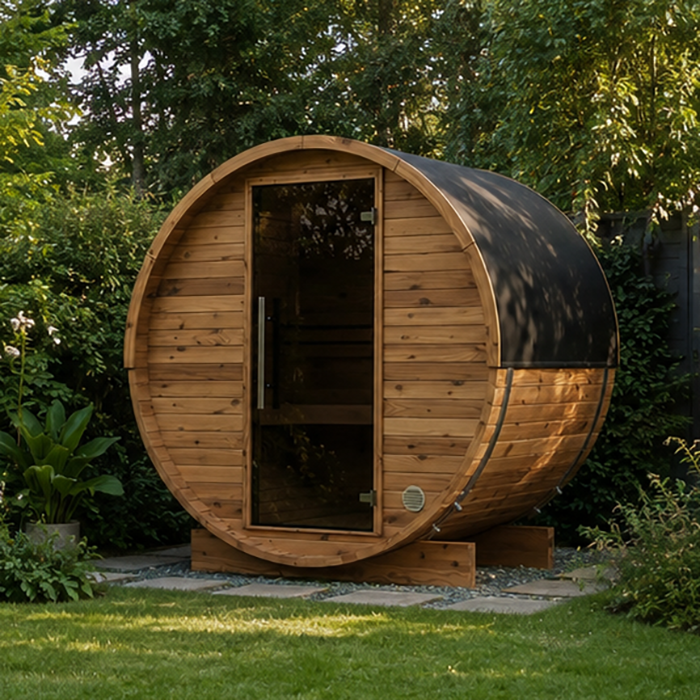
As one catalogue example, the Sauna LC-260 listing identifies a Thermowood Barrel Sauna and shows 5.12 m². Treat that as a published figure to clarify, not evidence of internal usable area, occupant capacity or commercial approval. Ask the supplier to state what the measurement covers and provide dimensions and intended capacity for the exact version. The distinction matters when room layout and bookings depend on the space available inside; product photography cannot settle it.
Plan guest access and booking changeovers
Capacity inside the sauna is only one part of guest flow. Allow for where people change, wait for a slot, store belongings and receive instructions, and consider whether the route crosses private accommodation or a busy service area. A group may arrive early or finish at different times, so booking boundaries should not leave people queuing at the entrance. Think through privacy, wayfinding and access for the range of guests you expect. If a particular access need or property constraint affects the layout, ask a suitably qualified local professional to assess it; an online image cannot show the conditions at your site.
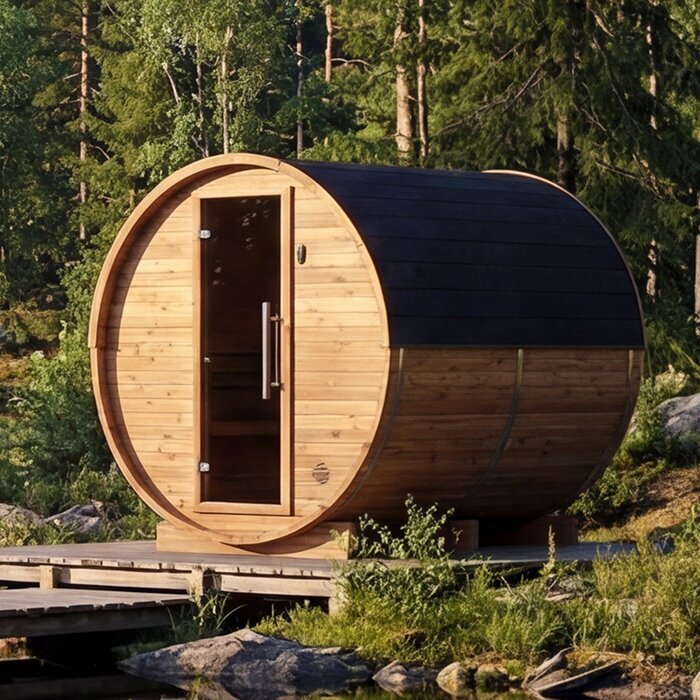
The Sauna HCF-300 listing shows 6.89 m², but that figure does not show how guests approach the entrance or where they wait. Request a plan and assess the route from changing space, the door’s operation and circulation outside the unit. Then set booking boundaries that leave staff time to confirm the previous party has left, complete any required reset and prepare for the next arrival. Keep the timetable and guest directions consistent with the actual layout, including what happens if a session overruns or the next party arrives early.
Set a supervision and operating policy
Set the supervision level from the manufacturer’s instructions, the actual controls and your service hours, rather than convenience alone. Confirm whether the model is intended to be guest-operated, whether staff need to activate it and what oversight is required while it runs. Give guests concise instructions on approved use, access arrangements and how to report a fault or uncertainty. If the manufacturer requires staff supervision, make sure the planned opening hours match staff availability. Identify who takes over during breaks or shift changes, rather than assigning responsibility only to a department. Reception staff should know whom to contact when the person responsible is unavailable and whether bookings must pause in that situation. Keep these arrangements consistent across the booking confirmation, guest information and staff instructions, so guests are not promised access that the team cannot provide. Do not assume that unattended operation is permitted because a booking is private or a control panel appears simple.
Keep the controls, access policy and staff rota aligned. For the exact Sauna LCF-300 listing, ask the manufacturer to identify which controls and heater configuration are supplied or required, whether guests may operate them, and what oversight the intended pattern calls for. Do not infer that a named model has a guest mode, remote control or permission for unattended use unless the manufacturer confirms it. If the approved operating method needs more staff coverage than the rota can provide, reduce the booking hours or adopt a service arrangement the supplier confirms.
Build a cleaning and inspection routine
Write a cleaning schedule around actual turnovers and the manufacturer’s care instructions. Ask which cleaners and tools are permitted, which surfaces require particular treatment, and what drying or ventilation routine follows use. Do not assume that materials, finishes or components across similar-looking models accept the same cleaning product. Leave enough time between sessions to complete the instructed work rather than promising consecutive bookings that staff cannot prepare the space for properly. Separate the guest-facing tidy-up from scheduled maintenance, so a quick visible check is not mistaken for a full service. Make the task list clear enough for a relief member of staff to follow: identify the relevant care instructions, the person responsible and how completion is recorded. Include a way to flag unfinished work to reception before the next party arrives. A booking should not appear ready simply because the previous guests have left or their allotted time has ended.
Record the exact model in the maintenance file. If the Sauna S-140 listing is on your shortlist, use that model name when requesting its care instructions. Ask what routine visual checks are expected, which tasks require authorised service, and what to do if a component is damaged or a fault appears. Keep a log of dates, observed issues and actions so staff can hand over information between shifts. If the sauna cannot be operated according to its instructions, remove it from bookings until the issue has been assessed. Staff should not dismantle equipment or improvise repairs.
Review installation and service access
The Sauna HC-150 listing gives 2.97 m², but this is not an installation drawing and does not establish the conditions required at your site. Before finalising a location, request dimensioned manufacturer drawings, installation instructions, utility requirements and stated clearances for the exact configuration. Have an appropriately qualified installer assess the supply, location, base, ventilation, access and any site work. Where property-specific requirements or approvals need confirmation, consult the relevant local professionals or authorities. Do not use a catalogue area figure as a substitute for site assessment.
Service arrangements matter throughout the sauna’s working life, not only when it is installed. Ask who handles faults, which parts or components may need servicing, how repairs are arranged and what maintenance the manufacturer expects. Confirm what support is available for the exact configuration and who in the hotel is responsible for contacting the supplier. Do not build a service promise around an assumed response time. If a fault would cancel booked sessions, decide in advance how staff will tell guests, suspend access and manage the affected bookings.
Get written approval for accommodation use
Send the manufacturer a specific description of the proposed operation and ask for a written answer on suitability. Include the exact model, heater and control configuration, intended location, anticipated hours and frequency, whether guests or staff will operate it, and whether unrelated guests may share a session or each party books exclusive use. For example, refer to the Sauna HC-225 listing by its exact model name rather than asking about a broad product family. A general description of occasional use or a reassuring sales phrase does not resolve whether the particular setup is approved for repeated guest use at a small hotel or guesthouse.
Ask the manufacturer to confirm which warranty terms apply to that use and configuration, and whether any operating or maintenance conditions affect them. Obtain the relevant manuals, installation requirements, servicing guidance and written confirmation in one file. If the response depends on a different heater, control or installation arrangement, make sure the final quotation and delivered configuration match the one assessed. Approval for a related model should not be treated as approval for another; keep the answer tied to the exact equipment and service pattern under consideration.
Compare operating costs and supplier support
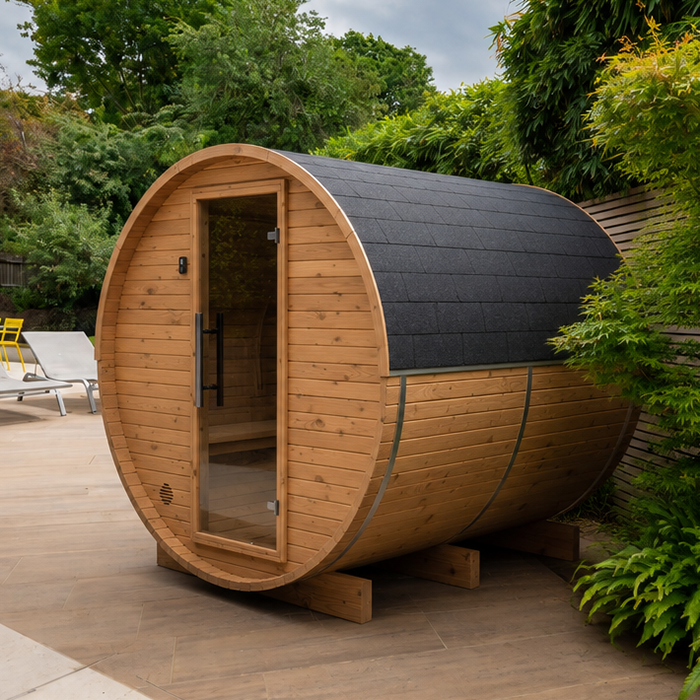
A purchase quote is only one part of the operating budget. Ask suppliers and qualified installers for information on expected energy use for the exact configuration, installation work, planned maintenance and service requirements. Combine that information with your own staffing and cleaning arrangements and the utility rates that apply to your property; do not estimate consumption from the sauna’s area. The Sauna N-210 listing gives 4.43 m², but that figure is not an energy-use or running-cost estimate. Compare like with like, using the same opening schedule and operating assumptions for each option.
Read quotations for their actual inclusions and exclusions. Confirm which model and configuration are being quoted, what equipment is included, what site work remains, and which support or service arrangements are available. Ask how replacement components are identified and sourced, without assuming that a named model includes a particular heater, control or accessory. Separate one-off purchase and installation costs from recurring operating expenses in your comparison. Show any item that has not yet been priced as unresolved rather than treating it as free or included. Where figures depend on booking volume, use the same ordinary-day and peak-day schedules for every option and label estimates clearly. This makes the comparison useful without suggesting a level of cost certainty that the quotations do not provide. For a small property, the ability to assign someone to routine tasks and arrange qualified service may matter as much as the purchase price. Record unanswered questions before comparing options, so a lower quote is not mistaken for a complete operating plan.
Prepare staff and records before opening
Before guests use the sauna, bring the written manufacturer confirmation, exact equipment details and installation handover together with the operating instructions. Train the staff who will manage bookings, open or close access, explain the approved use and report faults. Keep the cleaning routine, inspection record, service contact and guest directions where the relevant team can find them. A process that exists only in one manager’s notes can easily be missed during a shift change. Make responsibilities clear for ordinary operation and for taking the sauna out of service when instructions cannot be followed.
If the Sauna N-250 listing is on your shortlist, record the exact model name alongside its published 5.27 m² figure, while keeping the drawing and equipment schedule as separate references. Before accepting bookings, walk through a sample arrival, session changeover, cleaning task and fault report with the staff involved. Check that the proposed timetable leaves enough time for those steps and that guests receive clear directions. Test the handover between roles as well as the individual tasks: who tells reception that cleaning is complete, who changes availability when a fault is reported, and who informs guests whose bookings are affected? Resolve any uncertainty before opening rather than leaving each shift to devise its own process. Keep a current version of the procedure accessible to the team and make clear who updates it. Review the operating log after opening and revisit manufacturer confirmation if the model configuration, hours, access policy or use pattern changes.
Frequently asked questions
What does sauna duty cycle mean for a small hotel?
It describes the planned pattern of heating and use, including operating hours, start-ups, bookings and intervals between guests. Set out that pattern and ask the manufacturer what limits apply to the exact model and configuration; a daily guest count alone is not enough.
Can a sauna intended for private use be used by hotel guests?
Do not assume so, or assume it is excluded. Ask the manufacturer in writing whether the exact model and configuration are approved for your accommodation use and expected frequency. Confirm that the relevant warranty and service terms also apply to that use.
Do staff need to supervise sauna sessions?
That depends on the manufacturer's instructions, the controls, the access arrangements and the operating plan. Confirm whether staff must start or monitor the equipment, then set opening hours and guest instructions around the supervision your team can provide.
How often should a guesthouse sauna be cleaned?
Follow the manufacturer’s care instructions for the specific model and build. Set a routine that allows staff to clean between bookings when required, as well as complete any separate periodic checks or maintenance. Do not guess which cleaners or methods are suitable.
Does the area in a product listing tell me how many guests can use the sauna?
No. Ask what the listed area measures and request a drawing and manufacturer-stated capacity for the exact version. Do not infer usable seating, an occupant limit or commercial suitability from an area figure or product photograph.
Commercial suitability depends on the precise equipment configuration, the manufacturer’s written approval for the intended use, and the property’s ability to supervise and maintain it. A small footprint or a modest guest count does not answer the duty-cycle question. A sound choice is one that can be operated as promised, with clear responsibilities, workable turnover time and service arrangements that staff understand.
