
Long, Leggy Greenhouse Seedlings: Causes and Remedies
Greenhouse growing guide
Long, thin stems often indicate that seedlings are receiving too little light for their rate of growth, but light is not the only possible cause. Excess warmth, crowded trays and sowing too early for available conditions can contribute. A greenhouse may look bright while a particular bench is shaded or the air around it becomes too warm. Assess new growth alongside tray position, temperature and spacing before changing care. The right response depends on whether seedlings have just emerged or already have several true leaves.

How to recognise a leggy seedling
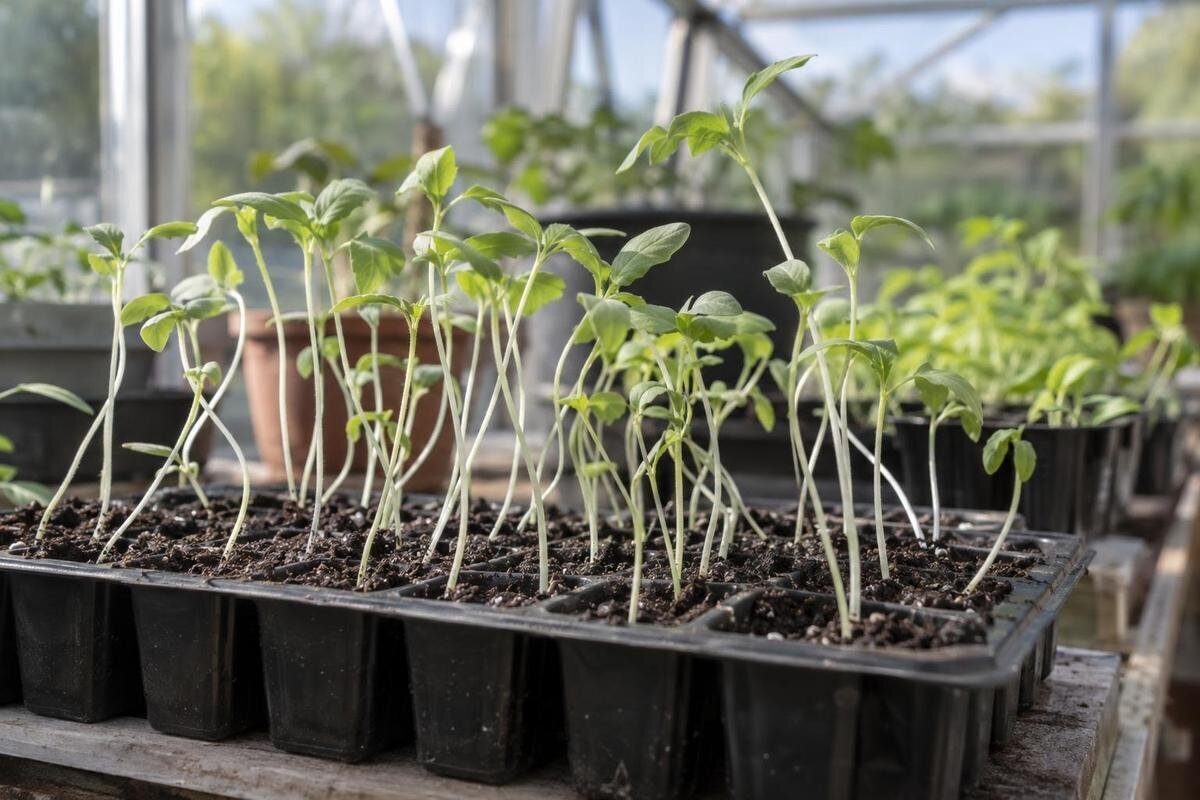
Leggy seedlings have stems that are unusually long and narrow for their age, often with wide gaps between leaves, known as internodes. They may lean towards a window or the brighter side of the greenhouse, look pale, or topple as the leaves gain weight. Compare plants of the same species, variety and sowing date: a naturally tall seedling should not be judged against the compact shape of another crop. Some stretch below the cotyledons is normal as a shoot emerges. Persistent elongation after the first leaves open is a more useful warning than one long stem.
Look at the whole tray rather than diagnosing from height alone. A row leaning in one direction points to uneven light; uniformly long stems can reflect low light, warm conditions or both. Small leaves, long gaps and weak stems together support a stretching diagnosis, but leaf colour varies with species and growing conditions. Compare the centre of the tray with its edges and note whether the tallest seedlings are also the most crowded. This helps distinguish a problem affecting the whole batch from one linked to a particular position. Check the stem at compost level and note whether leaves are unfolding normally. A dark, pinched or water-soaked base followed by collapse is not simply legginess; it suggests a different seedling problem that needs its own assessment.
Check light at the height of the leaves
Judge light where the leaves sit, not by how bright the greenhouse looks when you walk in. Frames, rafters, shelves, neighbouring plants, a nearby building or wall, shade cloth and dirty or misted glazing can reduce light over a particular tray. A greenhouse may have bright patches and dim corners, and the sun moves across it during the day. Check seedlings in the morning, around midday and later in the afternoon. A single midday glance can miss the period when their bench is most shaded.
Set trays where light is more even, leaving space between the leaves and anything that casts a shadow. If stems all bend one way, turning the tray periodically can balance their exposure, but rotation cannot compensate for too little light overall. Move seedlings into stronger sun in stages, particularly if they have been in shade, to reduce the risk of scorching. When planning a bench, mark the shaded positions you have observed rather than treating the entire floor area as equally useful for propagation. The listed area range for Aluminium Greenhouses is 3.77–28.08 m²; compare the selected footprint with your bench plan. Leave room to reposition trays as neighbouring plants grow, rather than filling every available surface from the outset.
Light duration and supplementary lighting
Seedlings can stretch even when the greenhouse is bright at midday if they receive too little useful light during much of the day. Day length, cloud, seasonal sun angle and shading all matter, so compare conditions across several days rather than relying on one sunny afternoon. Clear glazing admits daylight but does not create it: a shaded site or low sun can still leave plants with less light than their growth rate needs. Note when new growth begins to lengthen, not just how tall the older stem has become.
Where natural light is consistently insufficient, a purpose-made grow light may help. Choose one suitable for seedlings and follow its manufacturer’s guidance for placement, duration and heat; there is no single setting for every species or lamp. More light is not automatically better if it overheats the leaves, and many crops need an appropriate dark period. Before buying, identify which trays need supplementary light and when daylight falls short. That gives you a clearer requirement than choosing a lamp simply because a batch looks tall. If planning a dedicated bench, compare the intended arrangement with Limited Edition Aluminium Greenhouses. Consider the position of the trays and lighting together, while assessing light at seedling height rather than assuming the greenhouse model determines it.
How warmth affects seedling growth
Temperature can change quickly in a greenhouse. The air may warm fast in sunshine and cool again later, while a tray at bench height can differ from a reading near the roof. Warmth speeds growth, so seedlings may lengthen rapidly when light is limited. High temperature does not explain every stretched stem, but it can magnify a light shortage. Germination and growth after emergence may call for different conditions, so do not keep emerged seedlings at the warmest setting simply because their seeds needed warmth.
Place a minimum–maximum thermometer near the seedlings and note readings through a typical day and night. If the greenhouse has warmer and cooler areas, check more than one position before moving a whole tray. Record where the thermometer stood so that later readings are comparable: a measurement near the roof does not describe the conditions around a low seed tray. Adjust ventilation and placement gradually, taking the crop’s guidance and the weather into account rather than deliberately chilling young plants. When considering a Wall Greenhouse, include the intended seedling position in your layout. Its temperature still needs to be measured beside the trays; neither the type of structure nor the outdoor forecast tells you exactly what those seedlings experience.

Crowded trays create competition
When seedlings are sown thickly, their leaves overlap and the plants beneath or in the middle of the tray receive less light. Stems may extend between neighbouring leaves, causing uneven growth even when the tray is in a bright part of the greenhouse. Crowding also makes seedlings harder to inspect and water evenly. Check whether leaves touch or form a continuous canopy, and whether seedlings in the centre look taller than those at the edges. Use spacing guidance for the particular crop; one fixed distance will not suit every species or container.
Thin a dense sowing before roots become tangled. For very small seedlings, snipping surplus shoots at compost level avoids tugging at the roots left behind. If the crop is ready to prick out, lift each seedling carefully by a leaf rather than squeezing its stem, then give it space to develop. Distinguish between seedlings crowded within a tray and separate pots standing too close together: moving pots apart will not resolve a dense sowing inside one container. The Spacious Greenhouse range lists areas from 47 to 70 m². When planning a growing bench, draw in the trays at their intended spacing, together with a working aisle. A layout that fits tightly packed trays may leave insufficient room once those seedlings have been separated.
Water and feeding are secondary clues
Watering and feeding can affect vigour, but they are less common explanations for the classic combination of long gaps between leaves and a thin stem than low light and excess warmth. Constantly wet compost can leave roots short of air and weaken their ability to support growth; a dry root ball can wilt or stall. Too much fertiliser, particularly a strong feed that encourages leafy growth, can produce soft growth without fixing a shortage of light. Adding more feed is not a remedy for a stretched stem.
Check the moisture of the growing medium and whether the tray drains, then water according to the crop and compost rather than keeping every tray saturated. Newly germinated seedlings often use reserves in the seed; feeding needs change as they grow and depend on the compost. Follow its label and species guidance, and change one factor at a time. Note what compost and feed each batch has received, so that you do not mistake differences in care for differences in light. If storage is part of your setup, Aluminium Greenhouses with Storage – Limited Edition identifies a greenhouse with built-in storage. Include supplies in your space plan rather than allowing bags, bottles or spare containers to occupy the bench area intended for seedlings.
For young seedlings, correct conditions first
At emergence and the first true-leaf stage, act promptly but change the surroundings gradually. Move the tray to the brightest suitable place, space out crowded pots and bring the temperature closer to the crop’s guidance for growth after emergence. Remove a source of shade if practical, but do not take seedlings accustomed to filtered light straight into intense sun. Their root systems are small, so avoid repeated lifting just to inspect them. Keep the growing point and new leaves intact while you adjust their conditions.
Watch the next leaves, not the length of the old stem. A leggy section will not shrink, but shorter new internodes and a firmer stem suggest that the adjustment is helping. Identify which leaves were already open when you changed conditions so that you can distinguish existing stretch from subsequent growth. This is more useful than repeatedly judging the whole seedling against an ideal compact shape. If seedlings need separating, prick them out only when they can be handled without crushing the stem, and use cells or pots appropriate for the species. For a separate propagation area, the Bloomcabin Prestige Greenhouse range is listed from 3.77 to 28.08 m². Compare the chosen footprint with the room needed to reach and inspect each tray without moving the entire batch.
Pot on older seedlings only when appropriate
With several true leaves, a stretched seedling may be ready for a larger pot if its roots have filled the cell, but height alone is not a reason to pot on. Move it only when the root ball can be handled carefully and the crop is at a suitable stage. Hold the seedling by a leaf or by the compost around its roots, not by the delicate stem. Some species tolerate deeper planting, while others may rot or fail if the crown is buried. Check crop-specific advice and keep the growing point above the compost.
After potting, restore conditions that encourage compact growth and avoid crowding the new pots together. A temporary support can stop a top-heavy stem from falling, but it does not correct inadequate light or excessive warmth. Do not expect a badly stretched stem to become short and sturdy; assess whether the roots are healthy and the new growth is strong enough to keep. Consider that outcome separately from the decision to use a larger pot: extra compost alone does not resolve the original growing conditions. The T-Model Orangery Greenhouse range is listed from 16.52 to 30 m². If planning space for potting on, allow for the larger pots in their growing positions as well as a working area. Count the space needed after potting, not only the footprint of the original seed trays.

Avoiding leggy growth in later sowings
A repeated problem can begin before sowing, when a batch is started earlier than the available daylight and suitable bench space can support. Use species-specific sowing guidance to choose timing, and sow only as many seeds as you can place in a bright, well-spaced area after emergence. Some crops need warmth to germinate, then prefer different conditions once shoots appear. Mark that change in care when you label the tray. Sowing smaller batches at intervals can prevent a crowded flush that has to remain on one bench.
Record sowing and emergence dates, where the tray stood, and any unusually warm or dull spells. Those notes make it easier to distinguish a seasonal light issue from a spacing mistake next time. Include when you thinned or separated seedlings and whether later growth became more compact. A brief record tied to a labelled batch is more useful than a general impression that all early sowings struggled. For staggered sowings, the Pyramid Greenhouse range lists areas from 5.53 to 18.9 m². Use the selected footprint when planning bench and access space, including room for batches at different stages. Assess the light and temperature at each growing position rather than assuming that one arrangement will suit every sowing throughout its development.
Check whether new growth is improving
After adjusting conditions, inspect seedlings regularly instead of making several dramatic changes at once. Compare fresh leaves and internodes with older growth, note whether stems have stopped leaning, and check temperature and compost moisture at a consistent time. A side-on photograph can make it easier to see whether new growth is becoming more compact. Take it from a similar position each time so that a change in viewing angle does not obscure the comparison. Keep track of the adjustment you made, whether that was moving a tray, reducing crowding or changing ventilation. If only one side of the tray is affected, look again for a local shadow or temperature difference before assuming that every seedling needs the same treatment.
Long, thin but intact stems usually call for a review of growing conditions; collapse, a constricted or discoloured base, damaged roots or sudden failure may point to another issue. Do not force a diagnosis from one symptom. If disease seems possible, keep badly affected seedlings apart from healthy ones and seek local horticultural advice when the cause is unclear or losses spread. This keeps the response proportionate: improve light, warmth and spacing for stretched plants, but treat a different problem as a different problem.
Frequently asked questions
Can leggy seedlings recover?
Often, if the growing point and roots are healthy. Correct the light, warmth or spacing problem and watch the new leaves and stem sections. The stretched part will not shorten, so judge recovery by whether fresh growth is firmer and more compact.
Should I plant a leggy seedling deeper?
Only if that species tolerates deeper planting. Some seedlings can form roots from a buried section of stem; others may rot if the stem or crown is covered. Check crop-specific guidance, and keep the growing point above the compost.
Will extra fertiliser make seedlings sturdier?
Usually not. Feed cannot make up for insufficient light, and too much can encourage soft growth or damage young roots. Check the compost and the needs of the crop before feeding; seedlings often use the reserves in the seed during their earliest growth.
Do greenhouse seedlings need a grow light?
Not automatically. First check how much light reaches the leaves over the day and whether nearby structures, shading or the greenhouse frame block it. If natural light is consistently inadequate, choose a suitable grow light and follow its instructions for placement and use.
How can I tell legginess from damping off?
Leggy seedlings generally have long, thin but intact stems. Damping off can cause a pinched, dark or water-soaked stem base and sudden collapse. These symptoms can have more than one cause, so seek horticultural advice if the diagnosis is unclear or losses spread.
For a stretched batch, compare light, warmth and spacing before reaching for fertiliser or trying to force faster recovery. Make gradual changes and look for sturdier new growth; the old stem is unlikely to become compact again. When the cause is clear, the right adjustment can support the seedlings that are still growing and help you plan the next sowing more carefully.
