
Tomato Cracking in the Greenhouse: Causes to Check
Greenhouse crop problems
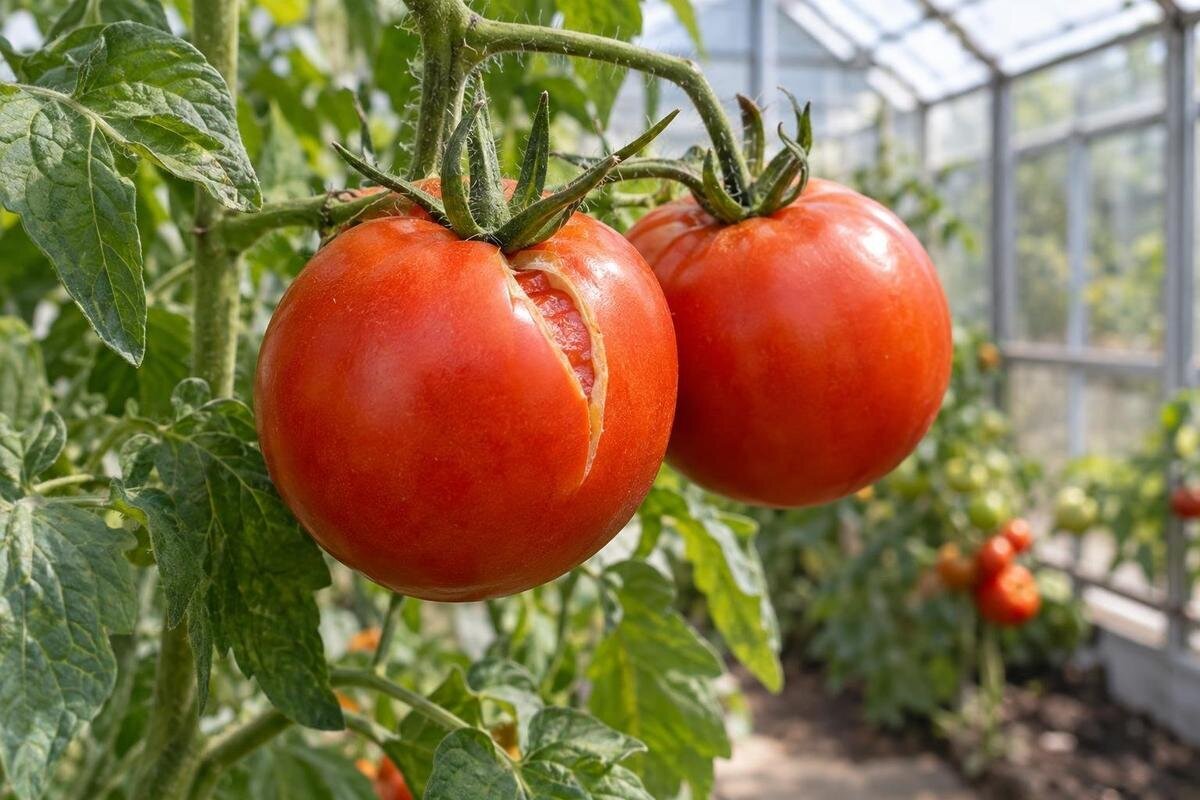
A split tomato in a greenhouse often results from rapid fruit growth, rather than a pest or disease. The skin can tear when the flesh expands faster than it can stretch, particularly as fruit ripens and the supply of water to the roots changes. The direction of the crack, which fruit are affected and recent changes in root-zone moisture are useful clues, but none proves a cause on its own. This guide focuses on diagnosing cracks and stabilising care for fruit still developing, rather than repeating a general tomato-growing routine.

What the crack pattern can tell you
A radial crack usually runs from the stem end down the side; concentric cracking appears as one or more rings around the shoulder. Both are forms of skin failure as fruit expands. The patterns are worth naming, but neither reliably identifies a single cause: water changes, variety, fruit stage and growing conditions can overlap. Note the crack’s direction, position and depth, and whether its edges are fresh, dry or partly healed. Check whether the line stays in the skin or opens into the flesh. A clean tear differs from a sunken patch, a hole or diffuse softening, so describe the whole mark rather than labelling every damaged tomato as split. This detail helps you compare fruit from the same plant.
Look at more than the most damaged tomato. Are the splits limited to fruit turning colour, present on one truss, scattered through the greenhouse, or confined to a bed or container? Compare fruit of similar size and cultivar. Clean tears on otherwise healthy fruit following a watering change point towards a growth-related issue, but do not prove it. Wet or discoloured edges, mould, an entry hole, soft decay, or unusual leaf and stem symptoms suggest another problem or infection entering through the wound. Take a close photograph and a wider view of the plant; note the date, truss and ripeness. Keep the cultivar label with your record, as a photo of detached fruit can hide where the damage began.
Why a dry-to-wet change can split fruit
Tomato flesh can expand quickly when roots take up more water, while the skin cannot always stretch at the same rate. If the root zone has become very dry and then receives a large amount of water, fruit may swell and split. The risk is often higher on large, nearly ripe tomatoes, whose skins may be less flexible than those of small green fruit. This is not simply a case of using too much water: repeated swings between dry and wet conditions matter, as do cultivar and maturity. A single heavy irrigation after a dry spell is more informative than the total used over a week, so remember what happened immediately before the cracks appeared.
In a greenhouse, direct rainfall is usually reduced, so missed irrigation, hot spells, inconsistent hand-watering or a sudden catch-up soak can create that swing. Aim for steady moisture in the root zone rather than a dry-down followed by flooding; check how quickly the bed or container dries instead of following a fixed schedule. When planning a growing space, consider how the watering routine will work across the intended beds. The Limited Edition Aluminium Greenhouses range covers 3.77–28.08 m². Compare the proposed planting area with the reach of your watering equipment, keeping the daily routine manageable rather than treating a larger structure as a remedy for cracking.
Check moisture at root depth
The surface can look dry while soil around active roots remains moist, or the top can look damp while a container’s root ball is drying unevenly. Check moisture within the root zone at the same few locations and a similar time, preferably before watering, rather than judging by the surface alone. Avoid digging close to stems. In a bed, compare more than one row; in pots or grow bags, assess each container because small root volumes can change moisture more quickly than a bed. You are not looking for a perfect number. The useful question is whether the root zone dries too far between waterings or remains saturated for too long.
Check water delivery as well as soil. Look for a blocked outlet, kinked hose, leak, water running past a container, or hand-watering that consistently misses certain plants. With a drip line, collect output from several outlets in identical containers for the same period to spot obvious differences, then compare soil moisture. A local supply issue may explain why neighbouring plants are affected differently. For a proposed layout in the T-Model Orangery Greenhouse, listed at 16.52–30 m², mark the tap, irrigation lines and test points on your plan. Leave access to the outlets so you can check delivery along the line, not just at its nearest end.
Fruit maturity and variety both matter
Fruit is often most vulnerable while swelling and approaching maturity. A tomato turning colour can continue to expand, and its skin may not keep pace after a sudden change in water uptake. Fully ripe fruit left on the vine can also go unnoticed until a crack has opened. Check colour and firmness across the truss, then compare crack timing with the stage at which you normally harvest. Picking sound fruit when it reaches the intended ripeness reduces the time it remains exposed to further growth and moisture fluctuations. It does not correct a water-management problem for fruit still developing, so pair harvest observations with root-zone checks.
Varieties differ in their tendency to crack, so compare like with like: one cultivar may split while another sharing the same bed remains intact. If the same variety repeatedly cracks under similar conditions, susceptibility may be part of the explanation; if several varieties split after the same dry-to-wet spell, look first at their shared conditions. Keep plant labels with your notes and avoid deciding from one fruit. When planning a small variety comparison, mark each planting position and its cultivar on the bed plan. The Pyramid Greenhouse listing gives a 5.53–18.9 m² range; use the proposed bed arrangement to plan the comparison, and the varieties’ own growing information to assess cracking susceptibility.

Heat, water demand and sun injury
Heat can make an irrigation pattern less forgiving. On bright days a greenhouse may warm quickly, plants can use water faster, and a routine that was adequate earlier may leave the root zone much drier by afternoon. A heavy watering at the next opportunity then creates a sharp change in water availability. Check affected and unaffected plants at more than one time of day, not just at the morning watering. Ventilation and shading can help manage the greenhouse environment, but they do not replace a consistent water supply. Use vents and shade as intended for the structure, and do not assume that cooler air alone will prevent splitting. Note any recent change in door or vent use.
Fruit newly exposed after heavy leaf removal can also show sun injury, which differs from a clean split: the skin may develop a pale, dry or leathery patch. Exposure and cracking can occur together, so inspect the mark rather than attributing every problem to heat. Keep adequate leaf cover and avoid combining major pruning with a large irrigation change while diagnosing the crop. When comparing the Aluminium Greenhouses with Storage – Limited Edition, listed at 5.52–28.08 m², check the ventilation details separately from the storage provision. Include access to doors and vents in the growing plan so routine ventilation does not depend on moving pots or equipment.
Water may not reach every plant evenly
Not every tomato in a greenhouse receives the same amount of water. Containers may dry at different rates, an irrigation line may deliver less to one end, and separate beds can have different drainage or root volumes. A greenhouse-wide instruction to water more may therefore help one area while leaving another too wet. Map the plants that split and check moisture beside affected and healthy fruit using the same method. If damage repeatedly occurs in one row or a cluster of pots, compare water delivery, container size and drainage there before changing the routine for the whole crop. The same is true if one pot is more exposed to sun.
For hand watering, follow a consistent route and make sure each bed or pot is reached. Sketch the route alongside water outlets and affected plants to see whether damage follows a missed area or a particular irrigation zone. Correct an obvious blockage or missed container, then observe later fruit before making wider changes. When assessing a layout for the Bloomcabin Prestige Greenhouse, available from 3.77 to 28.08 m², include the paths as well as the beds. Check whether you can reach every container without stretching across plants, and whether the intended irrigation can serve each zone. This makes the watering plan more useful than a footprint measurement alone.
Distinguish a split from other fruit damage
A clean rupture through the skin is not the same as every dark mark on a tomato. Blossom-end rot usually appears as a dark, sunken area at the end opposite the stem rather than a lengthwise opening, although a fruit can have more than one problem. A feeding hole, puncture or ragged wound suggests physical damage, while wet, soft or mouldy tissue may indicate decay in or around a split. The shape is a starting clue, not a complete diagnosis. Inspect nearby fruit, leaves and stems as well, because an open crack may become a route for secondary decay after it has formed. Check whether damage was present before harvesting, as handling can also cause fresh tears.
Do not apply a pesticide or disease treatment solely because one tomato has split; an opening in the skin does not identify an insect, fungus or bacterial cause. Remove badly rotted or deteriorating fruit, and record sound, superficial cracks separately. If lesions spread, many fruits are affected without an obvious water change, or foliage and stems also show symptoms, consult a trusted local horticultural source or an experienced adviser. In a larger growing area, record the affected row or zone so the location remains clear. The Spacious Greenhouse listing covers 47–70 m²; when planning beds within that area, include inspection access rather than considering planting space alone.
Cracking does not automatically mean a feeding problem
Cracking by itself does not show that the plant lacks a nutrient. Adding extra fertiliser or calcium without evidence will not close a split and may further disturb the growing medium. Root health and drainage matter because damaged or poorly functioning roots can make water uptake irregular. A wilted plant can have dry soil, but it can also wilt when roots are waterlogged or compromised. Check whether water drains, whether the root zone remains wet for long periods, and whether growth is otherwise normal before changing feed. Keep to a regular feeding plan suited to the growing medium and product directions. Compare leaf condition and new growth on affected and unaffected plants when assessing whether the problem extends beyond the fruit.
If several plants are affected, look for a shared condition such as inconsistent water delivery, poor drainage or an abrupt change in routine before buying a supplement. Note any recent feeding changes alongside the watering record, rather than treating them as separate investigations. If you are also considering the Classic aluminium greenhouse range, listed at 3.77–28.08 m², decide separately how the crop will be grown: in beds, pots or grow bags. The structure’s area does not specify the growing medium or drainage arrangement. Those choices belong in the crop plan, while any feeding adjustment should respond to the plants and medium rather than the greenhouse model.

What to do with split tomatoes and later trusses
Once the skin has opened, the crack will not heal back to normal. Pick a fruit with a small, clean split when it is ripe or nearly ripe, inspect it, and use it promptly if the flesh remains sound. Remove fruit that is soft, leaking, mouldy or clearly deteriorating rather than leaving it on the plant. Keep cracked fruit separate from sound fruit, and clean tools if they have contacted rotting tissue. These steps help limit further deterioration; they do not identify the trigger. Note whether other fruit on the same plant are at risk before changing irrigation for every bed.
For the remaining trusses, return to steady moisture and avoid overcorrecting with a flood, heavy feeding or drastic pruning. Harvest ripe tomatoes regularly, and keep leaf cover where possible. Make inspection part of the harvesting round so newly opened cracks are noticed before fruit deteriorates. If considering a different growing footprint, the Wall Greenhouse listing states 3.69–14.34 m². Assess the actual bed and path arrangement for access to the trusses, including those furthest from the path. Watering reach and harvesting access are useful layout checks, but the response to the current cracking should still follow the observations from your crop.
A short record can reveal a repeating trigger
Keep a short record for several weeks, or until the next fruit show a pattern. For each new split, note the date, position on the plant, crack direction, fruit size and colour, cultivar, and whether the plant is in a pot, grow bag or bed. Add when and how it was watered, the root-zone condition before watering, and any unusually hot or bright period. You do not need sophisticated instruments: repeated observations in the same places are more useful than a vague impression that the greenhouse was dry. Include intact fruit for comparison, not only damaged examples. A small sketch of the rows can help you check the same locations again.
Compare your notes with fruit that stayed intact. Splits appearing after repeated dry periods followed by heavy watering support a moisture-fluctuation explanation; splits limited to one variety or one irrigation zone suggest different factors to test. Use that pattern to choose an adjustment, then change only one additional factor at a time. New fruit can show whether it helps, while old cracks remain visible and are not evidence that the change failed. Record the date of the adjustment so you can distinguish fruit damaged beforehand from later cases. If the pattern still does not fit, or other symptoms appear, seek a local horticultural diagnosis rather than guessing at a product or treatment.
Frequently asked questions
Why do greenhouse tomatoes split after watering?
After a dry spell, roots can take up water quickly once the soil is rewetted. The fruit expands, but its skin may not stretch at the same pace, particularly when tomatoes are large or ripening. The sudden change, rather than watering alone, is the useful clue.
Do radial and concentric cracks have different causes?
They describe the direction of the split: radial cracks run from the stem end, while concentric cracks form rings around the shoulder. Either pattern can have several contributing factors, so consider it alongside fruit stage, recent watering and where the damage occurs.
Should I remove a split tomato?
Harvest ripe fruit with a small, clean crack and use it promptly if it is otherwise sound. Remove fruit that is leaking, mouldy or decaying. Then address the likely trigger for fruit still on the plant; an opened skin cannot be repaired.
Can overwatering alone cause cracking?
A large watering may coincide with a split, especially after dry soil, but the relevant issue is often a rapid change in water availability. Check the root zone and how evenly water is delivered before reducing irrigation or letting plants dry out.
Are some tomato varieties more prone to splitting?
Yes, susceptibility varies between varieties. Compare fruit of the same variety and maturity stage, and keep the cultivar label with your notes. If different varieties crack after the same watering change, shared growing conditions are more likely than variety alone.
Investigate when and where tomatoes split rather than drawing a conclusion from one damaged fruit. Compare the mark with fruit maturity, check root-zone moisture and water delivery in affected and unaffected areas, and note any hot spell or recent change in care. Then make a measured adjustment that addresses the strongest clue and watch later fruit. A clean skin tear often has a manageable growing-condition trigger. Unusual lesions, decay or symptoms elsewhere on the plant need a separate diagnosis.
