
Greenhouse Tomato Flowers but No Fruit: A Checklist
GREENHOUSE TROUBLESHOOTING
Tomato flowers in a greenhouse can look healthy and still fail to produce fruit, but a flower that has only just opened has not had time to show whether it set. The quickest useful diagnosis is to follow the same trusses, note temperatures during flowering, and compare what happens across plants and positions. Then check whether pollen is being released and whether the crop is under water, root or nutrient stress. The pattern matters: a greenhouse-wide failure points towards different possibilities from one plant losing its blossoms. Avoid changing several things at once, or it will be hard to tell which factor mattered.

Make sure the flowers have had time to set
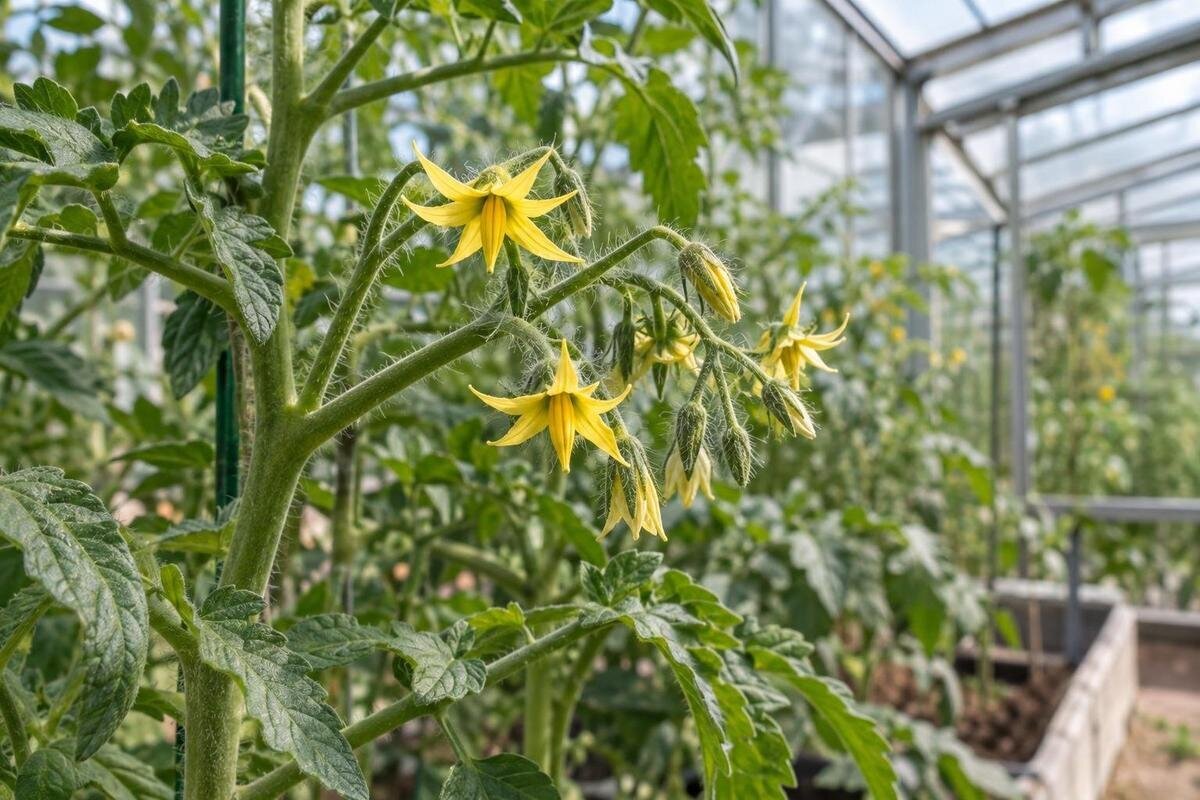
A tomato flower does not turn into visible fruit as soon as it opens. Behind the petals is a small green ovary; after successful pollination and fertilisation, this part enlarges while the yellow petals age. A newly opened bloom therefore cannot tell you much, and petals drying on their own do not prove failure. Mark a few open flowers on each affected truss with a loose tag, or note their position and date. Recheck the same flowers over the next several days, looking for growth at the base rather than counting fresh blossoms elsewhere on the plant.
If the petals fade but a small green fruit remains at the base, set has started; the green calyx usually stays around it as it develops. If the ovary stays tiny, shrivels with the flower or the whole flower separates without swelling beneath it, that bloom probably did not set. Take a close picture of the flower base and short stalk, as well as a wider view of the truss. These images make it easier to compare the same flower later. One failed blossom does not mean the plant is sterile: other flowers on the same truss or newer trusses may still set normally.
Compare affected plants and trusses
Walk along the rows and note which plants and trusses are affected. If flowers fail across the greenhouse during the same spell of hot or cool weather, a shared environmental factor is plausible. If only one plant or a small patch is affected, inspect its root zone, watering, shade, stem damage and crowding before changing care for the whole crop. When the problem follows a row, note whether it is close to a door, wall or opening, or in a noticeably shaded position. These are clues rather than proof: soil, irrigation and plant condition can also vary from one spot to another. A simple sketch with rows numbered from the entrance makes these comparisons easier to follow. Mark both affected plants and those setting fruit normally, rather than recording failures alone. Where you grow several varieties, identify them on the sketch so that you can distinguish a pattern within one variety from a pattern shared across the planting.
Record the date each truss flowers and whether its position is low, high, near an edge or deeper in the planting. If an affected row is close to a wall, check the shade there at the times when the plants receive light. For a wall-based greenhouse layout, the Wall Greenhouse listing gives a model reference and sizes from 3.69 m² to 14.34 m²; those figures do not show how a particular wall affects light or airflow. Measure and observe the actual site before drawing conclusions from the pattern.
Check temperatures during flowering
Tomato pollen is sensitive to temperature, and prolonged heat can reduce its viability or disrupt fruit set. For many cultivars, days around 30°C or higher, particularly when nights remain around 20–22°C or warmer, are warning conditions. Cool spells can also slow pollen release and fertilisation. Treat these as rough guideposts, not universal cut-offs: the response depends on cultivar, length of exposure, the day-and-night pattern and plant health. Flowers may have been affected before you noticed the problem, so a comfortable reading on the day you inspect them does not rule out an earlier heat or cold spell.
Place a minimum–maximum thermometer around flower-truss height, shaded from direct sun and not touching the glazing. Record afternoon peaks and overnight lows for several days while marked flowers are developing and opening; one reading from a wall or doorway may miss conditions among the plants. Note the thermometer’s position and the period each pair of readings covers. If you move it, record that too, rather than treating readings from different positions as a continuous record of the same spot. Alongside the figures, note when doors or vents were open, so you can compare the conditions with how the greenhouse was being managed. If repeated heat points to a broader site or layout issue, the T-Model Orangery Greenhouse listing gives sizes from 16.52 m² to 30 m² for comparison. Floor area alone does not predict temperatures: check the actual configuration and its ventilation details separately.
Assess humidity and air movement
Tomato flowers usually contain both male and female parts and can pollinate themselves, but pollen still has to leave the anther cone and reach the stigma. Still air means less movement to help with that transfer. Very humid air can make pollen clump and release poorly; prolonged very dry conditions can also contribute to plant stress. A single humidity reading does not establish the cause, so note the conditions alongside flower set: whether condensation persists, the flowers are damp, or the air seems stagnant within the canopy.
Use the greenhouse’s existing ventilation as designed to help remove trapped warm, damp air, and check whether airflow differs between planting positions. Do not wet blossoms in an attempt to improve pollination. If comparing greenhouse models, the Pyramid Greenhouse listing gives sizes from 5.53 m² to 18.9 m²; the model name and footprint do not establish how well a particular configuration will ventilate. Check the opening details and layout of the option you are considering rather than inferring airflow from its shape.

Inspect the flowers and their stalks
Look closely at several affected buds and open flowers in good light. Note whether petals are intact, the flower opens normally and the short stalk looks undamaged. Tomato flowers vary between cultivars, so a difference in shape is not automatically a fault; compare flowers on the same variety before treating one as abnormal. The pollen itself can be difficult to see, and taking a flower apart is unlikely to give a reliable diagnosis. A close image of the flower and its stalk, paired with a picture of an unaffected flower, is more useful than judging one blossom in isolation.
Check for visible feeding marks, distorted buds or other damage, then look over nearby new growth and leaves for additional symptoms. Small pests may be hard to spot, and similar damage can have different causes, so a photograph is evidence to share rather than a diagnosis by itself. If several parts of the plant look affected, record what you see and seek an identification before applying a broad treatment. Spraying simply because flowers have failed can add stress without addressing temperature, humidity or pollen release.
Review water, roots and feeding
A plant under root or water stress may lose flowers even when pollination conditions seem suitable. Check the growing medium below its surface rather than judging moisture by how the top looks. Note whether it becomes very dry between watering, stays saturated, or changes sharply from one condition to the other. Blocked drainage or damaged roots can affect one plant while its neighbours look normal. Aim for reasonably even moisture without waterlogging, and avoid trying to correct a dry spell with a sudden, excessive soaking. Compare the affected plant with a healthy one in the same row, including how often each is watered.
Review feeding before adding more fertiliser. Very lush, dark foliage with relatively little fruit can raise the question of excess nitrogen, but that appearance alone is not proof; weak growth can also have several causes. Write down recent applications and consider testing the soil or growing medium if a nutrient problem is suspected. Make the feeding record specific: include the product, dilution, amount applied and application dates, rather than simply noting that the plants were fed. Keep plain watering separate from feeding in your notes. If someone else also tends the crop, compare records before making an adjustment, so that your decision reflects what the plants actually received rather than the intended schedule. The Bloomcabin Prestige Greenhouse with metal foundation listing identifies a metal-foundation model and sizes from 3.77 m² to 28.08 m². The foundation description does not establish drainage at a particular site or the condition of a crop’s root zone, so assess those separately.
Check light, shade and plant crowding
Tomatoes need enough light to support growth and fruit development. Observe whether a wall, nearby structure or foliage shades the affected trusses for much of the day, and whether the pattern differs between rows. A dense canopy can shade flowers and restrict air movement around them. Note where leaves overlap and whether trusses are buried within vigorous growth, but avoid removing large amounts of foliage at once: sudden heavy pruning can stress the plant and make it harder to judge what helped.
Map shade at the times it actually falls across the crop rather than relying on a single glance. On your planting sketch, distinguish shade cast by objects outside the greenhouse from shade within the tomato canopy. Note which trusses are obscured and whether neighbouring plants remain in the light at the same time. This gives you a concrete basis for assessing planting positions or crowding, rather than assuming that every shaded flower has the same problem. When planning a different growing area, the Spacious Greenhouse page lists sizes from 47 m² to 70 m². A larger footprint does not establish how much light a particular plot receives or where tomato rows will be shaded. Consider the site, planting positions and access together; the observed location of the flowers matters more than the greenhouse’s stated area on its own.
Try gentle vibration on dry flowers
If flowers are dry and temperatures are not obviously unsuitable, gentle vibration can help test whether pollen movement is limited. Lightly tap the truss or its support so the flower moves; do not shake the whole plant forcefully or rub the blossoms. You may see a little pollen dust, but not seeing it is not proof that pollen is absent. Try the same gentle approach on a few marked trusses and record which flowers were treated. Do not mist the flowers before or after; dampness can make pollen less free-flowing.
Compare treated flowers with untreated ones on plants growing in similar conditions, then watch for ovary swelling over the following days. Choose flowers of the same variety at a similar stage of opening, and label the two groups clearly. Record how many flowers you followed in each group and how many began to swell. A comparison between one treated flower and a much older untreated flower would be difficult to interpret, so keep the comparison as consistent as practical. If set improves, limited movement may have contributed, but that result does not rule out temperature or plant stress. If the trusses are difficult to reach, record that as a layout issue rather than assuming the plants need a new greenhouse. The Aluminium Classic Greenhouse listing gives sizes from 3.77 m² to 28.08 m²; when comparing layouts, check actual internal clearances and access rather than using footprint as a substitute.
Change one likely cause at a time
Choose the adjustment that best matches the evidence. If your log shows high daytime temperatures or warm nights, review how the existing greenhouse ventilation is being used. If flowers stay damp, look at the timing and effectiveness of ventilation. If one plant is affected and its medium is either persistently wet or very dry, investigate its root zone and watering. Avoid changing feeding, pruning, watering and ventilation all at once; if new flowers set afterwards, you will not know which change mattered. Compare flowers that open after the adjustment, as blooms already affected may not recover.
A repeated problem may justify reviewing the growing layout, but that is separate from treating a flower-set problem. Consider where plants, paths and working space would sit, and whether a storage area is needed for equipment. The Aluminium Greenhouses with Storage – Limited Edition listing describes a storage model and sizes from 5.52 m² to 28.08 m². Treat storage as a layout consideration, not as a remedy for failed pollination; check the specific dimensions and configuration against your site and crop plan.
Keep records and seek help if the problem continues
If several new trusses continue to fail after you have checked the temperature record, flower condition, pollen movement and plant care, seek a closer diagnosis from a horticultural adviser or plant diagnostic service. Share dated close-ups of flowers and stalks, wider plant photographs, and notes on where the affected plants sit. If flowers are distorted or the plant has other unexplained damage, include those details. Summarise when the problem began, whether any plants are still setting fruit, and what happened after your adjustment. Explain whether you are seeing flowers drop, ovaries remain small or young fruit begin to develop and then stop. Keeping those observations separate gives the adviser a clearer question than simply reporting that there are no tomatoes. Different causes can look alike, so a picture or a single temperature reading may narrow the possibilities without identifying the cause.
Keep a simple log of plant and row, truss and flowering date, minimum and maximum temperatures, humidity if measured, watering and feeding changes, and whether the ovary swelled. That record will help you see whether the same pattern returns and what changed beforehand. If it points to a specific structural constraint, such as a layout that limits access or ventilation, the Limited Edition Aluminium Greenhouses listing gives sizes from 3.77 m² to 28.08 m² to compare. Check the details of any particular model only after you have identified what the growing area needs.
Frequently asked questions
How long should I wait to see whether a tomato flower has set fruit?
Mark an open flower and check the same one over the next several days. A successful flower’s ovary starts to enlarge, but the timing varies with conditions and cultivar. Petals fading on their own are not enough to confirm that fruit set has failed.
Do greenhouse tomatoes need bees to produce fruit?
Usually not. Tomato flowers can pollinate themselves, but pollen still needs to move from the anthers to the stigma. Air movement or gentle vibration can help; poor pollen release, unsuitable temperatures or plant stress may still prevent fruit set.
Can hot nights affect tomato fruit set?
Yes. Persistent warm nights, especially alongside hot days, can reduce fruit set in many cultivars. The effect depends on how hot it gets, how long the conditions last and the plant’s health, so use temperature records as clues rather than relying on one fixed cut-off.
Should I add fertiliser when tomato flowers do not set?
Not without evidence of a nutrient problem. Extra fertiliser will not correct poor pollen release or unsuitable temperatures, and an unnecessary application can add further stress. Review the feeding record and consider a soil or growing-medium test before changing the fertiliser.
Can a photo show why the flowers are not setting?
A clear close-up can show whether an ovary has started to swell or whether a flower appears damaged. A wider image can show the plant and its position in the greenhouse. Photos are useful records, but often cannot identify the cause on their own.
Work through the evidence in order: confirm that older flowers have not started to swell, map which plants and trusses are affected, then review temperature, humidity, pollen movement and plant stress. A measured change followed by better set on newer flowers is more informative than a broad treatment based on guesswork. If the problem persists or the plants show other damage, keep the photographs and growing notes together so that the next diagnosis starts with a clear record.
