
Greenhouse Tomato Leaf Curl: Stress Signs and Red Flags
Tomato plant health
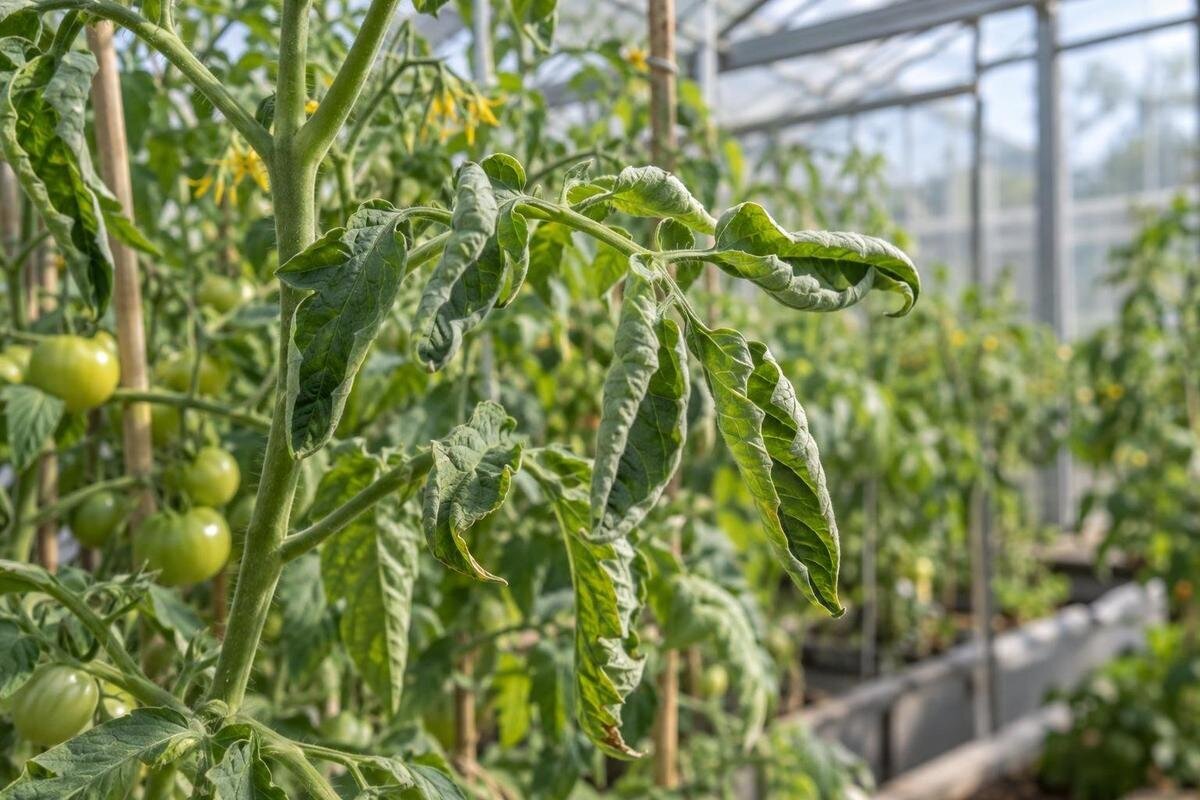
Tomato leaves curling in a greenhouse can look alarming, but the shape alone does not tell you whether the cause is heat, uneven moisture, root stress, pests or disease. Physiological leaf roll can follow changing growing conditions; some viruses and other problems also distort leaves. Compare older foliage with new growth, check the whole plant and map where symptoms appear before changing watering or feeding. This guide explains which patterns are more consistent with temporary stress, which signs deserve closer attention and what to photograph before asking for a diagnosis.

Why leaf curl alone is not a diagnosis
Leaf curl describes a symptom, not its cause. Tomato leaflets may roll upward, cup, twist or become narrow for several different reasons, and more than one stress can affect a plant at once. A curled leaf may follow a hot spell or root disturbance, while viruses, sap-feeding insects, chemical exposure and root problems can also alter growth. Even a clear close-up rarely distinguishes these causes by itself because the direction and degree of curl can overlap.
Look at the leaf’s shape alongside its colour, age, texture and the condition of the growing tip. Is the leaf an even green, or are there yellow margins, pale patches or mosaic-like mottling? Are older, lower leaves affected while the tip grows normally, or are the newest leaflets small and misshapen? Note whether stems, flowers or fruit have changed too. Describe each feature separately rather than grouping everything under “curl”: a green leaf rolled along its length and a narrow, twisted new leaflet are different observations to report. If several features occur together, record which appeared first. These details do not prove a cause, but they are more useful than treating every curl as a watering problem.
What physiological leaf roll usually looks like
Physiological leaf roll is commonly seen as a lengthwise upward curl of mature leaflets, often first on the lower part of a plant. The edges may roll inward, giving a leaflet a cupped or tube-like look. Affected leaves can feel firmer or more leathery, yet remain mostly green without clear mosaic patterns or separate lesions. The growing tip may look more normal. University extension descriptions use this pattern to explain a non-infectious response, but it is only a clue: varieties and conditions differ, and some diseases also curl leaves.
Common triggers include high heat or strong light, uneven moisture around the roots, root disturbance and substantial pruning. Vigorous growth associated with excess nitrogen may also contribute, but curl alone does not show that fertiliser is excessive. A physiological response is not an infection spreading by contact; several plants may show it together if they share the same stress. If conditions settle, later growth may look normal while already rolled leaflets stay that way. Judge recovery by new growth and overall vigour, not by whether every old leaf uncurls.
Compare leaf age, location and spread
Mark affected plants on a simple plan and note whether the symptoms begin on mature lower leaves or at the growing tip. Record the side of the greenhouse, bed, distance from an opening or wall, and whether neighbouring plants share the pattern. A band of curl in one row may follow uneven watering or exposure; new cases appearing across previously healthy plants may warrant checking for pests or infection. Neither pattern proves a cause: a local insect problem or a local microclimate can both begin in one area.
Compare plants of the same variety and age where possible. Note when the change began relative to a hot afternoon, irrigation, pruning, transplanting or feeding. Separate the date you first noticed a symptom from any estimate of when it started; a plant hidden behind dense foliage may simply have gone unchecked. Mark unaffected plants too, so later notes show whether the affected area is expanding or the original plants are changing. For a new crop plan, the Prestige greenhouse range lists areas from 3.77 to 28.08 m². Use the footprint to sketch proposed rows and inspection routes, then add the confirmed positions of doors and openings. In an existing greenhouse, a sketch of the actual planting arrangement is more useful than a catalogue outline for comparing symptom locations.
Check heat, bright light and ventilation
Outdoor weather reports are not a substitute for a reading inside the greenhouse. Sunlight can raise the temperature around the canopy quickly, and conditions can vary between a bright side, the centre and a shaded corner. Place a min/max thermometer near the tomato leaves but out of direct sun, and record readings at different points in the day. Note whether curling appears after the warmest period, whether plants recover overnight and whether the pattern is limited to exposed leaves. These observations support a heat-stress explanation but cannot exclude disease.
Check whether existing openings are unobstructed and whether air can move through the planted area. Where appropriate, gradual changes to ventilation or shading may reduce environmental swings. Record what you changed and when, alongside readings from the same positions, rather than judging the result from a single cooler afternoon. Changing several conditions at once makes it harder to identify what mattered. If ventilation is part of a purchase comparison, the Spacious Greenhouse range lists areas from 47 to 70 m². Ask about the openings and their positions for the option under consideration, and compare these with your intended rows and paths. Floor area provides a starting point for the layout, but it does not describe air movement beside the tomato canopy or establish how the space will perform on your site.

Check moisture around the roots
Check the soil or growing medium around the root zone, not only its surface. The top may look dry while deeper layers remain wet, or the surface may be damp while water has missed part of a bed or container. Compare affected and unaffected plants, look for standing water or unusually dry patches, and review when and how you last watered. Repeated drying can limit water uptake, while waterlogged roots may struggle to function. Either condition can cause leaf stress that is mistaken for disease.
Keep watering reasonably even for the crop and conditions rather than responding to curl with a sudden soak or an automatic daily schedule. Plant size, temperature, container volume and growing medium all affect how quickly moisture is used. Check whether each plant actually receives water, rather than relying only on the duration of a watering session. If you are planning a new growing area, the Classic aluminium greenhouse is listed in sizes from 3.77 to 28.08 m². Draw the intended beds or containers within the proposed footprint and consider how you will reach them to water and check moisture. Include plants at the far end and those behind other foliage, not just the row beside the entrance. Confirm the water supply and any irrigation equipment separately from the greenhouse purchase.
Consider nutrients, pruning and chemical exposure
Do not add fertiliser simply because a leaf has curled. Nutrient deficiencies and excesses can affect growth, but they usually need to be considered alongside other signs, such as yellowing, marginal damage, weak growth or symptoms on leaves of a particular age. Review recent feeds, compost and any soluble fertiliser, and consider an appropriate soil or growing-medium test if the problem persists. Write down the product used, its dilution or application rate, the application dates and which plants received it. Keep that history distinct from your observations: curling noticed after a feed does not by itself establish that the feed caused it. Excess feeding or accumulated salts can injure roots and cause secondary water stress. A test-based correction is more reliable than adding a general feed and waiting to see whether the curl changes.
Include pruning, transplanting, root injury and possible chemical exposure in the timeline. Herbicide drift or residue may distort new growth, which can look twisted, unusually narrow or misshapen; similar symptoms on nearby plants can be a useful clue. Record spraying in or around the greenhouse, including its location and date, and ask a qualified adviser before applying another product. For a greenhouse beside a wall, include the adjoining garden and nearby treated areas in your site notes rather than considering only the space under glass. The aluminium lean-to greenhouse is listed with areas from 3.69 to 14.34 m². When considering that format, mark its proposed position in relation to surrounding activities; neither its name nor its floor area establishes the exposure a crop would experience there.
Look for disease and pest red flags
New growth that is increasingly small, yellow, mottled or distorted is a stronger reason to investigate than a few older green leaflets rolled after a hot spell. Tomato yellow leaf curl virus disease can cause upward curling along with yellowing, stunting and poor flowering; whiteflies can transmit the virus. Other viruses may produce mosaic colour or misshapen young leaves. University of California Statewide Integrated Pest Management Program guidance describes this cluster of signs, but similar symptoms can have other causes. A familiar-looking pattern or photograph cannot confirm a virus, so seek plant-health advice if symptoms progress or spread.
Inspect leaf undersides and tender stems with a hand lens for whitefly adults or immature stages, aphids, mite damage or fine webbing. Sticky honeydew and dark sooty growth can point to sap-feeding insects, while stippling or bronzing may suggest mites; none of these findings alone establishes the full cause. Note what you actually saw and where, distinguishing a visible pest from damage you suspect it caused. Pests can be difficult to see, and feeding damage may remain after an insect has gone. Avoid spraying unidentified symptoms or removing every affected plant. When comparing growing spaces, use the Limited Edition aluminium greenhouse listing, with areas from 3.77 to 28.08 m², to begin a planting sketch. Then check whether the proposed arrangement would let you examine leaf undersides throughout the crop, rather than leaving inspection access to chance.
Access for inspecting tomato plants
Access and crop layout affect how easily you can spot change. When foliage overlaps densely, small colonies or the first distorted leaf can be hidden, and air may move less freely through the canopy. Keep a route to the crop and enough room to examine both sides of leaves without pulling or bruising stems; check inner as well as outer foliage. Good access makes monitoring and routine care more practical, but it does not prevent disease or correct excessive heat, a moisture problem or an unsuitable root zone.
When reviewing an existing or planned greenhouse, check its dimensions, doors, openings, orientation, shading and the space left for paths and plants. The T-Model Orangery Greenhouse is listed with areas from 16.52 to 30 m². Use the dimensions of the particular option being considered to draw beds, containers and walking routes to scale, rather than treating the total floor area as usable growing space. Consider how you would reach inner foliage once the plants have grown, and where you would stand while checking or photographing a leaf. A layout that looks accessible before planting may need reconsidering when foliage overlaps. Keep these access questions separate from temperature control: being able to inspect every plant helps you detect symptoms, but does not establish that ventilation or growing conditions are adequate.

Investigating recurring curl in one area
If the same corner or row repeatedly shows curl, treat the location as a clue to investigate. Compare temperature and root-zone moisture there with a healthier area; note shade, nearby surfaces, airflow and whether irrigation reaches the plants evenly. A local pattern may reflect a microclimate, but it may also result from a blocked water line, root competition or an early pest focus. Repeat the observation on another day before deciding that the building itself is at fault, and consider whether affected plants share a variety, age or recent treatment.
Consider a greenhouse change only when you can name the measured problem it is intended to address. Write down the observation, the change you are considering and what you would compare afterwards. For example, a recurring difference between two temperature readings gives you a more specific question to investigate than “the plants look stressed”. If you are comparing footprints, the Oasis pyramid greenhouse is listed with areas from 5.53 to 18.9 m². Assess the particular option against the problem you have identified, using confirmed details of its openings, dimensions and proposed position rather than assumptions about its shape. Ask the supplier or a qualified installer about unclear details. Replacing a structure without identifying the stressor may leave the leaf curl unchanged, particularly if the cause lies in watering, pests or another crop-management issue.
Photograph symptoms and seek a diagnosis when needed
Photograph the whole plant first, then the growing tip, one affected leaf from above and below, and a comparable healthy leaf or plant. Include a wider view showing where the plant sits in the greenhouse, and label each image with the date and bed or plant location. Use similar lighting and angles for follow-up pictures so changes are easier to see; avoid relying only on a tightly cropped close-up. A set of images can show whether older leaves are affected or new growth is changing, but it cannot prove a virus or distinguish every root, nutrient or chemical problem.
Keep a short record of temperature, watering, feeding, pruning, transplanting, sprays, pest sightings and when symptoms first appeared. Ask a horticultural adviser, agricultural extension service or plant diagnostic laboratory for guidance if new growth is distorted, plants become stunted, yellowing or mottling appears, pests are present or symptoms spread. Ask how to collect and transport a sample before sending one. Include your planting sketch with the photographs so the adviser can relate close-ups to the wider space. Mark beds, paths and any storage area separately. If you are also planning a combined growing and storage space, the Limited Edition greenhouse with built-in storage is listed with areas from 5.52 to 28.08 m². Confirm how the chosen option is divided before drawing its crop layout; the total area alone does not show where plants would stand in relation to storage.
Frequently asked questions
Can heat alone make tomato leaves curl?
Yes. Hot, bright conditions can trigger physiological leaf roll, often affecting older leaves first. That pattern is a clue, not proof. Check temperatures near the plants and look for other changes, particularly on new growth.
Will curled leaves uncurl once conditions improve?
Not always. Leaflets that have rolled may stay that way even after the stress has eased. Pay attention to whether new growth looks normal and the plant is otherwise developing well.
How can I distinguish stress from tomato yellow leaf curl disease?
Stress is more plausible when older leaves remain green and new growth looks normal. Yellowing, mottling, small or distorted new leaves, stunting and poor flowering are reasons to seek advice. Whiteflies can transmit the disease, but symptoms alone cannot confirm it.
Should I water or feed more when leaves curl?
Not without checking first. Feel the growing medium around the roots, review recent watering and feeding, and look for other symptoms. Extra water or fertiliser can make some root-zone problems worse.
What should I photograph for a plant-health adviser?
Take a whole-plant view, close-ups of affected and healthy leaves, the growing tip and leaf undersides if pests are suspected. Include the date and plant location, and note recent changes to watering, temperature, feeding or pruning.
Leaf curl is most useful when considered as part of a pattern: which leaves are affected, how quickly symptoms change, where they appear and what else has happened in the greenhouse. A few green, rolled older leaves after heat or uneven watering, with healthy new growth, can be monitored while you restore more consistent growing conditions. Yellowing, mottling, distorted tips, stunting, visible pests or spread call for closer diagnosis. Record what you see before treating; careful observation is more useful than guessing from curl alone.
