
Traditional or Infrared Sauna: Experience and Equipment
Sauna buying guide
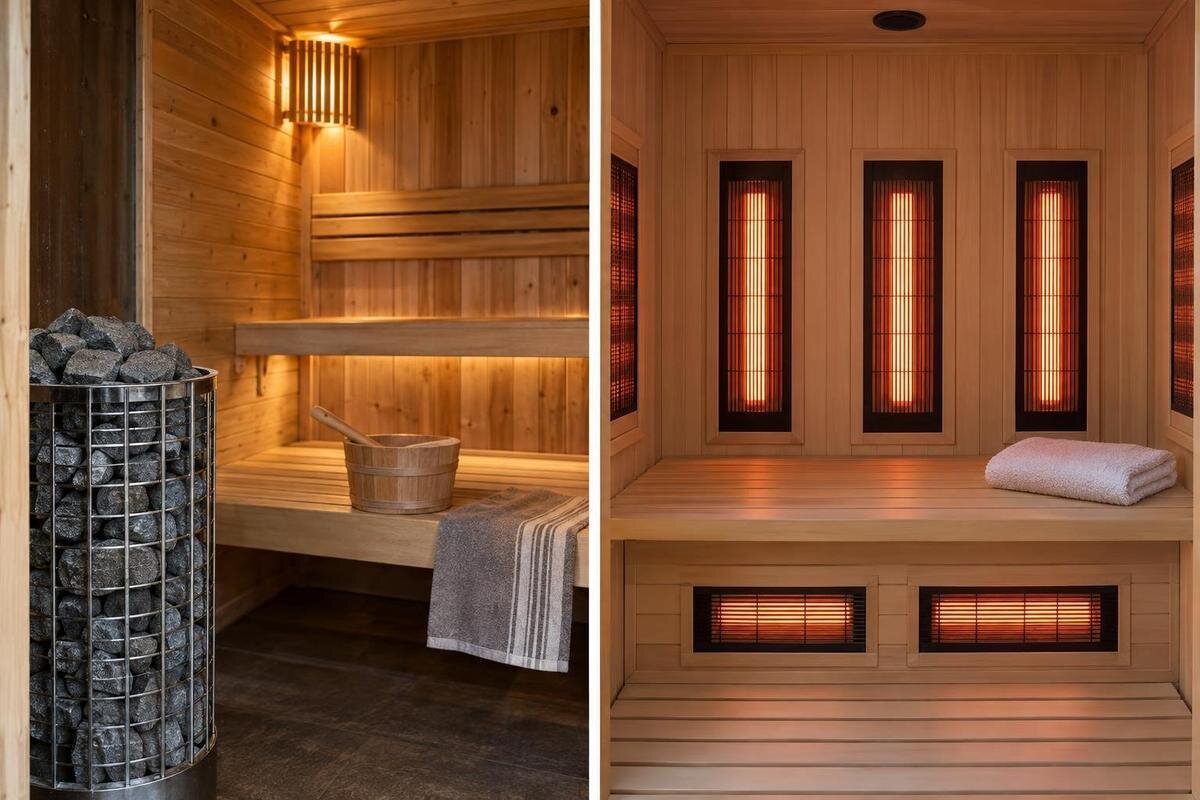
Traditional and infrared saunas both provide warmth inside a cabin, but they create that warmth differently. A conventional sauna heater warms the cabin air and nearby surfaces; infrared emitters provide radiant warmth to people and surfaces in their path. The difference affects what you feel, the equipment to check and how well a layout suits your routine. This comparison focuses on experience and buying details, not medical outcomes. It also explains why a sauna’s name or photograph cannot confirm the heating system, included components or intended use. Those points need to be checked for the exact model and configuration.
The heating method changes what you feel
A traditional sauna usually relies on a heater to warm the cabin air and surrounding surfaces. Depending on the model, that heater may be electric or wood-fired and may use stones. You experience a warmed room, with the air, benches and interior all contributing to the overall impression. Infrared saunas use emitters that radiate warmth towards the bather and nearby surfaces, rather than relying first on heating all the cabin air. The air can warm too, but it is not the primary route by which infrared systems create their effect. Cabin design, heater or emitter position, controls and starting conditions all matter, so treat these as two different ways of arranging heat, not as a ranking.
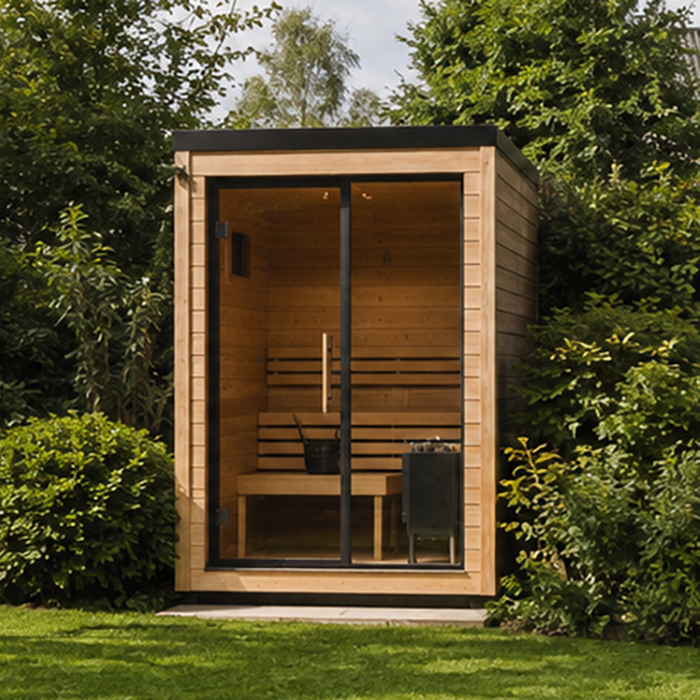
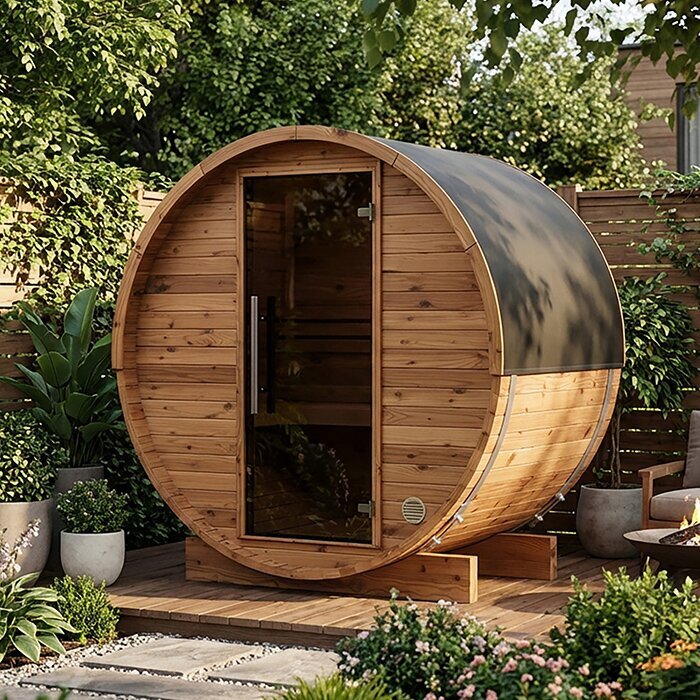
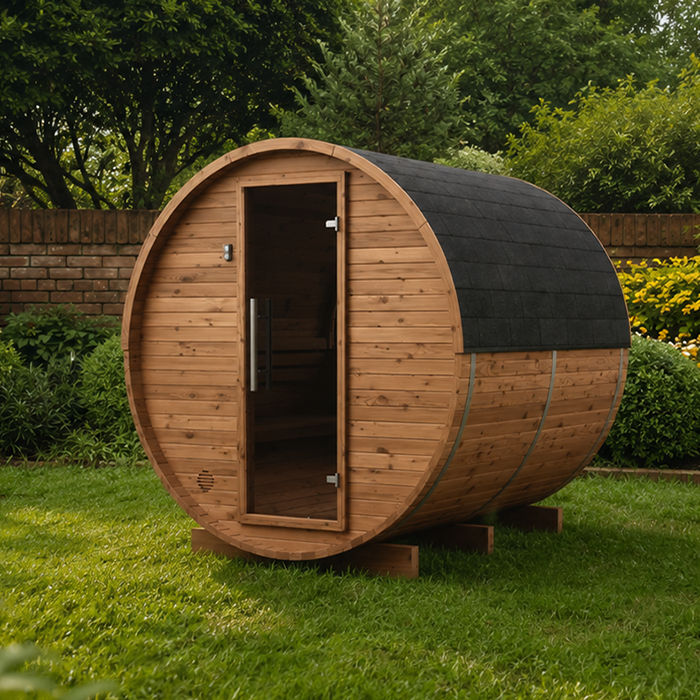
Think of the heating method as a technical feature, not something you can infer from a cabin’s shape, finish or photograph. The Thermowood Barrel Sauna N-210 is identified as a barrel sauna, and its listing gives 4.43 m². Neither its name nor that figure, on its own, establishes whether a particular configuration has a stone heater, infrared emitters or which components are included. Check the current description, selected options and manufacturer’s manual. If a product family offers more than one set-up, compare the exact model codes and component lists instead of assuming the image represents the version you will receive. An area value is not a heater specification or a drawing of the internal layout.
Water on stones is an optional part of a traditional session
A traditional-sauna session may include a dry, warmed cabin or a brief rise in humidity when water is poured over suitable hot stones. The Finnish term löyly is often used for the steam sensation associated with that practice. Water is optional: it changes the feel of the air temporarily rather than defining every traditional sauna. Some users value the ritual and the choice of whether to add water, while others prefer not to. Whether a particular heater permits it depends on its design and instructions, so do not treat all stone heaters, or all cabins marketed as traditional, as interchangeable.
If this ritual matters to you, check whether the stones and heater are included and what the instructions say about water. Confirm that the exact configuration supports the way you intend to use it; a general description of a sauna is not enough. The Thermowood Barrel Sauna N-250 listing gives 5.27 m², but that figure and the barrel-sauna name are not a heater specification. Check the selected model’s details before counting on water-on-stones use. For an infrared cabin, likewise, do not assume that panels can be splashed or that a stone heater is part of the equipment; follow the manufacturer’s instructions for that system.
Infrared panel placement and seating
With infrared, the position of the emitters is an important part of the experience. Panels can be arranged differently, and their placement relative to the bench affects how the manufacturer intends the cabin to be used. Ask for a drawing that shows the emitters and seating together; a product photograph may not reveal their exact positions. Consider how you usually sit, whether you want to recline and whether more than one person expects to use the cabin at the same time. Follow the instructions on where to sit and how to use the panels rather than assuming that moving closer or changing position is an approved adjustment.
The air in an infrared cabin may become warm, but a displayed temperature should not be compared directly with one from a traditional heater as if both represented the same conditions. Controls and sensor positions vary by model. To understand how warmth is distributed across seats, ask what the manufacturer means by its coverage description and compare it with the seating drawing. Keep this heating information separate from the cabin’s listed area. For example, the LC-260 Thermowood Barrel Sauna listing gives 5.12 m², but does not establish an infrared configuration. When comparing it with an infrared model, record the heating equipment and seating arrangement for each separately. This avoids treating two similarly sized cabins as equivalent when the way you would sit in them and experience the warmth may differ.
Warm-up claims and temperature settings need context
A traditional sauna may need time to warm its cabin before it reaches the conditions you want; an infrared system also needs to reach its intended operating state. Neither type is automatically faster in every setting. The result depends on the particular equipment, cabin construction, controls and starting conditions. If warm-up time matters to your routine, look for information about the exact model and how the manufacturer defines its result. A general claim about traditional or infrared saunas may not describe the model, cabin size or conditions you will actually have.
The control panel is another point to compare. Ask how the model sets and displays its operating conditions, where its sensors are located and whether the instructions explain the start-up process. Do not transfer a temperature setting from one heating method to another. Look beyond the display itself: can you understand the controls, identify what each setting changes and follow the operating sequence without guesswork? If several people will use the sauna, consider whether everyone can manage that routine confidently. A demonstration of the controls can be useful even when it does not include a heated session. The Thermowood Barrel Sauna HCF-300 listing gives 6.89 m²; that area alone cannot tell you how long the cabin takes to warm, and it is not a performance comparison with an infrared model. Compare the operating information for the exact models, including how each manufacturer describes readiness for use.
Check the complete equipment list
The equipment supplied can matter as much as the sauna category. Depending on the chosen package, a traditional set-up may involve a heater, stones and controls; an infrared set-up uses emitters and a control system. The cabin, benches and other fittings may be listed separately or included in a particular configuration. Do not assume that a photograph shows everything in the order or that a product-family name identifies the contents. Look for an itemised list and check which components are included, optional or expected to be supplied separately. When comparing offers, give the cabin and heating equipment separate entries in your notes. Record the selected heater or emitter system beside its controls, rather than simply writing ‘heating included’. This makes it easier to spot an incomplete description and to ask a precise question about what the quoted package contains.
Also confirm who is responsible for the connection and commissioning requirements, and have the site and supply assessed by a qualified professional where needed. Ask for the model-specific manual and any technical information that the installer will need, rather than working from a general description. The Thermowood Barrel Sauna LCF-300 listing gives 6.89 m², the same area figure shown for the HCF-300. A shared area figure does not establish that two models have matching heaters, controls or package contents; check each configuration separately.
Check seating and usable space in the drawing
A stated area does not tell you whether the interior layout suits the people who will use it. Check bench length, headroom, the position of the door and the space needed to sit or move comfortably. Think about whether you mainly want to sit upright or recline, and whether users will share the cabin. For a traditional heater, ask the maker to explain the intended seating positions. For infrared, compare the bench layout with the emitter plan so that you understand how the positions relate to the panels. A clear drawing is more useful than estimating from a photograph.
The Thermowood Barrel Sauna S-140 listing gives 1.93 m². Treat that as the area stated on the listing, not as a seat count, a complete set of internal dimensions or proof that a particular posture will fit. Ask which measurements describe the interior and which describe the outside, and look for the bench and equipment positions on the drawing. If the seller offers several configurations, make sure the drawing corresponds to the exact model you are comparing. This helps separate a useful area figure from the practical question of how the sauna can be occupied.
Site requirements do not follow from the heating label
The heating method alone does not tell you whether a particular cabin is intended for your proposed location. Confirm the manufacturer’s requirements for its setting, surrounding space and ventilation, and consider how the door will open and how people will reach the unit. For an indoor location, check the room and access route; for an exposed or covered outdoor location, confirm that the specific model is suitable for those conditions. Do not assume that every sauna can be installed in either setting simply because it uses a particular type of heat.
Before committing to a position, compare the product drawing with the route into the site, the available space and the services that may be required. A listed area is not enough to establish the complete external dimensions or whether the unit can pass through an access opening. For example, the Thermowood Barrel Sauna HC-150 listing gives 2.97 m²; use the model’s dimensions and siting guidance to assess the actual location. Have any installation or supply questions checked by a qualified professional rather than relying on a general description of the sauna type.
Care and running costs are model-specific
Maintenance depends on the equipment and the manufacturer’s instructions. A traditional heater may require attention to its stones and other parts, while an infrared model has emitters and controls with their own care requirements. Check how the cabin surfaces, heater or panels should be cleaned, and whether the manual specifies routine checks or replacement parts. Avoid applying a generic cleaning method to an unfamiliar finish or component. The product page and manual should make clear what care is expected for the exact configuration you purchase.
The heating label also does not guarantee a lower electricity bill. To compare operating costs, ask for the model’s rated input and any manufacturer guidance on energy use for a stated pattern of operation. Your costs depend on the unit, how often and how long you use it, the conditions it starts in and your tariff. The Thermowood Barrel Sauna HC-225 listing gives 4.4 m², but an area figure cannot establish energy use. Compare the technical information for the actual traditional and infrared models rather than relying on broad claims about one type being more efficient.
Choosing a sauna to suit your routine
For a traditional sauna, the deciding attraction may be the feeling of a heated cabin and, if the heater permits it, the option of adding water to stones. For infrared, it may be the direct radiant warmth from the panels and a session without that ritual. These are preferences about the experience, not promises about health or a guarantee that one will feel better for everyone. Picture an ordinary occasion when you would use the sauna, rather than choosing only by its most appealing feature. Would you mainly use it alone or share it? Do you want to sit quietly in one place, recline where the layout allows, or have the option of water on stones? Consider which features you would actually use and which would add little to your enjoyment. There is no need to select a type based on a claimed benefit that the equipment information cannot establish.
If a demonstration is available, treat it as a chance to understand that particular model rather than a guarantee of how every sauna of the same type will feel. Ask to see the seating positions and operating controls, and distinguish your impression of the cabin from your preference for its heating method. Otherwise, use the manufacturer’s description, drawing and instructions to picture how the cabin is prepared and used. For shared use, compare each person’s comfort preferences before choosing a layout. Discuss any differences explicitly: one person may value the option of water on stones while another is more interested in the seating arrangement or a straightforward control routine. If a medical concern is driving the decision, discuss that concern with a qualified healthcare professional; this equipment comparison cannot determine which option is appropriate.
Questions to resolve before you order
Before comparing offers, write down the exact model and configuration, then check the heating method, the equipment included and the relevant manual. For an infrared system, ask for the emitter positions and seating drawing; for a traditional system, confirm the heater type and whether stones and controls are supplied. In both cases, check the cabin measurements, the site requirements, the expected supply and connection arrangements, and the maker’s care instructions. If warranty or service terms matter to your decision, read the terms for that specific offer instead of assuming they are the same across a product range.
The models linked in this guide are identified as Thermowood Barrel Saunas; their names and listed areas do not establish whether the current Malta range includes infrared or hybrid options, or which heater is included with each configuration. Check the current local listing and the exact model details before deciding. If a specification leaves the heating system or package contents unclear, do not assume that the product will deliver the experience you are comparing it with. Compare only after the model, equipment and intended use are explicit.
Frequently asked questions
Can you use water in an infrared sauna?
Do not assume that you can. An infrared cabin is not automatically equipped with a stone heater, and its panels may have specific moisture restrictions. Follow the manual for the exact model and use water only if the manufacturer explicitly permits it.
Does one type of sauna warm up faster?
There is no reliable answer based on the type alone. Warm-up depends on the particular cabin, heating equipment, controls and starting conditions. Compare manufacturer information for the exact models rather than relying on a general claim about traditional or infrared saunas.
Can I compare the temperature settings on both types?
Not as if the numbers describe the same experience. The heating methods and control systems differ, and sensors may measure conditions in different ways. Use each model’s own instructions; do not transfer a setting from one type to another.
Which type costs less to run?
The category name alone does not establish running cost. Ask for the exact model’s rated input and usage guidance, then consider the way you expect to use it and your electricity tariff. Avoid assuming that either method will always cost less.
Does the Malta catalogue offer infrared or hybrid saunas?
The Malta listings referenced here identify Thermowood Barrel Sauna models, but that information does not establish whether infrared or hybrid options are currently available. Check the current local catalogue and the documentation for the exact configuration.
The better choice is the one whose heat source, layout and operating routine match what you want, with clearly specified equipment. Decide whether you prefer a heated cabin with the option of water on suitable stones, or the radiant warmth of infrared panels. Then compare the drawing, instructions, configuration and site requirements for the particular model. If the heating system or included components are unclear, resolve those details before choosing.
