
Using a Pergola in Winter: Snow, Ice & Wind | Bloomcabin Malta
Short answer
Yes – but winter use means protection, checks and model-specific operation, not simply summer use in cooler weather.
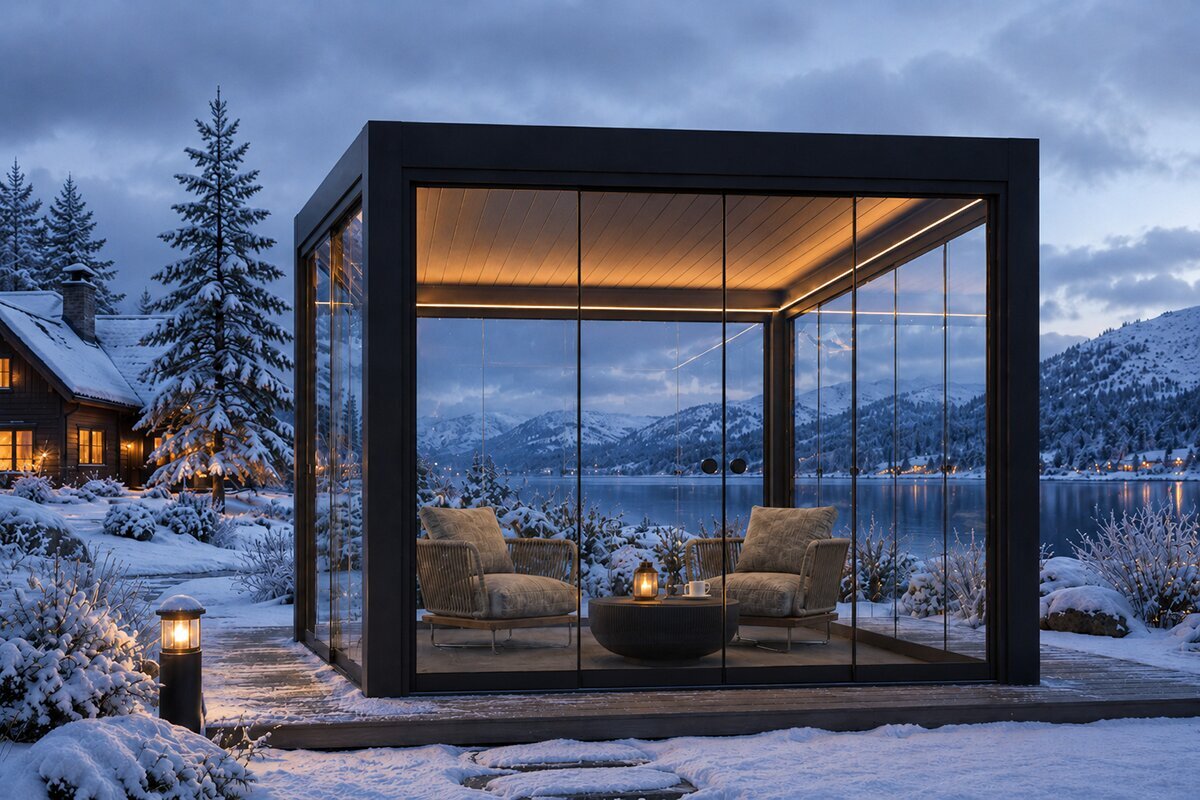
On clear winter days, a pergola can create a sheltered place outdoors. Glass walls or selected side panels reduce cold wind, while the roof can protect against direct weather. This can extend terrace use well beyond that of a completely open seating area, especially in the cooler season and on sunny days.
Snow conditions and pergola models should not all be treated alike. Powder snow, wet snow, drifts and freezing rain load a structure differently. Avoid generic depth rules found online; follow the documentation for the specific Bloomcabin model and assess conditions at the installation site.
Motorised louvre roofs require particular care in winter. If louvres, hinges or tracks are frozen, do not force them free with the motor. Unusual resistance is a reason to stop operation and safely identify the cause.
Winter-ready use starts in autumn: clean roof drainage, remove leaves from tracks, secure loose furniture and check where meltwater will run during frost. Preparing these points prevents many common winter problems.
Winter operation
Winter is a separate operating season, with priorities different from summer and autumn.
Summer priorities are shade, ventilation and rain protection. In winter, snow, ice, frozen mechanisms, strong gusts and repeated freeze-thaw cycles become more important. The pergola remains the same structure, but appropriate use changes.
A sunny January day in Malta may feel almost spring-like, while exposed coastal sites can still receive driving rain and powerful gusts. Conditions can vary considerably between sheltered gardens and open locations.
Before operating moving parts in cold or wet weather, check for debris, pooled water, ice or other obstructions. A motor does not replace a visual inspection.
The cautious rule is simple: if it is unclear whether current weather conditions are within the model guidance, do not improvise. First establish the procedure intended for that specific model.
Snow on the pergola
Snow is not a uniform load, so generic depth limits offer little useful guidance for pergolas.
At the same depth, light powder snow can weigh considerably less than wet, water-laden snow. Wind may also create drifts that concentrate snow on one side of the roof. Visible snow depth alone therefore reveals too little about the actual load.
Transitional weather is particularly demanding: snow falls, temperatures then rise just above zero, the snow becomes heavier and everything freezes again overnight. These cycles can also form ice along edges, in drainage channels and around moving components.
Do not choose a winter louvre position using a general online rule. The operating instructions for the specific roof are decisive. A position that works for summer rain is not automatically the correct one for snow.
If snow or ice lies on moving louvres, do not test whether the motor can overcome it. Mechanical resistance may come from frozen edges, snow between the louvres or blocked hinges.
Do not remove snow with hard metal tools or aggressive blows. Coatings, seals and profiles could be damaged. Any snow clearance must be safe and follow the product guidance.
The surroundings also affect snow distribution. A high house wall may create drifts; trees can shade part of the roof so snow remains longer; sunny sections may thaw sooner.
During a thaw, snow becomes water, so clear drainage matters as much as the snow itself. Several centimetres of snow can release a substantial volume of water within a short time.
When selecting a pergola for a site where snow may occur, consider location, exposure, roof type, foundation and intended winter use together.
Ice and freezing rain
Cold air is rarely the main issue – frozen or obstructed mechanisms are.
Freezing rain can leave a thin, firmly attached layer of ice over louvres, hinges and tracks. From below, the roof may appear almost clear even while contact points between moving parts remain frozen.
If a louvre, sliding-glass panel or another moving component becomes unusually stiff, stop operating it. More motor power is not a safe solution for ice.
Floor tracks can also freeze. Snow, slush and water in a sliding-glass track may freeze as temperatures fall and block the panels. Keep tracks clean and as free as possible from standing water in winter.
Outlets are another consideration. Water that drains correctly during the day may freeze on steps or paths overnight. Drainage should not discharge directly onto main walkways or in front of terrace doors.
After a frosty period, it can be sensible to let everything thaw fully and then inspect the mechanism instead of repeatedly trying to operate it during the transition.
Louvre roof in winter
An adjustable roof remains adjustable – but its actual condition must be checked before every movement in winter.
During warmer months, louvres may be moved several times daily. In frosty weather, make a quick visual check before each movement: is there snow, are edges iced, or is a branch or another object obstructing the mechanism?
The roof’s winter position depends on the documentation for the particular Bloomcabin model. Recommending one position for every louvre roof would not be appropriate.
If the drive sounds unusual or movement does not begin freely, stop the process. A blocked mechanism does not become more reliable when the control is pressed repeatedly.
Before freeze-thaw periods, make sure water channels and outlets are clear. Meltwater that cannot drain may freeze elsewhere and create additional obstructions.
In sunny winter weather, open louvres can bring light to the terrace and adjacent windows, provided the model guidance and actual conditions allow it. This can be important with wall-mounted pergolas.
If choosing between a classic and bioclimatic pergola, include winter operation in the decision: an adjustable roof offers greater flexibility, but requires closer attention to condition and operation.
Winter wind
Cold wind can make a terrace uncomfortable long before temperatures feel extreme.
A sunny winter temperature can feel much cooler in the wind. Glass walls or purposefully closed sides can therefore offer a particularly noticeable comfort benefit in winter.
Buildings, walls and hedges alter wind locally. Airflow may accelerate around a house corner while being calm only a few metres away. Choose the protective side according to the actual microclimate.
Glass walls reduce airflow at seating level, but also increase the area exposed to strong gusts. The final side configuration should therefore form part of the overall foundation and fixing plan.
Winter storms can bring stronger gusts than normal terrace use. Treat screens, sliding elements and moving components in line with their individual operating instructions.
Light furniture, planters and decorations are part of the wind plan too. A flying chair can damage even correctly installed glass.
Complete enclosure is usually unnecessary. One or two well-chosen protective sides can make a major winter difference while retaining ventilation and an outdoor feel.
Glass walls in winter
Glass makes a winter pergola more sheltered from wind – not a heated indoor room.
Clear glass walls can be especially useful in winter because they reduce wind while retaining sunlight and garden views. On a bright day, a sheltered terrace can feel noticeably more pleasant.
Sliding glass lets you close the windward side, then open it again in stronger sunshine or milder conditions. This flexibility is useful in Malta’s variable winter weather.
Fixed glass suits a side that needs wind protection most of the time. Combining a fixed weather side with a movable garden side is often more practical than glazing every side.
Condensation can form on cool glass. This is normal in an outdoor space. Ventilation helps surfaces dry and prevents the pergola from remaining unnecessarily damp.
Snow and slush can enter floor tracks and freeze there. Do not move sliding-glass panels when ice is blocking the guide.
Anyone using a portable heater must follow only the heater manufacturer’s clearance, ventilation and safety instructions. A glazed pergola is not an indoor room.
Malta in winter
Coastal sites, sheltered towns and exposed gardens need different winter strategies.
Malta’s winter weather ranges from mild sunny periods to rain, storms and strong coastal winds. The precise terrace location matters more than a national average.
Good winter planning responds to the site’s main risk: wind, driving rain, temporary water build-up, slippery surfaces or local gusts.
Coastal locations Wind, salt-laden air and driving rain may matter more than cold. Side protection, secure anchoring and clear drainage take priority.
Sheltered urban gardens Stored warmth and reduced wind can make winter use pleasant, but rainfall drainage and ventilation still need attention.
Exposed plots Stronger wind and rain call for extra attention to model-specific operation, anchoring and weather management.
Higher ground More exposed conditions can occur on elevated sites. Site-specific and model-specific guidance is particularly important.
Courtyards Low wind and retained warmth can support winter use; in sunshine, adequate ventilation should still be maintained.
Foundation and winter weather
Long-term stability begins beneath the visible aluminium structure.
A pergola can remain straight only as reliably as its supporting base. Frost-sensitive ground, poorly drained water or local settlement can gradually alter its geometry.
With sliding glass, even small movement becomes apparent quickly because the long floor track must remain accurately aligned. Paving or tiles are not automatically equivalent to a load-bearing foundation.
Posts must transfer loads into suitable structural support. On timber decks, raised paving systems or terraces over rooms, the actual substructure must be considered.
Ground and drainage conditions vary between Maltese sites; where freeze-thaw exposure is relevant, account for it. Soil, drainage and local requirements determine the appropriate foundation solution.
For a new terrace, it is best to plan foundation points, drainage, electrical routes and glass tracks together.
After winter, inspect the area around posts and tracks. A single lifted paver can already change the route of water.
For existing terraces, check whether small settlements have appeared since construction. A few millimetres may barely matter in normal use, but can be relevant to a long glass track or precisely aligned posts.
Anyone planning a new pergola where frost may occur benefits from considering ground conditions, drainage and planned side elements early. This creates a system that is straight on installation day and can retain its geometry reliably over many winters.
Drainage in winter
Water that drains correctly at midday can create a hazard elsewhere later.
Snow often thaws in sunshine even when the air temperature is only just above zero. The water drains away and may freeze again a few hours later.
For this reason, outlets should not discharge onto steps, in front of terrace doors or directly through sliding-glass tracks. Winter drainage is also a safety issue.
Before the first frost, remove leaves, seeds and dirt from roof channels and outlets. Summer debris can become a frozen blockage in January.
Snow piles beside the pergola also matter. As they thaw, they can direct water into tracks or around post bases even when the roof itself drains correctly.
At the start of spring, check whether winter weather, cleaning or ground movement has changed falls around the pergola.
Spring check
After winter, a brief function check is worthwhile before the pergola is moved daily again.
Once snow and ice have completely disappeared, inspect roof channels, louvre edges, visible fixings, tracks and paving around the posts.
Then check sliding glass through its normal travel. If a panel suddenly sticks, do not push harder; first look for dirt or changed alignment.
Move the louvre roof only when the mechanism is clear and conditions are suitable. Unusual resistance or sounds indicate that the cause should be checked.
Garden changes belong in the check too. Grown branches, new furniture or recently placed planters must not block moving parts.
A spring check is not a structural inspection by the user; it is an opportunity to notice obvious changes early.
Wall-mounted or freestanding
In winter, proximity to the house strongly affects wind, drainage, access and weather protection.
A wall-mounted pergola benefits from the building as a sheltered rear side, but snow or wind may drift around the façade. Low door thresholds and water routes also become more important.
A freestanding pergola is often more exposed to wind, but drainage can more easily be directed away from house doors and façade bases.
For either option, check where snow normally drifts, where roof water exits and which routes are regularly used in winter.
In front of large windows, an adjustable roof can influence winter daylight. The suitable louvre position always depends on model guidance and the actual weather condition.
When choosing between wall-mounted and freestanding designs, consider not only summer furniture, but also winter access, snow clearance and water routes.
A typical winter day
Sensible winter operation comes from observation rather than routine.
A practical example: after a frosty night, morning sunshine appears while frost remains on some louvres. Do not automatically move the roof merely because the terrace will be used. First check that every moving area is clear. Only when the mechanism is normal and ice-free should regular operation continue in accordance with the model guidance.
Winter checklist
Eight simple habits reduce many typical winter problems.
01. Clean drainage before frost Remove leaves and seeds from roof channels and outlets.
02. Keep sliding tracks clean Do not leave snow, slush, sand or ice in the guide.
03. Do not force frozen louvres Unusual resistance means: stop and identify the cause.
04. Treat snow according to model guidance Do not adopt generic centimetre rules from other pergolas.
05. Check outlets for ice formation Meltwater must not freeze dangerously on main paths or near doors.
06. Secure loose furniture before storms Flying objects can damage glass and the roof.
07. Check after freeze-thaw periods Inspect paving, tracks and water routes for changes.
08. Test overall function in spring Operate moving parts normally only after all ice has cleared.
Bloomcabin Malta / plan further
Winter comfort starts with the right pergola model, foundation and location.
These Bloomcabin Malta pages help with roof type, position, size and ground preparation.
Louvre roof Bioclimatic pergola →
Freestanding Bloomcabin pergola →
Wall-mounted Bloomcabin wall pergola →
Size Pergola size guide →
Ground Pergola foundation guide →
Comparison Bioclimatic or classic pergola →
Position Wall-mounted or freestanding →
FAQ
Questions about pergolas in winter
Can a pergola stay outside all winter?
An outdoor pergola remains installed, but snow, ice and operating conditions depend on the specific model and site.
Can I use the pergola during snowfall?
That depends on the model, snow conditions and operating instructions. Moving parts must not be forced against snow or ice.
Should I move louvres when snow is lying on them?
Only according to the specific model guidance. Do not operate a blocked or frozen mechanism.
Can the motor break frozen louvres free?
No. Resistance is a reason to stop, not to apply more motor power.
Do glass walls improve winter comfort?
They can substantially reduce wind and make sunny winter days more pleasant, but they do not create an insulated indoor room.
What is the key winter care task?
Clear drainage and clean moving tracks are particularly important.
Can I use a patio heater?
Only in line with the heater manufacturer’s safety, clearance and ventilation instructions.
What should be checked in spring?
Drainage, tracks, paving, visible connections and free normal movement of components.
Use it wisely in winter
Yes, a pergola can be used in winter – but snow, ice and model limits determine its operation.
A well-planned aluminium pergola can remain a valuable outdoor space in Malta for many months. Winter comfort comes from wind protection, reliable drainage, a stable foundation and disciplined operation without forcing moving parts through ice or snow.
View bioclimatic pergolasMalta: This article gives general guidance, not structural load figures. Snow, wind, ice, foundation and operating limits vary by model and site. Follow the specific Bloomcabin documentation and ask a perit to confirm Planning Authority requirements for the proposal.
