



Wall-mounted or freestanding pergola?
A clear comparison for anyone deciding which pergola best suits their terrace: wall-mounted or freestanding, with differences in design, use, positioning and buying decisions.
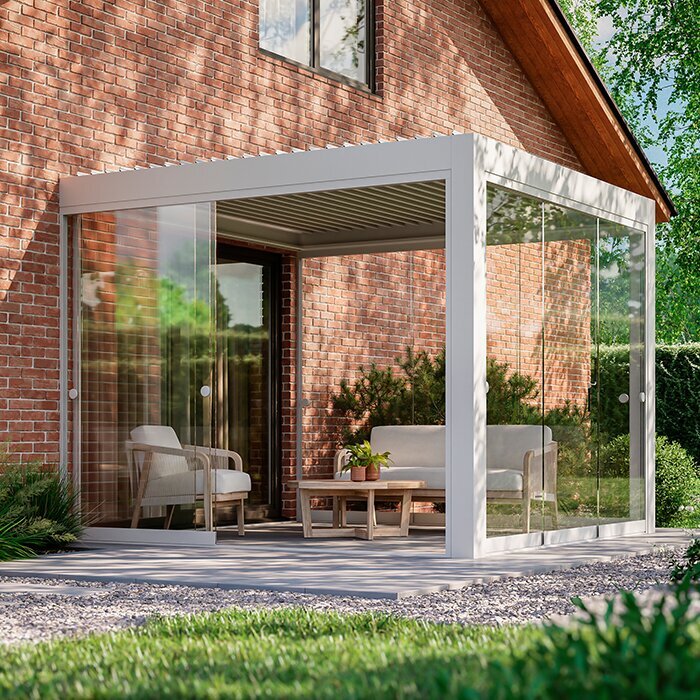
Anyone planning a pergola for their terrace will often face one basic question: should it be a wall-mounted pergola or a freestanding pergola?
At first glance, the two options can look similar. Both create shade, give the outdoor area structure and make a terrace or garden more inviting. In practice, however, they suit different house styles, terrace layouts and ways of living outdoors.
That is exactly why this choice matters. The pergola that looks best in one photo is not automatically the right one. The better option is the one that genuinely suits your home, terrace and everyday routine.
Bloomcabin offers both options in Malta: the Bloomcabin Pergola as a freestanding solution and the Bloomcabin Wall-mounted Pergola as a wall-mounted solution. If comfort and flexibility are especially important to you, it is also worth looking at the Bloomcabin Bioclimatic Pergola.
For a broad introduction, see the guide Choosing the right aluminium pergola: a practical guide. If you also want to compare comfort levels, the article Bioclimatic or classic pergola: which is right for you? is a useful companion.
What is the key difference between wall-mounted and freestanding pergolas?
The real difference is not only in construction, but mainly in how the pergola relates to your home.
A wall-mounted pergola is fixed directly to the façade. It can therefore feel like a natural continuation of the house and terrace. A freestanding pergola stands independently and gives you more freedom over where it is positioned.
Put simply:
- A wall-mounted pergola is usually better when the terrace is directly beside the house and you want an integrated solution.
- A freestanding pergola is usually better when you want more freedom of placement or wish to create a separate outdoor area.
When is a wall-mounted pergola the better choice?
A wall-mounted pergola is usually the stronger option when your terrace adjoins the house and the outdoor area should feel like an extension of your living space.
In situations like these, a wall-mounted pergola often works particularly well because it looks more architectural, integrated and deliberately planned. It creates a smooth transition between indoors and outdoors and can give the terrace a more complete overall appearance.
A wall-mounted pergola is often the better choice when:
- the terrace is directly beside the house;
- you want a visually integrated solution;
- the pergola should look like part of the architecture;
- you want to clearly frame the house-facing side of the terrace;
- you use the outdoor area as an extension of the interior.
For many contemporary homes, this is the most natural option. The Bloomcabin Wall-mounted Pergola is particularly relevant for this purpose.
When does a freestanding pergola make more sense?
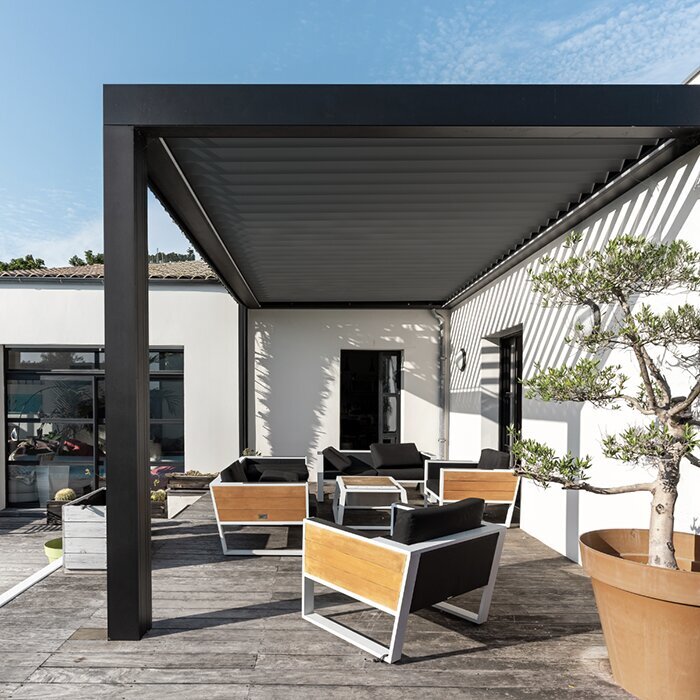
A freestanding pergola is often the better option when you want greater freedom. That freedom may concern its position, the design of the terrace, or the wish for an outdoor area that feels more independent of the house.
It works especially well when you want to create a self-contained lounge area, a separate dining space or simply more flexibility in the garden or on a larger terrace.
A freestanding pergola is often more suitable when:
- you want more freedom over positioning;
- the terrace is not ideal for wall mounting;
- you want to create a separate place to relax;
- the pergola does not need to follow the façade;
- you want to define a distinct outdoor room in the garden or on the terrace.
For this direction, the Bloomcabin Pergola is the suitable solution.
Which option looks better?
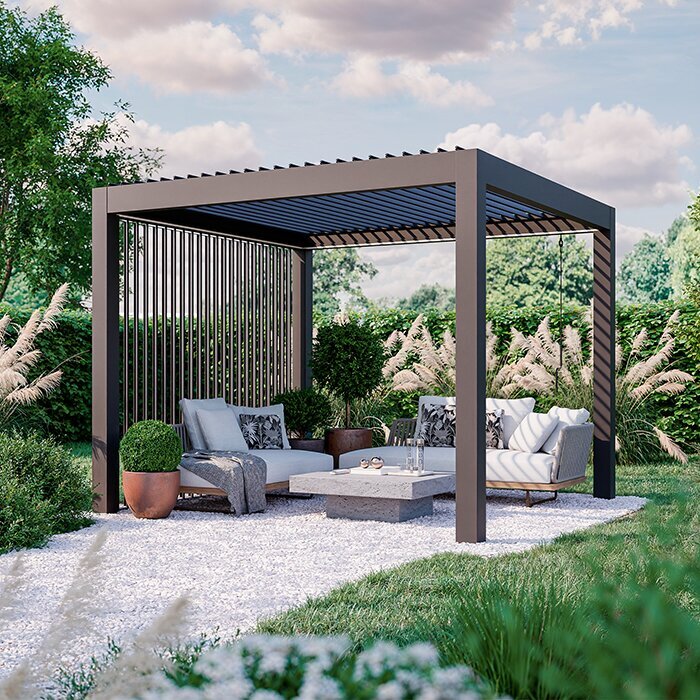
There is no universal answer, because both options can look excellent when they suit the house and terrace.
A wall-mounted pergola often appears more architectural, calmer and more closely connected to the façade. It is usually the better choice when you want a clear visual relationship between home and terrace.
A freestanding pergola often feels more open, flexible and more like an independent design feature. On larger areas, it can add structure to the outdoor space without being directly tied to the house.
So the question is less about which pergola is inherently more beautiful, and more about which one creates the best overall look on your property.
Which option is more practical day to day?
That also depends on your lifestyle.
If you regularly move between house and terrace, dine outside close to the home or use the terrace as a natural extension of your living area, a wall-mounted pergola is often more practical. It makes the transition between indoors and outdoors feel simpler and more natural.
If you would rather create a separate place for relaxing, reading, dining or welcoming guests, a freestanding pergola may be more practical. It lets you plan the outdoor area more freely and independently.
What about comfort and premium use?
This is where the decision becomes a little more nuanced.
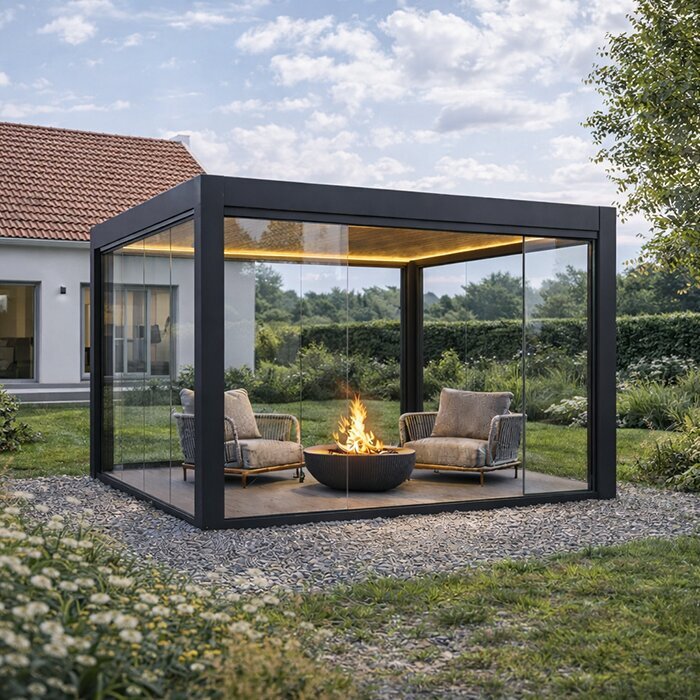
The question wall-mounted or freestanding pergola is about layout and placement. The question classic or bioclimatic is more about comfort and function.
Both wall-mounted and freestanding pergolas can look very high-quality. However, if greater comfort, more control and a more premium way of using the space matter to you, you should also consider the Bloomcabin Bioclimatic Pergola .
The existing comparison Bioclimatic or classic pergola: which is right for you?also fits well here. Anyone deciding between wall-mounted and freestanding today may also want to compare comfort levels tomorrow.
What should you consider before deciding?
Before choosing, it helps to ask a few practical questions:
- Is your terrace directly beside the house or more independent from it?
- Should the pergola feel like part of the architecture or more like a separate outdoor feature?
- Do you mainly want to improve the house-facing side of the terrace or create a separate outdoor area?
- Is visual integration more important to you than freedom of placement?
- Will you use the pergola mainly in daily life beside the house or for a flexibly planned garden seating area?
When you answer these questions honestly, it usually becomes clear very quickly which option truly suits you better.
If you also have practical questions about guarantees, care or models in general, it is worth visiting the page Frequently asked questions about aluminium pergolas.
Frequently asked questions
Is a wall-mounted pergola always better for terraces beside the house?
In many cases, yes. If the terrace adjoins the house and you want a seamless transition between indoors and outdoors, a wall-mounted pergola is often the more natural solution.
Is a freestanding pergola more flexible?
Yes. A freestanding pergola generally gives you more freedom in positioning and design, making it especially appealing for larger terraces or separate garden areas.
Which option looks more modern?
Both can look very modern. The deciding factor is whether you prefer a more integrated solution or a more independent structure.
Can a freestanding pergola also stand close to the house?
Yes. Freestanding does not automatically mean far from the house. It can also work well nearby when the positioning or terrace layout supports it better.
Should I also consider a bioclimatic pergola?
Yes, especially when comfort, adjustability and a more refined use of the space are priorities. In that case, comparing classic and bioclimatic pergolas is a sensible next step.
Find the pergola that genuinely suits your terrace
The right pergola is not simply the one that looks best in a single image. It is the one that truly suits your home, terrace and everyday life.
View wall-mounted pergolas View freestanding pergolas View bioclimatic pergolas
