
Overwintering Geraniums in a Greenhouse
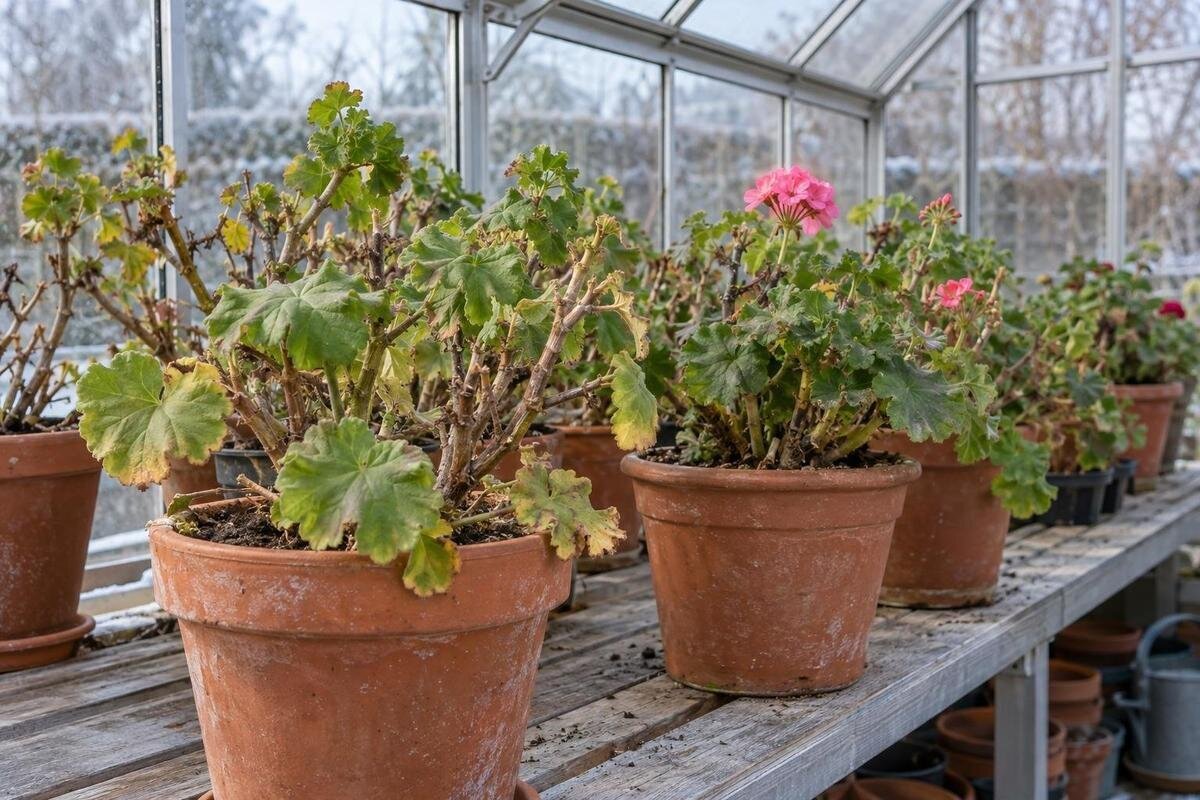
Greenhouse plant care
Many plants sold as geraniums are Pelargoniums, tender perennials that need a different winter plan from hardy garden Geraniums. In a greenhouse, you can keep suitable Pelargoniums cool and resting or maintain them in active growth; neither method is simply a matter of leaving pots in the house. Light, night temperature, pot moisture and airflow must match the chosen approach, and the greenhouse can warm quickly in winter sun. This guide explains how to identify the plant, choose a method and manage its care through the season.

Greenhouse buying considerations 1
Identify the plant before choosing its winter routine
In garden shops, geranium often means Pelargonium: the zonal bedding plants, ivy-leaved trailers, regal types and many scented-leaved varieties. Botanically, these are not the same genus as hardy Geraniums, often called cranesbills. Many cranesbills are perennial garden plants that can remain outside according to the needs of their species, while Pelargoniums are generally frost-tender and commonly overwintered under cover. Treating both groups alike can mean taking up greenhouse space unnecessarily or exposing tender plants to cold damage. Check the label for Pelargonium, Geranium and, where possible, the cultivar name before moving the pot.
Leaf shape or scent can suggest a group, but it is not reliable enough to set a winter temperature by itself. Zonal Pelargonium × hortorum, ivy-leaved P. peltatum and regal P. × domesticum do not all have identical habits: trailing plants need room for their stems, while scented-leaved cultivars vary widely in growth. Record the name, the plant's condition and whether you hope to keep it flowering. If the label only says geranium, ask the nursery or supplier which group it belongs to. Knowing the plant's identity informs both its temperature and pruning choices.
Choose between a cool rest and active growth
With a cool-rest approach, the aim is to slow growth, not to make the plant shrivel. Keep a potted Pelargonium in a bright, cool place, remove fading growth and reduce watering because compost dries more slowly when roots are cool and leaves are not expanding. Plants may retain some foliage; a winter rest does not require stripping every leaf. Dark, bare-root storage is a separate technique with different handling and should not be confused with keeping leafy plants in pots. In a greenhouse, a cool and bright position is usually easier to monitor.
Active winter care keeps leaves growing and can preserve a fuller plant for the next season, but it requires a brighter position and more regular attention. Choose it for healthy plants when you can provide adequate daylight and avoid the combination of warmth and low light that encourages weak, stretched shoots. A mixed collection can use both methods: rest sturdy mature plants while keeping a few labelled cuttings or selected pots growing. For a large collection, the Spacious Greenhouse listing covers versions from 47 to 70 m². That is a catalogue area range, not a recommended minimum or evidence of winter temperature control.
Greenhouse buying considerations 2
Set a realistic winter temperature
Pelargoniums are tender, so do not assume that a greenhouse is frost-free. For a commonly grown zonal bedding Pelargonium (Pelargonium × hortorum), a bright, cool rest around 7–10°C is a practical target; if you keep it actively growing, roughly 10–15°C with strong light is a more useful working range. Regal pelargoniums (P. × domesticum, often sold as Martha Washington types) also suit a cool, bright winter, though their flowering habits and cultivar guidance matter. Ivy-leaved P. peltatum remains frost-tender too; its trailing habit changes how much room it needs, not its need for protection. These are care targets, not guaranteed safe limits.
Put a minimum–maximum thermometer near the pots, rather than in a sunny spot above head height, and record overnight lows and daytime highs for several days. A greenhouse may warm sharply in sun and cool after sunset, even when outdoor conditions feel mild. Use measured temperatures to decide whether a resting or active regime is realistic. The Aluminium Classic Greenhouse range is listed from 3.77 to 28.08 m², but a footprint says nothing about a particular model's minimum temperature, insulation or vent arrangement. Check the selected version's specifications before relying on it for winter protection.
Match winter light to the way the plant is kept
Light is one of the main differences between a quiet winter rest and active growth. A resting, leafy Pelargonium still benefits from a bright position, although it uses less water as growth slows. An actively growing zonal or scented-leaved plant needs the brightest available winter light to avoid elongated, pale stems and sparse leaves; a warm corner several metres from glazing may not provide enough. Keep leaves clear of cold glass and turn pots occasionally if growth leans towards one side. Give ivy-leaved forms room for their trailing stems so they do not cover smaller plants.
Assess the site during the part of winter when the sun is low: a wall, tree or nearby building can shade a greenhouse even if the spot is sunny in summer. Do not infer light from a product's name or shape; check the actual position and any seasonal shadows. The Wall Greenhouse range is listed from 3.69 to 14.34 m², while the suitability of a particular wall location still depends on its orientation and shade. If active plants make soft, stretched growth, improve the light or reduce excess warmth where possible instead of increasing feeding.

Greenhouse buying considerations 3
Balance ventilation with protection from cold
Air movement helps leaves dry and limits the stagnant, damp conditions in which grey mould can take hold. It does not mean leaving a door open through a cold night. On a bright day, use available vents or openings as needed when the greenhouse warms, then review the temperature before evening. Base decisions on the readings and the weather rather than a rigid timetable. Avoid placing pots so tightly together that leaves overlap or air around them remains still. A small gap between canopies also makes it easier to check each plant for pests and signs of damage.
Condensation on glazing is a prompt to review moisture, crowding and airflow, not a reason to mist the plants. Remove dead or mouldy leaves, water the compost rather than wetting foliage, and avoid sudden changes that chill vulnerable plants. When comparing greenhouse configurations, verify how many vents or windows the exact version has and where they sit. The Limited Edition Aluminium Greenhouse listing covers versions from 3.77 to 28.08 m², but its product name and area range do not tell you the ventilation arrangement. Check the specification for the model you would actually buy.
Adjust watering and feeding to growth
Resting plants use less water, especially in cool conditions. Test the compost with a finger rather than watering by the week: if it still feels damp below the surface, wait; if it has dried through much of the pot, water modestly and let excess drain away. The interval depends on pot size, compost, temperature and airflow. A dormant zonal P. × hortorum with little foliage may take longer to dry than an actively growing ivy-leaved P. peltatum with a full trailing canopy, so check each pot rather than applying one schedule to the whole group. Do not leave pots standing in water or let the root ball stay bone dry for a long period.
For actively growing plants, water thoroughly when the upper layer of compost has dried, then empty saucers or trays. Larger, leafier plants and warmer spells may use water faster, while a cold spell slows uptake; respond to the pot rather than the calendar. Feeding is unnecessary while growth has stopped. Once a plant is making steady new leaves, use a suitable Pelargonium feed according to its label and avoid encouraging lush growth in weak light. Leave room to reach the soil and see whether water drains freely. The T-Model Orangery Greenhouse options are listed from 16.52 to 30 m²; compare actual floor plans for access, not just area totals.
Greenhouse buying considerations 4
Prepare pots and cuttings before winter
Before moving a plant into winter quarters, remove spent flowers and dead or damaged leaves, then inspect the stems, leaf undersides and compost surface. Do this in good light, since small pests can hide at leaf joints and around new growth. A plant with active whitefly, aphids or mealybugs should be isolated rather than placed among clean pots. Check for soft, dark stems or a sour-smelling, persistently wet root ball too; these may signal a problem that should be dealt with before winter conditions slow recovery. Avoid moving unhealthy plants into a tightly packed group.
Trim damaged or excessively long growth with a clean tool, but do not remove healthy foliage simply to make every plant the same size. For a crowded collection, taking a few healthy cuttings before the main plants rest can preserve a favourite without keeping every mature pot in active growth. Label each cutting with its cultivar and date. Cuttings need their own bright, mild conditions and careful moisture, not the very cool, dry routine used for resting adult plants. The Pyramid Greenhouse range is listed from 5.53 to 18.9 m²; check the chosen layout for enough usable working space to inspect and handle plants.
Check for pests and keep the greenhouse clean
Good greenhouse hygiene reduces the chance of carrying problems from one pot to the next. Clear fallen leaves and old flower heads from benches and the floor; inspect leaf undersides for whitefly and aphids, stems for mealybugs, and foliage for fine speckling or webbing that may indicate spider mites. Grey mould can develop on damaged tissue in cool, damp, still air, so remove affected material promptly and keep it away from the plants. Set suspect pots apart and recheck them over the following days. Do not assume that a clean-looking upper surface means a plant is free of pests.
Wash reusable pots and clean tools between plants, especially after pruning or dealing with a suspect specimen. Keep compost bags, fallen debris and newly bought plants away from the main group; quarantine arrivals before they share the same bench. If you are considering a greenhouse with a named storage section, check whether the exact layout helps keep tools and growing plants separate rather than assuming it provides a hygienic work area. The greenhouse range with storage is listed from 5.52 to 28.08 m²; check the selected version's plan and dimensions before deciding where pots, supplies and a quarantine plant will fit.

Greenhouse buying considerations 5
Plan space for pots, access and ventilation
Count plants and measure pots before choosing a greenhouse. The footprint has to allow for the pots, any existing shelving or staging, a clear route through the house and enough room to turn a plant for inspection; nominal floor area is not all usable bench space. Group plants by their care needs: resting pots can stand together if leaves do not touch, while active plants need bright positions and easy access for watering. Plan for mature ivy-leaved growth, not just the small pot on purchase day. Keep access to vents and doors clear, and consider where excess water will drain.
Also check the doorway, internal height, glazing, ventilation openings and the precise configuration. A model family may cover several footprints, while the selected version has its own dimensions and layout. The Prestige Greenhouse listing covers versions from 3.77 to 28.08 m²; that range is useful for comparing scale, not a substitute for the chosen model's detailed plan. If the greenhouse is only for a few plants, the smallest practical arrangement may be easier to monitor than a large space left half empty. If you also grow other plants there, allow room without crowding the winter collection.
Return rested plants to growth gradually
Resume more generous watering when new growth is clearly under way, increasing it in response to leaf growth and the drying rate rather than all at once. Remove dead stems, check whether roots have filled the pot and repot only when needed; a large pot of wet compost can remain cold and damp. Hold back feed until the plant is actively growing, then follow the product label. Rested plants may look sparse at first, so judge them by firm stems and healthy buds rather than by a full summer canopy. If shoots are weak, improve the light before applying more feed.
Plants kept actively growing may still need a gradual change when moved from the greenhouse to a more exposed position. Introduce them to stronger sun or outdoor airflow in stages, and consider the forecast and the cultivar's cold tolerance rather than relying on one calendar date. Pot on cuttings when they have established roots, and label them so their winter method is easy to compare with the parent. Note which plants stayed firm, which became too wet and how temperatures behaved. That record makes next winter's choices more precise than repeating a fixed watering or venting schedule.
Frequently asked questions
Are garden-centre geraniums true Geraniums?
Often they are Pelargoniums: zonal bedding plants, ivy-leaved trailers, regal types or scented-leaved varieties. Many plants sold as hardy Geraniums are cranesbills and have different outdoor-growing needs. Check the plant label for the genus and, if possible, the cultivar before deciding where it should spend winter.
Can I overwinter Pelargoniums in an unheated greenhouse?
Only if the temperatures inside stay suitable for the plants you have. A greenhouse is not automatically frost-free, and it can become warm in sun before cooling overnight. Measure the temperature near the pots for several days. If the house regularly falls below your chosen target, use a more protected frost-free place or keep suitable cuttings elsewhere.
How often should I water a resting Pelargonium?
There is no reliable weekly schedule. Check the compost: wait while it is damp below the surface, then water modestly when it has dried through much of the pot. Let excess drain away and do not leave the pot standing in water. Recheck regularly so the root ball does not remain wet or become bone dry.
Do dormant Pelargoniums need to be kept in darkness?
Not if they are leafy plants resting in pots in a greenhouse. Keep them bright and cool, even though they will use less water as growth slows. Dark, bare-root storage is a separate method with different handling; it should not be confused with putting leafy pots in a dim corner.
Will an actively maintained Pelargonium flower all winter?
It may flower, but this is not guaranteed. The result depends on the type, the plant's condition and whether it gets enough light at a suitable temperature. If growth becomes pale or stretched, improve the light or reduce excess warmth rather than trying to force flowers with more feed.
A successful winter routine begins with the plant's identity, then follows from whether it is resting or actively growing. Measure the greenhouse temperature, adjust watering to the compost and leave enough space to inspect each pot and keep air moving. No single setting suits every Pelargonium, and hardy Geraniums may need a different plan altogether. Keeping the plant labels and a brief record of temperature and watering will make it easier to choose the right routine for the next winter.
