
Overwintering Potted Olive Trees in a Greenhouse
OLIVE TREE CARE
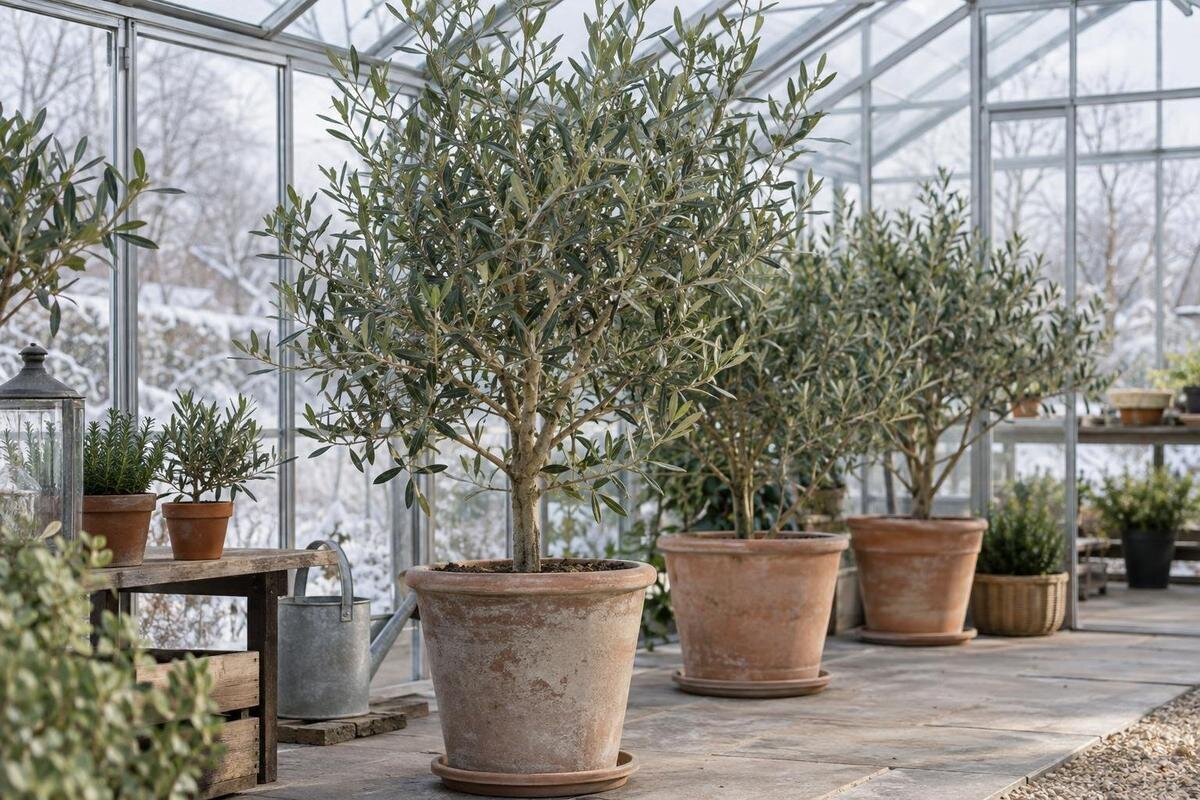
A potted olive can benefit from a more sheltered place for winter, but a greenhouse does not create a fixed climate. The air may warm in sunshine and cool again after dark, while a container's roots are more exposed than roots in the ground. Successful overwintering depends on the cultivar, the light at the chosen site, the temperatures the tree experiences and how the compost is watered. This guide covers bright placement, root-ball protection, careful watering and ventilation.

01
What a greenhouse changes in winter
An unheated greenhouse is a shelter, not a temperature guarantee. It may reduce exposure to wind and keep direct rainfall off the pot, but sunlight can warm the space during the day and that warmth can fall away after sunset. Air near the canopy may not match conditions around the root ball, especially if the pot rests on a cold floor or sits close to glazing. A structure can make winter care more manageable without removing the need to watch the olive. A warm lunchtime reading alone tells you little about the lowest temperature overnight, and a closed greenhouse can also become warm on a bright day.
Before moving the tree, decide what the greenhouse is meant to do: reduce wind exposure, keep direct rain off the container, or provide a monitored place during colder spells. Each aim affects the position and your care routine. When comparing footprints, the Classic aluminium greenhouse range is listed from 3.77 to 28.08 m². Treat those figures as catalogue area, not as free planting space. Allow for the pot, the canopy, an access route and enough clearance to use doors and vents. For a collection, measure for every pot rather than only the largest tree you have today.
Place the olive where winter light is strongest
Olives need a bright, sunny position, so choose the brightest practical place rather than assuming that glazing makes every corner suitable. Observe the site at different times of day, particularly during winter, when the sun follows a different path from summer. A boundary wall, nearby building, evergreen tree, roof overhang or taller plants can cast shade. Check the position on clear days if possible, and keep the glazing reasonably clean so dirt is not adding to the light loss. Greenhouse glass cannot create light where the site receives little sun.
A wall greenhouse may suit a site where space is limited, but the wall can also shade the tree for part of the day. Assess the actual position before deciding: note when sun reaches it, how the shade changes and whether nearby plants will grow into the light. The Wall Greenhouse range is listed from 3.69 to 14.34 m², but its footprint does not show whether a particular wall has good winter light. Allow room for the olive's canopy and keep the plant accessible for watering and inspection rather than crowding it among other pots.
02
Monitor temperatures around the canopy and pot
There is no single minimum temperature that can be promised for every potted olive. Cultivar, previous acclimatisation, the length of a cold spell, moisture around the roots and the exact site all matter. A tree accustomed to outdoor conditions may respond differently from one moved abruptly from a warm setting; roots in a container also have less surrounding ground to buffer changes. Use guidance for the named cultivar rather than treating a general winter average as a guarantee. Note whether cold is brief or repeated, since the duration affects the conditions the plant experiences.
Place a min/max thermometer near the foliage, shaded from direct sun and away from the doorway, and record readings through cold nights and bright days. A second thermometer beside the pot can show whether that position is colder than the air around the canopy. Label the readings by location so you can compare the same positions over time. Note when you read and reset each instrument; otherwise, a recorded minimum may belong to an earlier cold night rather than the period you are assessing. Record whether vents were open as well, so changes in your routine are not overlooked. Compare your observations with cultivar-specific advice and local forecasts. If supplementary heat seems necessary, ask a qualified professional to assess the greenhouse and any equipment. The Limited Edition Aluminium Greenhouses range is listed from 3.77 to 28.08 m²; check the exact configuration and documented ventilation details rather than inferring winter conditions from a product name or area.
Protect the root ball without blocking drainage
In a container, an olive's root ball has less surrounding soil to buffer changes than it would in the ground. Protect the sides of the pot with dry insulating material or place it in the most sheltered part of the greenhouse, without wrapping the canopy as a substitute for suitable conditions. Keep foliage from pressing against glazing and avoid a draughty doorway. If you put a mat beneath the container, keep it stable and make sure surplus water can still drain away. The aim is to reduce exposure around the roots, not to seal the pot in a damp cover.
Check that the drainage holes remain open and that the base does not sit in water. Empty a saucer after watering, and make sure insulation does not cover the holes. Plan for the pot's full width and height, as well as the canopy and space needed to reach it, before choosing a position. A wet container can be heavy, so avoid a layout that requires frequent lifting or sliding. The T-Model Orangery Greenhouse range is listed from 16.52 to 30 m²; area alone does not establish door clearance or internal height, so check the details for the exact model before setting a large pot inside.

03
Water by checking the potting compost
Under cover, rain may no longer reach the compost reliably, while cooler conditions and lower light often mean that the olive uses water more slowly than during active warm-season growth. Neither point means that the root ball should dry out completely. Check the compost below the surface rather than judging by the top alone; if it still feels damp, wait and check again. As the upper layer begins to dry, water according to the pot's size, compost and conditions instead of following a fixed weekly schedule.
When watering, moisten the root ball evenly and allow surplus water to drain freely; do not leave the pot standing in it. A large container may hold moisture longer than a small one, so check again after watering rather than repeating an assumed volume. Make your watering notes specific: record how the compost felt before watering and whether excess water drained away, rather than simply ticking off a weekly task. At the next check, compare its condition with that observation. This gives you a practical basis for adjusting your routine without assuming that every olive or container needs the same amount. The Pyramid Greenhouse range is listed from 5.53 to 18.9 m². When assessing the layout, allow room to reach the compost and empty any saucer without having to move neighbouring pots. Advertised floor area alone does not show whether those tasks will be convenient.
Ventilate on mild days and after damp weather
Ventilation matters even when the greenhouse is being used mainly for winter storage. On a suitable mild day, airing the space can help manage stagnant, damp conditions after watering or a spell of condensation. Open an appropriate vent or door in a controlled way, then close it before outdoor conditions turn colder. Leaving an entrance open overnight is not the same as planned ventilation. Avoid directing a strong cold draught straight onto the canopy, especially if the plant has spent the day in a warmer pocket of air.
When comparing greenhouse designs, check how vents and entrances are described for the exact size you are considering, and whether they can be reached without moving the olive. If keeping tools nearby matters, the Aluminium Greenhouses with Storage – Limited Edition range is listed from 5.52 to 28.08 m² and identifies built-in storage. Check its position and usable capacity so it does not take space needed for plants or access. Storage is a convenience; it does not replace checking how to ventilate the space or monitoring its temperature.
04
Inspect leaves and stems for pests
Inspect the olive regularly once it is under cover, looking at the undersides of leaves, the junctions between leaves and stems, young shoots and the trunk. Scale insects, aphids and mites can be difficult to spot in a dense canopy, so a short weekly check is useful. Leaf yellowing, sticky residue, fine webbing or sudden leaf fall are signs to investigate, not a diagnosis by themselves. Note what you see and compare it with reliable olive-specific pest guidance before deciding whether any treatment is needed.
Remove fallen leaves and plant debris, keep the greenhouse floor clear and avoid packing pots tightly together. Examine the olive carefully when it first comes indoors, and keep a visibly affected plant separate while you identify the problem. Access matters for inspection: check the published internal height, door clearance and layout for the exact model, including the Bloomcabin Prestige Greenhouse range, listed from 3.77 to 28.08 m². The area does not tell you whether you can reach the canopy comfortably. If you use a pest product, follow its label.
Allow room for the canopy, pot and routine care
Measure the tree as it stands, including its canopy, then allow for future growth, the pot and the space needed to reach every side. A tight fit can make watering and pest checks awkward; if the container has to be shifted for routine care, consider how heavy it will be when wet and whether the floor route is clear. Leave enough space that leaves are not pressed against glazing and air can move through the canopy. Also decide whether you are planning for one olive or several, since a group of trees needs a different arrangement from one specimen.
Compare internal dimensions, not only advertised floor area, and verify the door opening and vent locations for the exact size you are considering. The Spacious Greenhouse range is listed from 47 to 70 m², a substantially larger footprint to weigh up only if the wider space has a purpose beyond one olive; it is not a winter-care requirement. If you are considering a more compact option, check its usable space just as carefully. Suitability depends on clearances, access and the chosen layout, not on the model name alone.

05
Moving an olive into the greenhouse
Before moving an olive from outdoors, inspect its leaves and stems, check the compost and note the conditions it has been experiencing. A change in light, airflow and night temperatures can matter more than the act of moving the pot itself. If the forecast signals conditions the cultivar is not suited to, plan ahead rather than waiting for visible damage. Where the outdoor position already offers appropriate light and protection, compare it honestly with the greenhouse; moving under cover is not automatically an improvement. Once you have chosen the indoor position, check the whole route to it, including the entrance and any narrow turns. Compare the canopy width as well as the pot width with the available opening. Clear watering cans, tools and loose pots out of the way before starting. If the tree cannot be moved comfortably, arrange suitable help rather than attempting an awkward lift. Set it where you intend to maintain it, with access to the compost and thermometer, so bringing it under cover does not create a need for repeated moves.
Once the tree is inside, keep a steady observation routine: read the thermometer, check moisture below the compost surface and inspect for pests. Do not react to a single leaf change with extra water or an abrupt move. First consider whether the compost is wet, whether the greenhouse became warm in sunshine or cold overnight, and whether the plant is shaded. A short note of the date, weather, readings and watering helps reveal patterns and makes it easier to compare conditions over the season.
Acclimatise the tree before returning it outdoors
At the end of winter, do not choose a move-out date by the calendar alone. Use the olive's cultivar guidance and local forecasts, considering night conditions as well as the direct sun it will receive outdoors. Gradually increase ventilation on suitable days and let the plant adjust to brighter light and moving air before it faces a sudden change. Decide where the tree will stand outdoors before beginning this transition: compare that position with the light and shelter it has had inside, rather than simply returning it to whichever space is free. Keep the route back under cover accessible while you assess the weather. If conditions remain unsettled, staged acclimatisation is more sensible than leaving the greenhouse door open continuously. Keep track of changes in exposure so you can distinguish the move itself from changes in watering or weather when reviewing the tree's response.
Continue checking the root ball after the move. Outdoor rain may reach the pot again, but wind and sunshine can change how quickly the compost dries. Watch new growth and leaves for changes, remembering that a symptom can have more than one cause. At the end of the transition, summarise what your winter notes showed: which position received useful light, whether the pot remained damp between checks and how temperatures varied around the tree. Keep these observations for planning the following winter, alongside guidance for the cultivar. They describe your own arrangement, not a universal safe temperature or a watering schedule that must be repeated.
Frequently asked questions
Can an unheated greenhouse keep an olive safe from frost?
Not necessarily. A greenhouse can reduce exposure to wind, but it may still cool substantially overnight and does not guarantee a particular minimum temperature. Check readings near the tree and pot, then compare them with guidance for the olive's cultivar and the conditions at your site.
How often should I water a potted olive in winter?
There is no fixed interval that suits every pot. Check the potting compost below the surface and wait if the root ball is still damp. When the upper layer begins to dry, water and let excess drain away. Pot size, light and greenhouse conditions all affect how quickly it dries.
Should greenhouse vents stay closed throughout winter?
No. Air the greenhouse on suitable mild days, particularly after watering or when condensation has built up, then close vents before conditions turn colder. Keeping the space sealed can leave it damp and stagnant, while an entrance left open overnight may expose the tree to a cold draught.
Does a potted olive need a sunny position under cover?
Olives generally do best in a bright, sunny position. Check how much winter sun actually reaches the proposed spot; nearby walls, trees and buildings can create shade even inside a greenhouse. Glazing can admit available light, but it cannot make a naturally shaded position bright.
Can I leave my olive outdoors instead of using a greenhouse?
Possibly, depending on the cultivar, its acclimatisation and the exposure at your site. Roots in a pot have less protection from surrounding soil than roots in the ground. Compare the outdoor position and forecast with the conditions you can monitor under cover; neither an olive's name nor a greenhouse alone determines which is safer.
Overwintering a potted olive means managing the conditions around one particular tree: light at its position, temperature through the night, moisture in its root ball and air movement around its leaves. Keep the pot drained, water in response to the compost and ventilate when the weather allows. A greenhouse offers useful shelter, but observation and cultivar-specific guidance are what make that shelter meaningful.
