
Buying a Greenhouse for a School or Community Garden
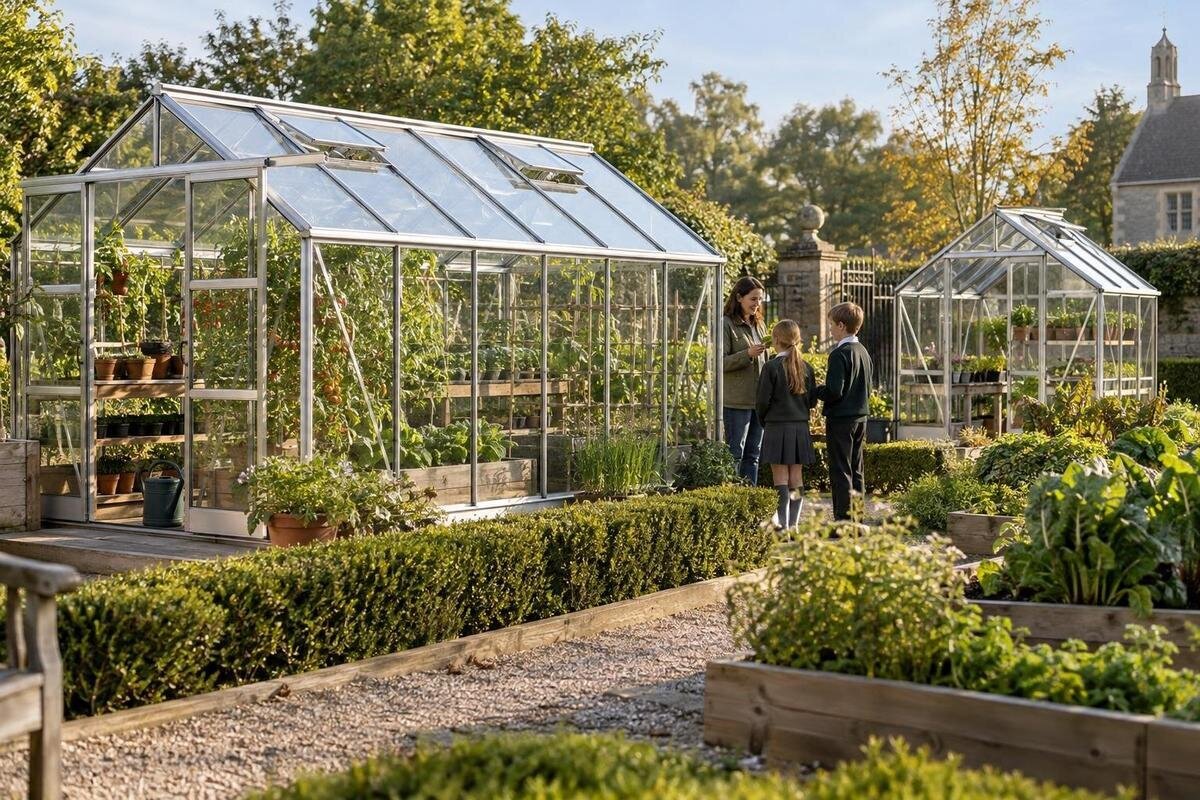
Greenhouse buying guide
Choosing a greenhouse for a school or community garden is less about finding the biggest model than matching a shared growing programme to a workable site. The number of people using it, the activities planned, the crops you want to grow and the support available for upkeep all affect the purchase. This guide turns those needs into points you can compare against product information, site requirements and ordering terms.
Define the greenhouse’s role
Before comparing models, write down what the greenhouse must make possible: raising seedlings for outdoor beds, teaching propagation, extending the growing season for selected crops, or giving volunteers a protected place to work. A school may need short, repeatable activities that fit a lesson, while a community garden may prioritise shared harvests and flexible volunteer sessions; either can have several aims. Rank those aims instead of treating every possible use as essential. Decide how the group will judge success, such as seedlings ready for beds, regular lessons or a reliable harvest. That gives everyone a clear reason for choosing certain dimensions or features and helps set aside options that add cost or complexity without supporting the programme.
Turn those priorities into a simple growing plan. List the crops, when they are started, how long they will remain under cover and whether they move outdoors once established. Note whether the greenhouse is mainly for growing or will also host demonstrations; those uses compete for floor and bench space. Ask who benefits from the harvest: classroom activities, sharing among garden members or several outcomes. Tasks such as tool storage or potting may be handled elsewhere rather than automatically taking up greenhouse space. A written plan gives the purchasing group a consistent basis for comparing layouts, rather than relying on a general wish for a larger or more versatile structure.
Estimate how many people will use it at once
Count how many people are likely to be inside at the same time, rather than using the school roll or garden membership as the size guide. A class can split into small groups; a volunteer session may bring several people together, and the person supervising still needs a clear route between them. Sketch a typical task—sowing, potting on, checking plants or harvesting—and mark where users stand, carry trays, wait and set down completed work. Consider the busiest planned activity, not only a quiet visit by one gardener. This reveals whether usable working space matters more than maximum crop area, without assuming that a particular greenhouse size will suit.
Plan how people will take turns and hand over between activities. If a class uses the space in groups, consider where the next group can wait and whether some tasks need uninterrupted time. Separate jobs that need standing room from crops that occupy a bench for weeks, and decide how many trays can be managed at once. School periods and term breaks may affect access and watering; community garden attendance can vary with volunteer availability. These patterns affect both the growing area and the daily workload. A smaller space with a clear schedule may be easier to keep productive than a larger greenhouse without an agreed rota.
Measure the site and the working space
Measure the proposed site in person and mark a full-size outline with pegs or string. Use dimensions stated for a specific greenhouse, including any stated projections, rather than assuming the footprint is only the growing area. Mark the entrance, door opening, routes people already use and space needed to reach around the structure for routine care. Check nearby fences, beds, paths and buildings, and note where rainwater from adjacent roofs falls. For example, the Bloomcabin Prestige greenhouse with metal foundation listing is a title to investigate, not proof that a foundation is included or that its footprint fits. Verify measurements and base details in the product information before comparing it with your marked site.
Allow room for the way the school or garden operates around the greenhouse, too. A delivery or assembly route may differ from a regular path for students and volunteers; consider gates, corners, steps, surfaces and where components could be put temporarily. Think about whether a wheelbarrow, watering equipment or harvested produce can pass without crossing a busy area. Check with the landowner, school facilities contact or garden committee before settling on a permanent layout, especially if services or planned work may be affected. This early site check can rule out a model that appears to fit on paper but leaves no practical room for access or maintenance.
Assess sun, exposure and water
Observe sunlight and shade at different times of day, and consider how trees and buildings change them through the year. A sunny patch at one visit cannot describe the site’s light over every growing period. Note wind, rain, frost and summer heat as they affect the crops you intend to grow; conditions can vary within a single property. Ask gardeners who know the site about recurring patterns, then check the proposed position directly. The Bloomcabin Orangerie listing is one model page to compare, not evidence of suitability for a particular exposure: use its published details and match them to what you have observed.
Work out how water will reach plants and where surplus water will drain without making the approach slippery or directing it towards neighbouring beds or buildings. A nearby tap may be convenient, but a long hose across a shared path can be awkward to manage; plan a route users can handle safely. Look at overhanging trees and leaf fall, and consider who will clear debris or check the site after poor weather. Do not treat a greenhouse as a substitute for correcting an unsuitable position. If drainage, ground conditions or exposure raise structural questions, get advice from a qualified installer or relevant building professional before choosing.

Compare freestanding and wall-mounted layouts
Freestanding and wall-mounted greenhouses present different layout choices, not a universally better option. A freestanding structure gives you more choice about where it sits, but it still needs a position that suits light, access and the garden’s circulation. A wall-mounted layout has to work with the wall’s position and condition, available space, and the greenhouse’s attachment and clearance requirements. Do not assume a wall automatically provides suitable shelter or light. The T Model wall-mounted greenhouse orangery is a named listing to assess against those questions; confirm the installation details in its product information rather than inferring them from the title.
Consider what the structure would sit beside: classrooms, public paths, play areas, neighbouring plots or a shared boundary. A greenhouse beside a building may compete with windows and doors or affect where people can gather, while one in an open bed area may divide growing space. Compare door position, stated height and required clearances with the actual site plan. If fixing a greenhouse to a wall, altering the ground or managing runoff involves structural uncertainty, ask a qualified professional to assess it. This is a purchase decision as much as a layout choice: an option that cannot be placed appropriately is not a useful bargain, regardless of its appearance.
Read the specification, not just the model name
Compare the frame material and glazing that each listing actually specifies, along with stated dimensions, opening arrangements, door hardware and included parts. A name such as Aluminium Classic Greenhouse is not a substitute for checking the frame, glazing or configuration details; similarly, do not assume two models use the same glazing because they share a broad style. Note where information is missing and seek clarification before comparing products. For a school or community project, details that affect durability, replacement and everyday handling matter to the people who will manage it, so record the answer alongside the model and version being considered.
Ventilation needs to match both the crops and the group’s ability to manage the structure. Check what openings are described, how they are operated and whether someone can monitor them during lessons, weekends and school holidays. A routine that depends on one volunteer may be difficult to sustain. Think through how staff or volunteers will respond to changing conditions, and whether shading or other growing equipment is part of the plan rather than included by default. If the project also proposes powered equipment, have a qualified person advise on what is appropriate and arrange any work professionally; do not assume power is needed or supplied.
Plan the growing layout for shared use
Sketch an interior plan before choosing an area. Mark growing beds or containers, bench space for sowing, room for larger plants and a clear route for carrying trays and watering. A school may want a small work zone for a demonstration; a community group may need space to sort a harvest without crushing plants. Those uses cannot all occupy the same floor at once, so decide which are fixed and which happen outdoors or in another covered area. Compare the sketch with verified internal and external dimensions. The model name Classic Plus 385 does not establish a measurement or capacity; use the dimensions published for the exact product and configuration.
Plan shared storage and identification at the same time. Label beds, trays or rows so different classes and volunteers know what is being grown and who is responsible for it. Keep tools, spare pots and supplies from gradually taking over the growing area; decide what belongs in the greenhouse and what can be stored elsewhere. Consider how people will clean up after sowing, manage plant waste and return equipment, then choose a simple system the group can follow. A layout that is understandable to a new volunteer is more likely to remain usable when the original organisers move on, and it reduces avoidable confusion between shared crops.
Confirm base requirements and ongoing care
Find out exactly what base or ground preparation the chosen greenhouse requires before ordering. Product titles can be suggestive but do not establish whether a base is included, supplied separately or needs to be prepared by the buyer. The Pyramid greenhouse for masonry base listing should be checked against its full product information, including any stated base dimensions and installation requirements; do not assume the name answers those questions. Compare what you can prepare with what the supplier or installer expects, and get a qualified professional’s advice if anchoring, site level, wind exposure or ground conditions are unclear. Avoid making an engineering decision from a photograph or a neighbouring structure.
Decide who will carry out routine checks once the greenhouse is in use. A shared rota can cover watering, opening or closing vents where applicable, cleaning, checking for loose or damaged parts and noticing pest or plant problems. Make arrangements for weekends, term breaks, public holidays and periods when a regular volunteer is away; avoid assigning the whole job to one person with no backup. Agree how tools and garden treatments are stored and who can use them, following the organisation’s own procedures. Link the maintenance commitment to the growing plan: if no one can look after seedlings during a break, revise the crop schedule rather than assuming the greenhouse will run itself.
Budget for the whole project and its upkeep
Compare the complete project cost, not only the greenhouse listing. Include any separately quoted base or ground preparation, delivery, assembly, site access work, tools, water arrangements and equipment the growing plan requires. Ask which items are included, which are optional and what the customer must arrange; do not infer them from a product name or image. The Aluminium wall greenhouse page can be one item in a comparison, but check its product details and applicable charges alongside other options. Prices, delivery conditions and inclusions depend on the actual order, so use written details for the selected destination and model.
For a school, identify which budget can cover the structure and any site work, and when approval needs to be in place; for a community garden, agree how shared funds or contributions will be managed. Keep recurring costs separate from the one-off purchase, including water use, consumables and planned maintenance. Record who owns equipment, pays for repairs and takes over if a coordinator leaves, in line with the organisation’s arrangements. A low purchase cost can still create a difficult project if essential work is unfunded or nobody is responsible for ongoing care. Comparing like-for-like totals makes the choice clearer than comparing headline prices alone.
Check the order and delivery arrangements
Before placing an order, confirm the exact model and any selected configuration against the product information and the site plan. Check stated dimensions, frame and glazing details, what is included, base requirements, delivery terms and whether assembly is part of the order or separately arranged. For the Limited Edition Aluminium Greenhouse listing, as for any model name, verify the page details rather than assuming from the label what comes in the package. Ask the supplier to clarify any uncertainty in writing, especially where the answer changes your site preparation or overall budget. Keep the final product and quote details together so the group knows which version it has approved.
Coordinate delivery and assembly with the site’s practical constraints. Confirm the delivery destination, access route, unloading arrangements, a suitable place for components and who can receive them; check these points with the supplier rather than assuming a standard arrangement. Agree who is responsible for preparing the location and arranging assembly, what work is excluded and what should be ready beforehand. Allow time for approvals and site work before scheduling lessons, planting or a community opening. If the instructions or scope raise concerns about structural work, handling heavy parts or electrical equipment, use an appropriately qualified professional. The order is ready only when the greenhouse, site and people responsible for it are all accounted for.
Frequently asked questions
How do we estimate the right greenhouse size?
Count how many people will use it at once, then map the tasks they need to do and the crops they plan to grow. Compare that layout with the published internal and external dimensions, including space around the entrance. Total school roll or garden membership alone is not a useful measure of capacity.
Is a wall-mounted greenhouse best for a small garden?
Not necessarily. Check the wall’s position and condition, available light, attachment requirements, water runoff and the route people will use. Compare those constraints with a freestanding option and the actual site plan. If fixing a structure to a wall raises questions, ask a qualified professional to assess the situation.
Which details should we check on a product listing?
Look for stated dimensions, frame and glazing details, openings, base requirements and what is included. Also check delivery and assembly arrangements. A model name or photograph does not confirm these details, so seek clarification if anything important to your plan is missing.
How can a school keep its greenhouse cared for during holidays?
Agree a rota with a named backup before planting. Include watering and plant checks, and make sure someone can take over during school holidays or when the usual volunteer is away. If reliable cover is not available, adjust the growing plan rather than relying on the greenhouse to manage itself.
What should we include in the purchase budget?
Allow for the greenhouse, any separate base or site preparation, delivery, assembly and any equipment needed for the growing plan. Include recurring costs such as water, consumables and maintenance. Check written details for the selected model and destination so you can compare the full project cost, not just the product price.
A good school or community greenhouse is one the group can keep productive, not simply the largest option it can accommodate. Agree its purpose, count the people using it at once, measure the actual location and assess the light, exposure, water and layout. Then compare verified product details with the interior plan, maintenance rota, base requirements and full project budget. When those pieces fit together—and the group knows who will care for the space—the greenhouse is more likely to support regular growing and shared learning over time.
