
Buying a Greenhouse for Orchids and Tropical Plants
GREENHOUSE BUYING GUIDE
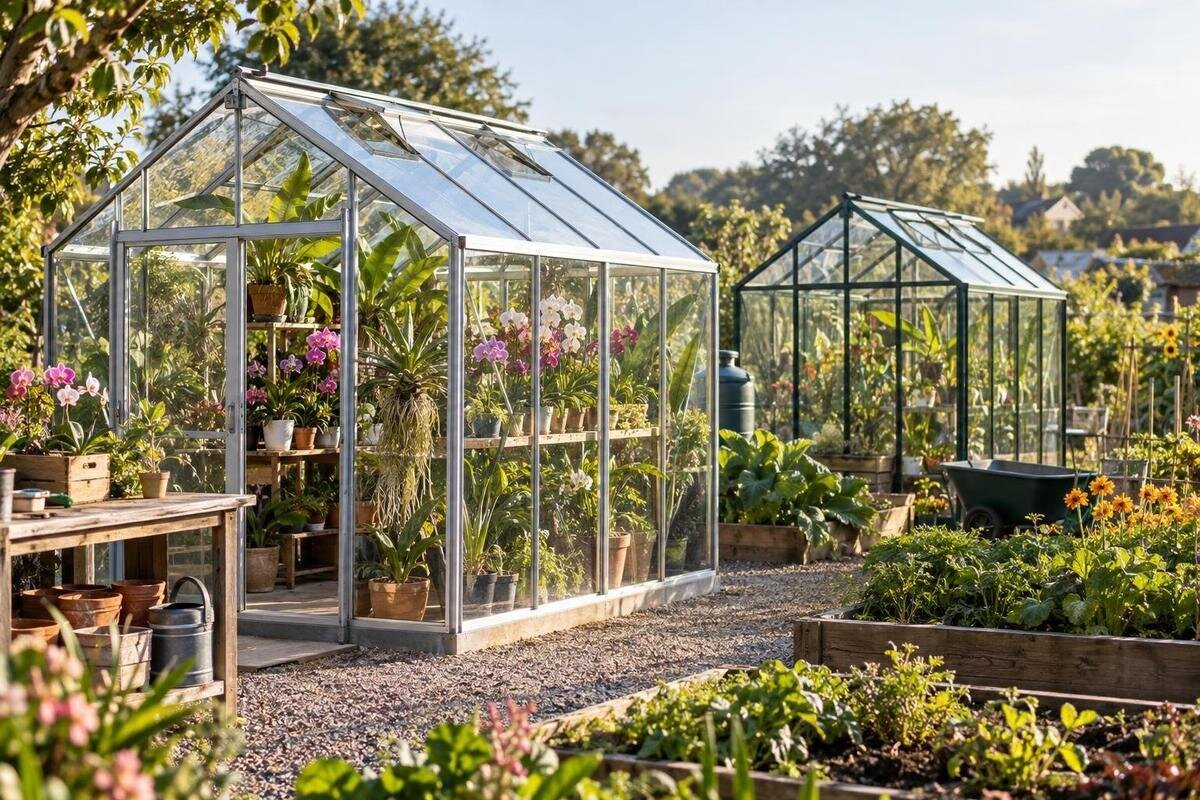
Orchids and tropical foliage plants can grow well under cover, but ‘warm and humid’ is not a complete greenhouse specification. Species vary in the temperatures, light and airflow they tolerate, and a greenhouse does not provide reliable heat or humidity by itself. Begin with the plants you actually keep, then compare the structure with the site, layout and equipment you can manage. This guide focuses on the buying decisions that matter for a greenhouse for orchids and other tropical plants: usable space, glazing, ventilation, temperature and humidity control, maintenance and ordering details.

01
Define the plants’ growing requirements
Begin with a plant list, not with a general ‘tropical plants’ label. Orchids and other tropical species do not share one universal preference for warmth, light, humidity or air movement. Record each plant’s preferred day and night conditions, response to seasonal change, light level, watering pattern and airflow needs, using reliable care information for that species or hybrid. If you have a mixed collection, group plants with similar requirements. This helps prevent the most demanding plant from unintentionally setting conditions that are unsuitable for every pot.
Decide what the greenhouse must do throughout the year and which plants could move elsewhere if conditions change. A group kept under cover in warmer months may need something different from plants that rely on protection through colder periods, so use species-specific limits rather than an assumed setting for tropicals. Note any plants that need separate acclimatisation or checking when newly bought. If the collection includes plants with different temperature preferences, one setting may not suit all of them; consider whether practical zones are possible and whether the structure and equipment can maintain them. Include plants you expect to grow into larger specimens, not just the pots on the bench today. Write down both the preferred range and the conditions each group must avoid; those limits can matter more than a general daytime average. These notes form a realistic brief for comparing size, glazing and climate equipment.
Measure usable space before choosing a size
Measure the proposed site in metres and compare its footprint with each greenhouse’s published external dimensions. Include the approach to the door, room to open it fully and access for cleaning or replacing a panel. Note nearby buildings, fences, trees, eaves, drains and the route from your delivery point. These details can rule out an attractive shape or position. Do not treat the full footprint as usable growing space: framing, the entrance, bench depth and clearances reduce the interior area. Read external dimensions and internal layout information separately, and check what each measurement refers to. Marking the outline on the ground can reveal conflicts before you order.
Sketch the interior before ordering. Allow for benches, shelves, hanging plants, tall specimens and a place to stand without brushing foliage or knocking pots. Orchids can occupy several levels, but vertical display is useful only if the published height and planned fixing arrangements suit your setup; do not assume the structure includes hanging points or a stated load capacity. Leave room to move a pot out for inspection and reach plants at the back. If you expect to carry large pots or a trolley through the entrance, check the door opening against the largest item. Compare candidates against your sketch: the Bloomcabin Prestige greenhouse listing is a page to check for its published dimensions, not evidence of a particular size or internal arrangement. Allow space for future growth, too.
02
Compare glazing and light conditions
Glazing affects how much light reaches plants, how evenly it is distributed and how the enclosure responds to outdoor conditions. Orchids and tropical species have varied light needs; bright filtered light suits some, while others cope with different conditions. Consider the site’s orientation, nearby shade and changing sun through the day and seasons. Different glazing can vary in light transmission, diffusion, insulation, weight and breakage behaviour, but performance is product-specific. Compare documented details with your plants’ needs rather than assuming that clearer or thicker glazing is automatically the better choice.
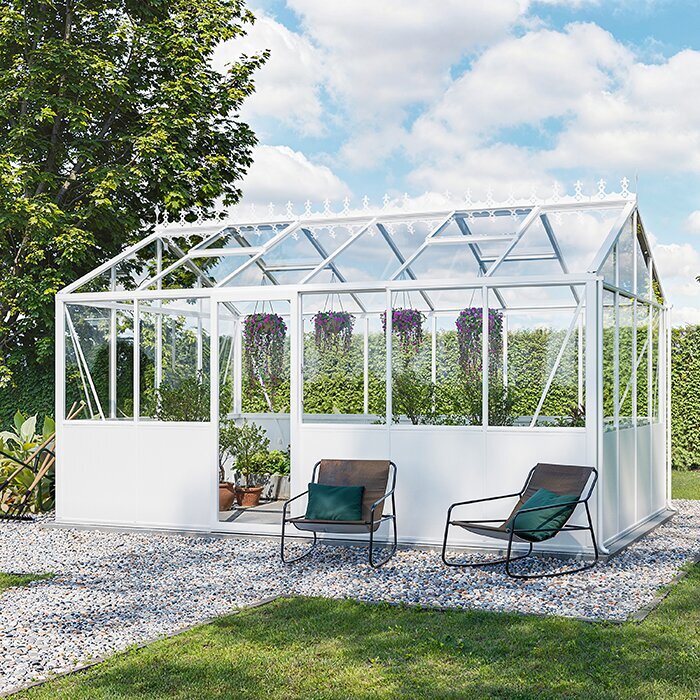
Check the full glazing specification: material, thickness, how panels are held, and whether shading is included, optional or absent. Images show appearance, not these details. Think about how you will reduce strong sun during hotter spells without leaving other plants too dim; check whether any shading option is suitable for the chosen structure. If possible, observe light at likely bench positions at different times instead of relying on a single visit to the site. If light needs differ, sketch which positions receive direct sun and where shading could be adjusted without darkening the whole collection. The Bloomcabin Orangerie listing can be compared against its documented glazing and dimensions; its name alone does not establish either. Ask the supplier to clarify missing details before using the listing to compare value.
Check ventilation and air movement
Ventilation is part of climate management, not simply a way to cool an overheated greenhouse. It exchanges air and can help limit long periods of still, damp conditions around foliage, while many orchids benefit from air movement around leaves and roots. Check how many vents are specified, their positions and opening sizes, and whether they are manual or automated. Confirm whether an opener or control is included, optional or not listed. A door can add an opening when used, but it does not replace checking the dedicated ventilation provision.
Consider your normal routine. If you are away during the day, how will you respond to a sunny spell or a rapid change in weather? Think about how vents are opened and secured, possible rain entry and insect access; screens, stays and controls may be separate items. Air exchange depends on where openings sit and whether air can move through the planned interior, so avoid choosing by vent count alone. Crowded benches or dense foliage can obstruct airflow; leave routes between plant groups and keep moving parts accessible. Manual vent handles need to be reachable from the working path, without clashing with doors, shelving or hanging plants. If you are considering an automatic opener, check its compatibility and whether it is included. The aim is a manageable balance between fresh air and the moisture your collection needs, not a permanently sealed humid box or an opening left unattended.
03
Plan for temperature control
Write down temperature requirements for each plant group, including overnight limits and seasonal changes. A greenhouse can moderate exposure to outdoor weather, but its temperature still responds to sun, shade, ventilation and conditions outside; it is not warm by itself. Compare expected cold periods at your site with any product information on heat retention, if supplied. Where plants need different ranges, decide whether you can create separate zones or whether a single heated space would be unsuitable for some of them.
Work out what control would involve before buying: where you would monitor temperatures, whether a thermostat-controlled heater is needed, the power available and the running costs you can manage. A greenhouse listing may not include heating or control equipment, so verify the package. A thermometer or data logger at plant level can show how the space behaves before you rely on it for valuable plants. Consider what would happen if the heater or power failed during a cold spell, and whether a warning system is worthwhile. Make sure readings reflect conditions among the plants, rather than a spot directly in sunlight or beside a heater outlet. Do not size or install electrical equipment by guesswork; ask a suitably qualified professional about fixed electrical work and equipment for a humid environment. Check the Classic Plus 385 listing for its published dimensions and contents, while assessing temperature performance from specific evidence rather than its model name.
Consider humidity and water access
Warmth and humidity are separate variables. Some tropical plants appreciate humid air, but prolonged moisture with little air movement may leave surfaces wet, and needs differ even within a collection. Decide whether you want to manage humidity throughout the greenhouse, create smaller zones around particular plants or rely on grouping and watering routines. A humid corner or enclosed growing cabinet can create local conditions, but it also changes access and airflow. Avoid treating a high target for one group as the right setting for every pot; use care information for the plants you intend to grow.
Check where water will come from and where spills or drainage will go. Carrying cans can become inconvenient; a hose connection, tap or rainwater arrangement must suit the site and equipment you plan to use. Do not assume a greenhouse includes a water supply, sink, floor drain, misting system or humidity control. A humidity meter placed near plants gives a more useful reading than one beside a doorway or directly beside a humidifier. Consider whether you can adjust humidification and ventilation separately, and include the effort of refilling and cleaning any humidifier in your routine. If the T model wall mounted greenhouse orangery listing is on your shortlist, check its documented access and included components, not the title for water or humidity features. Plan for cleaning wet surfaces and drying condensation, too.
04
Check the site and base requirements
Choose the site as carefully as the greenhouse. Record how sun and shade move across it during the day and year, and whether trees, fences or buildings block light or shed leaves. Note wind exposure, runoff, low spots and where water goes after heavy rain. A sheltered position may be easier to manage, but a place that feels protected is not automatically suitable. Check the supplier’s stated base requirements against the ground at the proposed position; the base needs to be planned for the structure, not improvised after delivery. Allow room to reach outside surfaces for routine cleaning, and check that access remains practical after rain.
Confirm what the greenhouse is designed to sit on and which parts, if any, are supplied. A product name referring to a foundation or masonry base is not a complete foundation plan: verify dimensions, preparation details and compatibility in the current product information. For one example, inspect the Pyramid greenhouse listing for its published base requirements, and do not assume these match another model’s. Where ground preparation, anchoring or exposure raises structural questions, ask the supplier or a suitably qualified local professional rather than relying on generic advice. If runoff near a wall or boundary could affect adjacent areas, resolve the drainage plan before settling on the position.
Compare maintenance and replacement details
Compare the documented structure and upkeep, not just the outline in a photograph. Check frame material and finish, fixings, glazing-retention method, seals and manufacturer care instructions. These details affect what you need to inspect and clean, but a material name alone cannot confirm the performance of the complete assembly. Think about exposure at your site, including salt air, wind and falling debris, and seek product-specific information relevant to those conditions. If care requirements are missing or unclear, ask before purchase rather than assuming the greenhouse is maintenance-free.
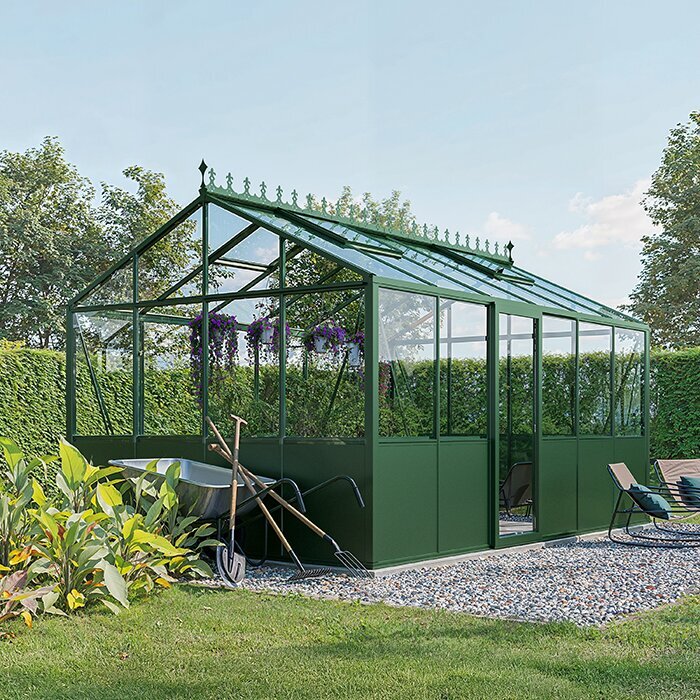
Include replacement parts and repair access in your long-term comparison. Ask whether panels, seals, fasteners and opening mechanisms can be identified and ordered separately, and whether assembly and upkeep instructions are available. Consider what it would take to clean roof glazing or high shelves safely, and whether those surfaces will stay accessible once benches and plants are in place. Ask which cleaning methods suit the glazing and whether seals or moving parts need routine inspection. Do not infer that two models share parts because their names or appearance are similar. Use the Aluminium Classic greenhouse listing to look for documented construction, maintenance and replacement-part details; its title alone does not confirm a material specification or component availability. Keep product documents somewhere you can find them after assembly.
05
Compare freestanding and wall-mounted options
A freestanding greenhouse and a structure designed to sit against a building solve different site problems. A freestanding option needs an accessible base and room around its entrance; an attached option may make use of an existing wall, but its suitability depends on that wall, the orientation, available openings and the maker’s mounting requirements. A wall may cast shade or shelter one side, but do not count on it to keep plants warm. Indoor temperatures still depend on the whole enclosure, its ventilation and outside conditions.
Before choosing an attached arrangement, check nearby windows, doors, gutters, downpipes and access paths, as well as how roof runoff is managed. Confirm that the proposed position still provides suitable light and leaves vents and glazing reachable for care. Think about whether the greenhouse would obstruct maintenance of the wall or its drainage. Ask who can verify the wall and fixings and whether the work needs a qualified installer. Read the actual mounting information for each model; the Aluminium wall greenhouse listing is a comparison point, not proof that your wall or site is compatible. Measure the intended position before ordering. Apply similar checks to freestanding options, especially base dimensions, door clearance and access for cleaning.
Review the listing and ordering details
Once the growing plan and site are clear, compare complete product listings line by line. Confirm external dimensions, usable height, door opening, glazing, vents, base requirements, supplied fittings and any equipment you expect to use. Check whether photographs show standard contents or optional extras, and whether heating, shelving, shading or control gear is included. If a detail is absent or ambiguous, get written clarification before paying. A familiar-sounding model title is not a substitute for current specification information.
Check ordering practicalities too: assembly method, tools or help recommended by the supplier, delivery access, package dimensions, unloading arrangements and site preparation. These details determine whether parts can reach the final position and whether the base is ready. Confirm how to identify a missing or damaged component and where support or replacement parts can be found, without assuming a particular service or delivery schedule. Compare packages like for like, noting which essentials would be extra and which claims still need checking. A simple table with columns for confirmed details, optional items and unanswered questions makes differences easier to see. You can include the Limited Edition Aluminium Greenhouse listing in your review, but compare its current specifications with the others rather than treating the name as proof of glazing, finish or orchid suitability.
Frequently asked questions
Can one greenhouse suit orchids and other tropical plants?
Possibly, if their light, overnight temperature and humidity needs overlap, or if you can create manageable zones. A greenhouse does not make conditions uniform: position, vents, shading and equipment all matter. Sort plants by their requirements before deciding whether one growing space will work, and consider keeping outliers elsewhere.
Will a greenhouse stay warm through winter?
Not necessarily. It can provide shelter, but overnight temperatures depend on the structure, its openings, the site and outdoor conditions. Compare your plants’ minimum needs with reliable product information and plan for heating and monitoring where needed. Don’t assume the greenhouse alone will provide tropical conditions.
What glazing is best for orchids?
There is no universal answer because orchid light needs and site exposure differ. Compare documented light transmission, diffusion and heat-retention information, then consider adjustable shading and replacement details. A product photo or model name alone cannot tell you whether the glazing suits a particular plant.
How can I maintain humidity without stagnant air?
Treat humidity and ventilation as related but separately adjustable parts of the plan. Monitor conditions near the plants, group those with similar needs and check that openings can exchange air without drying plants unexpectedly. Choose watering or humidifying equipment only after confirming what is included and how you will maintain it.
Is a wall-mounted greenhouse suitable for tropical plants?
It may suit a site where the wall, orientation and mounting requirements are appropriate, but a wall does not guarantee warmth or good light. Check the actual footprint, shading, fixing requirements, drainage and access to openings. Have structural or installation questions assessed by the supplier or a suitably qualified professional.
The best greenhouse for orchids and tropical plants is the one whose documented dimensions and growing environment match both the collection and the site. Treat plant requirements, light, airflow, water and overnight temperature as connected decisions: changing one without considering the others can create new problems. Compare current specifications and included items carefully, then rule out any option whose base, openings or control plan remain unclear. That is more reliable than choosing by a broad label such as ‘tropical greenhouse’.
