
Buying a Greenhouse in Stages: Essential Features and Later Upgrades

Greenhouse buying guide
Buying a greenhouse in stages can make the first order manageable, but some choices are difficult to revisit once the structure is in place. The site, usable size, frame and glazing, base requirements, ventilation, access and delivery arrangements shape what the greenhouse can do from day one. Extra staging, automated controls or an irrigation system may be easier to defer, provided the greenhouse can accommodate them and your initial growing plan still works without them. This guide separates decisions to settle before ordering from additions you can assess after using the space. It focuses on choosing and ordering a greenhouse, rather than assembling a kit or comparing an installation quote.

01
Decide what the greenhouse needs to do first
Begin with the plants and tasks you expect to handle, rather than choosing by the photograph or model name. A greenhouse used mainly to raise seedlings has different day-to-day demands from one intended for established plants, pots or a sheltered place to work. Note what you want to grow at the outset, how many trays or containers may be in use at once, and whether you need room to pot, water and move around them. Separate must-have crops from possibilities you might try later; an ambitious wish list can lead to an oversized purchase without giving you a useful layout. Think, too, about whether trays will be carried in and out or plants will stay in place while you work. The aim is a clear minimum that matches how you actually garden.
Then separate essentials from conveniences. Write down what must be present for the first season: enough clear growing area, workable access, a ventilation arrangement suited to the structure and your plants, and a way to water them. Add a second list for comforts that could follow, such as extra staging or automatic controls. If more than one person will use the greenhouse, include shared access and storage in the plan; otherwise, a bench or tool box may crowd the only path. A staged purchase works only if the first stage is usable. Set a spending limit around the complete first stage, not just the greenhouse price, and keep room in the budget for site-related costs.
Assess the site before choosing a footprint
Inspect the proposed spot at different times and, if possible, in more than one season. Note how sunlight and shade move, and how trees, fences, neighbouring buildings or rooflines affect the space. Consider exposure to wind and rain, runoff and nearby overhanging branches rather than relying on a general assumption about New Zealand conditions. Notice where water gathers after heavy rain, instead of assuming that a dry-looking day tells the whole story. Your property and intended plants matter more than a broad climate label. Compare the site you can observe with the supplier’s published requirements. If exposure is unusual or you cannot judge whether a location suits the structure, ask the supplier or a suitably qualified installer what needs professional assessment before choosing.
Map the footprint and the space needed around it. Include door operation, a practical path for carrying plants and supplies, room to reach vents, and a route from the house or water source. Check the ground surface, drainage and stated base requirements rather than treating the greenhouse’s outer dimensions as the whole site plan. A slope, retaining wall, existing paving or proposed wall attachment can affect what preparation is suitable; do not resolve those questions by guesswork. Check access for delivery as well as everyday use, and whether boundaries or overhead obstructions affect the position. If access, ownership or planning constraints may apply, check with the local council or a relevant professional before placing an order.
02
Compare the structure, glazing and base requirements
Treat the frame, glazing and included components as essentials, not a set of interchangeable options. Compare the exact materials and glazing type stated for each model, how panels are retained, the door and opening arrangements, and which fasteners, seals or other parts are included. Photographs and broad product descriptions do not establish that two listings have the same specification. Consider the care instructions, replacement-panel information and availability of compatible parts as well as the initial appearance. Note the details in a comparison sheet so similar-looking products do not blur together. If a component affects your intended use or future maintenance, ask for that detail before purchase; a small uncertainty can become inconvenient once the greenhouse is delivered. Choosing on looks alone is a poor way to settle the structure.
Settle the base or foundation arrangement at the same time. Confirm what the selected greenhouse requires, whether the order includes any base components, what surface or preparation is expected, and whether those requirements suit the chosen spot. These details can be difficult or costly to change after delivery. The listing name Prestige greenhouse with metal foundation identifies a product to compare, but the name alone cannot establish what is supplied or what your site needs. Use current product information and seek professional advice where the ground or foundation design needs assessment. Do not assume a familiar path, patio or slab is automatically suitable, or that a base can be selected independently of the structure.
Choose a usable size and layout
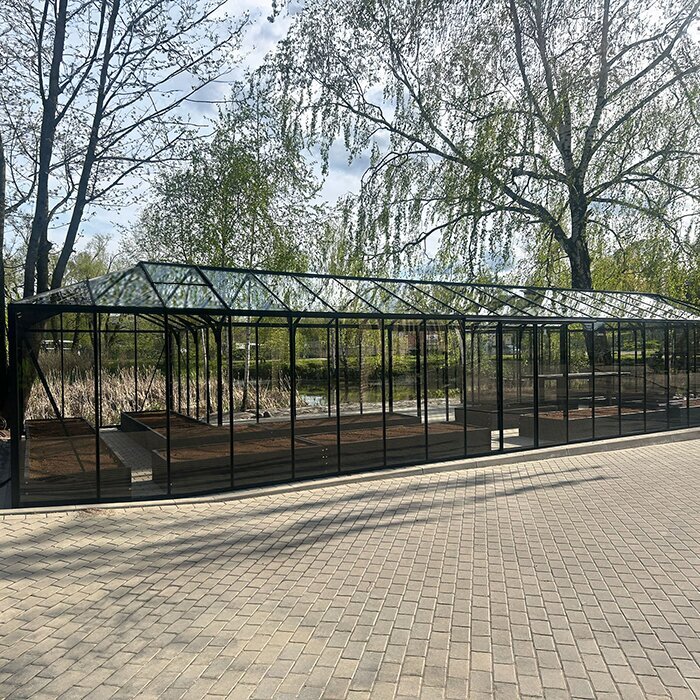
Choose a size by usable room rather than by the external measurements alone. The plan should fit the plants you intend to grow, the containers or trays you need, and the route you will use to reach them. Count working space as well as planting space: a bench can take up an aisle, and a crowded layout makes watering, pruning and moving pots awkward. Check stated internal and external dimensions, headroom, door width and opening clearance in the product details. If the greenhouse is close to a fence, hedge or wall, leave the access the supplier calls for and enough practical room for cleaning and maintenance.
Think about whether you need the whole capacity now or want room for gradual changes. A greenhouse that is just large enough for today’s containers may leave no useful place for a potting bench, while buying much more area may create more to maintain and fit out. Draw a simple plan with beds, shelves, doors and paths, then test a few arrangements before deciding. For comparisons, a listing such as the Orangerie should be judged by its published dimensions and specification, not by what its name or image suggests. If you expect to add shelving later, reserve floor and access space first. Check that your planned layout still leaves room to carry pots and tools without repeatedly moving plants.
03
Make ventilation part of the first specification
Ventilation belongs in the first-stage specification because plants and people need a practical way to exchange air and manage conditions inside. Check the stated number, position and operation of openings against your growing plans and the site. Do not assume that every greenhouse includes the same doors, roof vents or side openings, or that an opening shown in a photograph is part of the standard supply. Ask which vents are included, how they are operated and what can be added later. If your location or intended use needs more detailed climate planning, get advice from a knowledgeable greenhouse supplier or growing professional before choosing.
Automation can wait if you are comfortable managing openings yourself, but it should not be used to cover a shortfall in the basic ventilation arrangement. Automatic openers, remote controls or monitoring devices are possible later additions only where the structure supports them; confirm fit and any operating requirements against the exact model. For example, compare the product information for Classic Plus 385 with other listings for what is actually specified, not just the model label. Consider whether you can reach the controls easily and whether opening and closing the greenhouse will fit your daily routine. If a planned control depends on a particular opening or connection, check that requirement before ordering.
Plan water, power and everyday care
Plan how watering will work before ordering, even if you intend to add irrigation later. Consider the distance to a suitable water source, the route for a hose or watering can, where filled containers can stand, and how you will keep the path clear. The greenhouse’s position and floor arrangement should let you do ordinary tasks without dragging equipment through beds or over obstacles. If you collect rainwater or use stored water, confirm that your proposed arrangement suits the site and does not interfere with access. Include containers and watering equipment in the layout: their storage space is easy to overlook when comparing greenhouse dimensions. Irrigation timers, drip lines and extra storage may be deferred when manual watering will meet your initial needs.
Powered equipment is a separate decision. Lighting, fans, heating or propagation equipment may be unnecessary at first, and each addition can affect cost, power access and safe placement. Do not buy a powered accessory until you know the intended use and have confirmed that it is compatible with the greenhouse; have a qualified electrician advise on fixed electrical work. A wall-mounted model name, such as T Model wall-mounted greenhouse orangery, does not tell you whether a particular location or utility arrangement will work. Keep the purchase decision tied to the actual product details and your site, and consider where any controls or equipment can be reached without obstructing everyday work.
04
Include delivery and site costs in stage one
Build the first-stage budget around the whole purchase, not a headline greenhouse price. List the structure, any base or foundation components, site preparation, delivery, getting the delivery to the intended spot, assembly services if you will use them, and disposal of packaging. Check whether taxes, lifting or access constraints, and any booked work appear in the written order or quote; do not assume those items are included. Confirm that the delivery route can be used and ask what happens if access is restricted. This is not a guide to comparing installation proposals, but their scope can affect the total amount you need ready before a greenhouse is usable. Ask for unclear inclusions to be stated in writing.
Base costs may be inseparable from choosing the model. A title such as Pyramid greenhouse for masonry base is a reason to read the stated base conditions closely, not proof that an existing masonry surface meets them. Allow for professional assessment when the ground, drainage or base design is outside your experience, and include that advice in your planning. Then decide which optional items fit the first budget and which can wait. Staging does not guarantee a later accessory will cost the same or remain available, so ask about compatibility and any time-sensitive choices before placing the main order. Leave room for costs that are necessary to make the initial setup usable, rather than spending the whole budget on the structure alone.
Defer optional greenhouse upgrades carefully
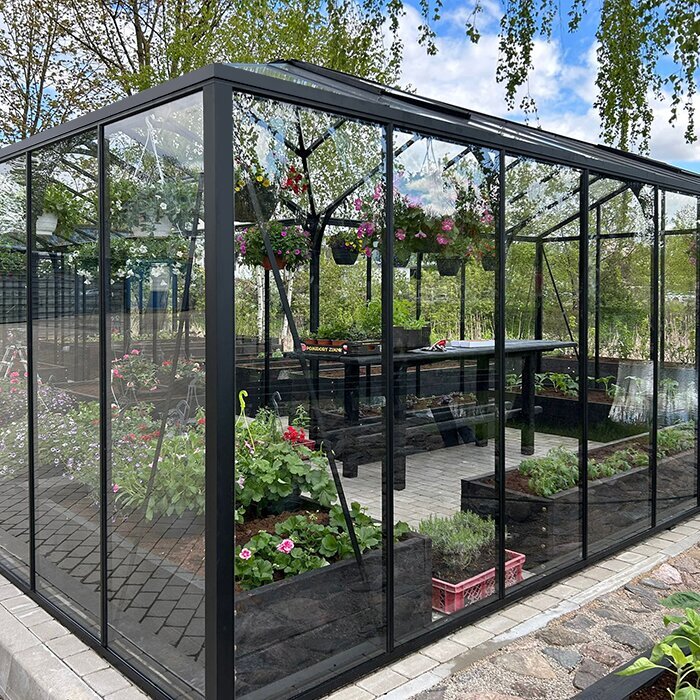
Good candidates for a later purchase are additions that are not needed to make the first layout functional and can be attached without altering the main structure. These might include extra benches or shelves, plant supports, a shade solution, a simple irrigation set-up or monitoring equipment. Before ordering the greenhouse, check whether the supplier lists those options for that exact model and whether they need mounts, clearances or connections that are easier to allow for now. Do not assume accessories from another model or brand will fit. A small allowance in the initial layout can keep the door and growing area clear while you decide what is worth adding. Also distinguish a genuine convenience from something your original growing plan depends on.
Some upgrades change the site or require more planning than a shelf. Heating, powered fans, grow lights, fixed water lines and automatic controls can bring new compatibility and safety questions. Decide whether a planned upgrade is important enough to include in the first specification; if it depends on a connection or structural attachment, clarify the requirement before the greenhouse is installed. Otherwise, use your first period of growing to observe what is actually missing. A product listing such as Aluminium Classic greenhouse is useful to compare as an exact model, but no title should be read as confirmation that a particular accessory is available for it. Do not add equipment simply because it is offered; choose it only when it serves a defined need.
05
Check compatibility before planning later additions
Make a short upgrade map before choosing a model: list the initial essentials, then name additions you may consider later, and beside each write what must be confirmed now. That might be support for an attachment, clearance for a bench, an opening arrangement, access to power or a base detail. Ask the supplier whether the accessory is compatible with the precise model and which parts or preparations are needed; a general statement that an accessory is available may not answer the specific question. For comparison, look at the published information for Aluminium wall greenhouse and any alternative as separate specifications, rather than assuming the names imply interchangeable parts.
Keep a copy of the product page or order specification, the model name, dimensions, list of included items and written answers about later accessories. These records make it easier to identify the same version if you need a part or want to check fit months later. Ask what could change before a later upgrade, including accessory availability, product revisions and delivery; the seller can confirm current information. If a crucial future feature cannot be confirmed as compatible, either include an approved option in the original order or choose a greenhouse whose documented options meet the plan. Do not rely on memory or informal assumptions when you compare later purchases.
Compare the final order details before committing
Before paying, compare a small number of listings against the same checklist: model and stated dimensions; frame and glazing specification; doors and ventilation; base requirements; items included or optional; accessory compatibility; delivery and any exclusions. Read the current listing carefully and ask for clarification on any point that changes the way you will use the greenhouse. A product name—whether Limited Edition Aluminium greenhouse or another listing—does not by itself establish its size, performance, contents or suitability. Use the specifications, not a category image or model number, for a like-for-like comparison. Check that any accessories you plan to order appear separately or are clearly included.
Finally, confirm the timing and responsibility for each part of the first stage. Check the delivery address and access, who will arrange any preparation or assembly, when you need those services, and what must be ready before the structure arrives. Read the seller’s purchase terms for payment, delivery, cancellations and after-sales support rather than assuming one order works like another. If you are deferring an essential component, recalculate: can you use the greenhouse as intended without it, and is the later option confirmed? Keep the final listing, order details and written clarifications together. Place the order only when the first stage is complete on paper as well as in the budget.
Frequently asked questions
What should I prioritise when buying a greenhouse?
Choose a site and footprint that suit your plans, then confirm the complete structure, base requirements, ventilation and access. Include delivery and site-preparation costs in your first-stage budget; consider optional extras after the essentials.
Which greenhouse upgrades can I leave until later?
Extra shelving, irrigation or monitoring equipment may be deferred if the greenhouse works for your initial needs without them. Check now whether the exact model supports each addition and whether any preparation is needed beforehand.
Can I buy a smaller greenhouse and expand it later?
Only if expansion or supplementary components are documented as compatible. Site and footprint choices can be difficult to change, so compare the space you need now with realistic future use before ordering.
Is the greenhouse base an optional extra?
Treat the base as a core part of the purchase decision. Confirm the selected model’s requirements, what the order includes and whether your site can meet them. Seek professional advice if your site or proposed base needs to be assessed.
How can I avoid buying incompatible upgrades?
Ask the supplier to confirm compatibility with the exact greenhouse model and keep the answer with your order details. Check any required mounts, clearances or connections before purchase rather than relying on a similar model name.
Think of a staged greenhouse purchase as a sequence of compatible decisions, not a reason to compromise on the parts that determine the site, size or basic function. Choose and budget for the structure, base, ventilation and everyday access first; defer add-ons only when they are genuinely optional and can be verified for the model later. Planning those essentials before ordering can make the first stage useful while leaving a sensible path for future additions.
