
Buying a Small Greenhouse for a Compact Garden
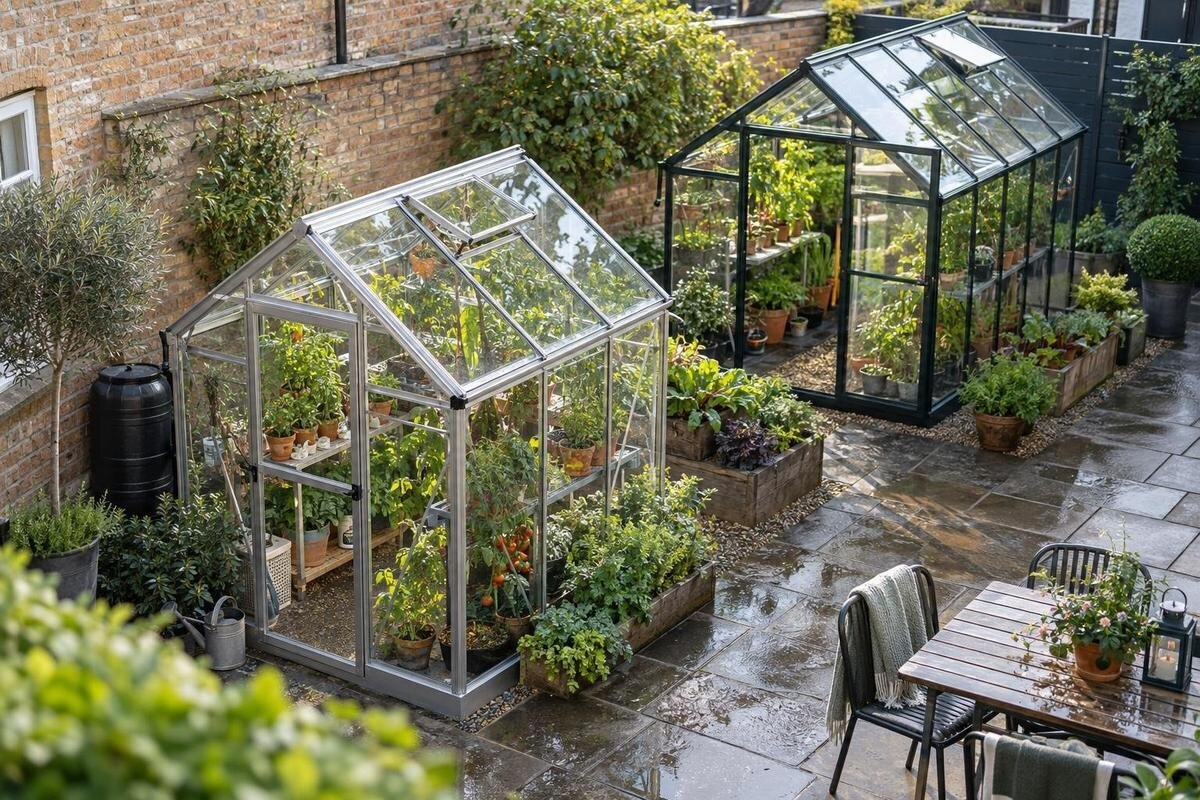
Greenhouse buying guide
Buying a small greenhouse for a compact garden is a fit problem as much as a size problem. The outside footprint has to work with paths, doors, fences and the route you use to carry in compost or plants; inside, the usable floor area has to leave room to reach what you grow. Before comparing models, measure the spot, list what you plan to grow and decide how you will move around the greenhouse. That gives you a practical basis for comparing product dimensions, layout, access and ordering details, rather than choosing by a “small” label alone.

Measure the space available
Begin by measuring the part of the garden you can genuinely give over to a greenhouse, rather than the largest empty patch you can see. Record the usable width and depth in metres, then note fixed obstacles such as fences, posts, raised beds, trees, drains, taps, steps and places people already walk. Check whether the ground narrows or changes level across the proposed area, because one measurement at an end may not describe the whole site. Include the door approach and any clearance required by the installation information. A greenhouse that fits only by blocking a regular path or covering something you need is not a practical fit, even if its outline appears to fit.
Mark the proposed outline with string, chalk or a hose, then walk around it from the paths you use. Stand where the entrance would be and check the approach, not just the dimensions on the ground. Try the route with a pot or garden tool in hand; a turn that is easy to walk through empty-handed can be awkward while carrying something. Once the usable outline is clear, compare it with the stated external measurements on each product page. The Classic Plus 385 greenhouse is one listing to assess in that way; do not guess its size from the model name. Use published measurements or drawings, and note any missing dimension rather than estimating.
Match the footprint to your growing plan
Turn the space measurement into a growing plan before choosing a size. Write down what you intend to grow, roughly how many plants or containers you have in mind, and whether they will be raised from seed, grown to maturity or moved through the greenhouse at different times. Include plants you expect to bring in from elsewhere if that is part of your plan. This list helps define the usable space you need; a greenhouse that works for a few seed trays may not leave room for mature plants, several pots and a way to reach them. Keep the list realistic for the care and time you expect to give the garden.
Sketch the interior from above and assign space to each part of the plan. Show beds or containers, any shelves or potting surface you expect to use, and a route to reach plants without moving everything else. Then compare that sketch with the dimensions and drawings supplied for each option. For any candidate, including the Bloomcabin Orangerie listing, look for stated internal measurements; if only outside dimensions are given, avoid treating the whole footprint as growing area. A compact layout can work well on paper but feel crowded once pots, tools and plant growth are accounted for. Adjust the plant list or arrangement before deciding that a larger footprint is necessary.
Check height as well as floor area
Floor space does not tell you how much usable growing room a greenhouse provides. Think about the mature height of the plants on your list, whether you plan to use shelves, and how much headroom you need to work comfortably. A low area near the sides may be less useful for taller plants than the centre, depending on the greenhouse’s shape. Check the stated overall height and, where available, the height at different points inside. This gives you a better sense of the space you can actually use than a single height figure on its own.
Compare the dimensions with your plan for reaching, watering and moving plants, not just whether a plant might physically fit. Look at the door opening and any internal layout shown in the product information; do not assume the full external height or width is available inside. A listing such as the Aluminium Classic greenhouse should be assessed using its own published measurements, rather than a material or model label. If the internal dimensions, height profile or door opening are not stated, ask for clarification before relying on the product for a particular plant arrangement.
Allow room for the door and daily access
Check how you will get in and out before settling on a position. A door may need room to swing, or its opening may be arranged differently; use the product information to confirm which applies. Measure the approach from the garden path and consider whether the door would open towards a fence, bed or other obstacle. Also look at the clear opening, not only the overall door dimensions, if you expect to carry in pots, trays or supplies. A tight entrance can make ordinary tasks inconvenient even when the greenhouse itself fits neatly in the available space.
Inside, plan a route that lets you reach the plants you expect to tend. If you are adding shelves or a work surface, include their depth in the sketch so they do not narrow the way through unexpectedly. Think about the tasks you will do most often, such as carrying a watering can, moving a tray or removing a pot, and make sure the layout allows for them. The best position for a greenhouse is not always the one that uses the smallest patch of ground; ease of entry and movement matter too. Test the arrangement on the ground before ordering.
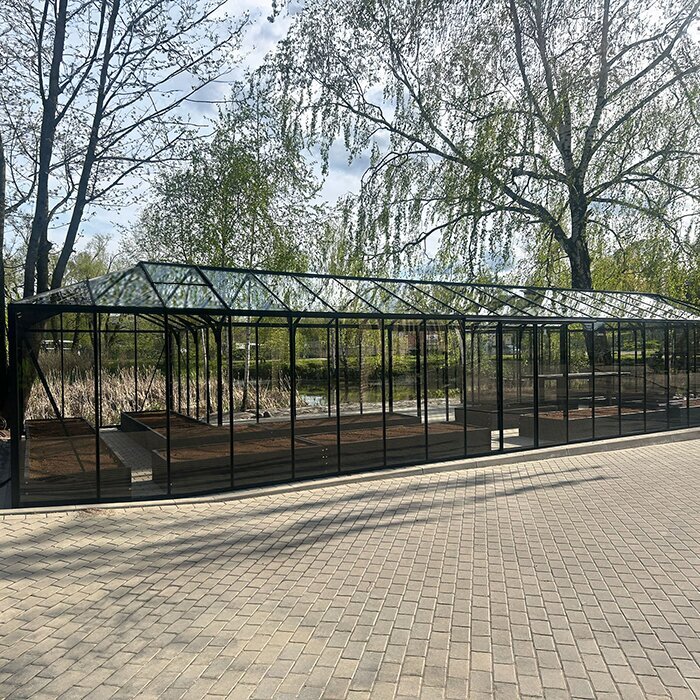
Choose a freestanding or wall-mounted layout
A compact garden may suit a freestanding greenhouse or a wall-mounted design, but the right arrangement depends on the site rather than the label. A wall-mounted layout needs an appropriate wall and enough room for its entrance and any required clearances. Check whether the wall is shaded, whether nearby doors or windows would be obstructed, and whether roof edges or downpipes affect the position. A freestanding option also needs a workable approach and the clearances specified for that product. Compare the actual footprint and placement requirements of each design against the same marked-out site.
If you are considering a wall-mounted arrangement, the T-model wall-mounted greenhouse orangery is a product page to examine for its stated layout and requirements; the name alone does not establish whether your wall or site is suitable. Read the manufacturer’s fixing and clearance information, and do not assume that any convenient wall can support a greenhouse. If you are uncertain about the wall, attachment or required preparation, ask a qualified professional before proceeding. In a small garden, a layout that fits only by blocking access to the building or a regular route is unlikely to be a comfortable choice.
Confirm the base and site requirements
Treat the base as a separate part of the buying decision. Check the product information for the required surface, preparation and any levelling conditions, and establish whether the base is included, optional or something you need to arrange separately. Do not assume that lawn, soil or existing paving will meet the product’s requirements. Also compare the dimensions of the greenhouse and any base shown in the documentation; they may not describe exactly the same outline. Clear information here helps you avoid choosing a footprint that fits the garden but cannot be prepared as intended.
Think about drainage and the condition of the proposed position, and note anything that could complicate preparing the site. The product page named Pyramid greenhouse for masonry base is a reminder to read the base description in full: its title alone does not tell you how the site should be prepared or what is included. Use the manufacturer’s instructions for model-specific requirements. If you are unsure whether an existing surface or proposed support is suitable, ask the supplier or a qualified professional rather than making assumptions about the structure or its foundation.
Compare glazing, frame and ventilation details
Do not choose a greenhouse from a photograph or a broad material label alone. Read the written specification for the frame and glazing, and compare like with like across the options you are considering. Check what type of glazing is described and whether the information explains the panels or their construction. Look at the ventilation details too: note what openings are specified, where they are positioned if shown, and whether you can reach them once the greenhouse is in place. The available sunlight and exposure at your site are also worth considering when comparing products, without assuming that one material or style suits every garden.
Make a note of any specification that matters to your plans but is not clear, such as ventilation arrangements or the details of the glazing. The aluminium wall greenhouse listing should be assessed using its written product information, just like any other option; its name does not establish the glazing, ventilation or fixing details. Check whether the product information addresses the conditions at your chosen spot, and ask about gaps before buying. This keeps the comparison focused on declared features rather than assumptions drawn from an image, a model name or the word “compact”.
Check what the product listing includes
Read the complete product description to understand which parts are included in the item you are considering. Check the stated model and specification, then look for details about the frame, glazing, doors, vents, base and any accessories you expect to use. A product photograph may show a staged setup, so do not assume that shelves, benches or other visible items are part of the order unless the listing says so. Write down anything that is described as optional or sold separately, and ask about unclear inclusions before checkout. This makes it easier to compare two options on the same basis.
Pay particular attention to the difference between a named component and a confirmed inclusion. For example, the Bloomcabin Prestige greenhouse with metal foundation name is not, by itself, a full explanation of what arrives or what preparation is required. Read the product details to establish whether the foundation is included, optional or specified as something to arrange separately. Confirm the assembly information and any parts your plan depends on, such as a particular accessory. If a feature is essential to your compact layout, get a clear answer before placing the order rather than building your plan around an assumption.
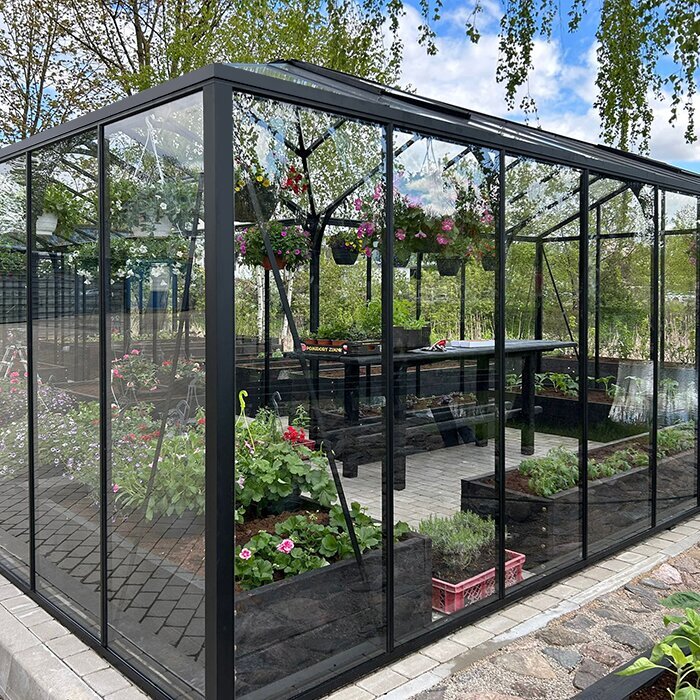
Plan delivery and assembly access
A greenhouse can fit in the garden yet still be difficult to bring to its final position. Trace the route from the delivery point to the site, noting gates, narrow passages, steps, sharp turns and overhead obstacles. Compare those constraints with any package dimensions or delivery information provided. If measurements are not available, ask what information the seller can supply; do not assume that a package will pass through the narrowest part simply because the assembled greenhouse fits beyond it. Also think about where components could be placed temporarily if they cannot be carried straight to the installation area.
Check the product information for assembly requirements and who is expected to carry out the work, then consider whether the garden offers enough room to manage it. A page such as the limited edition aluminium greenhouse listing should be checked for its own ordering and delivery details; its name does not tell you package sizes or how delivery is handled. Confirm any unclear practical arrangements before you commit. Planning for the route and assembly space is especially useful where the garden is enclosed or access is shared, because the available area may be smaller during setup than it is once the greenhouse is in place.
Test the complete layout before ordering
Bring the decisions together with a full-size outline on the ground. Mark the greenhouse footprint, show where the door opens, and sketch the path, beds and shelves you expect to use. Walk around the outline and repeat the exercise with the route to the delivery point in mind. Then compare the result with your growing list: can you reach the plants, fit the containers you planned and use the entrance without moving something each time? This practical test brings together dimensions, access and growing space in a way that a product photograph or a label cannot.
If the plan works only when every centimetre is used or a regular path is blocked, reconsider the position, the layout or the number of plants before choosing a model. You may find that a different shape suits the garden better, or that reducing the growing plan makes a smaller footprint workable. Recheck any detail you could not confirm in the product information, particularly where it affects the base, access or assembly. The aim is not to buy the smallest greenhouse available; it is to choose one that fits the site and leaves enough practical room for the growing you intend to do.
Frequently asked questions
How do I choose the right size greenhouse for a small garden?
Measure the usable site, then list the plants and containers you want to accommodate. Compare the greenhouse’s stated external footprint with that space and sketch the inside, allowing room to reach and tend the plants. A “small” label alone is not a reliable size guide.
Which greenhouse measurements should I compare?
Look for external width, depth and height, plus internal dimensions or a plan where these are provided. Check the door opening and any base dimensions too. Make sure you know what each measurement includes, rather than assuming the frame, base and usable growing area are identical.
Is a wall-mounted greenhouse a good choice for a compact garden?
It may suit a site with an appropriate wall, but the layout still needs room for access and ventilation. Check the product’s fixing instructions, wall clearance, sunlight and any nearby windows or doors. If you are unsure whether the wall or fixings are suitable, ask a qualified professional.
How much room should I leave around a greenhouse?
There is no single clearance that suits every product and site. Allow for the entrance and the route you will use, and follow the clearances in the manufacturer’s instructions. Marking out the footprint and walking around it can reveal pinch points before you order.
What should I confirm before ordering a compact greenhouse?
Confirm the actual model, its dimensions, what is included or optional, base requirements, ventilation details and assembly information. Check the delivery arrangements and whether the route to your garden can accommodate the packages. Ask the seller about any detail that is unclear.
A compact greenhouse should fit both the measured site and the way you intend to grow. Compare the external footprint with a marked-out position, then test the door route, working space, plant height and any wall or base requirements against the product information. If the layout forces you to sacrifice access or a planned part of your growing plan, adjust the position or plan before ordering. A modest footprint is useful only when the inside remains workable.
