
Buying a Greenhouse for a Windy Garden: Site Checks and Specs
Greenhouse buying guide
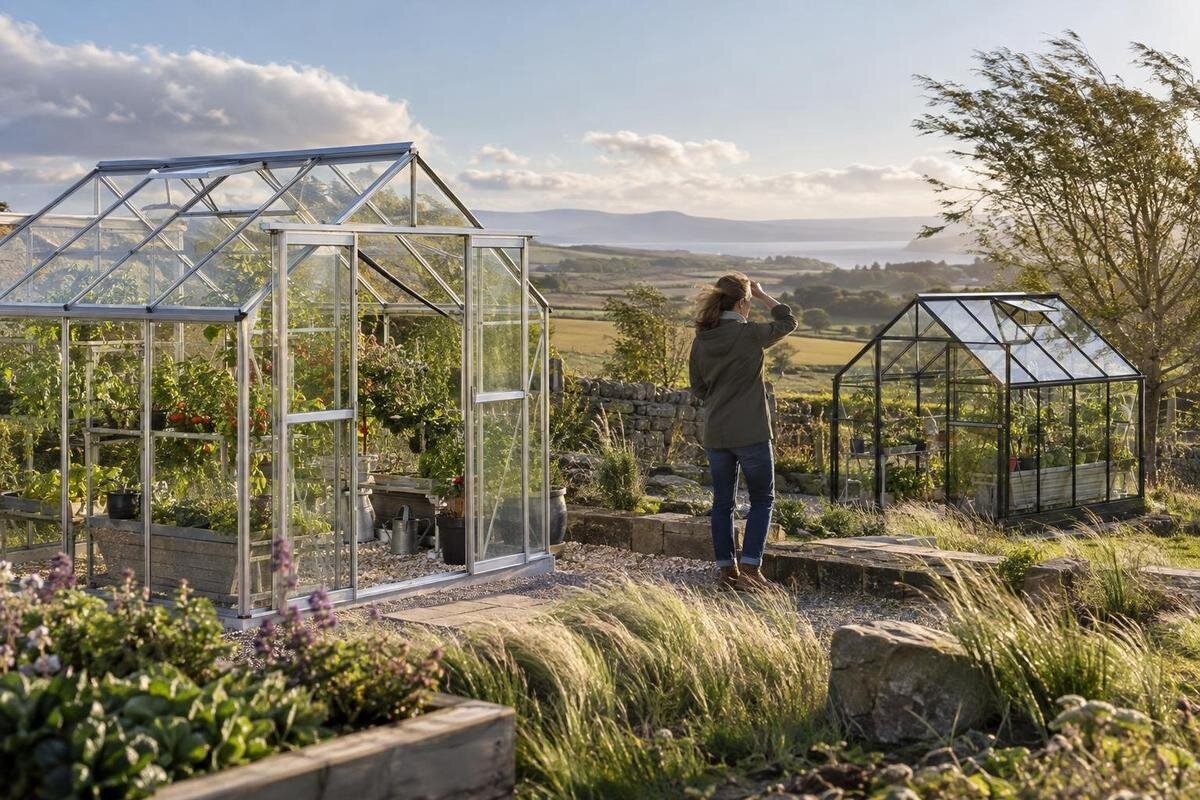
Wind can turn a good-looking greenhouse into a poor purchase if its position, base or fixing system does not match the garden’s exposure. Before you buy a greenhouse for a windy garden, assess where gusts reach, what existing shelter actually does and how much usable room is available. Then compare written information for the complete structure: frame, glazing, base, anchors and openings. A product name, material label or photograph cannot establish whether a particular configuration is suitable for your site.

Assess exposure at the exact spot
Wind exposure can change markedly across a garden. An open corner, a rise, a gap between buildings or the edge of a slope may behave differently from a sheltered-looking patch only a short distance away. Avoid labelling the whole property simply sheltered or exposed. Stand at the proposed greenhouse position and note which directions bring the strongest gusts, whether they arrive steadily or shift, and whether the spot feels exposed from more than one side. A forecast for the wider area can help you choose when to observe, but it cannot describe airflow at one exact patch of ground. If possible, compare what you notice from the garden with what you can see from the house.
Make a simple site sketch and mark the candidate position, open ground, slopes, buildings, hedges and large trees. Add wind directions you have observed, including those that occur less often; do not plan only around the prevailing breeze if gusts can approach from elsewhere. Notice whether the site becomes more exposed when leaves drop or when nearby doors or gates are open. If you cannot observe several conditions yourself, local knowledge can help identify recurring patterns, but it is context rather than a substitute for the greenhouse’s wind-design information. The aim is to describe the place accurately enough to compare it with assumptions in product documentation.
Check what nearby shelter really changes
Fences, hedges, sheds and neighbouring buildings may reduce direct wind, but none should be treated as a guaranteed windbreak. Airflow can change around an obstruction: an end, corner or gap may leave a nearby area more unsettled, and the effect depends on the shape, distance, height and local ground form. A greenhouse just behind a barrier is not automatically in calm air. Compare two or three feasible positions in relation to those structures rather than judging shelter from the boundary line or a view from the house. A small change in position may alter how exposed the entrance and sides feel, so consider the whole footprint.
Treat living shelter as changeable. A hedge may be dense in one season and sparse in another, while trees grow and branches can break; planned planting may take time to establish. Check whether the proposed spot sits under branches or where falling limbs could strike, and whether the garden layout is likely to change during the greenhouse’s lifetime. A fence that seems helpful now could be replaced or altered. Do not invent a safe distance or use hedge height as a wind specification. If buildings, slopes and barriers combine to make the airflow difficult to judge, ask a qualified professional to assess the location before choosing a model.
Measure the footprint and working space
Compare the greenhouse’s outside footprint with the working space you need, not just the growing area shown in a diagram. Allow room for the entrance to open, for a person to pass with a tray, and for routine access to the sides and ends. Think through where plants, staging or tools will sit without blocking the route through the structure. A narrow strip may fit the frame on paper but leave little room for maintenance or make an open door awkward in gusty conditions. Use your garden measurements and everyday tasks to decide what size range is practical, including space to reach components for routine checks.
Check the stated external dimensions, including any base or projections shown in the plan, and mark the footprint on the ground before choosing. Confirm how much clear space is required for assembly and future access using the manufacturer’s instructions; do not guess from a product photograph. Consider how the doors face your approach and where you can stand while opening them, but avoid a universal rule about orientation: local gust patterns and access can point in different directions. A named option such as the Orangerie greenhouse listing belongs on a shortlist only after you have checked its published dimensions and layout; the name does not tell you how much space it needs.
Compare the frame specification
A frame’s material name is only one part of its specification. Ask what material and profile are used, which structural members and connections are supplied, and whether the manufacturer publishes details for the exact model and size. Look for information on joints, braces and fasteners in the product documentation rather than judging them from a close-up photograph. If the garden is exposed, ask which frame elements contribute to the wind design and whether components vary between sizes or options. Find out whether any bracing shown in drawings is included in the selected package or offered separately. This gives you useful points to compare across candidates.
Do not treat a heavy-looking frame, thick-looking bar or familiar material as proof of suitability. The complete arrangement matters: the frame must work with the selected glazing, base and anchoring, and the information should apply to the model you intend to order. Ask for written wind-design data and the conditions attached to it, including any size or configuration limits. The Aluminium Classic greenhouse listing can be considered on the same basis: look for stated frame details and wind information, rather than assuming from aluminium in the name that it meets your site’s needs. If key details are not on the page, ask the supplier to identify them.
Check glazing and panel retention
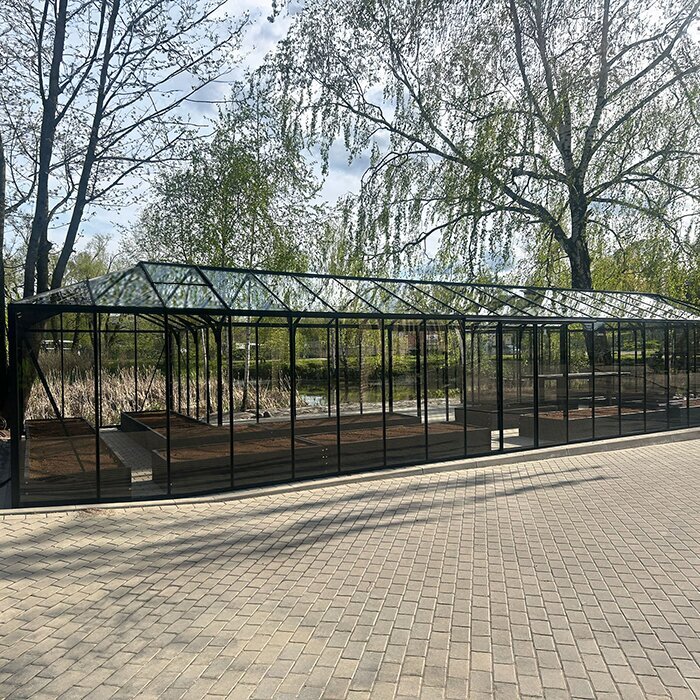
Glazing needs its own check. Ask for the exact panel material and thickness, how the panels are retained, and whether the product’s wind information covers those panels together with the frame. Clips, bars, seals or other fixings may be part of the specified arrangement, so avoid treating the words glass or polycarbonate as a full description. A panel that appears robust in a photograph tells you little about how it is held in the structure. If roof and wall panels use different details, ask how each is covered. The useful comparison is between documented complete configurations, not a broad material label alone.
Ask whether a change of glazing, panel size or fixing alters the wind information, and whether replacement panels and compatible fixings can be obtained. Find the manufacturer’s instructions for checking and maintaining the glazing after severe weather, rather than improvising a repair. If you use the Classic Plus 385 listing as one candidate, look for its precise glazing and retention details; the model name itself does not establish either. A supplier should be able to point you to the relevant information or explain what remains unconfirmed, particularly if a quoted configuration differs from the page.
Establish what the base includes
Separate the greenhouse frame from its base and from the connection between that base and the ground. Ask whether a base or foundation is included, optional or supplied separately, and which exact arrangement the manufacturer’s wind information assumes. Confirm the dimensions and connection details required by the product instructions, and whether choosing a different base changes the documented setup. A base that looks substantial is not evidence of a suitable anchoring system. These are specification questions, not something to settle by estimating weight or copying a neighbour’s installation. Check the parts list as well as the product description before comparing packages.
A listing such as the Prestige greenhouse with metal foundation still needs an itemised check: what components are included, what connects the greenhouse to the foundation, and what connects that foundation to the site? Ask the supplier to identify any parts that must be purchased separately and to provide the applicable assembly and anchoring documents. Do not read a product title as confirmation that the base matches your garden or the stated wind conditions. Resolve any uncertainty before placing the order, rather than after the frame arrives.
Match anchoring options to the ground
Describe the ground as it is actually built, not only what its surface looks like. Grass may cover soil or fill; paving may sit over a different base; a concrete or masonry surface may be old, uneven or in a condition you cannot assess. Record any slope and note where water collects, then tell the supplier what is beneath the proposed position as far as you know. Ask which substrate and anchoring options the manufacturer specifies for the exact model. If you do not know how the surface was made, get a qualified professional to assess it rather than choosing fixings from appearance.
An anchor needs to suit both the greenhouse connection and the supporting surface; do not assume one generic fixing fits every garden. Confirm the specified parts, installation conditions and whether a professional should assess the base. For example, the Pyramid greenhouse for a masonry base listing should prompt you to check exactly what the title means for the required base and connection; it does not establish that existing masonry at your home is compatible. Avoid substituting an unverified fixing pattern or base for the arrangement in the product documentation.
Ask for wind information for the full configuration
Ask for wind-design information in writing for the precise model, size and configuration you plan to buy. If the supplier gives a figure, ask what it measures, which method or reference it uses, what units apply, and what assumptions are built into it. Those assumptions may include exposure, surrounding shelter, the base and anchors, and the configuration of doors or vents. Check whether the information covers the complete greenhouse rather than one component. Do not compare figures from two products as if they mean the same thing until the supplier explains their basis. A general statement such as strong or suitable for windy areas is not enough to compare a particular site with the design.
Wall-mounted designs add a connection to the host building, so check both sides of that interface. Do not assume the wall automatically shields the greenhouse or that attaching to it removes the need for ground anchors. For the T-model wall-mounted greenhouse listing, ask whether any wind information covers the exact attachment arrangement and the supporting wall, and what you need to confirm about that wall. If its construction or condition is uncertain, have a qualified building or structural professional assess the proposed connection before relying on it.
Review doors, vents and day-to-day care
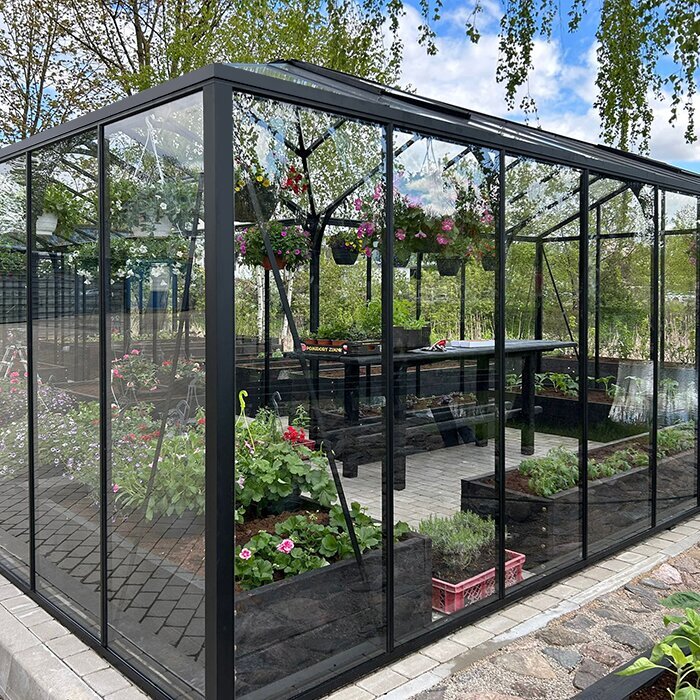
Doors and vents affect how a greenhouse is used in gusty weather. Check their position, opening direction, latching or retention details, and the manufacturer’s instructions for securing them when wind rises. Ask whether any automatic opening component has separate instructions for windy conditions; do not assume a vent closes itself safely or that a door will stay in place. A door that is convenient in calm conditions may be difficult to manage if gusts reach the entrance, so relate the layout to your site observations and usual access route. Check whether the configuration you are considering includes the components shown in any diagrams.
Read the operating and care instructions before buying, especially what the manufacturer recommends for doors, vents, panels and post-weather checks. Avoid planning around a feature that is not clearly included in the exact configuration; ask whether it is standard or an option. The aluminium wall greenhouse listing should be checked for its actual opening and securing information, not assumptions based on the model label. Also consider whether you can reach components for routine inspection without blocking beds or paths; practical access makes it easier to follow the maker’s maintenance guidance.
Compare the exact models before ordering
Compare candidates in one table with columns for the exact model and size, frame details, glazing and retention, base, anchors, wind information, door and vent instructions, and any options. Separate confirmed information from unanswered questions, and record who supplied each answer. Request an itemised quote that identifies the chosen configuration and any separate base, anchors, assembly or site-assessment costs; do not assume a headline product page covers them all. Check that the delivery route and working area can accommodate the components and assembly process, using the supplier’s stated requirements. This helps prevent a late change to the plan.
Before ordering, ask the supplier to confirm that the documents refer to the exact version quoted, not a similar greenhouse or a different base. A candidate such as the limited-edition aluminium greenhouse listing needs the same site, frame, glazing and anchoring checks as any other; the title alone cannot answer them. If the wind assumptions or ground connection remain unresolved, pause rather than filling gaps with guesswork, and seek advice from a qualified professional familiar with structural wind design. That gives you a basis for comparing options without mistaking a lack of information for evidence of suitability.
Frequently asked questions
Is a sheltered corner always the best place for a greenhouse?
Not necessarily. A barrier may reduce direct wind, but corners and gaps can create unsettled airflow, and shelter changes with the seasons. Compare feasible positions in different conditions rather than treating a fence or hedge as a guarantee.
What wind rating should I ask for?
There is no figure you can safely choose without considering the site and the rating’s basis. Ask for written information for the exact model and configuration, including what any figure measures and which assumptions apply. A qualified professional can help compare it with a complex or exposed site.
Does an aluminium frame mean a greenhouse is suitable for wind?
No. A material name alone does not establish performance. Check the documented frame, glazing, connections, base and anchoring as one complete arrangement, and confirm that the information applies to the model and size you intend to order.
Can I anchor a greenhouse to existing paving or a fence?
Do not assume either is suitable. Ask which supporting surfaces and fixing arrangements the manufacturer specifies, and describe how your paving or fence is constructed. If you cannot confirm the condition or structure, get advice from a qualified professional rather than choosing fixings by appearance.
Does a wall-mounted greenhouse automatically get shelter from the wall?
No. A wall can change the airflow, and the connection between the greenhouse and the building also needs to be considered. Check whether the wind information covers that exact arrangement and have the supporting wall assessed if its construction or condition is uncertain.
For a windy garden, the best choice is the one whose documented frame, glazing and anchoring arrangement can be assessed against the site you actually have. A sheltered-looking corner and a reassuring material name are clues to investigate, not proof. When the proposed position, supporting ground and exact product configuration all fit the supplier’s stated conditions, you can compare models on evidence rather than appearance. If they do not, reconsider the position or get professional advice before committing.
