
Black Friday Guide to Buying a Glass Greenhouse: Key Specs
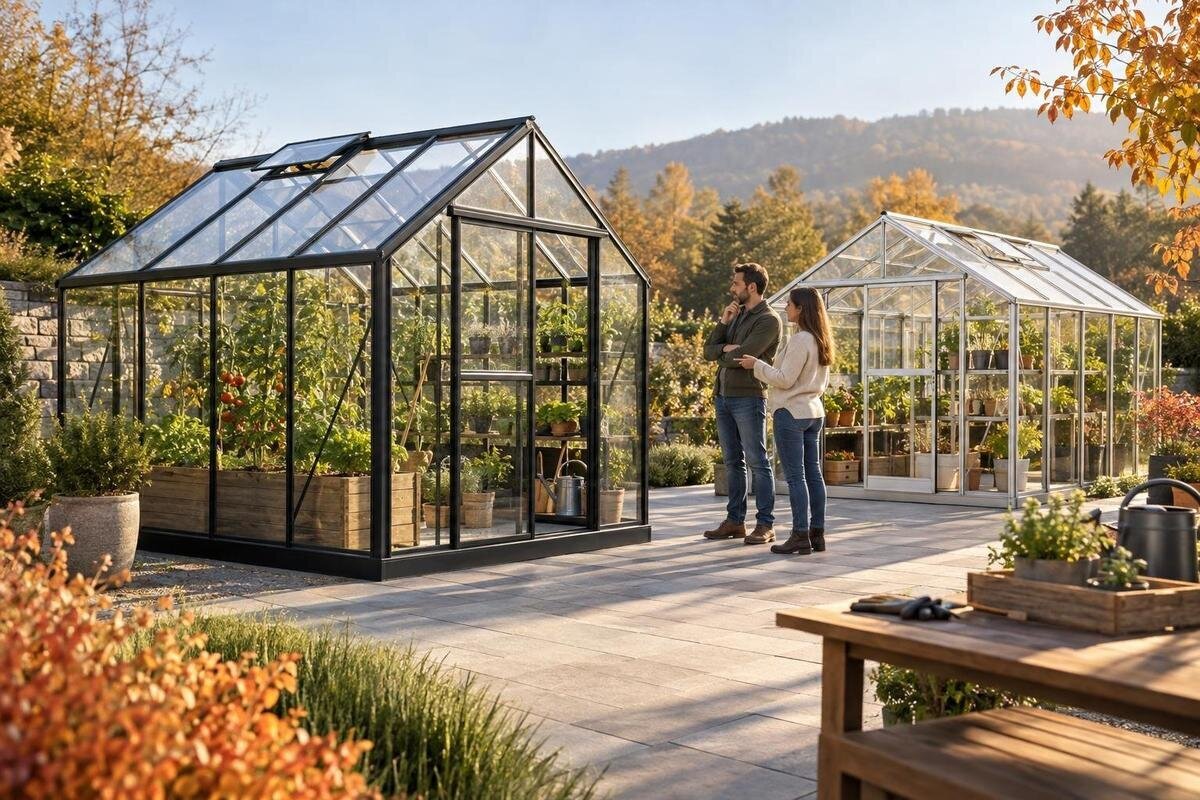
Black Friday greenhouse buying guide
Black Friday can put a range of greenhouse listings side by side, but a promotional label does not tell you whether a glass greenhouse suits your garden or whether two offers contain the same setup. Before comparing prices, verify the glazing, frame construction, dimensions, ventilation and base requirements. Then check the included parts, delivery arrangements and terms attached to any advertised offer. This guide focuses on those buying decisions; it does not assume that a discount is currently available. Use the exact specification rather than the name or image, and keep notes so you compare the same configuration from one listing to another.

01
What a Black Friday greenhouse offer actually includes
A Black Friday price is useful only when you know what it buys. Compare glass greenhouses with the same glazing type, frame configuration and selected options; two listings can look alike in photographs but describe different packages. Write down the model, size and exact configuration, then note the quoted price and any offer period or conditions stated. If a promotion is described as a percentage reduction, check what price it is compared with and whether the option you want is covered. Do not assume a particular saving, or that a discount is active, simply because the article topic is seasonal.
Put the non-price differences alongside the price before choosing. A displayed amount may exclude a base, ventilation hardware, delivery or assembly; another package may include items you would otherwise need to buy separately. Check what is optional and how each addition changes the total. For a glass greenhouse, the pane specification and its method of retention are central to the purchase, not details to skim over. Make sure you are comparing the same model size and configuration, and ask about any missing specification that affects fit or use. A written comparison makes it easier to judge the actual offer rather than its headline.
Glass type and pane placement
First establish that the candidate is genuinely glazed with glass. Look for explicit material wording in the specification, not just the word greenhouse, product photographs or a product name. Check whether glass is used in the roof and walls or only in particular sections, and note any differences between panes. A catalogue entry such as Bloomcabin Orangerie identifies a listing but does not verify its glazing. If a page says only glazed without naming the material, ask the seller for the pane specification. Do not compare it as a glass greenhouse until the construction is clear.
Then inspect the stated glass type and arrangement. A listing may distinguish horticultural glass from toughened glass, or specify a thickness or pane layout; compare the exact wording and which panels it applies to. Do not assume every pane is the same type because one heading mentions safety glass. Ask how the panels are retained, whether clips or seals are included and how replacement panes can be identified. Consider where people will walk and work around the greenhouse, and read the handling information supplied for the selected glazing. If the specification is absent, treat it as an unanswered buying question rather than filling the gap from a photograph.
02
Frame materials and structural details
Frame choice is more than a material label. Check whether the stated frame is aluminium, steel, timber or another material, then look for details about the profiles, connections, fasteners and finish. The frame, its joints, glazing bars and anchors work as a system; the word aluminium or steel by itself does not establish how it will perform on your site. For an entry such as Aluminium Classic Greenhouse, verify the full frame specification instead of reading a name as proof of a particular profile, coating or strength. If options change the construction or finish, record which version you are comparing.
Ask for the supplier’s stated design limits and installation requirements, particularly if your garden has strong wind exposure, coastal conditions or other site factors that need consideration. Do not infer a rating from frame colour, apparent weight or a material’s general reputation. Check how the glazing is fixed, which fixings or anchors are included and whether the finish has stated care requirements. Product information should describe the model and configuration being offered, not just a generic image or family page. If the limits are unclear, seek the manufacturer’s guidance or ask a qualified installer rather than relying on a broad claim such as heavy duty.
Greenhouse dimensions and usable space
Measure the intended footprint, then compare it with the greenhouse’s published external dimensions. Allow room for the entrance to open and for routine access around the structure; check fences, paths, eaves, overhanging branches and other obstacles. Distinguish the outside footprint from the internal growing area, since frame members, benches and staging affect the space available for plants. Compare the door opening, eaves height, ridge height and any stated clearance so that moving pots, trays and equipment through the entrance is practical. If listings use different units, convert the published measurements to metres rather than estimating from a picture.
Use dimensions specified for the exact model, not a number that happens to appear in its name: Classic Plus 385 should be measured from its published length, width and height, not interpreted as a size code. Check whether measurements include a base or other fittings, and whether the assembled greenhouse needs additional clearance for doors or vents. Sketch the benches or growing rows you expect to use, leaving a route to reach them and enough room to work. This is a layout check, not a reason to buy the largest footprint available; choose a size that fits the site and the growing plans you can realistically support.
03
Ventilation, opening controls and access
Read ventilation as a set of openings and controls, not just a count of windows. Check whether vents are in the roof, sides or doors; note their stated dimensions, how they open and whether the hardware is included. A name such as Limited Edition Aluminium Greenhouse does not disclose those details. Ask whether vent openers or other controls are part of the selected package or separate items, and confirm that any accessory is listed as compatible with the exact model. Where a specification gives a vent count but not its position or size, ask for those details before treating two designs as equivalent.
Match the arrangement to what you intend to grow and how you plan to use the greenhouse. A door provides access, but it is not necessarily a substitute for a dedicated vent; openings on different sides can support air movement, depending on their design and the site. Check that you can reach each opening to operate and clean it, and look for clear instructions on adjustment and care. If you want accessories such as vent controls or screens, confirm whether they are supplied and whether they fit the chosen configuration. Do not assume a photograph shows every opening or item included in the box.
Base requirements and site preparation
Confirm whether a base is included, what material and dimensions are stated, how the greenhouse is intended to attach to it and whether a floor is part of the package. A name such as Bloomcabin Prestige Greenhouse with Metal Foundation is a reason to read the offer details closely: identify the supplied components, footprint and site requirements rather than making assumptions from the title. Record whether the published dimensions refer to the frame, the base or both. Also check the required anchoring method and whether the parts needed for the stated setup are included or listed separately.
Before ordering, inspect the intended site for slope, drainage, access and nearby obstructions, then compare those conditions with the manufacturer’s preparation instructions. A poorly matched base can create fitting problems, but a universal foundation detail cannot be prescribed from a catalogue name. Ask the supplier or a qualified installer what preparation and anchoring the specified model requires for your site; avoid making engineering judgements from a generic diagram. Consider how a delivery can reach the location and whether there is room to assemble the frame and handle the panes. These checks help establish whether the site is ready for the particular greenhouse you are considering.
04
Comparing the full price and package
Itemise the frame, glass panels, doors, vents, fasteners, base, staging and any other extras you need. Confirm which are included in the selected price and which are optional. For a listing called Pyramid Greenhouse for Masonry Base, do not infer from the name whether masonry work or a base is included, or whether it suits an existing base. Verify those points in the actual specification and quote. If the offer has several sizes or configurations, compare the same variant and options rather than a discounted entry-level version with a more complete alternative.
Ask whether the total includes delivery, assembly or other charges relevant to your order, and note the terms attached to any special promotion. Check the model, glazing and options on the quote or checkout summary before paying; a promotion may apply only to a particular configuration, while accessories or services may be separate. Use any stated offer period or availability condition as written, without assuming it continues beyond its terms. The useful comparison is the total for the setup you actually want delivered. If that information is missing, request an itemised answer instead of deciding from a headline amount.
Delivery, glass handling and after-sales support
Delivery belongs in the buying decision because a glass greenhouse may arrive as a package of panels and frame parts that need careful handling. Confirm the delivery area, charges, handling arrangements, expected dispatch or delivery window and what access is needed for unloading. These details can vary by order, so check them for your address rather than assuming they are covered by an advertisement. If the delivery route is difficult or there is nowhere to store the package safely before assembly, resolve that before checkout. For a named model such as T Model Wall-Mounted Greenhouse Orangery, read the order information instead of assuming its title describes how it is packed or delivered.
Read the seller’s terms for damaged or missing parts, returns and cancellations, and note how any issue must be reported. Ask how replacement panes are identified and whether the appropriate parts can be supplied for the exact model; do not assume a pane can be substituted based on appearance alone. Check warranty wording and exclusions, including any stated care or installation conditions. If assembly support is offered, find out what the service covers and what site preparation remains your responsibility. Keep the product information, quote and order confirmation that identify the configuration you chose, so you can refer to what was offered and purchased.
05
Comparing specifications like for like
Make a simple comparison sheet with one row per greenhouse and columns for confirmed glazing, pane type and placement, frame and finish, external dimensions, usable internal space, vents, base, included parts, delivered total and delivery terms. Mark unknowns as unknown rather than filling them with guesses. A listing such as Aluminium Wall Greenhouse can be recorded in the same way, but its title alone does not answer those specification questions. Add the source for each detail, such as a product page, written response or quote, and check that it refers to the size and configuration you intend to order.
Use the sheet to rule out a product when an essential requirement is not verified, then compare the remaining options on real differences. One may have the glazing you want but need a separately priced base; another may fit the site while leaving ventilation details unclear. Do not score a claim that has no supporting figure or infer strength and suitability from photographs. For missing information, ask a specific question: what glass is used in the roof, which vents are included, what are the external dimensions, or what base is required? A written answer that names the model and configuration is more useful than general reassurance.
Choosing between verified offers
Set the essentials before deciding which offer to buy: confirmed glass glazing, a documented frame specification, dimensions that fit, ventilation that suits your intended use and a workable base plan. Once those points are clear, compare package completeness, delivery arrangements and total cost. This order prevents a large discount claim from rescuing a greenhouse that does not meet basic requirements. If an offer is missing a crucial fact, set it aside or request clarification rather than assuming the most favourable answer. You can then distinguish a genuine trade-off from a detail that has simply not been confirmed.
At checkout, check that the selected model, size, glazing, options, delivery charge and any stated promotion match the items you compared. Keep the terms and confirmation, and make sure any delivery window works for your own plans. If the configuration or price has changed, revisit the comparison before committing. A sound purchase is not necessarily the lowest headline price; it is the glass greenhouse whose documented specification and complete order fit your garden, budget and growing plans without relying on unverified assumptions.
Frequently asked questions
What wording confirms that a greenhouse is glazed with glass?
Look for an explicit glazing specification that names glass and explains where it is used, such as the roof, walls or both. A product name, category label or photograph is not enough. If the material or pane placement is unclear, ask the seller for details about the exact model and configuration before comparing it as a glass greenhouse.
Does the term toughened glass mean every pane is toughened?
Not necessarily. A description may apply to particular panels or parts of a model only. Check which panes use each stated glass type and whether the roof and walls differ. If that information is missing, request a pane-by-pane specification rather than assuming the same glass is used throughout.
Which frame details matter beyond the material?
Compare the stated frame profiles, connections, fasteners, finish and how the glazing is retained. Ask for the supplier’s documented design limits and installation requirements for the particular model. A material name alone does not tell you how the complete frame and glazing system will suit your site.
How can I compare two Black Friday greenhouse prices fairly?
Compare the same size and configuration, then itemise the glazing, frame, vents, base and other parts included. Add any separate accessories, delivery or assembly costs relevant to your order, and read the terms for the stated promotion. A headline price or percentage does not show whether the packages are equivalent.
Do all glass greenhouses need the same type of base?
No single base can be assumed to suit every model and site. Check the product’s preparation and anchoring requirements, whether a base is included, and which dimensions apply to it. Compare those details with the ground and access at your chosen location; ask the supplier or a qualified installer about anything that needs site-specific assessment.
Buying a glass greenhouse around Black Friday is a specification decision with any promotion layered on top. Confirm the glazing and frame, check that the dimensions and vents suit your planned layout, and resolve the base, delivery and package details for the exact model. If two options differ, compare their documented trade-offs alongside the total order cost. A sale label is a reason to read the terms closely; it cannot replace a clear description of the greenhouse you are buying.
