
Beneficial insects for greenhouses are a managed relationship.
The Living Treaty · UK glasshouse guide
Beneficial insects for greenhouses are a managed relationship.
Natural biological control can turn a greenhouse from a place of recurring emergency treatments into a more observant growing environment. Yet a release is not a ritual or a one-box cure. It is an agreement between pest, natural enemy, crop, climate and grower—with regular scouting as the record of whether that agreement is holding.
Why this is not a one-time purchase
The purpose is not simply to introduce more insects. It is to create a crop environment in which the correct natural enemy can find and suppress the correct pest before damage compounds.
Greenhouse biological control belongs within integrated pest management: exclusion, hygiene, crop care, early detection, accurate diagnosis, carefully selected living controls and, only where necessary, a compatible intervention. It suits serious home gardeners because protected growing makes patterns visible. Yellow sticky cards, a hand lens and a weekly route through the benches can reveal pressure while it is still limited enough for biological control to catch up.
Not every problem warrants a shipment of beneficial organisms. Clean incoming plants, sensible spacing, weed control, measured irrigation and appropriate screening all reduce the pressure that natural enemies must carry. A well-planned Classic Aluminium Greenhouse provides the access, controllable ventilation and ordered growing space needed for close observation and healthier crops.
For a durable structure that can evolve with an integrated pest-management routine, the Classic Aluminium Greenhouse supports clear circulation, considered ventilation and an orderly bench layout, making regular scouting easier than it would be in an overcrowded or improvised growing space.
The three principal guilds
Different allies, different work.
“Beneficial insect” is useful shorthand, but greenhouse biological control also includes predatory mites, parasitoid wasps, beneficial nematodes and microbial products. Their roles and operating conditions are not interchangeable.
They consume prey.
Predators include lacewing and ladybird larvae, predatory midges, mites and specialist beetles. Many are active hunters, but their usefulness depends on the prey, its life stage, the crop canopy and release timing.
- Lacewing larvae consume aphids, but they are not a universal cure.
- Predatory mites may target spider mites or young thrips, depending on species.
- Generalists may help early, but can disperse when prey becomes scarce.
They develop in or on a host.
Parasitoid wasps are extremely small, specialised natural enemies that are often most useful preventively or at the first trace of a pest. Their evidence can matter more than their appearance: aphid mummies, blackened whitefly scales or neat emergence holes.
- Encarsia and Eretmocerus suit particular whitefly situations.
- Aphidius species are selected according to the aphid present.
- They need hosts at suitable stages and cannot erase an outbreak overnight.
They work through biology, not spectacle.
Beneficial nematodes can be watered into suitably moist compost to target fungus gnat larvae. Microbial plant-protection products address susceptible pests through other biological routes and have their own authorisation, handling, coverage and environmental requirements.
- They are not insects, but belong in a biological-control plan.
- Success can depend on moisture, coverage, temperature and target life stage.
- Treat product labels and supplier directions as part of the treatment.
Pest before agent
Diagnose before you buy.
Honeydew, yellowing, stippling and distorted growth are clues rather than diagnoses. Aphids, whiteflies, spider mites and thrips leave different signatures, occupy different parts of a plant and expose different life stages to natural enemies. Photograph the pest and damage, inspect leaf undersides with a hand lens and compare several plants before choosing an organism.
1
Read symptoms
Study fresh damage.
2
Find pests
Check their location.
3
Name stages
Egg through adult.
4
Map pressure
Hotspot or crop-wide?
Symptoms: sticky honeydew and sooty mould suggest sap feeders; fine stippling and webbing point towards spider mites; silvered scars and black specks can indicate thrips.
Location: inspect tender growth, flowers, leaf undersides, stems, pot rims and damp compost. Where the pest lives determines where a useful predator, parasitoid or nematode must work.
Life stage: eggs, nymphs, larvae, pupae, adults and soil-dwelling stages do not share the same vulnerabilities. The most conspicuous stage may not be the most useful biological target.
Pressure: distinguish one affected plant beside a door from a bench-wide pattern. Isolate hotspots where practical and give the biological-control supplier an accurate account of what you found.
This sequence prevents a common mismatch: ordering an appealing generalist for a pest concealed in compost, protected within folded growth or already beyond the stage that the proposed natural enemy attacks. For an orderly, accessible growing foundation, consider the Classic Aluminium Greenhouse and plan clear inspection routes from the outset.
Portrait I · quiet patrol
Predatory mites
Predatory mites are consequential greenhouse allies precisely because they are easily overlooked. Some species are selected for glasshouse red spider mite; others feed on young thrips and may use pollen or alternative food. The assignment must be precise: a mite selected for spider mites is not automatically an appropriate answer to thrips.
Distribute living material through the affected crop according to its supplier’s instructions, rather than leaving it in one pile. Do not treat mites as a rescue device for heavily webbed plants; severe pressure often needs hotspot isolation and a broader recovery plan. Performance is inseparable from temperature, humidity, crop structure, handling and previous pesticide exposure.
Look for: fewer active pest stages and less fresh damage over time—not dramatic disappearance on release day.
Portrait II · precise correspondence
Parasitoid wasps
A parasitoid is a specialist, not a miniature decorative wasp. It finds a host pest and lays an egg in or on an appropriate life stage; its developing offspring ultimately kills that host. In greenhouse programmes, parasitoids are valuable because they search through the crop canopy and can leave legible evidence behind.
Commercial releases of Encarsia formosa are associated with glasshouse whitefly and are best introduced while pest levels remain low and incompatible residues have been excluded. Other whitefly and aphid parasitoids must be selected around the pest species, crop and conditions. Glasshouse whitefly and cabbage whitefly are not interchangeable diagnoses; neither are glasshouse whitefly and Bemisia species when making a supplier-led match.
Look for: aphid mummies, blackened whitefly scales and tidy emergence holes beneath carefully sampled leaves.
Portrait III · visible appetite
Lacewings, ladybirds and predatory midges
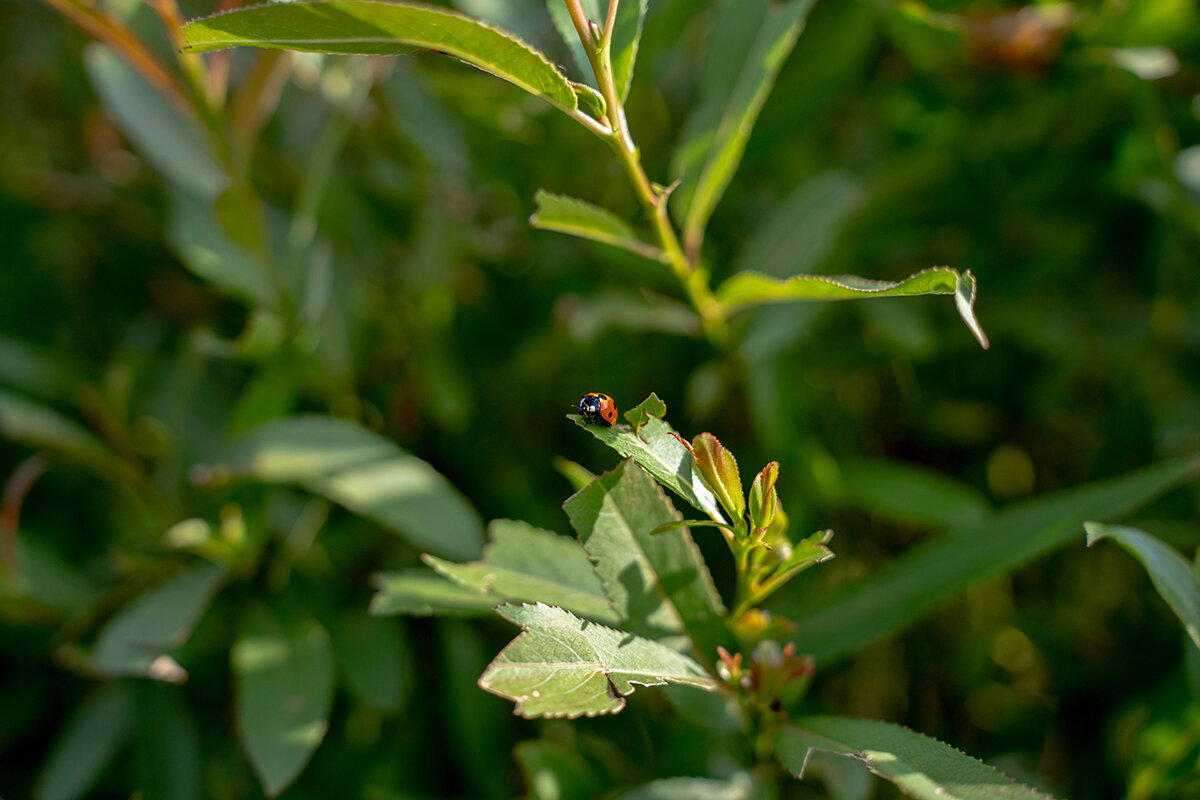
Lacewing larvae can consume aphids and other small, soft-bodied prey. Ladybirds are familiar, but released adults may disappoint when they fly from an open or prey-poor greenhouse; larvae placed within an aphid colony are more likely to remain with their food. Predatory midge larvae can also contribute where the pest, crop and conditions suit them.
These are working organisms, not mascots. The useful question is not, “Which beneficial looks most impressive?” It is, “Which stage of my confirmed pest is abundant, exposed and likely to be reached by this particular predator?” In a small home greenhouse, deliberate placement, suitable conditions and repeat observation usually matter more than buying an assortment.
Look for: active hunting where prey occurs and a stable downward trend, rather than one memorable sighting.
Portrait IV · beneath the bench
Nematodes and microbial controls
Not every greenhouse pest occupies the foliage. Fungus gnat larvae live in damp growing media, where beneficial nematodes such as Steinernema feltiae may be applied under the right conditions. Nematodes need an appropriately moist substrate, suitable temperature and careful timing, and should be used promptly as instructed. They do not replace drainage improvements or correction of persistent overwatering.
Microbial products require comparable operational care. They are regulated plant protection products, with authorised uses and conditions that matter. Performance may depend on coverage, temperature, moisture, light, pest stage and crop. Choose only a product authorised for the intended crop and use in Great Britain, follow its current label exactly and establish how it fits the wider programme.
Look for: fewer larvae in the compost or less fresh feeding injury after the vulnerable stage is targeted.
The living match exchange
Match the agent to the stage.
This is a decision aid rather than a shopping list or release-rate chart. Exact species, release method and quantity depend on the crop, confirmed pest, greenhouse conditions, supplier instructions and current UK availability.
Confirmed pest
Aphids Tender new growth
Whiteflies Leaf undersides
Thrips Flowers and foliage
Spider mites Before heavy webbing
Fungus gnats Damp compost
Mealybugs Localised colonies
Candidate group
Parasitoids or lacewings
Encarsia/Eretmocerus
Predatory mites or Orius
Specialist predatory mites
Steinernema feltiae
Specialist parasitoids
Use the left column to define the actual problem. Aphid parasitoid choice depends on aphid identity. Whitefly choices depend on the whitefly species and crop conditions. Predatory mites used against thrips mainly pursue young stages, while glasshouse red spider mite requires a different specialist match.
Use the right column to begin a supplier conversation. Provide clear photographs, crop information, recent climate conditions, previous treatment history and the pest stage observed. A reputable supplier can then recommend an available organism and provide current, crop-specific handling and release instructions.
Clear dead end: Do not use an attractive predator as a substitute for diagnosis. A thrips predator will not solve fungus gnat larvae in compost; a compost drench will not control adult whiteflies beneath leaves; and a parasitoid should not be expected to restore a pesticide-disrupted crop immediately. Glasshouse whitefly guidance cannot simply be transferred to cabbage whitefly either.
Release choreography
Three moments, three intentions.
Biological control is strongest when timing reflects pest pressure. These stages describe strategy, not a universal release rate. Follow the current instructions for the exact organism, crop, shipment and conditions in your greenhouse.
Preventative
Before detection
Early corrective
First finding
Outbreak response
High pressure
Preventative introduction: appropriate where records show a recurring risk and the recommended agent can establish or be replenished under current conditions. Think of planned cover, not an emergency service.
Early corrective release: map the first reliable finding, remove badly affected material where sensible and treat the indicated zone and nearby crop as directed. Return to those plants on schedule; this is often the biological-control sweet spot.
Outbreak response: isolate or remove the worst plants, improve hygiene and consult a specialist about any lawful, compatible intervention before rebuilding the biological programme. One release cannot promise instant eradication.
Before arrival
Receiving day
3–7 days
Following weeks
Confirm the pest, review treatment history and plan a sheltered, accessible distribution route through the crop.
Open promptly, inspect the packaging and follow supplier directions for storage, timing, temperature, handling and placement.
Revisit the original hotspot and representative plants elsewhere. Record pest stages, evidence of beneficial activity, fresh damage and crop response.
Compare trends across scouting dates. Replenish, change tactics or escalate only when the evidence justifies it.
The conditions clause
Climate is part of the release.
A greenhouse can provide an excellent climate for tomatoes, orchids or seedlings while remaining unsuitable for a particular beneficial organism. Temperature, relative humidity, day length, light, airflow and available prey all influence establishment. There is no responsible universal operating range because species, strains, packaging, crops, canopies and seasons differ.
For UK gardeners, fluctuation is often the central challenge: a cool April night, an unexpectedly bright May afternoon or a humid period after watering can affect both plants and natural enemies. Ask for the supplier’s preferred conditions before purchase, then build the answer into ventilation, shading, spacing and irrigation—not merely into release day.
Banker plants: useful only when properly managed
Banker plants are deliberately maintained support plants that sustain natural enemies, sometimes through non-damaging prey or floral resources. In professional systems, a documented grass-based arrangement may support particular aphid parasitoids. This is not an invitation to add random flowers or tolerate uncontrolled aphids within a home greenhouse.
A banker plant can become a reservoir for aphids, thrips, whiteflies, disease or simple confusion when the system is not understood. Select a documented arrangement for the crop and target pest, label and inspect it, and use it only when you can identify what belongs there. A simpler home greenhouse may be better served by hygiene, regular scouting and supplier-guided releases.
The interruption clause
Pesticide residue can break the agreement.
“Natural”, “organic”, soap, oil or botanical are not synonyms for harmless to every natural enemy. A treatment may affect a beneficial organism through direct contact, residues on foliage, systemic activity, prey loss or disruption to reproduction. A release can appear to fail when the underlying problem is an earlier treatment decision.
In Great Britain, use plant protection products only in accordance with their authorisation and label. Before releasing any living control, tell the supplier the exact product, active ingredient, application date, crop and whether treatment was foliar, soil-applied or systemic. If the label or compatibility advice is unclear, pause rather than guess.
Compatibility gate
Resolve these questions before release.
- What is the exact product name, active ingredient and formulation?
- Is the product authorised for this crop and intended use in Great Britain?
- What do the label’s application, re-entry and restriction instructions require?
- How long might residues affect this specific predator, parasitoid or nematode?
- Were the foliage, compost, benches, weeds or nearby plants treated?
- Has the biological-control supplier confirmed that the planned release remains suitable?
The monitoring clause
Watch for evidence, not hope.
A successful programme rarely looks dramatic. It looks like fewer new colonies, lower trap catches, less fresh feeding damage and more signs that a natural enemy is active or completing its work. Allow enough time for the programme to become legible, while never overlooking a clearly worsening outbreak or declining crop.
Each roundInspect the same representative plants, the original hotspot and crops beside doors, vents or recent arrivals.
RecordPest identity, life stages, approximate abundance, crop symptoms, beneficial evidence, climate events and all treatments.
CompareUse several dated observations. One sticky card or leaf is a signal; the trend across the greenhouse informs the decision.
EscalateWhen pest density rises, injury accelerates or evidence of beneficial activity remains absent, identify the cause before ordering more of the same.
Evidence 01
Whitefly scales change
On leaf undersides, glasshouse whitefly scales parasitised by Encarsia turn black. Increasing numbers can demonstrate activity even while some flying adults still appear on monitoring cards.
Evidence 02
Aphid mummies appear
Parasitised aphids can become swollen, hollow, papery mummies; adult emergence may leave a neat exit hole. Continue checking fresh growth because parasitoid activity and living aphid pressure can coexist temporarily.
Evidence 03
The curve softens
Trap catches, new damage and active pest counts stop climbing and then decline. This measured change means more than an isolated sighting of one beneficial organism.
The supporting articles
Biological control does not replace greenhouse discipline.
Exclude
Inspect incoming plants, including leaf undersides, before they join the collection. Quarantine where possible and use suitable screening only where it will not create damaging heat or airflow restrictions.
Sanitise
Remove heavily infested material carefully. Clear weeds, spent leaves and debris that harbour pests. Wash benches between crops and correct algae or persistently wet areas that support fungus gnats and other compost-associated problems.
Moderate
Avoid crowded, excessively soft growth and chronic wetness. Space plants for airflow and visibility, ventilate thoughtfully and ensure every pot remains reachable for routine inspection.
For gardeners creating a greenhouse as a long-term growing studio, Bloomcabin’s approach to Classic Aluminium Greenhouse connects ventilation, clear access and an orderly internal layout with a calmer, more manageable plant collection and more consistent weekly scouting.
United Kingdom greenhouse FAQ
Questions before the next release.
For a commercial crop, severe outbreak or unfamiliar pest, consult an experienced UK biological-control supplier or appropriately qualified plant-health adviser rather than relying on a generic recommendation.
Can I release ladybirds in my home greenhouse?
Sometimes, but they are not automatically the best choice. Adult ladybirds may disperse, whereas larvae placed in an aphid colony tend to remain near their food. Confirm the aphid where possible; a parasitoid, predatory midge or crop-care correction may suit the situation better.
Are beneficial insects safe around edible crops?
Living controls are used in integrated pest management, including on food crops, but correct handling and compliance still matter. Buy from a reputable supplier, follow instructions for the exact organism, avoid unnecessary contact, keep packs away from children and pets, and wash produce as usual.
How soon should I expect results?
Expect a trend rather than immediate eradication. Predators must locate prey, parasitoids require suitable host stages and nematodes need appropriate compost conditions. Follow the supplier’s expected monitoring interval and reassess the programme if pest pressure or fresh damage continues to rise.
Can I use soap or horticultural oil with beneficials?
Possibly, but never presume compatibility. Direct contact and residues may injure natural enemies, while effects vary by active ingredient, formulation, crop and organism. Follow the authorised UK label and give the supplier the exact product, use pattern and application date before arranging a release.
Do I need permission to release beneficial insects in the UK?
Rules depend on the organism and location. In England and Wales, certain non-native invertebrate biological-control agents require a licence even when released in glasshouses or polytunnels. Purchase through a reputable supplier, follow its guidance and check the current regulatory position for your part of the UK when uncertain.
Sources and further reading
Continue with authoritative UK guidance.
Natural enemies are living organisms, while availability, authorised uses and regulatory requirements can change. Read these references alongside the current instructions supplied with the organism or plant protection product chosen for your greenhouse.
More from Bloomcabin: UK greenhouse setup guide · summer greenhouse care advice · water-wise greenhouse guide
- RHS — biological control in the home garden
- RHS — glasshouse whitefly guidance and Encarsia formosa identification and control advice
- RHS — glasshouse red spider mite identification and biological controls
- RHS — fungus gnat guidance for fungus gnats in pots, cuttings and greenhouses
- RHS — indoor plant sap feeders and biological controls
Renew the agreement
Make room for the greenhouse’s smallest workforce.
Begin with a notebook, a hand lens and a weekly route through the crop. A beautifully made greenhouse becomes more productive when its climate, layout and maintenance rhythm leave room for calm observation and evidence-led decisions.
- Identify the pest before choosing a natural enemy.
- Confirm the match, target stage and handling plan with a reputable supplier.
- Schedule the next scouting date before the living control arrives.
A calm place to begin
Design for observation.
Clear access, controllable ventilation and an orderly growing layout make it easier to notice the small changes that protect a crop before pest pressure becomes an emergency.
