
Buying a Bioclimatic Pergola on Black Friday: Which Features Matter?
Black Friday pergola guide
Buying a bioclimatic pergola on Black Friday is a product-comparison decision before it is a hunt for a headline offer. Similar labels can conceal important differences in louvre movement, controls, rainwater management and what is included. The right feature set depends on the light and weather exposure at your site and how you plan to use the covered area. This guide explains what to compare, which claims need written detail and how to assess a seasonal offer without assuming that a discount is active or that a label proves performance.
What the bioclimatic label does—and does not—tell you
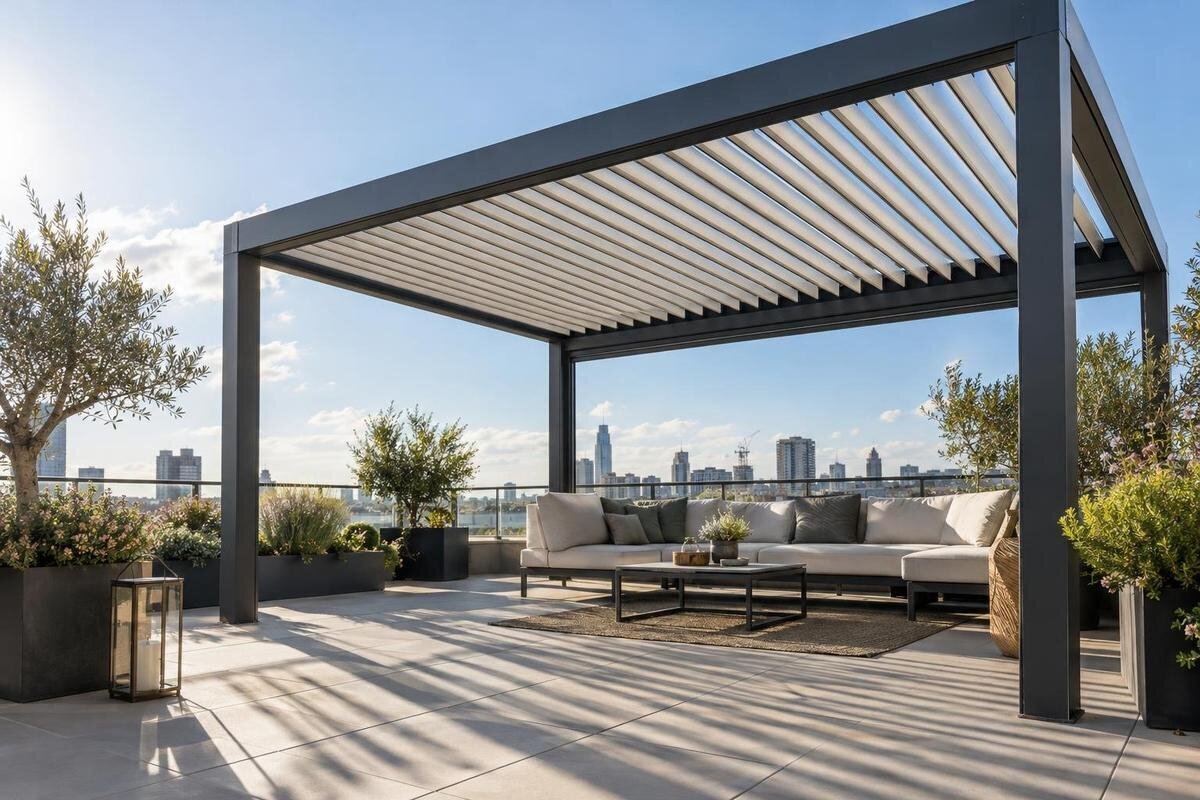
The term bioclimatic is commonly used for a pergola roof with adjustable louvres: changing their angle can alter the balance between shade, daylight and airflow. That describes a general approach, not the performance of a particular model. The label alone does not say whether the blades tilt, slide or retract, how much they move, or whether the mechanism is manual or powered. When considering the bioclimatic pergola listing, look for a written description of the roof movement rather than treating the product name as a specification. If the page gives only a short title or photograph, ask for details of the exact version.
Check whether the blades move continuously or between set positions, whether the whole roof moves together, and how the mechanism is operated. A diagram may show the parts without explaining the available movement or operating limits. Ask for those details in writing, especially if you expect to adjust the roof during the day. The product information should also make clear which roof components are included in the version being quoted. Keep the answers with the model or configuration name: a general description of a product family may not cover every option. It is also useful to ask whether the roof can be left partly open and what position the maker recommends when it is not in use. That separates the practical operating information from marketing language about comfort or flexibility.
Louvre movement and controls in daily use
Think about how you will actually adjust the roof. If you expect to change the louvre angle often, check where the controls sit, how they can be reached and whether one control operates the full roof or separate sections. A listing may describe manual or powered operation, but do not assume either from the category name. Ask what mechanism is supplied and whether a handle, switch, remote or other control is part of the order. Where possible, request a clear explanation or demonstration of how the chosen version works.
For a powered system, establish what electrical provision is needed and ask a qualified installer to assess the work. Do not treat a motor as a simple plug-in extra unless the product information says so. Ask whether a manual override or other procedure for a power interruption is documented, and what support is available if the mechanism needs attention. If an app, rain sensor or automatic control is mentioned, verify that it applies to the exact model and whether it is included or specified separately. Compare the full control arrangement, not just the word motorised. Consider who will normally use the pergola as well: controls that are straightforward to reach and understand are likely to matter more than extra functions that would remain unused.
Match roof adjustment to light and shade
Before comparing shade claims, observe the area at the times you expect to use it. Note when direct sun reaches seating, doors or windows, and how nearby buildings, trees and fences affect the pattern. Sunlight changes with time and season, so one view at midday is not a complete guide. A simple sketch showing the proposed pergola position and the sun’s path can help you judge whether adjustable roof louvres address your main need or whether another position would work better.
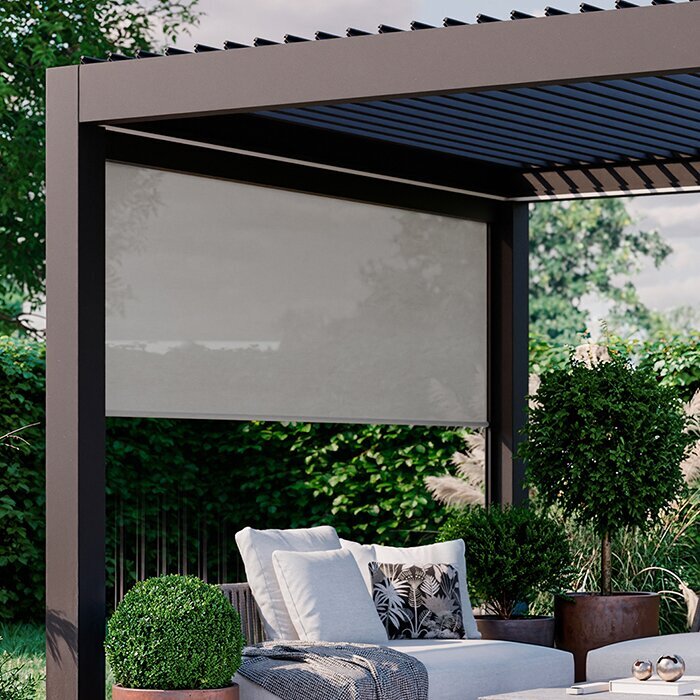
Louvres affect light from above; they cannot on their own screen low-angle sun from the side. Decide whether you want open sky and daylight at some times, shade at others, or a more consistently covered feel, then compare that with the adjustment described for each model. Think about the view from indoors and how the roof may affect nearby plants or furniture. Treat side screens, blinds and other shade additions as separate features unless the order details explicitly include them. If the area is used for meals, working or children’s activities, note when glare becomes troublesome rather than judging shade only by heat. This gives you a clearer basis for deciding whether roof adjustment alone meets the intended use.
Check rainwater management separately
A roof that closes is not, by itself, proof of a particular level of rain protection. Ask what the product information says about rain with the louvres closed, how water is collected and where it is discharged. The route matters for your layout: runoff may affect a doorway, seating area or neighbouring surface. For the bioclimatic pergola page, look for explicit details on rainwater handling; if they are not stated, ask before relying on the pictured roof or a broad weather-related description.
Also check whether the instructions describe limits on operating or leaving the roof in particular conditions. Wind-driven rain, for example, is different from water falling vertically, so do not assume that a closed roof blocks every kind of exposure. Rain sensors, gutters or other drainage components should not be treated as included unless the order information confirms them. If weather protection is a deciding feature, compare specific written statements for the models you are considering and follow the supplied operating guidance. Ask where water will emerge at ground level and consider whether that point can be kept clear. A drainage route that is acceptable on a plan may be inconvenient if it crosses a frequently used path or drains towards a threshold.
Measure the usable footprint
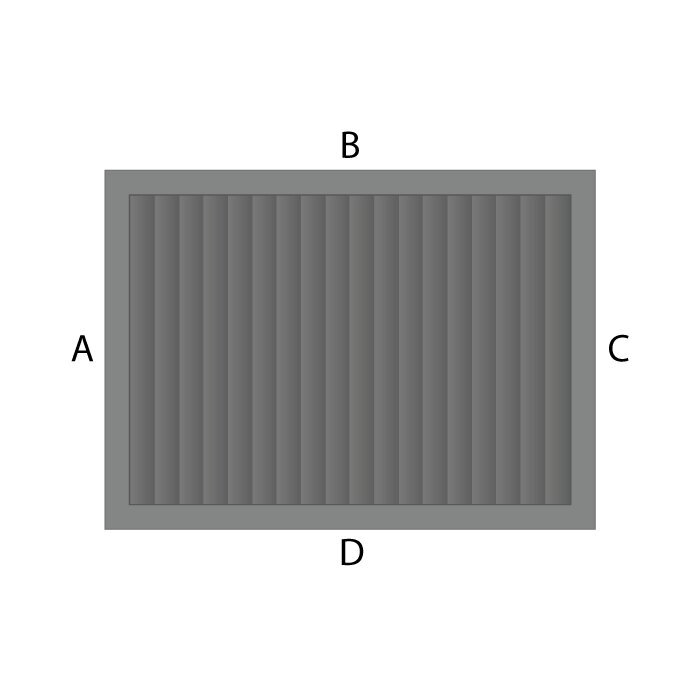
Compare the stated dimensions with the area you can actually use, not just the space you hope to cover. Check whether measurements describe the roof, the outside of the frame or another part of the structure, and note the position of any supports. Before shortlisting the Bloomcabin pergola listing, compare its stated dimensions with a sketch of your site; if a measurement or its meaning is unclear, ask for clarification rather than estimating from an image.
Mark the proposed footprint on the ground and consider how people will move around the area. Leave room for chairs to be pulled out, doors to open and regular paths through the garden to remain usable. Check nearby eaves, drains, fences and planting, as well as the position of furniture you intend to keep under the roof. These practical checks help distinguish a roof outline that looks suitable on a page from a layout that works once the space is in use. Include the space needed to clean, inspect or operate the roof where relevant, rather than planning only for the furniture beneath it. Taking measurements at more than one point can also reveal boundaries or surfaces that are not square.
Confirm how the pergola will be supported
The installation arrangement is a separate choice from the type of roof. A freestanding structure and one intended to attach to a building need different support arrangements, so establish which one the product description specifies. If a listing is described as lean-to, such as the listed lean-to pergola, read the stated attachment requirements rather than assuming that a nearby wall is suitable. The name alone does not establish what fixings are supplied or what the installation involves.
Ask what surface or structure the pergola is designed to be supported by, which parts or fixings are included, and whether site preparation is needed. A qualified professional can assess the proposed location and confirm whether it is suitable for the specified installation; do not rely on a generic product image for that judgement. Also check access to the site and any relevant obstructions before ordering. These questions help you identify practical requirements without trying to calculate loads or devise an installation yourself. For an attached arrangement, discuss the proposed wall and surrounding features with the professional assessing the work. For a freestanding arrangement, make sure the intended support positions can be accommodated before treating the available open area as sufficient.
Compare materials, finish and care requirements
Do not infer the frame or louvre material from a product title, photograph or category. Look for separate, clear descriptions of the frame, roof components and finish. When reading the pergola product page, use only the material and finish details stated for the particular model; if they are missing, ask the retailer for the specification. This matters when comparing two offers, because similar-looking structures may have different stated materials or surface treatments, and those differences should be confirmed rather than guessed.
Ask what routine cleaning and maintenance the manufacturer recommends, which products or methods should be avoided, and whether parts such as louvres or moving components can be obtained if needed. Check whether the instructions mention care for the finish in the conditions where the pergola will be used. Read the warranty terms for the exact version and note any maintenance conditions they state. A detailed care plan is more useful for comparison than a general claim about durability with no supporting product information. Keep the manufacturer’s written care information with your shortlist, particularly if one option requires a routine you would find difficult to carry out. This also makes it easier to compare stated aftercare expectations rather than relying on assumptions from appearance.
Check which accessories are included
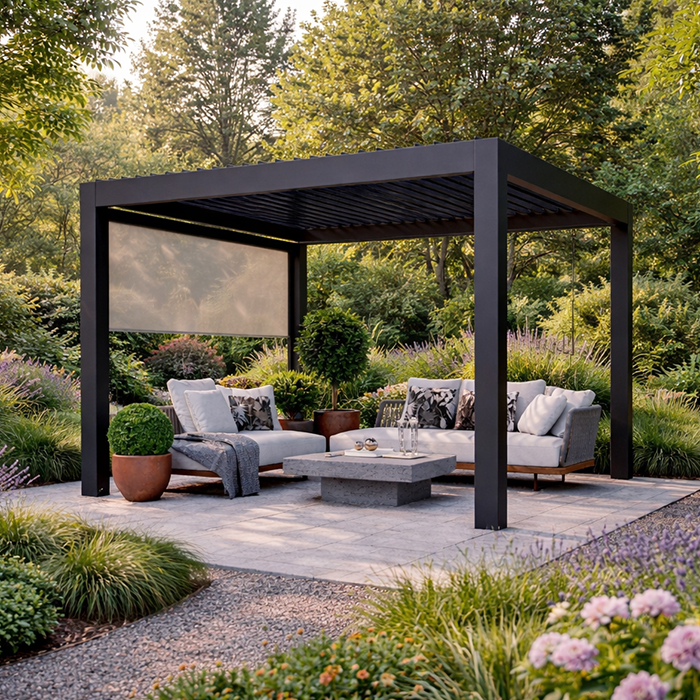
Product images can show optional equipment alongside a pergola, so distinguish what is pictured from what is included in the quoted order. Depending on the product and the retailer, items such as lighting, sensors, remotes, side screens or other controls may be offered separately; their availability is not established by a photograph. On the listed bioclimatic pergola, check the written included-items list and ask the retailer to identify any extra shown in an image that matters to your plan.
Make a short list of the additions you genuinely need, then check whether each is included, available for that model, or separately specified. Confirm compatibility before assigning value to a bundle: an accessory is not useful if it does not work with the chosen configuration. For powered equipment, ask about the relevant supply and installation requirements and get qualified help where needed. Compare like for like, so one offer is not made to look more complete merely because its photographs show more equipment. Separate essential accessories from items that would simply be convenient. You can then compare the base configuration first and assess the value of each addition without allowing a styled image to set the scope of the order.
Compare Black Friday offers like for like
A seasonal banner is only a starting point for checking an offer; no particular live discount or saving should be assumed. If you compare the Bloomcabin pergola page with an advertised Black Friday promotion, verify that the offer refers to the exact model and configuration you have assessed. Record the stated price and any conditions, such as a code, qualifying options or a specified purchase period, only where the seller’s terms provide them. A headline percentage cannot establish that two differently equipped pergolas are equivalent.
Check the final order details for what is included and any separately charged items, including delivery or assembly if applicable. Read the retailer’s stated returns, warranty and cancellation terms before placing an order, and confirm any deadline or eligibility condition from the actual offer rather than assuming one. Save the product description and offer details you relied on, so you can compare the same specification later. If a key feature is absent from the offer page, ask about it instead of letting a time-limited message decide for you. Where more than one configuration is listed, ensure that the price you record is attached to the same roof, controls and accessories in your comparison. A lower figure is not a meaningful saving if it describes a materially different order.
Use a shortlist to make the final choice
A simple comparison table can keep the decision focused. Give each model its own column and record roof movement, controls, rainwater information, dimensions, support arrangement, materials and included accessories. Mark each detail as stated, confirmed in writing or still unclear; do not fill gaps with assumptions. If the lean-to pergola page is on your shortlist, record its installation arrangement separately from the roof mechanism. Lean-to and bioclimatic describe different aspects, so one label does not prove the other.
Decide which features are essential for your intended use and which are preferences. A model with an unclear rainwater arrangement may be unsuitable if documented rain protection is a priority, while a feature you will rarely use may not justify paying more for it. Compare the exact versions and the written offer terms, then resolve any remaining uncertainty before ordering. The best seasonal purchase is the one whose documented roof behaviour, controls and configuration suit your space, not simply the one with the most prominent promotion. Revisit your site sketch alongside the completed table before making the decision. This final check can reveal a mismatch between a feature that seems attractive in isolation and the actual position, access or use of the proposed pergola.
Frequently asked questions
Does closing the louvres guarantee a watertight pergola?
No. The bioclimatic label and a closed roof position do not, by themselves, establish how much rain protection a particular model provides. Ask what the product documentation says about rain, drainage and water discharge. If protection from rain is important, get the relevant details for the exact model in writing rather than relying on a photograph or general description.
Which feature matters most for a sunny seating area?
Begin with the direction and timing of the sun where the pergola will stand, then compare the roof movement and coverage described for each model. Low-angle sun can come from the side, which a roof alone may not screen. Consider side shade only if you need it, and check whether any screens or blinds are available and included.
Is a motorised louvre roof worth the extra cost?
That depends on how often you expect to adjust the roof and whether the controls and power arrangements suit the site. Confirm what the quoted version includes, what installation requires and whether any manual operation during a power interruption is documented. Compare those details with the convenience you expect rather than assuming that motorised operation is automatically better.
Does Black Friday guarantee the lowest price?
No. A seasonal promotion does not, by itself, establish that a price is the lowest available or that a particular model is discounted. Compare the exact model and configuration, read any offer conditions and check the final order details. No specific live discount or saving is assumed in this guide.
Can a lean-to pergola also be bioclimatic?
The terms describe different aspects: lean-to refers to an installation arrangement, while bioclimatic usually refers to an adjustable-louvre roof. One label does not confirm the other. Check the product description for both the roof mechanism and the support or attachment requirements before treating two listings as comparable.
A sound choice comes from matching the louvre mechanism and controls to the way you will use the space, then checking that the supporting details are clear for the exact model. Compare any Black Friday offer only after you know what its configuration includes and what its terms say. If an essential feature remains undocumented, an attractive promotion cannot resolve that uncertainty.
