
How to Buy a Pergola for a Windy Location
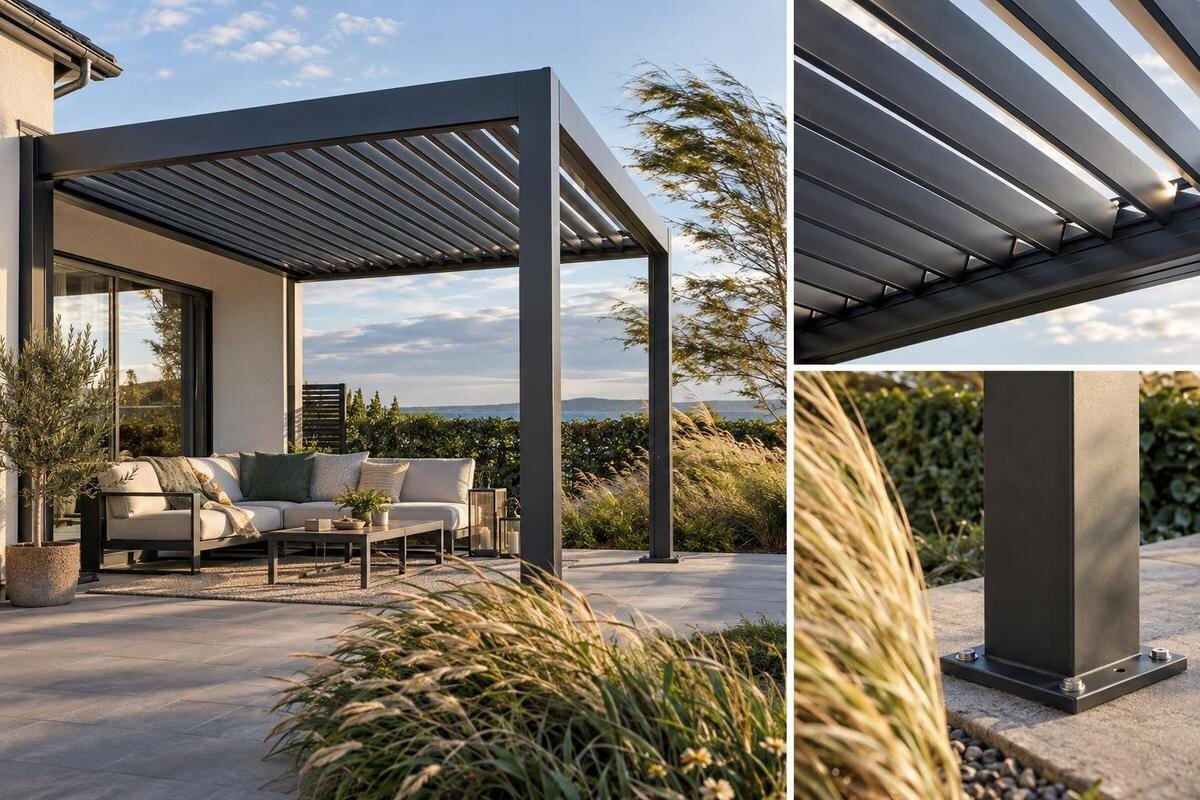
Pergola buying guide
Buying a pergola for a windy location calls for more than a sturdy-looking frame. The choice depends on the exposure of the exact spot, the manufacturer’s guidance for the complete design and the fixing method suited to the site. Use those points to compare options before ordering, rather than treating appearance or a sheltered-looking corner as proof of suitability.
Assess wind exposure at the exact position
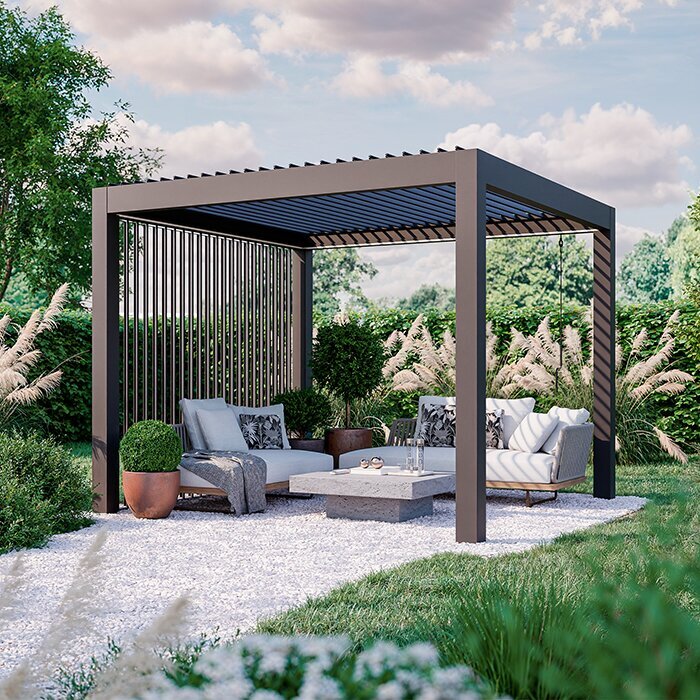
Before comparing frames, work out what ‘windy’ means at the intended spot. A garden can feel calm beside the back door yet be exposed across an open lawn; walls, outbuildings, fences or gaps between buildings may redirect airflow and create gusts. Note which directions bring the strongest conditions, whether they recur or are occasional, and whether the proposed position is open on several sides. Include the full planned footprint, since a sheltered-looking corner may expose one edge differently from the centre of the garden. Do not base a purchase on one calm afternoon or a broad description of the neighbourhood. Describe the conditions where the pergola will actually stand.
Observe the precise position at more than one time, and ask someone familiar with the garden about seasonal patterns if you can. These observations help explain the site to a seller or installer; they do not establish a safe wind limit. Record nearby buildings, fences and large trees rather than assuming an obstacle creates dependable shelter. Note whether gusts tend to arrive from one direction or change around the site, and what remains uncertain: ‘usually sheltered’ can hide short, strong gusts. If exposure is difficult to judge, a qualified installer’s site visit may be more useful than choosing a style and trying to make an uncertain corner work.
Ask for wind-performance information in writing
Look for written wind-performance guidance from the manufacturer, not a general description such as ‘robust’ or ‘built for outdoor use’. Ask whether the documentation gives a wind limit or other performance information, what the figure describes, and how it was established. A number is difficult to use unless its units, conditions and coverage are clear: it might refer to the complete structure, the frame alone or one roof position. Check that guidance applies to the exact model and configuration you plan to buy, not a similar-looking version. For a candidate such as the Bloomcabin pergola page, request the relevant product document before comparing it with alternatives. A supplier’s summary is useful only if you can trace it to the information it describes.
Read that information alongside the assembly and operating instructions. It may depend on specified fixings, a particular substrate, the installed position or a required roof and screen setting. Ask the seller to point out those conditions and whether the manufacturer has advice for exposed gardens when no formal wind rating is supplied. Also establish when the stated guidance no longer applies, such as after adding an unapproved component or changing the installation. A product listing identifies an item, but an attractive image or short description cannot resolve these questions. Get unclear limits or conditions clarified in writing before ordering, rather than borrowing assumptions from another pergola.
Treat the fixing method as part of the pergola
Wind performance depends on the structure being secured as specified; frame details alone cannot show whether the proposed site is suitable. Ground and building surfaces vary, so do not assume that soil, paving, a deck, a low wall or an existing slab provides an appropriate fixing point. Find out what anchoring arrangement the manufacturer specifies, whether it is included and what substrate it is intended for. Check whether the fixings must be selected separately or whether any site preparation is required. The seller may not be able to assess your base, so have a qualified installer check the actual surface and location before purchase. A candidate such as a pergola in the catalogue is only comparable once its fixing requirements are clear.
Make responsibility explicit in the quotation. It should say who checks the surface, supplies any specified fixings, carries out the installation and confirms that the chosen arrangement follows the product instructions. If an installer proposes changing the base or using different hardware, get confirmation that the manufacturer allows it and that the installer accepts responsibility for that choice. Do not treat generic anchors or a standard installation price as proof that the work suits the site. Written answers give you a useful basis for comparing quotes and reduce the chance of discovering after delivery that extra groundwork or a different fixing method is needed.
Check how the roof must be managed in windy weather
Roof design is a buying question, not a shortcut to a wind rating. A fixed cover, louvred roof or retractable canopy can have different operating instructions, so compare information for the exact design. If the pergola has adjustable or removable parts, ask whether the manufacturer specifies a particular position or restriction in windy conditions, and whether its stated performance applies in that position. Do not assume an open roof necessarily presents less risk, or a closed roof more: the answer depends on the product and its instructions. If considering this pergola listing, look for information about the relevant roof configuration rather than relying on the name or photograph.
Check how the whole assembly is meant to be managed, rather than focusing on one moving component. Ask whether locks, joints, guides or other parts need to be set or secured in a particular way, and whether any should not be operated beyond stated conditions. These are questions for the manufacturer’s instructions, not rules to improvise. If the manual says a feature must be positioned or left alone in wind, factor that into everyday use before buying. Consider how often you expect to adjust the roof and whether you can follow the stated guidance consistently. A design that does not fit how you plan to use the garden may be a poor practical choice.
Compare the complete structure, not just the frame material
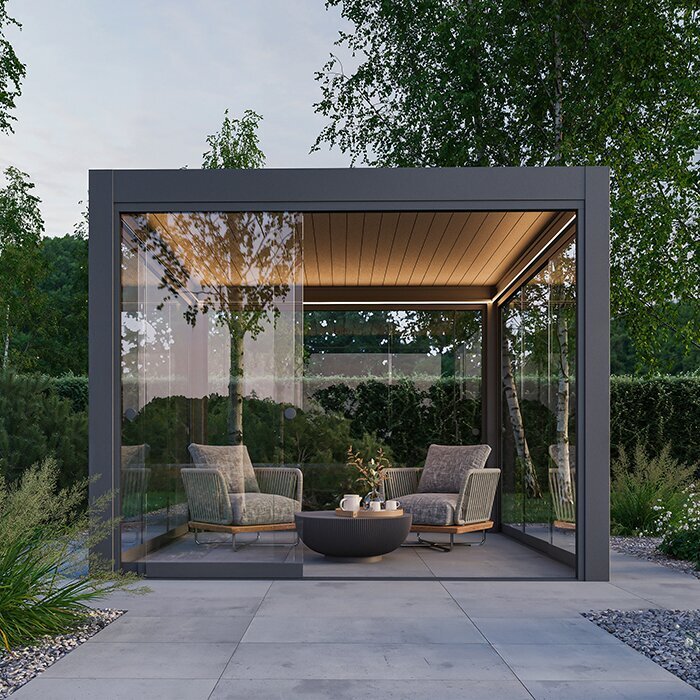
Material labels are a poor shortcut when judging wind suitability. A metal frame, timber finish or thick-looking post does not by itself show how the complete structure performs. Ask for the exact material and member information, along with details of the joints, connectors, bracing and fixings provided for the design. These elements work together, so do not infer strength from a photograph or compare products by material name alone. For this Bloomcabin option, check its own specification and ask the supplier to explain any terms you cannot interpret. Use information for the exact product and configuration; data for a different model is not a substitute, even if the products look similar.
Consider maintenance as well as the initial specification. Find out what the manufacturer says about checking the frame, connections, finish and moving parts over time, and what signs require attention or professional service. Wind exposure makes the condition of the complete assembly relevant, but there is no inspection interval to guess: follow the product instructions and the installer’s advice for the structure. Check whether servicing information or replacement parts are available, and consider whether you can arrange the recommended care. A pergola that needs upkeep you cannot realistically manage may not be the right long-term purchase, whatever its material.
Plan the footprint around the site and its airflow
Use the manufacturer’s drawing or dimension information to plan the exact footprint, not just a rough rectangle in the garden. Allow room for the structure as specified, access around posts, and any doors, paths or furniture you intend to keep usable. Then consider how the proposed position relates to walls, fences and corners: these can alter airflow rather than provide predictable shelter. Do not move a candidate into an apparently protected gap without checking whether that placement changes the relevant guidance. Reviewing the product listing alongside its dimensions and installation documents lets you compare the same footprint and conditions, rather than two pictures that may show different settings.
Establish whether the design is intended to stand independently or attach to a building, and buy only in the configuration described by the manufacturer. If a wall connection is part of the proposal, its suitability depends on the actual building surface and fixing details; a house wall should not be treated as automatic support or wind shelter. Ask a qualified installer to assess the attachment and position together, including the exposed sides and nearby obstacles. Keep that assessment tied to the precise product and layout you plan to order. A change from freestanding to attached, or a move to another corner, calls for a fresh check rather than an assumption that the conditions are equivalent.
Include screens and other accessories in the assessment
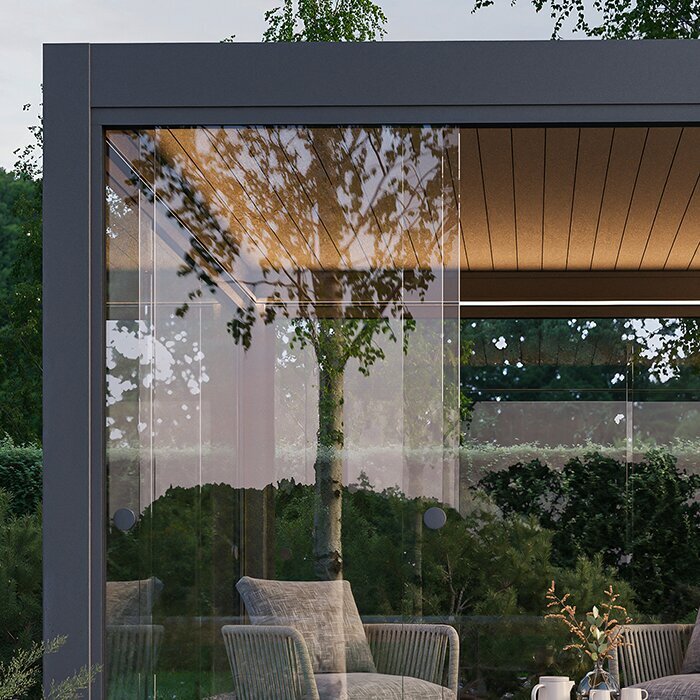
Side screens, curtains, privacy panels and other add-ons can change how wind reaches a pergola. Do not assume that guidance for an open-sided arrangement remains valid once a panel is fitted, or that a screen sold separately suits every model. Ask whether the manufacturer approves the exact accessory and combination, and whether it changes any wind limits or setup instructions. If the listed pergola is on your shortlist, compare information for the configuration you actually want to use, not just a bare-frame photograph. What matters is whether the complete arrangement is supported by the available guidance, not whether an accessory looks easy to add.
Make a separate note of each item you plan to attach, including anything intended to be temporary. Check how it is secured, whether the manufacturer specifies when it must be removed or repositioned, and whether those instructions are practical for you to follow. Do not add homemade panels, coverings or fasteners on the assumption that they will improve shelter; an unapproved change can leave you without clear guidance for the resulting arrangement. Include accessory compatibility, care and any extra installation work in the comparison. If information is not available for a preferred combination, ask the manufacturer or compare a simpler arrangement before placing the order.
Make assembly and delivery part of the buying decision
Arrange a site-specific conversation with the installer before committing to a design. Ask them to consider the proposed spot, the base or attachment surface, the product’s fixing instructions and the wind information together. The quote should describe the intended method and what is included; a general claim that a team installs pergolas does not show that this exposed site has been assessed. Ask how assembly will be managed if conditions become unsuitable on the planned day, since a partly assembled structure is not in its final state. Before ordering the Bloomcabin pergola on your shortlist, confirm that the proposed installer accepts the manufacturer’s requirements and can explain the work they have allowed for.
Delivery and access belong in the same conversation. Check that the planned route, storage space and work area allow the supplier and installer to handle the order without moving it to a more exposed position or changing the layout at the last minute. Clarify whether the quote assumes a prepared base, unobstructed access or additional work, and who will arrange anything excluded. If a site visit changes the proposed position, have the wind and fixing advice reviewed against the new location. Do not infer delivery or installation arrangements from a product page; establish the actual scope and timing with the seller and installer before finalising the order.
Compare the full quote and the written terms
Compare like-for-like written quotes, not just product prices. Separate the structure from delivery, specified fixings, site preparation, installation and any screens or roof accessories. Some items may be included and others quoted separately, so ask rather than assume. The quote should identify the model and chosen configuration, the work proposed at your site and any conditions that could lead to extra costs. Add another listed pergola to your comparison only when you have enough product information to match its installation scope. That way, a lower headline amount is less likely to hide a different level of site work or a missing component.
Read the seller’s warranty and the manufacturer’s care terms before paying. Ask specifically whether the written terms address wind-related damage, required maintenance, accessories and the fixing arrangement, and where responsibility sits if a separate contractor installs the pergola. Do not assume a warranty covers every weather event or that a particular wind claim has been tested; rely on the actual wording and request clarification where it is ambiguous. Keep the product identification, guidance, installation agreement and answers together. That record will help you follow the stated requirements and raise a clear question if the model, accessories or proposed installation change before delivery.
Set a clear threshold before placing the order
Bring the comparison down to questions you can answer from documents. Is the proposed location described accurately? Does the manufacturer’s wind guidance cover the exact model and planned roof and accessory arrangement? Are the required fixings suitable for the site, with a qualified installer willing to carry out the specified work? Is the full price and scope clear? If an answer is missing, mark it as unresolved rather than letting a good-looking photograph or a sales adjective settle it. This written comparison makes options easier to distinguish and shows exactly what you still need to establish before placing an order.
Before proceeding, you should be able to match the product instructions to the proposed installation, understand any wind-related operating conditions and obtain agreement on the site-specific fixing plan. If the manufacturer cannot supply relevant guidance, or no qualified installer can confirm a suitable approach, pause and compare a better-documented candidate instead of buying on hope. Another conversation may be needed, but uncertainty about the product or installation is not solved by choosing a heavier-looking frame. Make sure the model, configuration, accessories, delivery and installation scope in the order all refer to the same plan.
Frequently asked questions
What should I check first when buying a pergola for a windy garden?
Start with the exact position and its exposure, then find written wind guidance for the complete pergola configuration. Check that the specified fixing method suits the site and that a qualified installer is willing to assess and install it as described.
Does a heavier pergola cope better with wind?
Weight alone does not show how a pergola will perform. The design, connections, fixing method and site all matter, so compare the manufacturer’s information for the complete structure rather than judging by appearance or material name.
Is a louvred roof safer than a fixed roof in windy conditions?
There is no universal answer. Follow the manufacturer’s guidance for the specific design, including any instructions about roof position. Do not assume that leaving a roof open, shut or angled is safer without product-specific information.
Can I add side screens to a pergola in an exposed garden?
Only if the manufacturer confirms that the screens suit the pergola and explains any effect on its wind guidance or operating instructions. Check the complete arrangement you plan to use, not just the guidance for the pergola without accessories.
Will a house wall or fence shelter my pergola from wind?
Not necessarily. Walls and fences can change airflow, and a wall should not be treated as a suitable fixing point without assessment. Ask a qualified installer to consider the exact position and attachment, and check that the configuration follows the manufacturer’s instructions.
A suitable purchase is one where the wind guidance, intended position and installation plan agree. A robust appearance or a corner that seems sheltered is not enough to establish that. Compare the exact configuration and accessories, the written requirements and the installer’s site-specific proposal. If the manufacturer or installer cannot clarify how the product is meant to be used and secured in your garden, pause before ordering and consider a better-documented option.
