
Can You Use a Pergola in Winter? UK Snow, Wind & Ice Guide | Bloomcabin
Short answer
Yes — but winter use should be guided by the exact pergola model and the actual weather, not by summer habits.
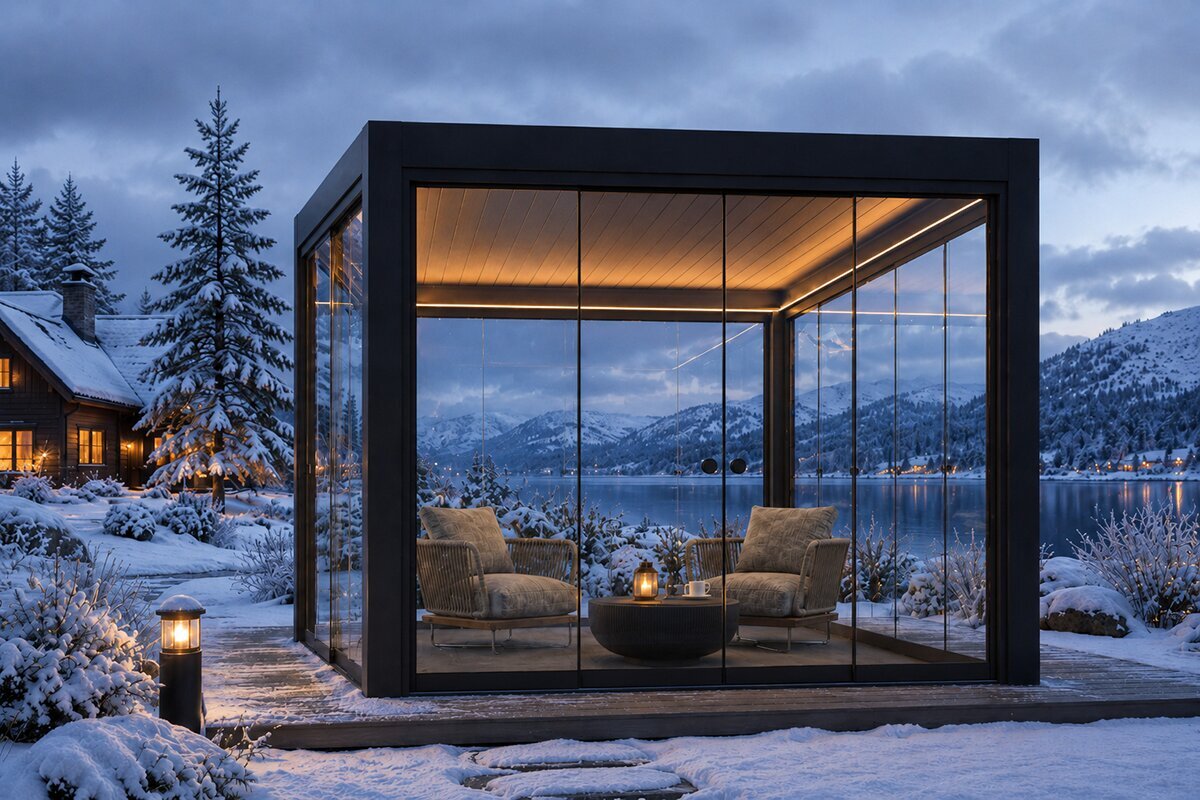
A sheltered pergola can be genuinely useful through much of a UK winter. On bright dry days, glass or other side protection can take the edge off cold wind and make the patio feel far more comfortable than a completely open terrace.
British winter weather is often less about long periods of deep snow and more about wind, rain, damp air and temperatures repeatedly crossing the freezing point. That makes drainage, ice and frozen moving parts particularly important.
Where snow does occur, its condition still matters. Wet snow can be far heavier than light powder, and drifting can concentrate it unevenly. Do not rely on generic snow-depth claims taken from unrelated pergola systems.
With a motorised louvred roof, do not attempt to operate components that are frozen, iced or obstructed. Unusual resistance is a reason to stop and inspect, not to use more motor force.
British winter operation
Think wet, windy and changeable — then add snow and ice when they actually occur.
The UK often moves from rain to a brief freeze and back to rain within a short period. Water that drains normally during the afternoon can become ice in a track or on a step overnight.
Coastal gardens may see relatively little snow but significant winter wind. Inland and elevated locations can experience more regular freezing and occasional heavier snow.
Before moving any roof or sliding system during freezing weather, check that no ice, snow, branch or debris is physically blocking the mechanism.
The exact roof position and snow procedure should come from the model documentation. Winter is not the season for improvising with a moving roof.
Snow on a pergola
UK snow may be occasional in many places, but when it arrives it still needs model-specific treatment.
Snow depth alone is a poor guide to load. A shallow layer of wet snow can weigh substantially more than a deeper layer of dry powder.
Wind can create drifts against a house wall, at roof edges or on the leeward side. The snow on the pergola may therefore be uneven even when the garden looks evenly covered.
Do not assume that changing the louvre angle is automatically the right response to snowfall. Follow the instructions for the exact pergola model.
If snow or ice bridges between moving louvres, do not use the motor to break them apart. The mechanism should move freely before operation.
Snow removal should also be conservative. Avoid hard tools that can scratch coatings, dent profiles or damage seals, and never put yourself in an unsafe position on icy surfaces.
As temperatures rise, accumulated snow becomes meltwater. Clear roof channels and outlets are therefore as important as the snow itself.
Snow cleared from the patio should not be piled against sliding-glass tracks or post bases. It can melt during the day and refreeze exactly where moving components need to remain free.
On higher ground in Scotland, Wales, the Pennines or other exposed regions, snow and wind deserve more attention at the purchasing and foundation stage than they might in a mild lowland garden.
Ice + freezing rain
Freeze-thaw cycles are one of the most relevant UK winter conditions for moving pergola components.
A thin frost can bond louvre edges or freeze water inside a lower glass track. The amount of ice may look insignificant while still preventing normal movement.
If a motor or panel suddenly feels different from normal, stop. Repeated operation against resistance can turn a small ice problem into unnecessary mechanical stress.
Freezing rain can coat joints and edges even when the centre of a louvre looks clear. A visual check should include the actual moving connections, not just the large visible surfaces.
Water discharge is another ice issue. An outlet that is perfectly acceptable in rain can become hazardous if it repeatedly freezes across a path or doorstep.
Waiting for a frozen mechanism to thaw fully is often the simplest and safest winter action.
Louvred roof in winter
A bioclimatic roof remains adjustable, but winter operation demands a condition check first.
During summer, changing the louvre position several times a day can be routine. During freezing weather, inspect the roof before each operation if ice or snow is possible.
The intended winter position of the louvres depends on the product documentation. Do not copy a rule from another brand or another roof system.
If movement does not begin normally, stop rather than repeatedly restarting the motor.
Keep drainage channels clear through autumn so meltwater does not back up and refreeze in an unintended location.
On a bright winter day, an appropriately open roof can allow more light towards the patio and adjacent windows where the product condition permits it.
Winter is one reason to understand the differences between a standard pergola and a bioclimatic model before purchase: adjustability adds flexibility but also requires disciplined use around frost.
Winter wind
In much of the UK, winter wind affects patio comfort more often than snow does.
Coastal exposure, hilltop sites and open new-build estates can experience strong wind even when temperatures are relatively mild.
Glass walls or selected side protection can dramatically improve comfort by reducing wind at seating height.
Those same side walls increase the area exposed to gusts. The final enclosure should therefore be considered as part of the structural and anchoring plan.
Winter storms may exceed the wind conditions under which screens or other movable accessories are intended to remain deployed. Follow the specific usage guidance.
Secure chairs, parasols, planters and portable heaters before severe weather so they cannot become impact hazards.
Often one well-chosen windward glass wall creates more winter value than completely enclosing every side.
Glass walls in winter
Glass can make a British winter patio much more usable without turning it into a conservatory.
Clear glass reduces cold wind and wind-driven rain while keeping daylight and the garden view.
Sliding glass is especially useful in changeable weather. Close the exposed side on a cold morning and open it later if winter sun makes the sheltered area warm.
Fixed glass works well on a side that consistently receives the prevailing wind and never needs to become a main route through the pergola.
Condensation on cold glass is normal when damp air is present. Ventilation helps the surfaces dry and keeps the space feeling like an outdoor room.
Slush and water in the bottom track can freeze. Do not force sliding panels through frozen debris.
If using any outdoor heater, follow the heater manufacturer's instructions for clearances, ventilation and permitted locations. Glass enclosure does not make the pergola an indoor environment.
UK winter differences
Cornwall, London, the Pennines and Scotland experience very different winter pergola conditions.
The British Isles have a relatively small geographic footprint but large differences in wind exposure, rainfall, elevation and snow frequency.
The most useful winter strategy addresses the dominant local issue rather than planning for a fictional national average.
South-west & exposed coasts Wind and driving rain are often the main winter issues. Good side protection and secure anchoring matter more than frequent deep snow.
South-east & London Freeze-thaw and damp conditions can be more relevant than prolonged snow; sheltered gardens may also warm quickly in winter sun.
Wales & western uplands High rainfall, wind and elevation can make drainage, exposure and occasional significant snow important.
Northern England Colder periods and upland snow make model-specific winter operation more relevant.
Scotland Conditions range from mild coastal climates to severe inland and mountain weather; local exposure should drive the plan.
Foundation + frost
A winter-ready pergola relies on stable support and drainage below the visible structure.
Paving slabs, decking or porcelain tiles are not automatically the structural foundation for pergola posts.
Sliding-glass tracks reveal small movements quickly because they need to remain straight over a long distance.
Older patios may already have local settlement that is harmless for walking but relevant for a precision track.
Where frost-sensitive soils or poor drainage exist, the support solution should be appropriate to the actual site.
On roof terraces or patios above occupied space, waterproofing and structural anchoring must be considered together.
For new patios, coordinate post foundations, drainage, electrical routes and glass tracks before the final surface is laid.
Drainage + refreezing
British winter water can move freely at lunchtime and become ice by morning.
Keep roof channels and outlets clear of leaves before the first cold spell.
Do not discharge meltwater across the main route between the house and garden, especially near steps and low thresholds.
Snow or slush piled beside a track can become a recurring source of meltwater and refreezing.
After a hard freeze, check whether surrounding paving has changed enough to redirect water towards the pergola.
Spring is a good time to watch one heavy rain event and confirm the entire winter drainage path still works as intended.
Spring inspection
When freezing weather has passed, run a calm, deliberate return-to-season check.
Inspect roof channels, visible louvre edges, sliding tracks, surrounding paving and the areas around post bases.
Move sliding glass through its normal range only when the track is free and conditions are suitable.
Operate the roof only when there is no frozen obstruction and normal movement is expected.
If a panel binds, correct dirt or alignment rather than simply pushing harder.
Check that new plant growth, furniture or stored winter items do not interfere with moving components.
Attached or freestanding
An attached pergola and a freestanding pergola experience winter water and wind differently.
An attached pergola gains shelter from the house but also places drainage, snow drift and ice closer to doors and the building fabric.
A freestanding pergola may be more exposed to wind but gives greater freedom to direct water away from entrances.
Look at where snow is normally piled during clearing and whether that location conflicts with glass tracks or posts.
Winter walking routes matter. The pergola should not create a drainage point that freezes exactly where people step out of the house.
If choosing between attached and freestanding layouts, include winter access and water management in the decision rather than looking only at summer furniture.
Typical British winter scenarios
A wet January morning and a snowy upland weekend require different responses.
In a mild southern garden, the most common winter sequence may be overnight frost followed by rain. The pergola is not under significant snow, but the sliding track can still freeze because water sat in it after the previous shower. In this case, track cleanliness and drainage matter more than snow removal.
On an exposed coastal site, the critical issue may be a winter gale. Side glass improves day-to-day comfort, but before severe wind the entire patio environment should be reviewed: movable accessories, furniture and anything that could strike the glazing.
In northern or elevated areas, an overnight snowfall can be followed by daytime thaw. The owner needs to think about both the snow condition and the meltwater path rather than treating them as separate events.
A sunny winter afternoon in a sheltered garden may make a glazed pergola surprisingly warm. Sliding glass should remain usable as a ventilation tool, not be treated as a permanent winter wall.
If the property is left empty for periods, clean drains, secure loose items and leave the pergola in the model-approved winter configuration before departure rather than relying on remote operation without seeing the actual roof condition.
Another common British pattern is a cold, clear morning after several wet days. The roof itself may be clear, yet water left in the lower glass track has frozen. The lesson is that winter inspection must include the floor-level mechanisms as well as the roof.
If the pergola sits beside a lawn that becomes waterlogged in winter, the area immediately around the posts should also be watched. Poor surrounding drainage can alter paving levels over time even when the pergola's own roof drainage is working correctly.
Finally, remember that winter care is not a one-off event in November. A quick check after the first hard frost, the first major storm and the first snow gives much more useful information about the actual patio than a generic seasonal checklist alone. in practice.
Winter checklist
Simple winter habits protect moving systems and make the patio safer.
01. Clean drainage before cold weather Remove leaves and debris from roof channels.
02. Keep sliding tracks clear Do not let slush and grit freeze in the mechanism.
03. Never force frozen louvres Stop if the roof does not move normally.
04. Treat snow by model guidance Avoid generic snow-depth rules.
05. Watch for refreezing at outlets Keep paths and thresholds safe.
06. Secure loose furniture before storms Prevent impact damage.
07. Inspect after hard freeze-thaw cycles Check tracks, paving and drainage.
08. Test full function in spring Only after snow and ice have gone.
Bloomcabin United Kingdom / continue planning
Winter comfort begins with the right pergola type, location and foundation.
These Bloomcabin UK pages help with roof type, dimensions and placement.
Adjustable roof Bioclimatic Aluminium Pergola →
Freestanding Bloomcabin Pergola →
Wall-mounted Lean-To Pergola →
Dimensions Aluminium Pergola Dimensions →
Placement Wall-Mounted or Freestanding Pergola →
FAQ
Winter pergola questions in the UK
Can a pergola stay outside all winter?
Yes, as an outdoor structure, but snow, ice and operating limits depend on the exact model and site.
Can I use it when snow falls?
Only within the model instructions and actual snow conditions; do not force moving parts.
Can frozen louvres be moved by the motor?
No. If they are frozen or obstructed, stop.
Are glass walls useful in winter?
Yes, particularly for wind and driving rain, but they do not create an insulated room.
What is the biggest UK winter issue?
Often drainage, damp freeze-thaw conditions and wind rather than long-lasting deep snow.
Can sliding glass freeze?
Yes, if water or slush freezes in the track; clear it before operation.
Can I use a heater?
Only according to the heater manufacturer's outdoor-use and ventilation requirements.
What should I check in spring?
Drainage, tracks, paving and normal movement of all movable components.
Use winter intelligently
Yes, a pergola can be used through a British winter — if wet weather, frost, wind and occasional snow are treated properly.
The best winter result comes from clean drainage, stable foundations, appropriate wind protection and disciplined operation of moving components. The pergola remains an outdoor space, but it can stay valuable well beyond summer.
View Bioclimatic PergolaUnited Kingdom: General planning guidance only, with no structural load figures. Snow, wind, ice, foundation and operating limits vary by pergola model and property. Follow the exact Bloomcabin model documentation and applicable local requirements.
