
A Fixed Glass Roof or a Louvred Pergola Roof?
Pergola roof guide
When choosing between a fixed glass roof and a louvred pergola roof, the key question is what you want the space above the seating to do. Glass gives a permanent glazed cover while allowing daylight through; adjustable louvres let you alter the amount of sun and create an opening for air. Those differences shape the patio at different times of day, but the labels do not tell you everything about heat, glare or rain. Glass specifications affect light, and louvre geometry and drainage affect weather protection. This guide compares the day-to-day trade-offs and sets out the details to request, so you can judge the roof by how you use the terrace rather than by its name alone.
01
How the two roof types work
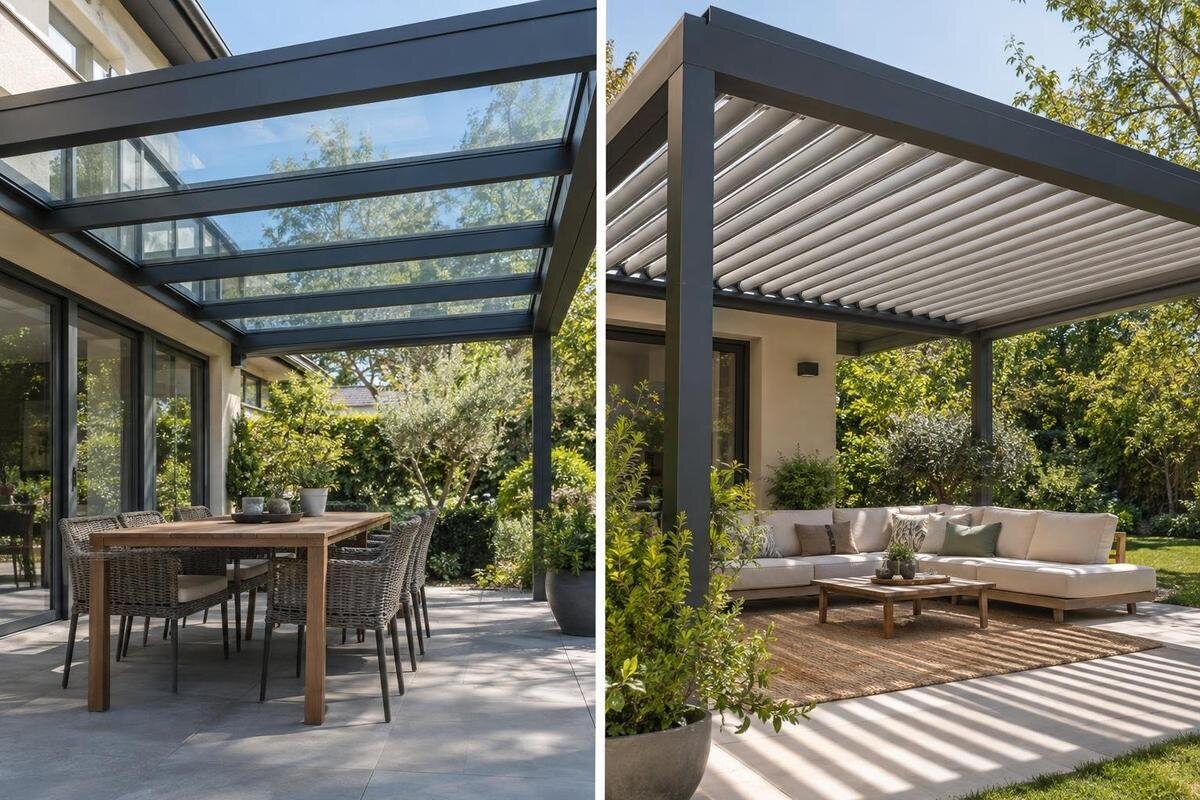
A fixed glass pergola roof is a stationary glazed plane. It provides a permanent overhead surface that lets visible light through, but it does not open to create a roof-level gap for ventilation. Fixed describes how the roof operates; it does not say whether the glass is clear, tinted or coated, how much light passes through, or whether the sides are open. Those points depend on the exact glazing and the rest of the structure. A transparent roof can feel visually open while still acting as a solid cover above the space. It is not the same as an open pergola frame, where the sky is unobstructed and rain falls through. That distinction matters when weighing daylight against shade and airflow.
An adjustable louvred roof uses a series of blades that turn to different angles. Changing their angle alters the openings between them, giving you a way to vary overhead sun and airflow rather than leaving the roof in one fixed state. When closed, the blades may form a more continuous cover, but their fit and the route taken by rainwater vary by design. 'Louvred' does not by itself mean that the whole roof retracts, that it is motorised, or that it closes automatically when rain begins. The available positions and adjustment range also depend on the mechanism. The central comparison here is permanent glazing versus adjustable blades, not glass versus an entirely unobstructed sky. A mechanism diagram should show what moves and how much of the roof remains overhead when open.
Daylight beneath glass and louvres
Clear glass keeps some view of the sky and allows daylight to reach the area below when the roof is in place. How bright it feels depends on the pane, its colour or coating, support bars, surface cleanliness and the sun's angle; 'glass roof' is not enough information to predict the result. Reflections and glare can matter above a dining table, while marks from pollen or rain may reduce clarity over time. If preserving light in a room behind the pergola is important, consider the shadow cast by the frame as well as the light passing through the pane. Ask for data on the exact glazing, where available, and check whether stated performance refers to the pane alone or the complete roof.
With louvres, the amount and pattern of light can change as the blades move. Open positions show strips of sky; an angled setting can cast bands of shade, and a closed position generally cuts more direct overhead light than clear glass. The result shifts with blade spacing, orientation and sun height, so a shadow may move across chairs, doors or a window during the day. Think about whether you prefer a glazed view or want to alter the light pattern, rather than judging only from a product photo. When enquiring about the Bloomcabin Pergola, ask which roof configurations are available and request images or drawings of the proposed option. A view from beneath the roof is particularly useful for understanding how much of the sky the frame and roof surface obscure.
02
Shade and glare in direct sun
A clear glass roof does not necessarily provide useful shade. Direct sunlight may still reach the seating area, so an overhead cover can feel bright or warm in strong sun. Tinted or coated panes can alter light transmission and glare, but appearance alone does not show how much they change conditions. Ask for the specification of the exact glass and what it is intended to achieve. If you may want a blind or screen, check whether one is offered for that design, whether it is included, and how it affects daylight, cleaning and rain. Fixed glazing alone does not give you a way to change shade during the afternoon.
Louvres give you more direct control over shade because changing the blade angle changes the route of sunlight into the space. That control is not the same as blackout: low morning or evening sun can enter from the sides, and gaps may leave bright stripes even when the blades are tilted. The useful setting can change through the day, so consider who will adjust the blades and how often. Manual and powered operation are different package details; do not assume either from a roof category. For the Bloomcabin Bioclimatic Aluminum Pergola, confirm the adjustment range and controls for the precise configuration; the model name alone establishes neither. If shade is central to your choice, ask to see a diagram or demonstration of the blade positions.
Ventilation and comfort under the roof
With a fixed glazed roof, air movement depends on the open sides and surrounding space: the roof itself is not a vent. Air can pass through an open-sided pergola, but a house wall, screens, fences or nearby buildings may limit crossflow. Sunlight can warm surfaces beneath the roof, so transparent overhead cover does not guarantee a cool seating area. These effects vary with layout and weather; a short visit on a mild day may not reveal how the patio feels at its hottest hour. If you plan to eat or work beneath the roof, consider airflow at the times you will actually be there and whether side screens will normally be open.
Opening adjustable louvres provides an overhead route for air, although the direction and strength of airflow depend on wind, blade position and the surrounding openings. Closing the roof reduces that route. A wall-mounted layout can affect crossflow because one edge meets the building, and screens may restrict it further. If you are considering the Bloomcabin Lean-To Pergola, ask for a drawing of the proposed roof and side arrangement. Identify which sides will normally remain open and which face a wall or fence. This helps you assess the available airflow without assuming that roof adjustment alone will make a sheltered corner comfortable.

03
Rain management with fixed glass
Rain performance is a design question for both roofs, not a guarantee that follows from the material. On fixed glazing, water runs across the pane towards an edge, gutter or other outlet; pitch, joints between panels, perimeter seals and direction of discharge all affect the route. A roof can keep direct rain off the covered area yet leave its sides open to wind-driven rain. Water spilling beside a door, onto a neighbouring surface or back towards a wall may be as inconvenient as a leak. Ask where rainwater goes in ordinary use and where it goes if the intended outlet is obstructed. Establish whether the stated protection applies only overhead or to the seating area as a whole.
Request a roof drawing that shows the slope, joints, collection channel and discharge point, and ask what cleaning or inspection those parts need. If the pergola meets a house, ask how the wall junction is detailed and have a qualified installer assess the site rather than assuming a standard canopy connection will suit it. When reviewing the regular Bloomcabin pergola listing, first establish whether a glazed roof is offered for your chosen configuration, then request its drainage details. Mark the proposed outlets on a patio plan alongside doors, steps and furniture. That makes it easier to spot an inconvenient discharge point before agreeing the layout, rather than discovering it during the first shower.
Rain management with louvres
On a louvred roof, rain management depends on blade shape, the way blades meet when closed and any channels that carry water away. Some designs route water through integrated channels; other arrangements and limits are possible, so the word 'bioclimatic' does not prove a particular system is watertight. A roof may be intended to manage rain only when the blades are fully closed, while an angled setting naturally leaves openings. Wind can also drive rain through an open side. Ask what the manufacturer means by rain protection, whether it applies to a particular blade position and whether it covers the roof only or the whole patio.
Look for a model-specific drawing or manual explaining how blades close, where water travels, where it exits the frame and what happens if an outlet overflows. Ask how the roof should be operated during rain and whether water remaining on the blades can drip into the seating area when they reopen. When enquiring through the bioclimatic pergola listing, request those details for the exact configuration being offered. If you want to leave cushions or equipment beneath the roof, compare the stated protection with their storage requirements. Shelter suitable for sitting outdoors during a shower is not necessarily suitable for leaving moisture-sensitive belongings outside unattended.
04
Cleaning and ongoing maintenance
Dust, pollen, leaves and water marks can be conspicuous on overhead glass, particularly when you look up from a table. The practical issue is often not simply how to clean the surface but how to reach it safely. Do not assume a glazed roof is designed to be walked on. Ask how access is intended, which cleaning methods are approved, whether seals need periodic inspection and who clears the gutters. Nearby trees or awkward access can make the routine more demanding, so include the task in your comparison rather than treating maintenance as an afterthought. Ask whether the service information explains repair or replacement of an individual pane.
Louvres introduce moving joints, blade edges and, on some designs, drainage channels that may need attention; a fixed glass roof has its own seals, panel joints and water routes. Neither system is automatically maintenance-free. For the regular pergola model from Bloomcabin, request the care instructions for the roof option you are considering. Check which tasks an owner can carry out and which require a service visit, particularly where parts are difficult to reach. Also ask how wear or damage is identified and whether individual roof components can be replaced. Follow the maker's guidance on cleaning products or lubrication rather than applying a general routine to every material.
The effect on the house and terrace
Consider the roof from inside the house as well as from the patio. A glazed cover can preserve some view of the sky, but the frame and its shadow may change daylight reaching nearby windows. With louvres, opening or angling the blades changes the pattern on the terrace and potentially near the adjoining room. Place the dining table, doorways and frequently used seating on a simple plan; then think about where the sun falls at breakfast, in the afternoon and in the evening. This check is more useful than deciding from one photograph, because photographs rarely show your particular orientation, glazing or neighbouring shade. Include the normal route between the house and seating too.
At a wall junction, access to the roof and the way rain is directed deserve specific attention; a freestanding pergola has different interfaces. Confirm how the exact assembly is intended to sit against the building, including any flashing or sealing detail, and ask a qualified installer to assess the wall and site. If you are considering the wall-mounted Bloomcabin model, include nearby windows, doors and existing rainwater fittings in the information you provide. Their positions may affect the proposed connection or access for maintenance. Keep mounting style and roof operation as separate choices: attachment to a wall does not establish whether the roof is fixed or adjustable.

05
What to compare in product specifications
Compare like with like: the same covered area, side arrangements and purpose. Ask each supplier for a roof plan and section, the pane or blade specification, the usable adjustment range, the operating method and any screen or blind options. Check what is included in the quoted package rather than assuming motors, sensors, controls, lighting or side panels come as standard. Note the height and support positions as well as the surface area; these affect the view, access and how the space feels, even when two options cover a similar patch of paving. If possible, compare drawings at the same scale so proportions are not hidden by different brochure layouts.
Then put the evidence side by side: available daylight or solar data, the rain-management drawing, operating limits, care instructions and any site-specific installation conditions. The supplied catalogue information identifies the models but does not establish their roof materials, mechanisms or weather performance. Use Bloomcabin's bioclimatic model page to identify the product you are enquiring about, then request the current manual or written specification for the selected version. Ask a qualified designer or installer to confirm that the specified glazing and supports are suitable for the overhead application and site. If a supplier uses a term such as 'weatherproof', ask what conditions it covers and record the answer in writing.
Which roof suits your priorities?
Fixed glass is the more natural fit when your priority is a permanent glazed cover and daylight, and you do not need the roof itself to open for ventilation. It may suit a seating area where a consistent overhead view matters more than changing shade, provided the glazing, glare, heat, structure, cleaning access and rain route meet your requirements. Adjustable louvres are worth considering when you value variable shade and an overhead opening for airflow. They ask more of the user: you need to choose positions and understand the closed setting, controls and maintenance. Neither preference settles whether a particular model manages rain well; that comes from its specification. The right choice is the one whose limits match your normal use.
For a breakfast table beside a room that already receives little daylight, preserving light may matter more than changing the roof throughout the day. Fixed glass could meet that preference if its light transmission and summer conditions are acceptable. For a terrace used from lunch until evening, adjustable shade may be more valuable because the sun moves across the seating area. Low sunlight entering from the sides still needs separate consideration. A household that mainly wants to sit outside during showers should give greater weight to documented rain protection and drainage than to either roof's appearance. These examples do not select a model for you; they show why the same roof can be a good fit for one pattern of use and a compromise for another.
Frequently asked questions
Can a fixed glass pergola roof be opened?
No, not if the roof is genuinely fixed. A separate vent or opening would need to be specified as part of the design; opening a side door or leaving the sides clear does not make the roof itself ventilate. Check the roof drawing for any separately operable sections.
Do louvres provide complete shade?
Not necessarily. Changing the blade angle can reduce direct overhead sun, but gaps may leave bright stripes and low-angle sunlight can enter from the sides. The result depends on the blade arrangement, its direction and the sun's position.
Will a closed louvred roof keep out all rain?
That depends on the specific design and its stated limits. Check how the blades meet when closed, where water drains and whether protection applies only in a particular position or set of conditions. Wind-driven rain may still reach an open-sided patio.
Which roof is cooler in summer?
There is no answer that applies to every terrace. Fixed glass does not open at roof level, while open louvres can provide an overhead route for air; however, side openings, sun exposure and the exact glazing or blade settings also affect comfort. Compare the layouts at the times you use the space.
Can an existing glass roof be changed to louvres?
Do not assume that it can. The frame and supporting structure must be suitable for the proposed roof system, and the junctions and drainage may need a different design. Ask a qualified installer or designer to assess the existing structure and confirm whether a conversion is appropriate.
Fixed glass offers permanent glazed cover and daylight without changing the roof position. Adjustable louvres offer a choice of shade and overhead openings, with comfort depending on the setting and surrounding space. Choose between them according to how you use the terrace: the light you want to retain, the sun you want to control and the shelter you expect in rain. The strongest choice is not the roof with the broadest promise, but the one whose documented capabilities match those priorities.
