
Buying a Freestanding Pergola on Black Friday: How to Choose the Right Size
Black Friday buying guide
Black Friday can put many garden structures in the same browsing session, but a headline price will not tell you whether a pergola fits. With a freestanding design, the right size is more than the patch of ground it occupies: you also need usable room for furniture, movement and access around it. This guide explains how to measure the site, read dimensions and compare listings on a like-for-like basis before ordering. No particular offer is assumed; assess the terms of any promotion shown rather than treating the event label as evidence of a saving.
01
Decide how the space will be used
Before measuring, decide what you want the pergola to accommodate. A dining table, a sofa set, a quiet seating corner or a route between house and garden will produce different layouts, so begin with the activity and the furniture rather than a number on a product page. Note how many people will normally use the space, whether the main furniture will stay in place, and whether you expect to eat, relax or do both. This gives you a practical brief: it distinguishes the area that must stay usable from optional extras, and stops a large nominal footprint from being mistaken for a comfortable arrangement. Also distinguish the space you want to cover from any adjacent seating you are happy to leave outside it.
Separate essentials from preferences before browsing. Write down the largest item that must fit, which pieces may move, and the route people need when the area is occupied. If one space has to serve different purposes, sketch the busiest arrangement rather than its empty version: the way chairs are used can matter more than the number of seats shown on a plan. Decide where you could compromise—perhaps a side table or an occasional extra chair—without sacrificing the main use. If other household members will use it too, agree the must-haves early; a short written brief makes comparisons more consistent. Note whether the furniture can be rearranged for different occasions or needs to remain in one layout.
Measure the site and confirm the pergola type
Confirm that each candidate is actually freestanding before comparing measurements. A broad pergola category can include more than one format, and dimensions for a different format are not an equivalent alternative just because the headline size looks similar. If the brief is for an independent freestanding structure, keep a listing identified as a lean-to pergola in a separate group. The distinction affects which positions you are considering; a spot beside a building may have different constraints from one placed elsewhere in the garden. Record the specified type and ask the seller if the product page leaves it unclear. Using the same description throughout your notes helps prevent formats being mixed up later.
Measure the area you can genuinely use, not the maximum length and width of the garden. Record the available dimensions at the proposed position and mark boundaries, paths, patio edges, gates, planting, drains and other fixed obstructions. In an irregular space, note where the edges narrow or change direction; a measurement across the widest point may hide a pinch point. Draw a possible footprint or mark it on the ground with removable markers, using dimensions from a selected listing only when they are clearly stated. If the surface is uneven or sloping, the plan alone cannot confirm suitability for installation; ask the supplier or a qualified installer what needs checking. An annotated site photograph can help explain the location, but it does not replace measurements.
02
Plan around furniture and movement
Bring the furniture into the plan before deciding that a pergola fits. Use the actual length and width of the table, chairs, sofa or storage pieces you intend to use, not an estimate from a catalogue photograph. If an item can be arranged in more than one way, draw the largest arrangement you expect to use; a chair pushed in occupies less space than one being used. If two pieces need to be used together, check that they do not block the route out. Include cushions or larger seasonal items only if they will usually stay in place. Compare your drawing with any clearly stated measurements on the Bloomcabin pergola listing only after the furniture plan is complete.
Add the space needed to use the furniture, not just its static outline. Draw chairs pulled out, leave a route to the house or gate, and consider whether someone can pass the table while others are seated. There is no single allowance that suits every garden or household, so test the layout with tape, boxes or removable markers and walk through it. If you are buying furniture later, use its published dimensions or a realistic maximum and keep that estimate beside your pergola notes. Check the route with furniture in its normal position, not only when everything is pushed neatly to one side. A space that fits on paper may feel awkward once people are moving through it.
Check what the listed dimensions mean
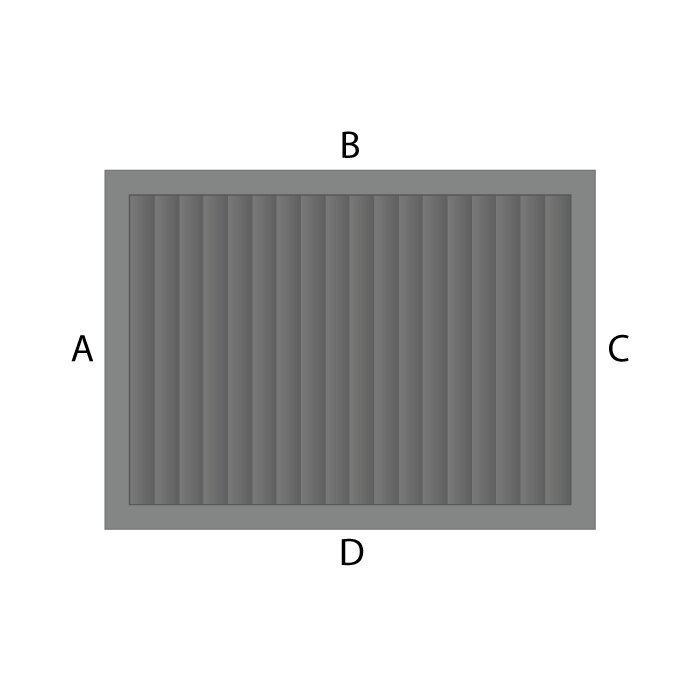
Product dimensions can describe different things. Overall length and width indicate the structure’s outside footprint, while an internal clear span, if supplied, describes the space inside the supporting parts. A drawing might also show a roof edge or projection; that is not automatically usable floor area. Look for a labelled plan or dimension diagram, and note whether each measurement refers to the overall assembled structure, the roof outline or an opening beneath it. If a page gives only a width and depth without saying what they measure, do not guess from a photograph: request clarification before using those figures to decide whether furniture will fit. If the drawing marks support positions, plot them too rather than assuming they can be moved.
Use the same conventions for every option. On the bioclimatic aluminium pergola listing, as on any product page, take measurements only from details stated for that exact product; its name does not establish its footprint, internal clearance or measurement method. Record length, width and height with their labels, keeping ‘overall’ separate from ‘clear’ where the seller uses those terms. A footprint alone does not promise a particular amount of shade or weather protection; those depend on product information beyond the ground dimensions. If a diagram does not answer a question, ask the seller what the relevant figure means before comparing options. Save the relevant diagram or note the selected size so you do not mix figures from different variants.
03
Compare length, width and layout
Compare length and width separately instead of reducing every candidate to a total area. Two footprints with similar area may suit very different arrangements: a long table, a compact seating group or a path running alongside the structure each uses the proportions differently. Put each outline on your garden sketch and try rotating it. Check which orientation preserves access from the house and leaves the rest of the garden usable. For any listing, including the Bloomcabin product page, copy both figures as labelled; if a side is not clearly identified, ask for a dimension drawing rather than assuming the first number faces the house. Mark the direction you tested on your plan.
Rotation can also change which part of the garden feels open and how the structure relates to existing paving or planting. Draw the boundary and access route as well as the rectangle, then test each possible orientation against the furniture plan. If one arrangement fits only by narrowing a path or placing a table where a door needs to open, treat that as a real trade-off rather than ignoring it in the drawing. In a narrow garden, compare how much passage remains alongside each orientation. Keep the unit and measurement order consistent in your notes, and mark any figures you still need confirmed. Comparing shape as well as area can show why a different proportion may suit the layout better.
Include height and overhead clearance
Check height as carefully as width and depth. A product page may state overall height, clear height below the structure, or both; these are different measurements, so note the wording rather than treating them as interchangeable. Look at the proposed position for low eaves, branches, open windows, existing lights and other overhead obstructions. Think about normal use too: standing at the edge, moving chairs or carrying items through the space can make vertical clearance relevant even when the ground outline fits. For this specific pergola listing, use only a height the page explicitly states; do not infer it from the image or product name. Check whether the measurement refers to the topmost point or the underside.
Consider the ground level across the proposed area as well. A sloping or uneven surface can change the clearance available at different points, and a flat drawing cannot tell you how the selected model should be fitted there. Note what you observe and ask the seller or a qualified installer whether the location and surface suit the product; do not improvise a base or adapt support positions from a sketch. If a chosen design has parts that move or adjust, use the maker’s stated operating-clearance guidance where relevant instead of assuming every pergola needs the same envelope. Where trees or foliage border the position, consider their growth and access for routine maintenance, not just the current gap.
04
Fit the pergola into the whole garden
The pergola has to work within the garden as a whole, not just inside a marked rectangle. Trace everyday routes from the house to the gate, shed or other parts of the garden, and note access to windows, planting and outdoor storage that you want to retain. Look at the proposed position from inside the house as well as from the patio: a footprint that fits may still dominate a small space or interrupt a route. Try two or three locations on the sketch rather than assuming the first empty-looking corner is the best one. Consider views or privacy only if they matter to your use, and assess them from the places where you regularly sit.
Observe the area at times when you expect to use it, especially if shade and daylight influence where you want to sit. The sun’s position and existing shade change through the day and year, so size alone cannot promise a particular result; check the site and the product information rather than drawing conclusions from a catalogue image. Consider how nearby planting may grow and whether you will still be able to reach it for routine care. Once you have marked the preferred footprint, compare it with any dimensions stated on the product page you are considering and revisit the access routes. Notes about when you observed the garden can help you remember what conditions you checked.
Compare like-for-like candidates
Build a short comparison table using the same fields for each candidate: product type, overall length and width, internal clear measurements if stated, height, and any dimensions still awaiting confirmation. Keep product identity and size in separate columns, and record which page or drawing supplied each figure. If one listing omits a measurement, leave the cell blank rather than borrowing a figure from a similar-looking product or guessing from an image. Mark whether each detail is missing, unclear or confirmed, so a blank is not mistaken for a zero or an unnecessary measurement. A table also makes it easier to spot when options use different measurement conventions.
Only compare models that meet the same basic brief: freestanding format, a workable orientation, enough room for the furniture and a route through the garden. A larger figure is not automatically better if it leaves little usable outdoor space; a smaller figure is not a bargain if it makes the intended layout impractical. Keep each candidate’s unknowns visible and decide how much uncertainty you are willing to accept before looking at price. If a page offers different sizes or configurations, make a separate entry for each one and check that its dimensions belong to the exact option. This prevents product names and thumbnail images from blurring the comparison.
05
Check delivery and installation details
Think about how the structure will reach its final position. The dimensions of the assembled pergola do not tell you whether its components can pass through a side gate, along a narrow path or around a sharp turn. Measure the access route at its narrowest points, noting steps and obstacles, then ask the seller for package dimensions and delivery details if these are not provided. Consider the route from the unloading point to the garden as well as the entrance itself. Do not assume there is room to store components temporarily; resolving access before ordering can prevent a product that fits the site from being difficult to get there.
Check who is responsible for assembly or installation, what is included in the quoted arrangement, and whether separate service or delivery costs apply. For a candidate such as the full product listing, check whether package, assembly and site information is stated for that exact option; if not, ask before comparing final costs. Do not infer that a service, accessory or support requirement is included because it appears in a photograph. Ask the supplier what preparation is expected, and consult a qualified installer about surface suitability or installation conditions rather than improvising technical solutions. Read the relevant delivery, returns and warranty terms before placing an order.
Assess a Black Friday offer after checking the fit
Treat Black Friday as a time to compare, not proof that a particular pergola is discounted. If an offer is advertised, check the exact product type, size or variant it applies to, its stated terms, delivery and any included extras. A price for the lean-to pergola page is not a like-for-like reference for a freestanding option; compare the same format and dimensions before judging value. Where a promotion has conditions or a stated end date, read them rather than assuming they apply to every size. Check the terms for the exact option you are considering, not just a general banner. No offer details are supplied here, so use the listing for current information.
Make the final choice from the shortlist that passes the practical checks: its footprint fits the site, the furniture layout works, height and access are understood, and delivery and installation arrangements are clear. Then compare the current price and terms for those candidates, rather than letting a headline saving decide the size. If two options both fit, consider how much of the garden each leaves available and whether the extra space serves a real use. A short record of dimensions, costs and terms makes the comparison easier to revisit without relying on memory. If an important measurement or condition remains unclear, pause until it is confirmed.
Frequently asked questions
How do I measure my garden for a freestanding pergola?
Measure the usable area at the intended position, noting boundaries, paths and fixed obstacles. Mark out the chosen pergola’s stated outer dimensions, and plot any support positions shown in its drawing. For an uneven or sloping surface, ask the supplier or a qualified installer what needs checking.
Is the listed footprint the same as the usable space underneath?
Not necessarily. A footprint may describe the structure’s overall outside dimensions, while an internal measurement, if provided, may describe the clear space beneath it. Check the seller’s drawing and how each figure is defined; do not infer usable space from a photograph.
How much room should I allow around garden furniture?
There is no single allowance that suits every layout. Draw the actual furniture dimensions, then add room for chairs to be pulled out and for people to move past. Mark the arrangement on the ground and walk through it before choosing a size.
Should I check the height as well as the footprint?
Yes. Compare the stated overall height with any clear height shown, and check for overhead obstructions such as branches or eaves. If the ground is uneven or the listing does not explain its measurements, ask the supplier or a qualified installer for guidance.
How should I compare Black Friday pergola offers?
Compare the same structure type, size and product option. Check any advertised terms, delivery arrangements, included items and additional costs before judging the price. Do not assume an event label means every model or size is part of an offer.
A suitable size is not simply the largest one that fits on a garden plan. It should work with the furniture you intend to use, leave practical routes through the garden and meet the site and access requirements confirmed for the chosen option. Once those points are clear, comparing any advertised Black Friday terms becomes more meaningful. If a key measurement is missing, seek clarification rather than choosing from a product image or headline dimension.
