
Gardening Trends 2027 UK: 12 Trends Shaping British Gardens
The strongest UK signal comes from the Royal Horticultural Society’s 2026 gardening predictions. The RHS describes climate as a principal driver of changing gardening behaviour and points towards water-saving techniques, drought-aware planting, plants for pollinators and more experimental food growing.
That matters because Britain no longer has the luxury of planning gardens around a dependable pattern of gentle rain. A single property may need to capture winter rainfall, protect plants through a summer dry spell and absorb a cloudburst without sending water straight towards the drains.
At the same time, small gardens, patios and courtyards remain enormously important. The 2027 British garden therefore becomes more layered, more productive and more precise rather than simply larger or more elaborate.
Rain becomes an asset
01
The water butt evolves into whole-garden water design
The RHS has highlighted community-growing techniques that store rainfall in the soil as well as in containers. That is an important clue for 2027: water management moves beyond a single butt connected to a downpipe.
Rain gardens, permeable paving, planted depressions and soils rich in organic matter can all slow runoff. In winter they help accommodate rain; in summer they help retain the moisture that plants need.
The aesthetic result can be excellent. Water-conscious gardens need not look engineered if storage and infiltration are built into the planting plan.
The British garden of 2027 will treat a wet week as preparation for a dry one.
Resilience over perfection02
Plant choices are made for variability, not an “average” year
A plant may need to tolerate summer heat and winter wet on the same site. That makes simple labels such as “drought tolerant” less useful than a full understanding of soil, aspect and drainage.
Mixed planting is one form of resilience. Trees, shrubs, perennials and ground cover create shade, reduce bare soil and provide different root depths.
Gardeners will increasingly observe microclimates within their own plot rather than following a single national planting recipe.
Longer food season · 03
Pollinator gardening becomes more seasonal and strategic
RHS signals continue to show strong interest in plants for pollinators. In 2027, the more sophisticated approach will focus on continuity: flowers in early spring, summer and autumn rather than one spectacular month.
Single flowers, herbs allowed to bloom, native or well-adapted plants and seed heads left through winter can all contribute. Shelter and water matter alongside nectar.
The shift is from buying a “bee plant” to designing an ecosystem that remains useful for much of the year.
Food in tiny spaces
04
Compact and tabletop vegetables make food growing more accessible
One of the more distinctive RHS signals is interest in tabletop vegetables and compact crops. This makes sense for balconies, courtyards and households that want fresh produce without a traditional allotment-sized plot.
Shallow containers, raised planters and dwarf varieties bring edible gardening closer to kitchens and seating areas. It becomes part of daily life rather than a remote task.
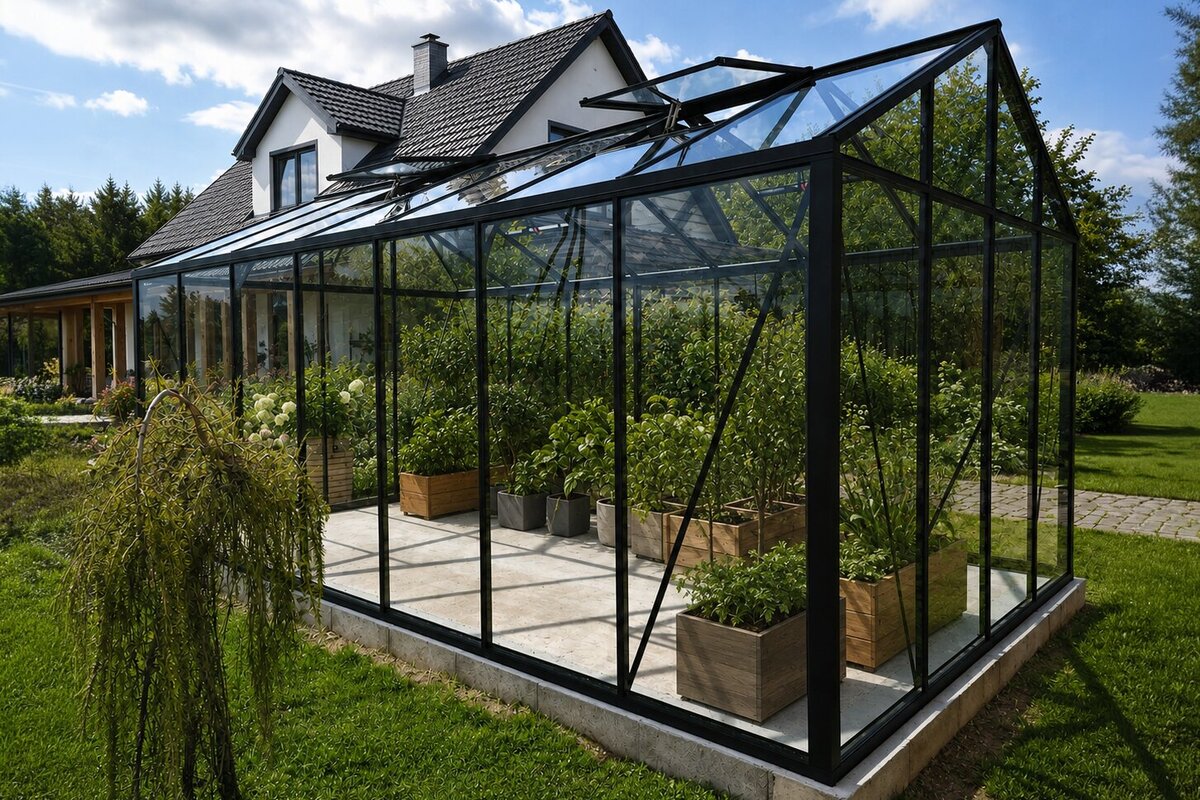
For more ambitious growing, Bloomcabin UK greenhouses and conservatories extends the protected season and provides options from compact to larger structures.
Season extension
05
The greenhouse becomes a climate buffer, not simply a tomato house
A British greenhouse is useful precisely because conditions outside are inconsistent. It can protect seedlings from cold starts, shelter crops from excessive rain and extend harvesting later into autumn.
Summer management matters just as much. Ventilation, shading and targeted watering are increasingly important during hot spells.
In 2027 the greenhouse will be planned as part of the garden composition, with paths, potting space, water and surrounding productive beds designed together.
Mobile horticulture06
Plants move between indoors, greenhouse and garden
The RHS has pointed towards “in-and-out” plants: specimens that spend different parts of the year in different environments. That is likely to become more common as gardeners seek flexibility.
Containers make this possible. Tender plants can spend the warm season on a terrace and move to a protected greenhouse or conservatory when temperatures fall.
The result is a garden that changes not only with flowering seasons but through deliberate movement of plants.
Every square metre works · 07
Small British gardens become more vertical and multi-purpose
Walls, fences and vertical frames are valuable growing surfaces. Trained fruit, climbers and slim raised beds use height without sacrificing circulation.
One structure can perform several jobs: a bench can edge a bed, a pergola can support climbers and create shade, and a lean-to growing structure can use an existing wall.
Small gardens also benefit from restraint in hard materials. A limited palette creates calm while allowing planting to be generous.
Soft planting, clear structure
08
Naturalistic planting meets the modern cottage garden
British gardening has deep cottage-garden roots, but the 2027 version is less dependent on thirsty or disease-prone nostalgia. It mixes romantic abundance with plants selected for contemporary conditions.
Grasses, resilient perennials and wildlife-friendly species can sit among roses, herbs and familiar cottage plants. Crisp paths and architecture prevent the scheme feeling chaotic.
This creates a style that is recognisably British but less dependent on constant intervention.
More usable months
09
Covered outdoor rooms make unreliable weather less limiting
A pergola or sheltered terrace can transform how often a garden is used, particularly when the design considers prevailing rain and wind rather than only summer sunshine.
A Bloomcabin bioclimatic aluminium pergola can define a dining or lounge area with a clear architectural relationship to the garden.
The trend is towards fewer, more deliberate outdoor zones rather than a scattering of furniture across the lawn.
Work designed out10
Low-maintenance gardens become more densely planted
Bare soil and isolated shrubs can require more weeding, watering and mulching than a well-established plant community. In 2027, low maintenance increasingly means choosing the right density and the right plant.
Ground cover, long-lived perennials and shrubs suited to the site reduce repeated replacement. Lawn is retained where it serves a purpose rather than by default.
Maintenance is not eliminated; it becomes seasonal and intentional.
Technology quietly useful · 11
Smart gardening focuses on irrigation and greenhouse control
Weather-responsive irrigation and soil-moisture information can prevent the habit of watering by calendar. In a greenhouse, automatic venting can protect crops during sudden heat.
The most useful systems will be those that reduce attention, not those that add another dashboard to check.
For 2027, technology sits behind the horticulture rather than becoming the visual identity of the garden.
A slower outdoor life
12
The garden becomes an intentional digital retreat
Gardening offers a form of delayed reward: sowing, tending and harvesting cannot be reduced to an instant interaction. That gives the garden unusual value in a screen-heavy life.
A reading chair under a tree, a small table in the greenhouse or a scented evening border can create a reason to remain outside without a task.
The most successful 2027 gardens will therefore measure value partly in time spent there, not only in resale appeal or appearance.
UK deep analysis
What the 2027 trends mean across Britain’s very different gardens
The UK is often treated as one gardening climate, but maritime exposure, urban heat, heavy clay, chalk, upland cold and increasingly erratic rainfall create very different design problems. The 2027 garden will become more site-specific.
Drought and heavy rain must be designed together
The same garden can experience weeks of dry weather and then intense rainfall. That makes simple “drought garden” thinking incomplete. Soil structure, mulching, rain capture and permeability have to work in both directions: slowing runoff when rain arrives and retaining enough moisture for the dry period that follows.
This is why rain gardens, water butts, planted swales and less unnecessary paving are likely to move from environmental features into mainstream garden design. The best examples will look intentional and architectural, not like add-on infrastructure.
Small gardens will become more productive per square metre
Britain’s terraces, courtyards and compact suburban gardens encourage vertical thinking. Walls can carry trained fruit, trellis crops and climbers; narrow raised beds can produce herbs and salads; containers can be grouped by watering need rather than scattered as decoration.
The 2027 shift is from “making a small garden look bigger” to making it work harder. A wall greenhouse, lean-to structure or compact growing zone can add an entirely new layer of use without consuming the centre of the garden.
The greenhouse becomes a climate-management tool, not only a season extender
Traditionally, the British greenhouse is associated with earlier sowing and tomatoes. Its 2027 role is broader. It can protect crops from excessive rain, provide a reliable place for propagation and create a controlled zone when outdoor weather becomes unpredictable.
Summer management becomes just as important as spring protection. Ventilation, shading and targeted irrigation determine whether a greenhouse remains productive during hotter spells. That makes design and operation inseparable.
Low-maintenance planting will become denser, not barer
A common misconception is that fewer plants mean less work. In practice, open soil produces weeds and loses moisture, while well-selected ground cover and perennial layers can suppress both. The mature 2027 garden is likely to look fuller while requiring fewer repetitive interventions.
This also favours long-lived shrubs, resilient perennials and plants chosen for the actual soil rather than for a generic trend list. The garden becomes easier because it is better matched, not because it has been emptied.
Putting the forecast to work
8 ways to prepare a British garden for 2027
Start with climate and function before choosing a style.
- Map water movement. Watch where winter rain pools, runs off or disappears too quickly.
- Improve the soil. Use organic matter and ground cover to increase resilience.
- Store rain in several ways. Combine containers, planting and permeable ground rather than relying on one solution.
- Extend pollinator seasons. Choose early, mid and late flowering plants.
- Grow one edible thing close to the house. Herbs, tabletop veg and compact fruit make food growing easy to use.
- Plan the greenhouse as part of the layout. Consider summer ventilation as carefully as spring protection.
- Create one genuinely sheltered outdoor room. Use aspect, planting or a pergola to improve comfort.
- Automate selectively. Irrigation and venting should solve real problems, not add complexity.
FAQ
Gardening trends 2027 in the UK: frequently asked questions
What is the biggest UK gardening trend for 2027?
Climate resilience, particularly the ability to manage both dry periods and intense rainfall.
Will lawns disappear from British gardens?
No. Functional lawns will remain; little-used or difficult areas are more likely to become planted, productive or meadow-like.
Are greenhouses still relevant?
Very much so. They provide season extension and protection, but summer ventilation and water management are increasingly important.
What are tabletop vegetables?
Compact edible crops grown in raised containers or planters at a convenient height, particularly useful for patios and small spaces.
What garden style will be fashionable?
Naturalistic and modern cottage planting should remain strong, especially when combined with climate-resilient plant choices.
Is smart gardening worth it?
When it prevents wasted water or greenhouse overheating, yes. Technology should be chosen for a clear horticultural benefit.
The British garden of 2027 will be softer in appearance and sharper in thinking
The visual direction is towards more plants, looser layering and greater seasonal change. Behind that softness, however, sits more precise thinking about water, shade, soil and how the garden is actually used.
That is why the most important trends reinforce one another. Rain storage supports resilient planting. Smaller lawns make room for biodiversity or food. A greenhouse extends production. A pergola makes an outdoor room usable for more of the year.
The result is not a fashionable garden with a short expiry date, but a British garden better prepared for the conditions it is likely to face.
Planning your 2027 garden?
Explore Bloomcabin UK greenhouses and outdoor structures and plan growing, shelter and outdoor living as one coherent garden system.
Sources & further reading
- Royal Horticultural Society – 2026 gardening predictions
- Bloomcabin UK – greenhouses and conservatories
These 2027 trends are an editorial forecast based on UK horticultural and climate signals available in 2026. Plant choices and structures should always be matched to local soil, exposure, microclimate and planning requirements.
