
Greenhouse Crop Rotation: How to Keep Your Soil Healthy
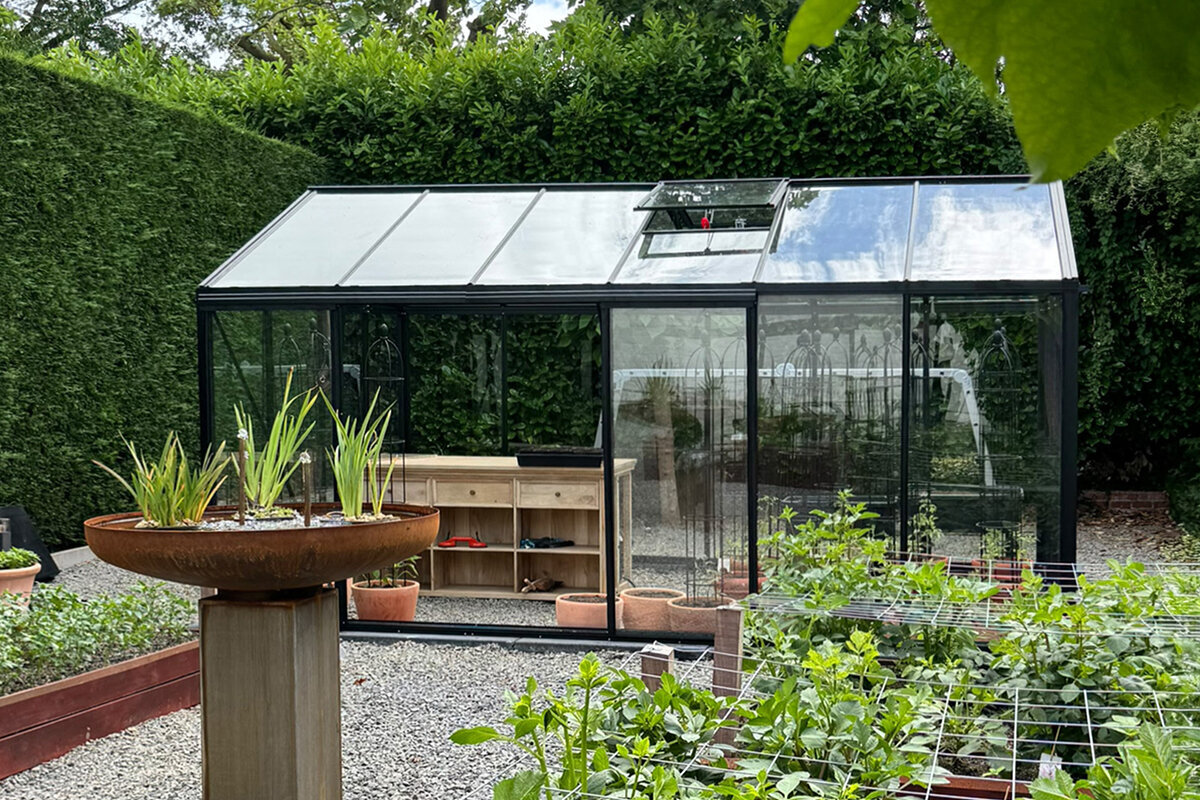
Soil memory / greenhouse field record 32
Greenhouse Crop Rotation: How to Keep Your Soil Healthy
A productive greenhouse bed does not begin each spring as a blank page. It retains the root paths, nutrient withdrawals, residues, watering patterns and amendments left by every crop that occupied it before.
Rotation means reading that record before writing the next season into it. In a protected growing space, where the same border may host tomatoes, peppers, cucumbers and salads for years, this matters more, not less.
A practical index
Read the bed before you replant it.
- What rotation can and cannot do
- Crop-family fingerprints
- Roots, residues and nutrient demand
- Build a four-year rotation ribbon
- Small-greenhouse adaptations
- Containers, grow bags and mixed systems
- Cover-crop windows and compost
- Testing, salts, sanitation and disease breaks
Why soil remembers
Every harvest leaves an instruction behind.
Tomatoes, peppers, chillies and aubergines are all Solanaceae. Moving from one to another may look like change, but it is not a meaningful family break. Cucumbers, melons and squashes share another family; mustard, rocket, mizuna and radish belong to the brassicas. Rotation begins with these botanical relationships because close relatives can share vulnerabilities and growing requirements.
Greenhouse rotation is broader than botanical bookkeeping. Fruiting crops usually remain in place for months, draw heavily on water and nutrients, and leave substantial roots and stems. Quick salads occupy a shorter, shallower window. A legume may work with nitrogen-fixing bacteria, yet it does not automatically provide all the nitrogen required by the next hungry crop. Its contribution depends on species, growth, nodulation, residue handling, timing and the subsequent management of the bed.
Think of the border as a small, intensively managed landscape. Rotate families to reduce repeated host pressure. Vary rooting depth and demand. Test before adding more fertiliser. Remove unhealthy residues, and give living roots—or fresh growing medium where space is tight—a deliberate place in the plan. This supports high productivity without treating greenhouse soil as disposable.
Family fingerprint index
Rotate the relatives, not merely the crop names.
These are practical greenhouse groupings, not a claim that every member behaves identically. A confirmed diagnosis, variety resistance and the actual history of the border should always take priority over a generic schedule.
01Solanaceae
02Cucurbits
03Brassicas
04Legumes
05Salads
Solanaceae. Tomato, pepper, chilli, aubergine and potato are relatives. Do not count tomato followed by pepper as a meaningful family break. Where a border has repeatedly held tomatoes or has a diagnosed disease, choose a clearly different crop group or move the fruiting crop into a container with managed medium.
Cucurbits. Trained cucumbers, melons and squashes can be highly productive greenhouse crops, but they bring vigorous foliage, sustained watering and considerable crop debris. A following interval of lettuce, beans, herbs or another suitable non-host gives the border a different pattern of roots, canopy and management.
Brassicas. Mustard, rocket, mizuna, radish and other brassicas can be valuable cool-season crops, but record them as one extended family. Be equally careful with mustard or another brassica green manure where brassica disease already forms part of the greenhouse history.
Legumes. Beans and peas can diversify a fruiting-crop sequence and support biological nitrogen fixation. Their useful fertility contribution varies, however, so their presence never removes the need to observe the soil, interpret test results and decide what the following crop actually requires.
Salads and herbs. Lettuce, endive and other quick salad crops can create valuable early- or late-season intervals. They are not automatically trouble-free: clean water, suitable spacing, airflow, drainage and a record of previous disease still matter. Their strength is flexibility when a permanent border needs a different occupant.
Family is only the first filter. Root depth, nutrient demand, pests, diseases and whether a crop occupies the border for three weeks or six months remain separate planning decisions.
The planning register
Build a rotation ribbon, not a rigid wheel.
A linear ribbon suits a greenhouse because borders are physical places, not abstract allotment quadrants. Label each permanent bed, then move crop groups through the available zones each year. Insert a short salad, legume or cover-crop phase when the calendar allows. Record the actual crop, amendments, symptoms and performance—not merely the category you intended to grow.
Bed
Y1
Y2
Y3
Y4
N
F
L
B
R
S
R
F
L
B
E
B
R
F
L
W
L
B
R
F
F — fruiting phase. Tomatoes represent a long-season, high-demand fruiting crop. Inspect the assigned border, check watering coverage and use observations or test results rather than assuming that last year’s compost and feeding programme remain appropriate.
L — legume phase. Beans or peas, perhaps followed by autumn leaves, change the roots, canopy and duration of planting. Remove unhealthy residues promptly and treat nitrogen supplied by legumes as a possible contribution to assess, not as a complete feed programme.
B — brassica phase. Brassicas can provide a useful seasonal interval, but only where family history allows. If brassica disease is suspected, a clearly different non-host crop is more valuable than following this example mechanically.
R — reset window. This may contain a short salad succession, herbs, a carefully chosen green manure, a clean fallow period or another suitable non-host crop that fits the available light and time.
This ribbon is an example, not a prescription. Substitute crops for your greenhouse, local light and seasonal window. Select any cover crop with the intended family break and known disease history firmly in mind.
Bed section
0–5 cmResidue
5–25 cmRoots
25–45 cmTransition
BelowDrainage
Root-depth succession
Healthy soil is not simply fed. It is observed.
A shallow-rooted salad, a medium-rooted bean and a long-season fruiting crop explore a border differently. This does not mean that roots occupy perfectly separate layers or that one crop repairs every effect of another. It does mean that changing crop architecture can diversify water use and root activity, while repeated planting of one crop can concentrate similar pressures in the same zone.
At the surface: look for dry compost, spilled fertiliser, algae, white salt crusts, fallen leaves and crop residues that should have been cleared. Surface clues are often the easiest evidence to see, although they are not a complete diagnosis.
In the active root zone: inspect old roots, planting holes and moisture around emitters. Repeated fruiting crops can concentrate watering, roots and nutrient demand within the same narrow corridor season after season.
At depth: slow infiltration, compacted ground, underlying soil texture or a persistently wet layer can influence every crop above. Rotation cannot compensate for a drainage or structural problem that has not been identified.
Walk the borders after clearing a crop. Are old roots healthy and decomposing? Does water soak in evenly? Is there a dry band beyond the irrigated area? Such observations turn rotation from a calendar exercise into practical soil stewardship.
Greenhouse note: Rain does not routinely flush a covered border as it does outdoor soil. Productive greenhouse beds therefore merit periodic testing for pH, key nutrients and, where appropriate, electrical conductivity or soluble salts. Compost supports structure and biology, but repeated generous additions—particularly alongside regular liquid feeding—can oversupply nutrients or contribute to salt accumulation.
Concrete constraint
When ideal rotation is impossible, create a credible break.
Case file A / permanent borders
Two in-ground beds
Alternate the dominant fruiting groups between borders, but use the shoulder seasons seriously. One border might hold tomatoes from May into October, while the other carries cucumbers where family and disease history allow. In cooler windows, sow salads, beans, herbs or a suitable non-host cover rather than allowing one family to occupy the soil continuously.
- Keep a three- or four-year written record.
- Use observations and test results to amend each border.
- Clean stakes, clips, tools and irrigation parts so equipment does not carry problems between crops.
Case file B / movable containers
Grow bags and containers
Containers offer the clearest practical reset because their growing medium can be renewed or managed separately. Place tomatoes, peppers or aubergines in dedicated pots or grow bags, then use the permanent border for salads, beans, herbs or a cover crop. Fresh medium does not replace sanitation: trays, pots, tools, supports and irrigation lines still require cleaning.
Do not reuse medium from visibly unhealthy plants. Where sound medium is retained for a less demanding crop or moved elsewhere in the garden, record its origin so it does not become an unexamined bridge between seasons.
Case file C / mixed greenhouse
Make the layout do part of the work.
A long border on one side, staging for propagation and a line of large containers can be both elegant and agronomically useful. A measured structure such as the Classic Aluminium Greenhouse provides a clear starting point for planning accessible beds, movable pots and a central working route, helping separate sensitive fruiting crops from permanent soil when required.
For an aluminium structure in which beds, staging and container positions can be planned as distinct working zones, explore the Classic Aluminium Greenhouse.
Break the carryover
Rotation has more force when the greenhouse is clean.
Some risks persist in crop debris, some travel on tools and supports, and others move through water or remain in soil. Survival varies considerably with the organism, host and site, so avoid universal promises. If wilting, root decay or unexplained collapse recurs, seek an informed diagnosis before selecting the next crop or simply adding more fertiliser.
For a structure designed around accessible growing and cleaning zones, the Classic Aluminium Greenhouse offers a useful reference when planning permanent borders, container positions and a working route that lets you reach every plant, support and bed edge.
Harvest
Remove
Between
Clean
Planting
Break
At harvest
Clear spent plants, fallen fruit, old ties and visibly diseased tissue promptly. Do not leave unhealthy residues as informal mulch. Compost only healthy material in a properly managed system; where disease is evident, follow appropriate local disposal guidance rather than taking unnecessary risks.
Between crops
Wash soil from hand tools and clean pots, clips, stakes, benches, trays and irrigation components. Repair leaks, water at root level and maintain airflow. Splash, high humidity and prolonged leaf wetness can make a favourable protected environment equally favourable to disease.
Before planting
Use a different botanical family where possible, begin with healthy plants and choose resistant varieties when appropriate. Grafted tomatoes, cucumbers, peppers or aubergines may support vigour or resilience in suitable situations, but grafting does not replace diagnosis, hygiene, drainage or a meaningful break.
A workable record
Three greenhouse sizes, three honest plans.
Use these sequences as prompts rather than prescriptions. A fruiting Solanaceae crop may be tomato, pepper, chilli or aubergine; following it with another member of that family does not count as rotation. Every plan must retain flexibility for the British season, available light, preferred crops and any diagnosed problem.
Before you plant: make three entries in your notebook: what grew here, what problem occurred and which botanical family comes next. This small habit prevents the most common greenhouse rotation error—relying on memory after a busy summer season.
| Greenhouse format | Simple sequence | What makes it work |
|---|---|---|
| One border + containers | Border: salads and herbs → beans → brassicas or a suitable non-host window. Containers: tomatoes, peppers or aubergines in renewed or carefully managed medium. | Move the repeated, high-value Solanaceae crop out of permanent soil. Clean containers, trays and support equipment thoroughly between seasons. |
| Two permanent borders | Border A: tomatoes → salads or legumes → cucurbits or a suitable non-host. Border B follows a contrasting sequence. | Use early- and late-season crops as genuine intervals. Avoid tomato after pepper, or cucumber after melon, in the same border. |
| Three or four zones | Fruiting Solanaceae → legume and salad phase → brassica, herb or non-host phase → cover or reset window; move each group into the next suitable zone. | This provides the greatest scope for family breaks, varied root use and targeted amendments. Test borders separately where their cropping and feeding histories differ. |
If you are planning a new protected growing space, begin with a structure that supports distinct zones. Explore the Classic Aluminium Greenhouse and its Classic Aluminium Greenhouse to consider how permanent borders, staging, containers and a usable central route can work together.
Compost, cover crops and tests
Restore with evidence, not abundance.
Mature compost can support organic matter, structure, biology and moisture behaviour, but simply adding more is not a greenhouse fertility strategy. In covered soil, salts and certain nutrients may accumulate because rainfall cannot perform its normal leaching work. Take representative samples from borders with different histories. Consider testing pH, key nutrients and organic matter; in an intensive, regularly fed system, ask whether electrical conductivity or soluble-salts analysis would also be useful.
Use the report to decide whether the border requires compost, a targeted fertiliser, no additional feed or a more considered corrective plan. Do not repeatedly leave thick layers of undecomposed material on the surface. If soluble salts are elevated, adding more compost or fertiliser from habit is unlikely to help. Investigate how feeding, irrigation water and drainage may be contributing, using appropriate test-based advice.
A cover crop or green manure is restorative only when it fits the rotation, available light and growing window. A grass may add roots and take up available nitrogen; a legume can fix nitrogen; a mixture may serve several purposes. Yet mustard is unsuitable as a neutral break where brassica disease is a concern, and any cover crop left too long consumes water, time and valuable space. Even a short autumn or early-spring window of living roots can help, but it should be planned as deliberately as the summer crop.
Field questions
Greenhouse crop rotation FAQ
How long should I wait before growing tomatoes in the same border again?
Aim for the longest practical break from Solanaceae, particularly after a confirmed problem. Three or four years is often used as a broad vegetable-garden guide, but many small greenhouses cannot provide that interval. In that case, strengthen the break with containers and fresh medium, non-host crops, sanitation, monitoring and, where justified, partial soil renewal. Base the decision on the actual problem rather than a calendar alone.
Can I rotate tomatoes with peppers?
Not as a family rotation. Tomatoes and peppers are both Solanaceae, together with chillies, aubergines and potatoes. They may share pests, diseases and similar feeding pressure. If both are essential in a small greenhouse, grow one in a container or grow bag with managed medium, then allocate the permanent border to a clearly different family.
Do beans replace fertiliser for the following crop?
No. Beans and peas can contribute biologically fixed nitrogen, but the benefit available to a following crop depends on growth, nodulation, root and residue handling, timing and soil conditions. Treat legumes as a useful source of diversity and a possible fertility contribution, then use soil observation or testing to decide what the next crop genuinely needs.
Should I replace all greenhouse soil every year?
Usually not. Permanent borders benefit from rotation, sensible organic-matter management, drainage, sanitation and testing. The RHS notes that replacing greenhouse border soil with bought-in topsoil or good garden loam every three to five years can help reduce soilborne disease build-up. Treat this as an option, not a substitute for diagnosis; serious recurring problems may require more specific advice and management.
What is the best cover crop for a small greenhouse?
The best choice fits the available time, light, soil objective and family planned next. A short leafy cover may protect the surface and add roots, while peas or beans can create a different crop rhythm. Avoid a brassica green manure where brassica disease is a concern. Sometimes a clean salad crop, a brief rest, mulching, drainage repair or thorough sanitation is more valuable than a rushed cover crop.
Sources & further reading
Continue the research.
These UK horticultural resources informed the practical principles in this guide. They are particularly useful for greenhouse crop management, planting plans, grafting, soilborne disease prevention and selecting short-term green manures.
More from Bloomcabin: greenhouse setup, layout, planting and care in the UK · UK greenhouse gardening guide · Bloomcabin's aluminium greenhouse FAQ
- Royal Horticultural Society — Vegetables in Greenhouses
- Royal Horticultural Society — Grafting Vegetables
- Garden Organic — Planning Your Planting
- AHDB Horticulture — Best4Soil: Soilborne Disease Prevention and Control
- AHDB Horticulture — Short-term Green Manures for Intensive Horticultural Soil
- RHS guidance — Growing Vegetables in Greenhouses
Write the next season
Make the next entry before the current crop disappears.
A greenhouse rewards continuity, but soil health depends on changing what that continuity means. Keep an accurate record, rotate the pressure, clean between crops and give every border a credible opportunity to recover.
Classic Aluminium Greenhouse