
How to Compare Pergola Quotes Like for Like
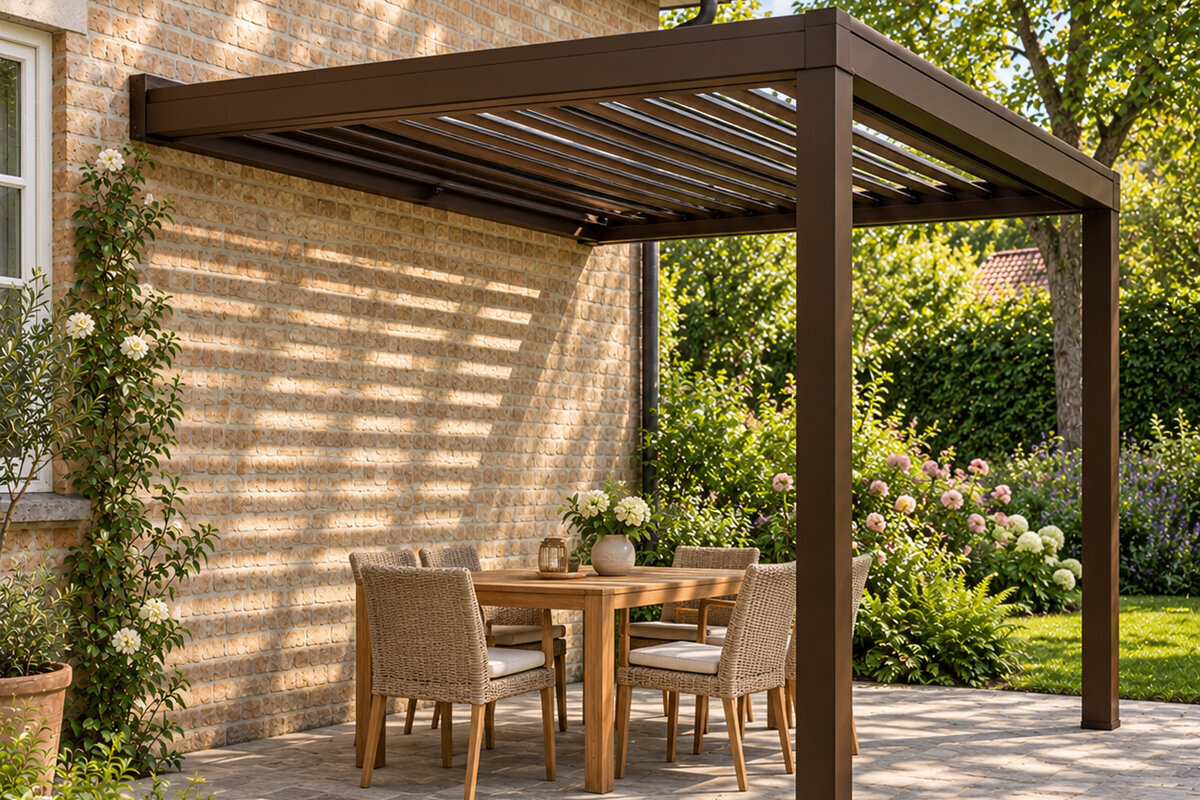
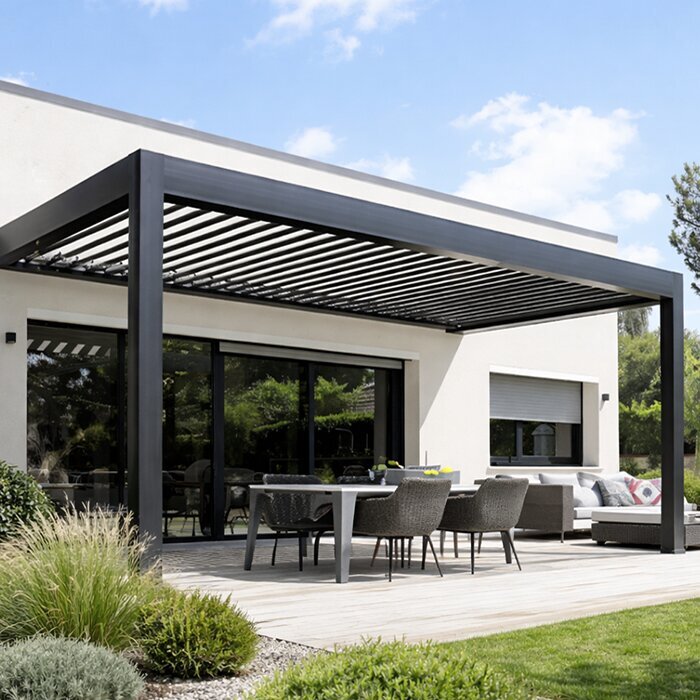
When you compare pergola quotes, begin by treating each one as a scope document rather than a shopping list. Two offers may describe a similar-sized aluminium pergola yet include different roof systems, colours, drainage arrangements, controls or fixing methods. If those differences are not visible, the lower total may simply cover less work, less equipment or a different starting assumption about your garden.
Ask every supplier to quote against the same written brief. Record the intended position, approximate footprint, preferred finish, roof type, desired accessories, access route and whether fitting is required. This makes it easier to identify a genuine alternative rather than comparing a supplied-only package with a more comprehensive proposal that includes labour or practical allowances.
Good comparison does not mean choosing the most elaborate specification. It means deciding which elements matter for the way you will use the space, then confirming their status in writing. A carefully checked quotation gives you a firmer basis for discussing the project with installers, household decision-makers and, where relevant, your local authority or insurer.
Stage one
Set one brief before requesting quotes
A like-for-like comparison starts before the first quotation arrives. Write a concise project brief that states where the pergola will sit, the available space, the purpose of the area and the features you value. Include photographs, rough measurements and notes about walls, boundaries, doors, levels and nearby services. The more consistently you describe the site, the less likely suppliers are to price different interpretations.
Be precise about the roof category you are considering. A louvred design and a regular fixed-roof or open-roof arrangement should not be treated as interchangeable merely because their footprints appear similar. Each can shape the visual character, controls, drainage detail and intended use differently. If you are still deciding, ask for clearly separated alternatives rather than a blended allowance that obscures the distinction.
State whether your preferred location is freestanding, against an existing building, beside a boundary or integrated with a patio arrangement.
List the features that are essential, desirable or unnecessary, so optional additions do not become accidental assumptions within the quote.
For a roof-led outdoor room concept, explore the bioclimatic aluminium pergola range before asking suppliers to price an equivalent configuration.
Stage two
Match structure and roof specification
Read beyond the overall dimensions. Check the quoted width, projection and height, and establish whether measurements refer to the outer structure, usable covered area or another reference point. Ask how posts are positioned and whether their locations affect doors, paths, furniture or views. A drawing or layout sketch is particularly helpful because it reveals practical differences that a short product description can conceal.
Then compare the roof on its own terms. Identify its form, the material or system described, how it is operated where applicable, and whether rainwater management components are included. Do not assume that wording such as ‘roof’, ‘canopy’ or ‘weather protection’ means the same thing in separate offers. Ask each supplier to define what their stated roof solution includes and what remains an optional addition.
Check that quoted dimensions, post positions and roof description match the same orientation and intended location in your garden.
Request a named list of structural components rather than relying on a marketing image or an abbreviated product title.
If a simpler garden structure suits your brief, review the regular aluminium pergola options and compare their stated roof and frame scope separately.
Stage three
Unpick features, finish and controls
Optional features often create the widest gap between quotation totals. Side screens, lighting, heating, glazing, privacy elements, sensors, remote controls and integrated accessories should each appear as named lines or clearly labelled packages. This lets you distinguish an included component from a provision for one, and decide whether an extra is important now or better considered later. Never assume a polished visualisation represents the exact quoted configuration.
Finish deserves the same attention. Confirm the stated colour, any finish options, visible trim, screen fabric where relevant and whether a particular appearance is standard or additional. For powered components, ask what control method is included and whether electrical connection is part of the quotation. A feature can be supplied without the electrical work needed to make it operational, so responsibilities need to be separated clearly.
Mark every feature as included, optional, excluded or not mentioned; an empty field is a question, not confirmation.
Compare controls and accessories by function and scope, including whether fitting, wiring or final adjustment is addressed.
To assess louvres, controls and compatible additions in context, consider a bioclimatic pergola with optional features as a separately itemised specification.
Stage four
Separate delivery from the product price
Delivery is more than a line at the bottom of a quotation. Find out what is being delivered, to which point, and what conditions have been assumed for vehicle access, unloading and safe storage. Narrow lanes, restricted parking, shared drives, gates and sloping approaches can all affect the practical plan. A quotation should make clear whether you are expected to provide equipment, assistance or a suitable receiving area.
Also confirm how delivery relates to installation. Goods might arrive before fitters attend, requiring you to keep components secure and protected, or delivery may be coordinated with the installation plan. Do not rely on an informal expectation about dates, because site readiness and access can change. Instead, establish the process for confirming arrangements and the action required if access or availability changes.
Ask for the delivery point, unloading assumptions and receiving responsibilities to be stated plainly in the quotation or accompanying documents.
Check whether packaging removal, temporary storage and disposal are included, excluded or your own separate arrangement.
For a straightforward structure-led choice, look at the regular pergola delivery-ready configurations while confirming exactly what your selected quote covers.
Stage five
Define installation and site preparation
Installation quotations can differ because the site conditions differ, not because one installer is necessarily more expensive. Ask whether the price includes survey work, setting out, assembly, anchoring, alignment, sealing and final checks. Clarify who confirms that the base is suitable and what happens if site conditions discovered on arrival differ from the information supplied. A transparent quote will identify assumptions instead of disguising them within a single installation line.
Groundworks, foundations, paving alterations, drainage changes and electrical connections are often separate trades or separate scopes. Your existing patio may look sound yet still require professional assessment for the proposed loadings and fixing method. Obtain advice suited to the actual surface and location, and ask installers what information they need before attendance. Do not treat an installation quote as automatic confirmation that all preparatory work has been assessed or included.
Ask which party is responsible for base suitability, accurate measurements, fixing locations and any concealed services beneath the installation area.
Request a clear boundary between pergola assembly and related works such as electrics, paving, drainage, decorating or landscaping.
When discussing a more complex roof installation, use the bioclimatic pergola installation specification to frame the questions for your chosen installer.
Stage six
Make exclusions visible and costed
Exclusions are where many apparently comparable quotations diverge. Look for statements about access difficulties, base preparation, crane or lifting needs, electrical connection, making good, drainage, permissions, removal of existing structures and waste. An excluded item may be perfectly reasonable, particularly where a supplier cannot assess it remotely. The issue is not exclusion itself; it is discovering it too late to plan the project properly.
Create an exclusions register alongside your quote comparison. For each item, note whether it is included, excluded, provisional, unknown or arranged by you. Where possible, ask for a separate allowance or a recommendation on how to procure the work. This gives you a more realistic project budget without pretending that every site-dependent task can be fixed before a proper assessment.
Treat phrases such as ‘if required’, ‘subject to site’ and ‘by others’ as prompts for a specific follow-up question.
Do not add excluded costs blindly; establish the required work, responsible party and current quotation before making decisions.
For a clear baseline when reviewing omissions, start with a regular pergola product specification and list every related site task separately.
Stage seven
Check planning, neighbours and insurance
A supplier’s quotation is not a planning decision. Depending on the property, position, dimensions and design, you may need to consider planning requirements, building-related considerations or restrictions affecting the site. Check the current position with the relevant local authority or a suitably qualified professional before committing, particularly for listed buildings, conservation areas, flats, leasehold homes or boundary-sensitive locations. Keep written records of the advice you receive.
It is also sensible to consider neighbouring properties and household insurance early. Discuss drainage direction, overlooking, access during works and the visual impact of the proposed location with neighbours where appropriate. Ask your insurer whether the planned structure affects your policy or whether notification is needed; coverage and requirements depend on the policy and property. These checks are part of responsible project preparation, not items to assume are covered by a product quote.
Keep planning, leasehold, title and neighbour considerations outside the quotation comparison, but resolve them before ordering or scheduling work.
Share the final product description and location plan with your insurer rather than relying on general descriptions of a pergola.
If you are assessing a roof system for a sensitive location, the bioclimatic pergola design details can help you prepare more focused questions for advisers.
Stage eight
Use a final decision matrix
Once every offer has been clarified, compare them using the same headings rather than relying on memory. Include product specification, accessories, finish, delivery, installation, site work, exclusions, assumptions and your own actions. A quote that is initially higher may contain work you would otherwise need to source, while a lower supply-only offer may be exactly right if you have reliable local trades already arranged.
Before accepting, ask for the final configuration to be recorded in the order documentation. Check that drawings, colour choice, dimensions, options and responsibility boundaries reflect the version you selected, not an earlier conversation. Read applicable written terms carefully, including cancellation, changes, payment stages and warranty scope where offered. A final pause to reconcile these documents can prevent costly misunderstandings after the project has moved from enquiry to commitment.
Score each offer against your agreed priorities, then write a short reason for any score that depends on an assumption.
Choose only after unanswered questions are resolved in writing and the final scope matches your intended garden arrangement.
For the final comparison column, include the regular aluminium pergola frame package only with its confirmed options, delivery and fitting scope.
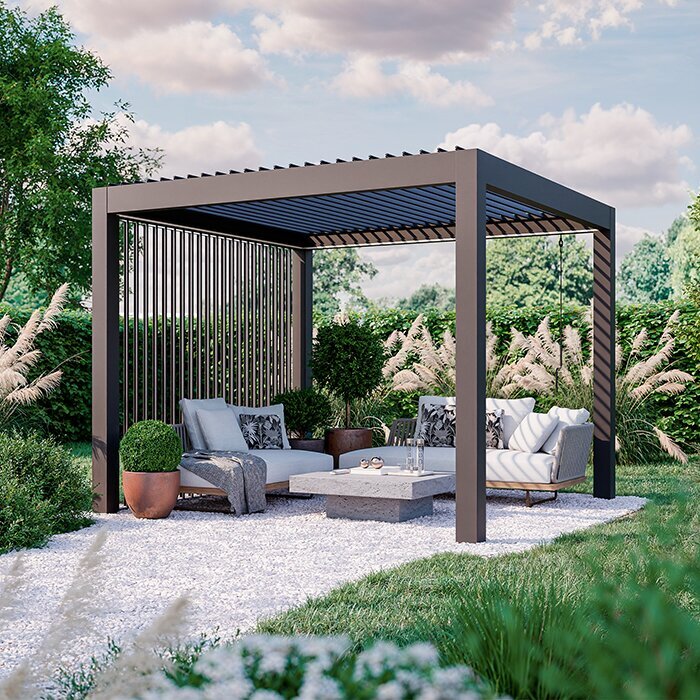
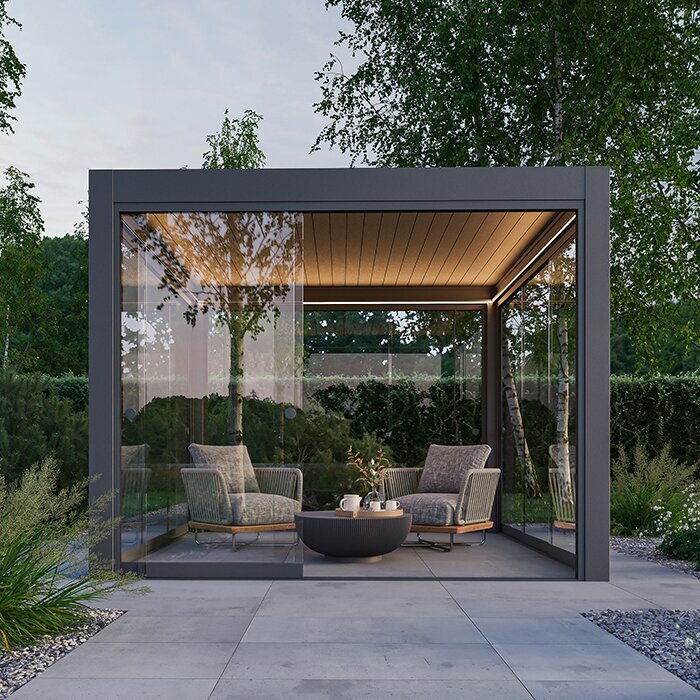
Comparison
A practical quote comparison matrix
Copy each quotation into one worksheet and complete every column from written evidence. The aim is not to make all offers identical, but to expose meaningful differences and identify the questions that must be answered before you choose.
| Comparison area | Quote A | Quote B or C |
|---|---|---|
| Structure and dimensions | Named frame, dimensions, posts | Match measurements and layout basis |
| Roof system | Type, operation, drainage elements | Confirm equivalent roof scope |
| Finish and accessories | Colour, screens, lighting, controls | Separate included and optional items |
| Delivery | Delivery point and unloading assumptions | Record storage and access duties |
| Installation | Assembly, anchoring, checks included | Identify survey and base assumptions |
How to run a quote review
Set aside time to review quotations line by line rather than responding to the first attractive total. A simple shared document is useful when more than one person is involved in the decision.
01
Write the fixed brief
Set out location, approximate dimensions, intended use, roof preference, finish, essential features and whether installation is required.
02
Gather matching documents
Place quotations, drawings, product descriptions, option lists and site photographs together so each statement can be checked.
03
Tag every line
Mark each item included, optional, excluded, provisional or unclear. Do not let a product image substitute for written scope.
04
Ask targeted questions
Send one concise clarification list covering dimensions, roof, delivery, fitting, base requirements, electrical work and exclusions.
05
Confirm the final version
Compare revised written responses, choose the scope that fits your priorities, then check order documents before acceptance.
Pergola quote checklist
Use this checklist before treating any quotation as a final project cost. It is designed to reveal missing scope early, while there is still time to ask for clarification or obtain related quotations.
01. The pergola type, dimensions, orientation and post positions are stated clearly and match your intended location.
02. The roof system is identified precisely, including operation, drainage components and any elements described as optional.
03. The colour and visible finish are confirmed, with accessories listed individually rather than implied by imagery.
04. Delivery point, vehicle access, unloading, storage and packaging responsibilities are written down.
05. Installation scope distinguishes assembly and anchoring from groundwork, electrics, drainage and making-good work.
06. Base condition and fixing assumptions are recorded, with a clear route for resolving unexpected site conditions.
07. All exclusions, provisional items and work by others are logged with a responsible party and follow-up action.
08. Planning, property restrictions, neighbour considerations and insurance questions have been checked independently where relevant.
Frequently asked questions
Why do pergola quotes vary so much?
Quotes can vary because the product, roof arrangement, dimensions, finish, accessories, delivery assumptions and installation scope are not the same. Site conditions also influence fitting proposals. Rather than comparing totals first, identify which components and services are included in each offer, then ask suppliers to clarify any missing or differently described items in writing.
Should delivery be included in a pergola quote?
It should be clearly addressed, whether it is included or shown separately. Check the delivery point, access assumptions, unloading arrangements, storage needs and whether packaging removal is covered. These details matter because an otherwise suitable product quote can leave practical responsibilities for you to arrange before installation can proceed.
Does installation include the base and electrics?
Not necessarily. Installation may refer only to assembling and securing the pergola, while groundwork, paving alterations, drainage and electrical connection are separate scopes. Ask for each activity to be named. Where a base already exists, seek advice on its suitability for the proposed structure rather than assuming it will be acceptable.
Can I compare a bioclimatic and regular pergola directly?
You can compare them against the same project brief, but they should remain distinct product categories in your matrix. Consider the roof approach, intended use, controls, appearance and associated options separately. A direct price comparison is useful only after you understand what each design provides and which differences genuinely matter to your household.
What should I do with an unclear exclusion?
Ask the supplier to explain what is excluded, why it is excluded, who normally undertakes it and whether a separate allowance is possible. Record the response beside the quotation. If the task is site-dependent, obtain an appropriate current quotation from the relevant trade rather than assuming a contingency will cover it.
Do I need to check planning or insurance before ordering?
It is prudent to investigate both early. Requirements can depend on the property, location and proposed structure, so check with the relevant local authority or qualified adviser where needed. Ask your insurer about your particular policy and planned installation. A supplier quotation should not be treated as confirmation of planning or insurance outcomes.
Explore pergola configurations
Compare scope first, then decide
The best way to compare pergola quotes is to make every offer answer the same practical questions. Once the structure, roof, options, delivery, installation and site responsibilities are visible, the final figure becomes far more meaningful. You can then select an aluminium pergola proposal that reflects the garden space you actually want to create.
Take your time with unclear wording and retain written answers alongside the quotation. Bloomcabin can help you explore product configurations, but your final decision should also account for your site, preparatory work and any independent checks needed. Clear scope now is the foundation for a more controlled project later.
Use your completed brief to compare suitable pergola designs and request a quotation with the scope you need clarified.
