
How to Grow Broccoli in a Greenhouse
The Crown Weather Bureau · Greenhouse growing
How to Grow Broccoli in a Greenhouse
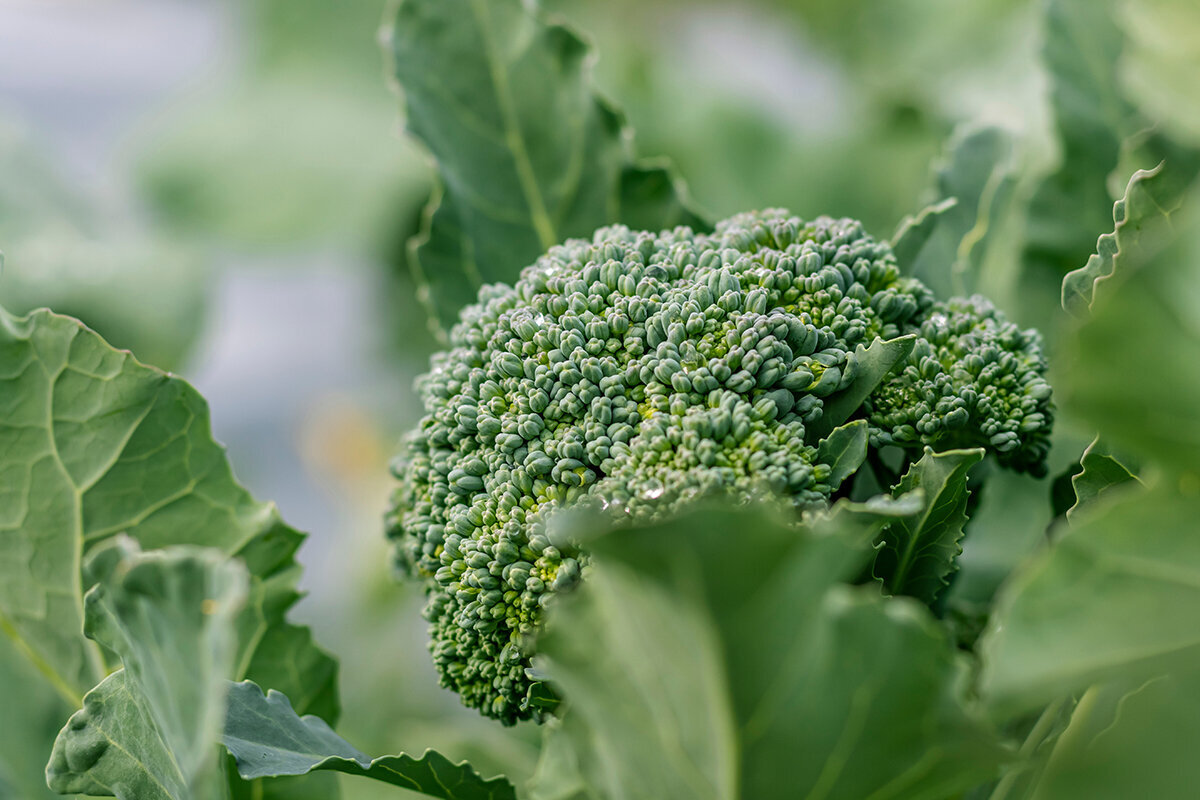
A broccoli crown records its weather. Close-packed buds, blue-green leaves and a firm branching stem reveal whether the crop enjoyed steady coolness or was hurried by heat, thirst and uneven growth.
In a greenhouse, broccoli is a rewarding cool-season crop—but only when the structure is treated as a ventilated shelter rather than a warm room. Protect young plants, leave room for the mature canopy, keep water consistent and release heat before the developing crown feels it.
Preferred seasonCool spring or autumn
Mature spacingAround 60–80 cm per plant
Useful climateCool, bright and well ventilated
Principal riskHot, uneven head formation
01 · Controlled coolness
The greenhouse advantage is not warmth, but fewer bad days.
The operating principle
Use glazing, vents, doors, temporary shade and careful watering to soften sudden weather changes. The objective is an evenly growing plant before head formation, not lush growth forced through a hot interior.
Broccoli is an expansive, cool-season brassica. An unheated British greenhouse can bring sowing forward, shelter young plants from persistent rain and protect a late crop, but it cannot remove the crop’s preference for cool, steady conditions.
02 · Choose the elevation
Pick a broccoli habit that suits the roofline.
Seed catalogues emphasise maturity, but greenhouse growers must also consider crown type, final dimensions, seasonal suitability and whether the plant continues with side shoots.
Compact broccoli
Shorter season
Smaller frame · generous spacing
Sprouting broccoli
Repeated picking
Small shoots · open crown
Calabrese
Principal crown
Broad canopy · side shoots
Compact broccoli types
These are practical for a modest greenhouse bed or an autumn run. They still require enough room for light and airflow: compact describes the plant’s habit, not permission to crowd it.
Sprouting types
Sprouting broccoli produces many smaller shoots rather than one exhibition head. It rewards patient, cool growing and regular picking, although its branching stems can become dense and must remain open to moving air.
Calabrese and heading types
The familiar green-headed crop usually forms one principal crown followed, in many varieties, by smaller side shoots. Its broad canopy and decisive harvest make final spacing especially important under glass.
For a first crop, choose a variety recommended for the season in which you intend to grow it. Read the packet for exact maturity, final dimensions and spacing rather than forcing a winter or summer variety into an unsuitable greenhouse window.
03 · The young plant sets the scale
Raise a transplant that never has to recover.
Broccoli responds poorly to being checked, held pot-bound or transplanted roughly. A seedling may appear healthy while its restricted roots and interrupted growth are already increasing the risk of a premature miniature head, commonly known as buttoning.
From February, sow in clean, peat-free seed compost at about 2 cm deep. Place two seeds in each module and retain the stronger seedling. Once they emerge, provide bright, cool conditions and gentle air movement. Keep the compost evenly moist rather than saturated, and avoid pushing soft growth with excessive feeding.
Grow plants on until they have several true leaves and a coherent rootball. RHS guidance places transplant-ready broccoli at roughly 10–15 cm tall with a good root system. Harden plants gradually before moving them into the greenhouse bed.
Nursery-to-head growing sequence
01
SowPeat-free compost; shallow seed.
02
EmergeBright light; gentle air.
03
ThinSnip the weaker seedling.
04
HardenIncrease exposure gradually.
05
TransplantFirm deeply and water in.
Keep the compost evenly damp until emergence, but never waterlogged. Move seedlings promptly into strong light and provide gentle air movement so that stems remain short and stocky rather than pale, soft and drawn.
Thin by snipping the weaker seedling at compost level instead of pulling it out and disturbing its neighbour. Pot on before roots become tightly restricted, and keep actively growing plants watered throughout the hardening period.
Plant when each seedling has several true leaves, a sound root system and no developing crown. Set the lowest leaves close to soil level, firm the plant carefully and water thoroughly. A stable transplant is more valuable than a prematurely early one.
04 · Mature spacing is climate equipment
Plan for the canopy you will have at maturity.
Many greenhouse broccoli failures begin with a neat-looking but crowded bed. Young transplants occupy little space; mature brassicas do not. Once broad leaves overlap, condensation lingers, inspection becomes difficult and plants compete for light, water and fertility just as heads begin to gather.
Allow around 60 cm as a practical minimum for genuinely compact varieties, and move towards 80 cm for broad heading plants or wherever light and airflow are limited. Use similar room between rows, always checking the cultivar’s instructions. In a greenhouse, the path and vent line are part of the spacing calculation because they support air exchange, watering and clean access.
Reserve access beside the bed. You should be able to lift lower leaves, feel the soil at root depth and cut a central crown without leaning through or breaking the neighbouring plant.
Placement airflow diagram
Incoming air
Clear vent route
Clear vent route
Broccoli bed
Open canopy
Open canopy
Harvest path
Dry access
Dry access
Position the tallest broccoli where it will not obstruct airflow between doors, louvres and roof vents. A central path, even a narrow one, gives warm air somewhere to travel and makes daily inspection considerably easier.
Container broccoli needs a deep, stable vessel, fertile growing medium and the same mature separation as bed-grown plants. Pots heat and dry faster than greenhouse soil, so check moisture below the surface particularly carefully during bright spells.
05 · Climate chamber
Head quality is a pressure map, not a thermostat setting.
Broccoli tolerates cool conditions well, but developing heads respond poorly to accumulated heat and irregular moisture. Aim for bright, cool days with moving air, opening doors and vents before the interior begins to feel hot and still. On sunny mornings, act early rather than waiting for leaves to become visibly limp; by that point the crop has already carried a significant stress load.
A glazed structure can overheat even when the outdoor day feels mild. Observe conditions at canopy level and note how quickly direct sun changes the interior. A min-max thermometer can help reveal short heat spikes, but regular vent checks remain the essential management tool.
Pressure ↑Stage →
High
Checked
Loose
Open
Mid
Water
Vent
Pick
Low
Steady
Set
Tight
Daily ventilation actions
- Morning
- Open roof vents, louvres or doors before direct sun turns the greenhouse into a heat store. Confirm that there is genuine air exchange across the crop, not simply one small opening.
- Midday
- Use temporary shading sparingly during fierce sunny spells. Broccoli needs strong light, so prioritise ventilation and reliable root moisture before reducing the light reaching its canopy.
- Evening
- Adjust openings before a cold night, while allowing watered foliage and the greenhouse floor to dry as far as practical before darkness and falling temperatures arrive.
- After watering
- Vent sufficiently to release humidity. Direct water towards the soil and do not use persistently wet foliage or a soaked floor as the primary way to cool the greenhouse.
06A · Water stream
Keep the root zone even.
Broccoli is not forgiving of a drought-and-drench rhythm. From transplanting to harvest, it needs soil or growing medium that remains evenly moist without becoming saturated. Water deeply enough to reach the active root zone, then judge the next watering by soil feel, plant demand and weather rather than the calendar.
Check several centimetres below the surface before reaching for the watering can. Dry-looking soil can remain wet underneath, while a large canopy in bright conditions may exhaust a shallow watering surprisingly quickly. Water at the base, preferably early in the day, and let air circulate afterwards.
06B · Fertility stream
Feed for steady leaves before the crown.
Prepare the bed with garden compost or well-rotted organic matter. Broccoli is a hungry crop, but abundant nitrogen cannot replace healthy roots, adequate light, continuous moisture and cool conditions. In an established greenhouse, begin with a soil test where practical and use balanced, measured nutrition rather than applying repeated feeds in response to every imperfect leaf.
Use a vegetable-appropriate fertiliser only where the soil and crop require it, following the product directions. Record what was applied and when. Excessive feeding can produce soft, lush growth and obscure whether the underlying problem is fertility, watering or temperature management.
Water and fertility meet at head formation: a well-rooted plant that has not paused for thirst or nutrient shortage is better prepared to build a close, firm crown.
07 · Read the canopy
How a tight head forms.
A broccoli crown is a cluster of undeveloped flower buds, but its quality is established well before those buds become visible. The plant must first build broad, vigorous leaves and a root system capable of continuous uptake. When cultivar maturity and conditions align, the central growing point begins assembling the head.
This is why a malformed crown often reflects an earlier event. A miniature head on an undersized plant can report cold shock, drought, root restriction or transplant stress. Coarse, separating buds and yellow flowers usually report a later interruption, such as excess warmth, uneven moisture or delayed harvesting.
Before initiationPrioritise balanced leaf and root growth. Young plants need space, oxygenated soil, regular water, bright light and sufficient—not excessive—nutrition.
At initiationKeep greenhouse conditions particularly even. Avoid sudden heat accumulation, drought and abrupt changes in watering or fertiliser concentration.
During sizingMaintain airflow around the crown, inspect closely and harvest while the buds remain tight instead of waiting for the largest possible diameter.
08 · Weather fronts
When the crown says that conditions have changed.
Do not apply a generic treatment to every imperfect head. Compare the symptom with plant age, recent temperatures, watering history, root condition and the appearance of the surrounding leaves.
Early head
Buttoning
Small plant.
Coarse buds
Loose head
Heat or uneven water.
Yellow buds
Opening
Harvest now.
Hollow stem
Stress
Review conditions.
Small early crown
Buttoning
Likely pattern: A young plant experienced a growth check through cold exposure, dryness, restricted roots, delayed planting or rough transplanting. It began forming a head before establishing enough leaf area and root capacity.
Least disruptive response: Harvest the tiny head if useful and keep the plant watered and airy in case it produces side shoots. Improve establishment and transplant timing for the next sowing.
Open or coarse buds
Loose head
Likely pattern: Warm conditions, weak ventilation or irregular moisture accelerated development. A mature crown left on the plant too long can also lose its dense texture as individual buds separate and prepare to flower.
Least disruptive response: Harvest promptly while the crown remains edible. For the next crop, ventilate earlier, water evenly and choose an early or autumn window instead of peak summer under glass.
Yellow petals or yellow cast
Opening crown
Likely pattern: The harvest window has passed, often because warm greenhouse conditions moved the mature crown rapidly towards flowering. This is usually a timing or stress issue rather than a disease symptom.
Least disruptive response: Cut immediately. Quality is best before flowering, although sound stems and buds remain usable. During a warm interval, inspect maturing crowns every day rather than relying on a weekly routine.
Brown tissue or hollow stem
Internal stress
Likely pattern: Fast growth, inconsistent water, cultivar sensitivity or an imbalance in nutrient availability may contribute. At garden scale, one cut stem rarely provides enough evidence for a precise nutritional diagnosis.
Least disruptive response: Review watering and feeding records, then test the soil before adding more fertiliser or micronutrients. Stabilise the next crop’s growth instead of chasing one symptom with repeated products.
09 · The quiet inspection round
Pests and moisture trouble arrive before they become obvious.
A greenhouse shelters broccoli but does not seal it from caterpillars, aphids, cabbage whitefly, slugs or occasional disease. Inspect beneath leaves, along midribs and inside sheltered folds near the crown whenever you water. Early hand-picking is often more effective than waiting for extensive feeding damage.
Mealy cabbage aphid has a pale, waxy appearance, while cabbage whitefly rises in a small white cloud when disturbed. Begin with hygiene, access and the least disruptive response: remove heavily infested leaves, control sheltering weeds and clean tools between batches. Any control product must be approved for the situation and used exactly as directed by its UK label.
Airflow is practical disease prevention. Maintain spacing, water the soil rather than the crown, remove damaged material and do not leave the greenhouse closed after irrigation simply because the outdoor air feels cool.
Five-minute crop inspection
- Lift two lower leaves and check for aphids, whitefly and caterpillars.+
- Part the canopy gently and confirm that the foliage is dry and moving air can reach the centre.+
- Feel several centimetres below the soil surface before watering; do not judge moisture from the top crust alone.+
- Inspect the crown for separating buds, yellowing, fresh frass or feeding damage.+
- Remove badly damaged or infested leaves from the greenhouse rather than leaving them beneath the bench or on the path.+
Rotate brassicas where the greenhouse layout allows, particularly in permanent soil beds. Keep simple notes of crops, pest pressure and amendments so that recurring problems can be recognised before the next planting occupies the same ground.
Main-head harvest elevation
Main crown
Tight green buds
Tight green buds
Cut line
Below the crown
Below the crown
Leaf axils
Keep intact
Keep intact
Side shoots
Laterals remain
Laterals remain
Cutting guide: Harvest when the central head reaches a useful size while every bud remains close and green. With a sharp, clean knife, take several centimetres of tender stem, cutting below the crown but above healthy lower leaf axils.
After the central cut: Leave the plant rooted, watered and healthy. Many calabrese varieties form smaller secondary shoots from axillary buds; inspect these regularly and pick each one before its buds begin to separate.
10 · The bright cut
Harvest the crown, then let the plant answer again.
Do not wait for a supermarket-sized crown if its texture has begun to loosen. Greenhouse broccoli should be judged by dense buds, tenderness and colour rather than maximum diameter. In warm weather, inspect daily because a mature head can move quickly from compact green buds to yellow flowers.
Side shoots are among the finest rewards of greenhouse calabrese: tender, quick to cook and produced after the main harvest. Continue normal watering, maintain airflow and cut the shoots regularly while their buds remain closely packed. The sequence may continue for a fortnight or longer.
Cool the crop promptly after cutting and use it fresh. Broccoli loses quality quickly when held warm, and the difference between a firm, just-cut greenhouse head and one stored for several days is striking.
For a greenhouse planned around practical paths, usable roof ventilation and a productive cool-season bed, explore the Classic Aluminium Greenhouse. Its adaptable interior can support a spring nursery, a spacious autumn broccoli crop and the next rotation of leaves or herbs without compromising access.
11 · United Kingdom timing notes
Schedule head formation for your coolest reliable window.
Cooler north and uplands
Protection is especially useful for raising even transplants and sheltering an autumn crop from persistent weather. Continue ventilating whenever conditions permit, because cool, damp air can linger around a dense brassica canopy even without obvious heat.
Milder south and cities
Spring and summer heat gain is often the greater challenge. Treat calabrese as an early or late crop, open the greenhouse promptly on bright mornings and position mature plants in the coolest, best-ventilated section available.
Coastal and exposed gardens
A greenhouse smooths wind and rain, but rapid weather changes and salt-laden air make daily checks valuable. Reliable doors, vents and an accessible path support the steady routine that broccoli needs.
Work backwards from the intended harvest using the cultivar packet’s maturity information, then allow time to raise sturdy seedlings. A Classic Aluminium Greenhouse—with observed sun patterns, clear paths and working vents—makes those seasonal decisions easier to carry through consistently.
12 · Field questions
A restrained answer is usually the right one.
Broccoli responds to small, timely corrections. Before adding feed, shade or treatments, decide whether the real interruption was heat, erratic watering, root restriction, crowding or simply a missed harvest.
Can broccoli grow in an unheated greenhouse?+
Yes. In the UK, an unheated greenhouse is often the most sensible setting for raising early seedlings and sheltering a cool-season crop. Its advantage is protection and moderation, not tropical warmth. Open doors and vents on mild sunny days so that mature plants do not overheat.
How many broccoli plants fit in a small greenhouse?+
Count mature plants, not seedlings. With approximately 60–80 cm between heading plants and comparable space between rows, a modest greenhouse may hold only a few. That can still be productive when the main crowns are followed by tender side shoots.
Why are my broccoli heads small?+
The cultivar may naturally be compact, but a miniature crown on an undersized plant usually indicates buttoning. Check whether the seedling became pot-bound or experienced cold, dryness, delayed transplanting or another abrupt interruption while young.
Should I shade greenhouse broccoli?+
Only use shading temporarily when persistent strong sun is creating excess heat. Ventilation is the first response, because permanent shade reduces the light required for a vigorous canopy. Improve airflow and maintain even root moisture before adding temporary summer shade.
Can broccoli grow in containers?+
Yes, provided each plant has a deep, generous vessel, fertile growing medium and enough separation for its mature canopy. Containers warm and dry faster than greenhouse beds, so reliable base watering and close monitoring during sunny weather are essential.
Sources & further reading
UK guidance behind the greenhouse crop plan.
More from Bloomcabin: UK greenhouse setup guide · aluminium greenhouse construction · Bloomcabin greenhouse collection
- Royal Horticultural Society — How to grow broccoli
- AHDB — Brassica crop walkers’ guide
- Royal Horticultural Society — Mealy cabbage aphid
- Royal Horticultural Society — Cabbage whitefly
- GOV.UK — Fertiliser Manual RB209
- GOV.UK — Nitrogen fertilisers in nitrate vulnerable zones
- Royal Horticultural Society — Broccoli sowing, spacing and harvest
Crown plan
Build around the quiet work of a good crop.
A serious greenhouse is not only a warm-weather home for tomatoes. It is an adjustable shelter for crops that excel in cool, bright conditions. Give broccoli a deliberate bed, generous mature spacing, a clean harvest path and ventilation that responds before pressure reaches the crown.
Configure a Classic Aluminium Greenhouse around a cool-season succession of broccoli, leafy crops, brassica seedlings and spring herbs. Its flexible layout helps preserve the access and ventilation that productive greenhouse growing requires. Explore the Classic Aluminium Greenhouse and consider its Classic Aluminium Greenhouse when planning a durable structure for successive crops.
Classic Aluminium GreenhouseDecision 01 Choose the cool-season harvest window first.
Decision 02 Draw mature broccoli spacing, not seedling spacing.
Decision 03 Keep an open, dry route for inspection and harvest.
