
How to Grow Coriander / Cilantro in a Greenhouse
Bloomcabin growing notes · United Kingdom
How to Grow Coriander / Cilantro in a Greenhouse
One brisk annual; two distinct harvests. Keep it cool and cut it young for vivid fresh leaves, or let selected plants rise, flower and dry for warmly aromatic coriander seed.
The green harvest
Fresh coriander is the fast side.
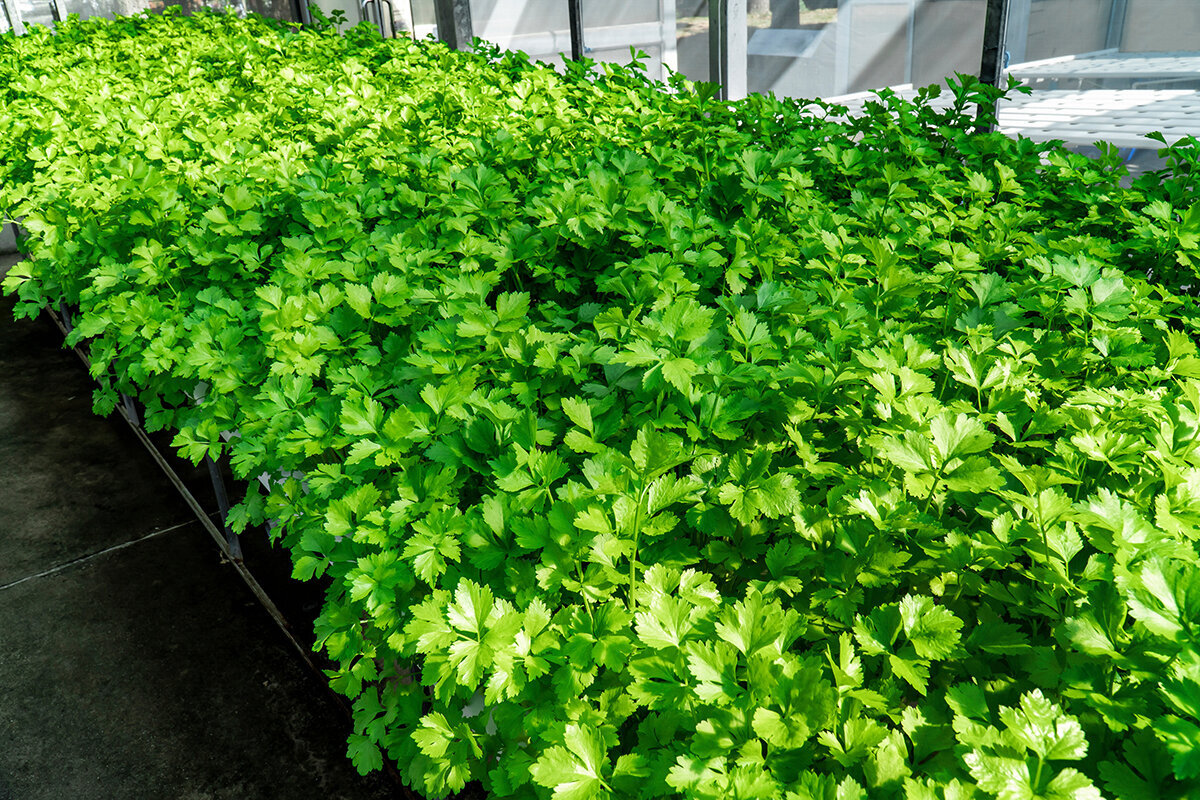
Fresh coriander is Coriandrum sativum harvested for its soft, aromatic leaves and tender stems. In a greenhouse it is wonderfully immediate: direct-sow a small patch, wait for a compact rosette, then cut only what you need. Its citrusy character is brightest when used fresh, before cooking or prolonged storage can soften it.
- Goal: repeated cuts of fresh leafy growth.
- Best habit: close sowing and short, overlapping batches.
- Climate priority: prevent hot roots, wilting and stagnant air.
- Crop rhythm: a matter of weeks, not one season-long plant.
The spice harvest
Coriander seed is the slower side.
Coriander seed comes from the same plant after it extends upwards, produces pale umbels and ripens round fruits. The foliage becomes fine and feathery as its purpose changes. Instead of fighting the flower stems, give a few plants elbow room, protect the maturing heads from shedding and finish them dry.
- Goal: aromatic, fully mature seed.
- Best habit: widely spaced plants with good airflow.
- Climate priority: ordinary summer warmth suits the ripening seed crop.
- Crop rhythm: one complete annual life cycle.
Leaf route
Cut it young.→
Seed route
Let it rise.This separation is the essential greenhouse decision. A leafy coriander row can be harvested densely; a seed crop cannot. Asking every plant to provide both often leaves too few useful leaves early and too little mature seed later. Divide the bench, border or trough deliberately—even a narrow, clearly labelled strip will do. Keep the leaf crop moving through small repeat sowings, while a separate seed group receives wider spacing and is left untouched once flowering begins.
Before the first green
Sow for the harvest you actually want.
Direct sowing is usually the cleanest route because coriander forms a taproot and dislikes unnecessary disturbance. Use fresh seed, peat-free free-draining compost or a finely prepared greenhouse border, and sow at a modest depth. Deep modular cells are an alternative, but avoid pricking out crowded seedlings or breaking apart their roots.
01
Choose seed with an ending in mind
For leaves, look for slow-bolting selections such as ‘Calypso’, ‘Santos’ or ‘Confetti’. They can extend the useful leafy window under accommodating conditions, but they are not immune to hot, dry greenhouse afternoons. ‘Confetti’ has particularly fine, ornamental foliage, while ‘Santos’ is commonly selected for leaf production. Choose a named open-pollinated variety if saving seed matters to you.
02
Use a shallow, firm sowing line
Sow about 1 cm deep unless the seed packet advises otherwise. Cover evenly, firm the surface lightly and water with a fine rose so the seed is not washed into clumps. In a greenhouse border or long trough, make restrained short drills across the narrow dimension; each batch is then easier to water, cut and clear independently.
03
Space leaves and seed plants differently
For leafy coriander, sow fairly closely and thin only enough to keep the seedlings upright and airy. Use the thinnings in the kitchen rather than transplanting them. For seed, retain fewer plants at roughly a hand breadth apart. Wider spacing allows light around the crowns and gives branching flower stems and developing umbels room to mature.
04
Wait without flooding
Keep the surface evenly damp until seedlings emerge, recognising that cool compost will slow germination. A clear cover may help briefly in a dry greenhouse, but remove it promptly after emergence so seedlings do not remain in still, humid air. Label every sowing with its date and intended harvest—leaf or seed—because several similar-looking batches soon become difficult to distinguish.
The greenhouse paradox
Give coriander light—without letting heat decide its ending.
Greenhouse protection is useful because it buffers cold nights and persistent rain, but trapped warmth can hurry coriander into flowering. This is a cool-season herb, so aim for bright conditions, dependable ventilation and a root zone that never repeatedly overheats or dries out. A thermometer positioned at crop level is more informative than an optimistic glance through the open door, especially when a bright British morning turns unexpectedly hot.
Light
Give plants a bright position. In high summer, soften fierce midday or afternoon sun with temporary shade rather than depriving the crop of morning light. A permanently dim corner produces weak, pale, stretched stems.
Temperature
Leaf crops favour cool, steady conditions rather than forced heat. Vent early during warm spells and move summer batches away from heat-storing walls or the hottest staging. Once seed is the aim, normal summer warmth is less troublesome.
Airflow
Open roof vents and doors early on bright days, using insect mesh where necessary. Avoid a permanently stagnant corner beneath staging. Automatic vent openers are valuable when the greenhouse warms rapidly while nobody is at home.
Water
Water the compost rather than routinely wetting the foliage, preferably early in the day. Leaves should dry promptly. Constantly wet surfaces combined with still air encourage damping-off, grey mould and soft growth.
Bolting anatomy
The leaf window, in five signals
01Rosette
Cut now
Cut now
02Central lift
Harvest
Harvest
03Fine foliage
Choose
Choose
04Umbels
Commit
Commit
05Seed set
Dry
Dry
Read the stages, then act. A low rosette of broad, rounded leaves is the prime cutting stage; begin harvesting lightly when plants are about 10–15 cm tall. When the centre starts to lift, take the best leaves while leaving the crown intact. Narrow, feathery foliage signals that the plant is redirecting its energy upwards. Once branching flower stems and pale umbels appear, decide whether to remove them for a brief extension of the leaf harvest or retain the plants for seed. Bolting is not caused by one mistake alone: longer days, heat, dry-root stress, crowding and normal plant maturity all contribute. Vent sooner, provide light shade during fierce summer weather, water before plants wilt and sow the replacement before the existing crop is exhausted. Once the central stem has extended decisively, do not expect the original leafy form to return.
A fresh batch is the real insurance
Plant a braid, not a single event.
One large sowing creates one generous flush followed by one simultaneous bolt. Small repeats every two to four weeks create a more useful rhythm: baby leaves, full leaves, a replacement coming on and one deliberate group retained for seed.
Example seasonMarAprMayJunJulAug
Batch A · leafsow + baby leaves
Batch B · leaffull-leaf cuts
Batch C · leafsow + baby leaves
Batch D · leaffull-leaf cuts
Reserved group · seedflower, ripen, dry
Baby-leaf / replacement window Full-leaf cutting window Seed crop, deliberately retained
This calendar is a pattern, not a promise. Sow every two weeks if coriander is used constantly; every three to four weeks may suit a smaller household. In high summer, shorten the interval or move leaf crops to the coolest available position because their useful phase will be briefer. In autumn, slower growth may extend the interval naturally, provided the greenhouse remains bright and frost is excluded.
Leaf harvest
Cut with enough restraint for another flush.
Productive cuts sit above the growing centre. The crown marks the recovery point that must remain intact.
Three ways to harvest well
- Selective cut: take the larger outer leaf stalks at their base, leaving the small central leaves to unfold. This works well for a few generous kitchen handfuls.
- Light row cut: trim a closely sown young row above the growing point with clean scissors, taking no more than the top third and leaving a generous green base. Use this only while plants are vigorous.
- Never crown-shear: a hard cut at compost level ends the crop. That is perfectly reasonable when clearing a spent batch, but it is a final harvest rather than a route to regrowth.
Flavour-preservation rail: harvest during the cool of the morning after the leaves are dry; use them immediately where possible; refrigerate dry leaves loosely wrapped in kitchen paper inside a ventilated container; and freeze chopped surplus with a little water or oil for cooked dishes rather than expecting dried leaves to retain peak character.
A thoughtful greenhouse arrangement makes daily harvesting easier. Keep coriander near the door-side edge or at the front of a bench so cutting, watering and inspecting never become awkward. A practical setting for an accessible herb trough is the Classic Aluminium Greenhouse.
The warm, dry ending
Let selected plants flower. Then become patient.
Once you choose a seed harvest, stop taking meaningful leaf cuts. The plants will form airy umbels of pale flowers followed by green, round fruits. Keep the compost evenly moist while flowering is active, allow access for visiting insects through open doors and vents, and maintain generous airflow so foliage and seed heads dry promptly after watering. Support sprawling stems with a discreet hoop or short twig if necessary, but otherwise let the crop complete its cycle.
01Green
02Changing
03Part-dry
04Bag-dry
05Clean + store
- Green: immature fruits are still soft, bright and citrusy. They can be eaten fresh, but leave them on the plant if your aim is the familiar dry cupboard spice.
- Changing: watch for fruits shifting from green towards yellow-brown, straw or buff. Maturity is naturally uneven, particularly in a warm greenhouse, so inspect the umbels regularly.
- Part-dry: when many fruits are firm and buff-brown, cut whole stems before the driest heads begin scattering their contents across the greenhouse floor.
- Bag-dry: place the cut seed heads inside a clean paper bag, then hang or lay it in a warm, dry and airy room for about a week. Extend drying if any stem remains damp.
- Clean + store: when completely crisp, rub or shake the fruits free, sieve away the chaff and place only fully dry seed in a labelled airtight jar away from heat and direct light.
Do not wait for every fruit to become dark brown on the plant. The earliest heads may shed while the latest remain green. Cut when the majority is firm and changing colour, then let the crop finish slowly under dry, ventilated cover. Paper catches loose seed while allowing residual moisture to escape.
Correct without drama
Common greenhouse problems, read as cause and response.
Plants bolt while still very small
Likely cause: a hot, dry spell, crowded roots, longer bright days or compost repeatedly allowed to wilt before watering.
Response: harvest the usable leaves, vent earlier, soften the fiercest midday exposure and water before wilting. Removing a new flower stem may provide a brief leafy extension, but sowing a replacement in fresh compost is more dependable than trying to reverse a committed plant.
Pale, weak or stretched leaves
Likely cause: insufficient light, waterlogging, exhausted compost, dense sowing or a root system constrained in a shallow container.
Response: move the container into brighter filtered light, thin an overcrowded stand and check that drainage holes are clear. Use a pot at least 20 cm deep next time. Feed sparingly only if the growing mix is genuinely spent; rich nitrogen feeding encourages soft, crowded growth with less concentrated flavour.
Yellow lower leaves and tired growth
Likely cause: naturally ageing foliage, saturated compost, poor air circulation or an old crop already moving towards flowering.
Response: remove old leaves, allow the surface to dry slightly between thorough waterings, raise pots off a wet floor and maintain gentle ventilation. Clear ageing plants rather than forcing them through another cycle, then use a fresh sowing for the next harvest.
Aphids gather on tender tips
Likely cause: sheltered, soft growth in a warm greenhouse, where a small colony can become established before it is noticed.
Response: inspect shoot tips and leaf undersides twice weekly. Pinch off the worst clusters, isolate heavily affected pots and wash remaining aphids away with a firm but gentle water spray. Improve airflow and avoid excessive nitrogen. Flowering coriander may support beneficial insects when open doors and vents allow access, but regular observation remains the most useful first defence.
Seedlings collapse at compost level
Likely cause: damping-off encouraged by crowded sowing, saturated compost, unclean containers and stale, humid greenhouse air.
Response: discard affected seedlings, wash containers and begin again with fresh seed compost. Sow more thinly, water the growing medium without continually wetting foliage and ventilate gently. Do not attempt to rescue an overcrowded, failing tray by adding more water or fertiliser.
United Kingdom timing adaptations
Use the greenhouse to soften the season—not to ignore it.
Light levels, rather than the calendar alone, determine when an unheated greenhouse is ready. These are planning windows for ordinary British home greenhouses, not fixed dates. A shaded site, exposed garden or cold spring may require a later start.
Southern and sheltered gardens
From late February onwards, begin with a small sowing as daylight strengthens, but do not confuse early sowing with fast growth. Leaf production is generally most straightforward from March into early autumn. During summer heatwaves, prompt ventilation, temporary shade and steady moisture become decisive.
Central England and Midlands
Start cautiously during March or early April in a cold greenhouse, then establish a succession rhythm as conditions brighten. Warm summer afternoons can make the greenhouse hotter than outdoors, so keep leafy batches close to vents or under light shade. A late-summer sowing can provide useful cool-season leaves if frost is excluded.
Northern and exposed sites
A late-March or April start may be more dependable. Wait for stronger light and compost warm enough to support even germination. Greenhouse shelter protects young crops from persistent wet weather and can extend autumn production, although exposed gardens may still need careful night-time protection during cold spells.
For an orderly seasonal herb area with useful ventilation and protected growing space, consider the Classic Aluminium Greenhouse. During dry spells, its accessible staging and ventilated structure can support an even-watering routine; explore the Classic Aluminium Greenhouse.
Questions from the herb bench
Coriander greenhouse FAQ
Can coriander grow year-round in a greenhouse?
A greenhouse can extend the season substantially, particularly in spring and autumn, but year-round production depends on winter light, frost protection and summer heat management. An unheated greenhouse will produce very slowly in low winter light, while an overheated summer house can trigger rapid bolting. Treat coriander as a succession crop rather than a permanent plant, and regard late-winter batches as patient experiments.
How long does coriander take to germinate?
Allow roughly two to three weeks, although cool compost may delay emergence. Keep the surface evenly moist but never waterlogged, maintain gentle ventilation after germination and avoid repeatedly digging for the seed. Uneven moisture or sowing depth commonly produces uneven emergence.
Should I split coriander seed before sowing?
The round fruit contains two seeds and can be pressed gently to separate its natural halves, but this is not essential. Fresh seed, an even sowing depth, careful moisture and fine free-draining compost matter more. Do not grind the seed into small fragments.
What size container does coriander need?
Use a container with clear drainage holes and at least 20 cm of depth to accommodate the taproot. A long, moderately deep trough is often more useful than several tiny pots because it holds a short row, can be watered evenly and makes successive sowing dates easy to organise.
Can I grow coriander beside tomatoes?
Yes, but give it a distinct, cool and accessible edge. The area around mature tomatoes is often among the hottest parts of a summer greenhouse, while tomato roots demand heavier watering and the canopy can reduce airflow. A separate trough on staging allows coriander to be watered, shaded and replaced on its own terms.
When is coriander seed ready to harvest?
Harvest when most fruits have changed from green towards yellow-brown or buff, feel firm and are beginning to dry. Cut the whole stems before the earliest heads scatter, place them in a paper bag and complete the drying process in a warm, airy room before cleaning and storing.
Sources & further reading
Practical references behind this guide
More from Bloomcabin: custom aluminium greenhouses · UK greenhouse setup and layout guide · Browse the Bloomcabin UK greenhouse collection
- Royal Horticultural Society — How to Grow Coriander: UK guidance on sowing, spacing, succession, watering, leaf harvesting, flowering and collecting ripe coriander seed.
- Royal Horticultural Society — Herbs: Growing: broader British advice on raising, maintaining, harvesting and overwintering culinary herbs under suitable conditions.
- Royal Horticultural Society — How to Sow Seeds Outdoors: practical principles for preparing ground, making drills, sowing evenly, watering and caring for emerging seedlings.
- Royal Horticultural Society — Coriandrum sativum ‘Santos’: cultivar information for a coriander selection commonly grown for its aromatic foliage and culinary use.
- Royal Horticultural Society — Tips on Saving Your Own Seeds: accessible guidance on selecting healthy plants, collecting mature seed, drying it thoroughly and labelling stored batches.
- Oregon State University Extension — Growing Cilantro or Coriander Seed: cultivation advice explaining the plant’s separate leafy and seed harvests, bolting behaviour and seed-finishing process.
Cultivation should always be adjusted for your seed packet, greenhouse, site and prevailing weather. For a durable structure in which leaf batches and seed plants can be managed separately, view the Classic Aluminium Greenhouse.
Leaf route
Choose freshness.
Set aside one deep trough, sow the replacement before the present batch peaks and make the first cool-morning cut part of dinner—not a task postponed until every stem begins to bolt.
Seed route
Choose spice.
Give a few healthy plants room to rise, leave their umbels intact and let the fruits dry with patience. Clean the harvest carefully, label the jar and bring your own greenhouse-grown coriander seed into the kitchen.
