
How to Grow Grapes in a Greenhouse
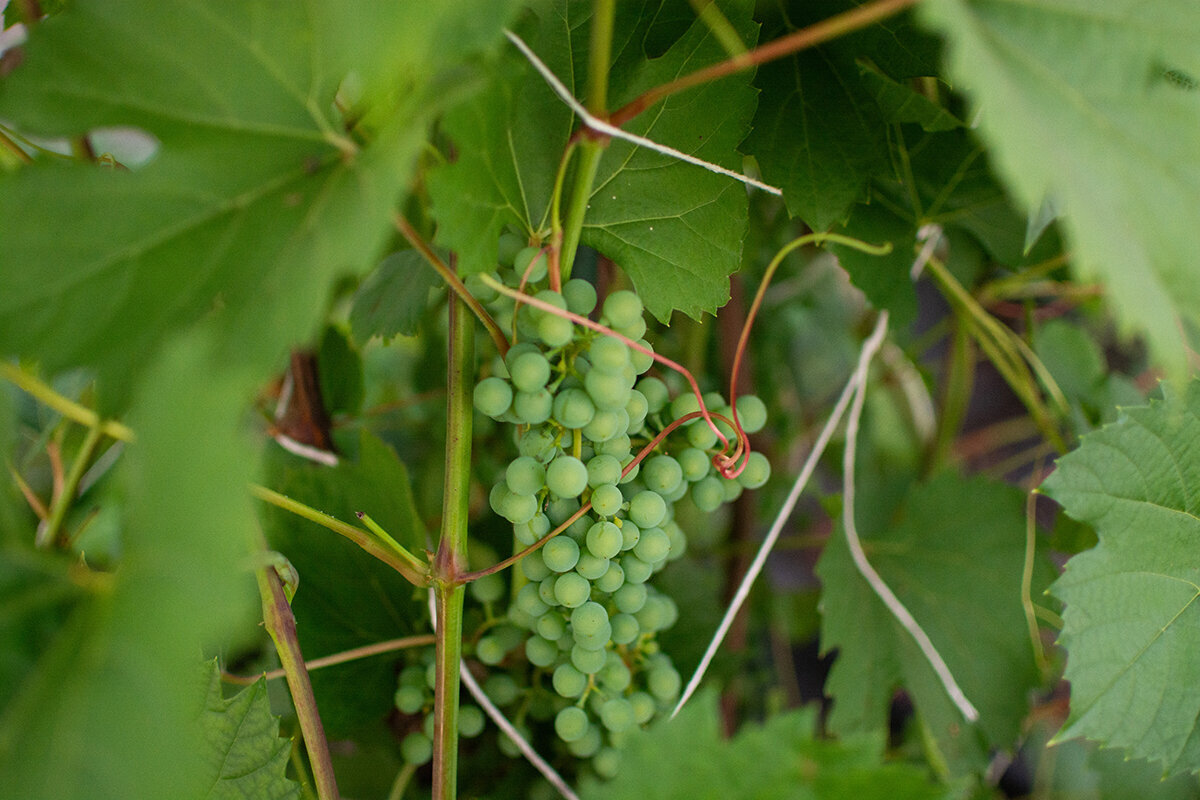
The vintage ceiling / UK growing guide
How to Grow Grapes in a Greenhouse
A vine beneath glass is not a seasonal crop. It is a permanent framework: roots below, disciplined wood at hand height and fruiting shoots trained into a bright, breathable roof.
01 / The case for glass
Begin with architecture, not berries.
Growing grapes in a greenhouse gives a British gardener valuable control over warmth, rainfall, access and canopy shape. It does not make a grapevine maintenance-free. Instead, it makes each intervention more deliberate—and the resulting crop more dependable.
Outside, persistent rain can leave foliage and bunches wet, while cool summers may shorten the ripening window. Under glass, a vine starts in greater warmth and its fruit is protected from direct rainfall. The exchange is responsibility: a greenhouse can become excessively hot, humid and still within hours. A handsome ceiling of leaves is not automatically a healthy crop. Grapes require moving air, measured crop loads, disciplined shoot spacing and an annual decision about which wood remains.
Treat the vine as a permanent resident at the greenhouse perimeter, not another pot placed among tomatoes. Give it a stable root run, a clear route towards the ridge and an aisle that remains usable at full canopy width. When considering the structure, examine the proportions of the Classic Aluminium Greenhouse and plan the vine’s permanent position before planting rather than trying to accommodate it afterwards.
02 / Planting decisions
Choose for flavour, vigour and pruning habit.
For most greenhouse gardeners, fresh dessert grapes are the natural ambition. Do not choose solely by berry colour or a seedless label. Cultivar affects ripening time, flavour, vigour and the most appropriate pruning system. In an unheated greenhouse or cooler part of Britain, favour an early dessert cultivar. The RHS lists ‘Reliance’ for cooler sites and also recommends ‘Sovereign Coronation’ and ‘Schuyler’, often sold as ‘Boskoop Glory’. Confirm protected-cropping suitability with a specialist nursery.
Fresh eating
Dessert grape priorities
Look for appealing flavour, manageable bunches and reliable early ripening. Greenhouse protection provides a longer, drier season, but it cannot make a late or unsuitable cultivar ripen well in every British garden.
- Buy from a specialist supplier and confirm whether the vine is grafted.
- Prefer proven early cultivars over novelty alone.
- Allow generously for large leaves and vigorous laterals.
The pruning question
Cane or spur?
Grapes fruit on current-season shoots arising from buds on one-year-old wood. Some cultivars crop reliably from short spurs retained along permanent cordons; others, including certain seedless varieties, perform better when suitable one-year canes are selected and replaced annually. The method must follow the cultivar and nursery guidance, not simply a preferred diagram.
Rod-and-spur, or cordon training, is the classic greenhouse arrangement, with permanent rods and fruiting side shoots cut to one or two buds in winter. Design the support layout to accommodate whichever system your chosen vine actually requires.
Position at planting
Root zone first
The most forgiving arrangement is often roots outside and canopy inside. Train the trunk through a purpose-made low opening, leaving the roots in naturally watered outdoor soil. Alternatively, plant in a well-drained greenhouse border at the far end and train the vine along the side towards the door.
- Leave the graft union above soil level where the purchased vine is grafted.
- Direct irrigation towards the root zone, not foliage or flowers.
- Preserve working access around the trunk for pruning and inspection.
Improve poor soil with well-rotted organic matter, but avoid creating an excessively rich, wet planting pocket. Stable drainage matters more than heavy feeding. A large container can support a compact trained vine where border planting is impossible, although restricted roots require closer watering and feeding and will generally limit cropping potential.
03 / Support before growth begins
Give the vine a framework worthy of its roof.
Use strong 2–3 mm galvanised wire, reliable end anchors and attachment points designed for the greenhouse frame or supported independently. Keep wires clear of the glazing. RHS guidance suggests positioning the first wire about 40–45 cm above ground, with further wires roughly 25–30 cm apart. Never rely on glazing, gutters, shelf rails or lightweight accessories to carry mature wood, dense foliage and a full fruit load.
Elevation / framework
Permanent trunkVertical backbone
Permanent armsRetained cordons
Fruiting woodCanes and shoots
Establish the trunk over the vine’s first years. Permanent arms, or cordons, remain in a spur-pruned system, while selected one-year canes are renewed in a replacement-cane system. New seasonal shoots carry the leaves, flowers and crop.
04 / Dormant-season literacy
Read the age of the wood before cutting.
The most useful grape-growing fact is also the source of much pruning anxiety: the coming crop develops on new shoots arising from buds on one-year-old wood. Dormant pruning is therefore an annual act of editing. Retain the permanent structure required by the training system, preserve purposeful one-year growth and remove the tangled excess that would shade and confuse the next canopy.
I
Permanent wood
II
One-year cane
III
Current shoot
IV
Removal
Permanent wood: The trunk and, in a cordon system, permanent rods form the durable architecture. Keep sound, well-positioned wood, removing it only when damaged, congested or no longer productive.
One-year cane: Well-ripened brown growth made during the previous season contains the buds that produce the next fruiting shoots. Retain a cane or shorten it to strong, plump buds as the system requires.
Current shoot: In spring, retained buds break into green shoots carrying leaves, tendrils, flowers and fruit. These shoots also produce wood that may become valuable at the following winter pruning.
Removal: Exhausted, tangled and surplus material is removed during dormancy. A correctly managed vine can look dramatically reduced after pruning, yet return with vigorous, organised growth.
For established indoor cordons, undertake the main pruning in early winter, commonly late November or December, before greenhouse vines begin their early spring sap flow. Late cuts can bleed freely. Do not apply a universal bud count without confirming the cultivar and system. The objective is balance: enough fruitful buds, sufficient leaf to ripen the crop and open space that keeps the canopy dry, legible and workable.
05 / Spring into summer
Shoots first. Bunches second.
Once buds break, greenhouse growth accelerates quickly. The important work begins before there are bunches to admire: decide which shoots belong in the permanent pattern. Rub away weak, badly placed, trunk-originating or crowded shoots while they are small. Retain healthy growth at useful intervals and tie it gently before tendrils bind neighbouring shoots into a knot. On an established cordon, aim for selected shoots approximately 25–30 cm apart where possible.
Stage 01Shoot selection
Stage 02Flowering
Stage 03Fruit set
Stage 04Thinning
Stage 05Berry growth
Shoot selection: Thin early to preserve an open pattern and direct the vine’s energy into correctly positioned, productive shoots.
Flowering: Ventilate and keep conditions dry. In still, humid weather, gently tapping flower clusters around midday can help pollen move.
Fruit set: The emerging berries reveal the crop load. On young vines, remove fruit that competes with development of the permanent framework.
Thinning window: For established dessert grapes, retain one good flower cluster per selected side shoot, then remove crowded, damaged or malformed berries gradually.
Berry growth: Continue tying and shortening laterals. Keep the fruit zone visible and airy without suddenly stripping away all protective leaf cover.
A note on flower and fruit set
Greenhouse grapes do not routinely require elaborate hand pollination. Climate management is the more useful intervention: ventilate before heat and humidity build, avoid wetting flowers with overhead watering and maintain air movement through an open canopy. If fruit set repeatedly disappoints, review the cultivar, temperature extremes, crop balance and pruning method. Overfeeding or retaining too much growth can produce abundant leaves at the expense of well-ripened wood and fruit.
06 / Glasshouse fruit-zone discipline
Airflow is part of the pruning system.
A vine makes a greenhouse feel wonderfully lush, but that effect becomes risky when leaves overlap, bunches touch and moist air stalls beneath the ridge. Pair roof ventilation with an open door or lower-level inlet whenever conditions allow. The aim is controlled exchange: accumulated heat escapes above, fresher air enters lower down and foliage dries instead of holding condensation around flowers and fruit.
Overhead plan / fruit bay
Access path
Clear working width
Clear working width
Leaf wall
Open shoot plane
Open shoot plane
Fruit zone
Free-hanging bunches
Free-hanging bunches
Water deeply and consistently. Newly planted vines need reliable moisture while roots establish. An established vine rooted outside may need little extra water, but indoor roots require regular attention throughout active growth. Apply water to the soil, preferably early enough for the greenhouse atmosphere to dry before evening. Avoid abrupt changes from drought to heavy soaking as berries enlarge, since uneven moisture stresses the vine and may contribute to splitting. Check the border, weather and crop rather than watering by calendar alone.
07 / From green fruit to maturity
Harvest by taste, not colour alone.
As berries soften and colour develops, keep the canopy open without abruptly exposing previously shaded bunches to fierce sunlight. Ripeness depends on the cultivar: appearance helps, but flavour, sweetness, texture and the way an individual berry releases offer better evidence. Taste fruit from several parts of a bunch over several days. Once ready, cut the bunch with clean secateurs, retaining a short section of stalk and handling the fruit gently.
Grapes do not become sweeter after cutting, so resist harvesting solely because the skin looks coloured. After harvest, keep healthy leaves while they remain functional; they continue replenishing the vine’s reserves. Promptly remove fallen or damaged berries and maintain ventilation as autumn conditions become cooler and damper.
Green berry growthKeep moisture even and avoid pronounced wet–dry cycles, particularly where berries have split in previous seasons.
Softening / colouringContinue observing the fruit zone. Reopen it modestly if laterals have closed the canopy, while retaining sufficient healthy leaf to power ripening.
Flavour checksTaste berries from the shoulder, middle and lower part of the bunch. A ripe-looking exterior may conceal sharper fruit beneath.
Harvest and aftercareCut whole bunches carefully, clear damaged fruit and retain functional leaves. Store harvested grapes cool, dry and unwashed until required.
08 / Problem cellar
Diagnose the climate before reaching for a cure.
Central diagnosis
What changed within the fruiting bay?
When the vine looks leafy but berries colour poorly, split or develop rot, the temptation is to add feed or apply a quick treatment. Inspect the physical conditions first. Can you see and reach every bunch? Are shoots stacked against the wire or glass? Does condensation remain after sunrise? Is a roof vent obstructed, a door routinely closed or irrigation irregular? Finally, ask whether the vine carries more bunches than its roots and leaf area can ripen.
- Poor colour: often reflects excessive shade, too much crop or a late cultivar unsuited to the site.
- Split berries: look for irregular soil moisture, sudden water uptake and bunches that have become excessively tight.
- Mites or small pests: inspect leaf undersides for pale mottling, tiny mites and webbing; use only controls approved for the crop and follow labels.
- Weak growth: investigate poor drainage, restricted roots, low light or a young vine being asked to carry fruit too soon.
09 / Adjust timing for cultivar, region and season
A greenhouse grape year at a glance.
| Season | Primary task | What to inspect | The restraint to practise |
|---|---|---|---|
| Early winter | Complete the main cane or spur pruning; remove dead, tangled and unwanted wood, leaves and old ties. | Trunk condition, wire tension, damaged supports and conflicts with glazing or roof clearance. | Do not postpone major cuts until sap begins rising inside the greenhouse. |
| Late winter | Check supports, mulch the root zone and prepare the ventilation system. | Swelling buds, clean borders, drainage, sound wires and the earliest pest activity. | Avoid heavy feeding before you understand the vine’s natural vigour. |
| Spring | Select shoots early, tie growth and begin active daytime ventilation. | Shoot spacing, flower development, soil moisture and rising roof temperatures. | Do not allow every bud to become a competing shoot. |
| Summer | Manage laterals, crop load, airflow and consistent root-zone watering. | Condensation, shaded bunches, mildew, mites and the pace of berry development. | Avoid overfeeding, drastic defoliation and irregular heavy soaking. |
| Harvest / autumn | Harvest by taste, clear fallen fruit and retain healthy leaves after picking. | Berry splitting, rot, uneven ripeness and the condition of the post-harvest canopy. | Do not remove functional foliage merely because the bunches are gone. |
For broader decisions about roof volume, paths, borders, water access and working space, examine the Classic Aluminium Greenhouse. A permanent grapevine performs best when the structure and the rest of its productive interior are planned around it.
FAQ
Questions from beneath the canopy.
A grapevine rewards observation more than rigid calendar gardening. These answers provide a sound UK starting point, but always match pruning and cultivar decisions to the particular vine you buy.
Can grapes grow in a small greenhouse?
Yes—and one vine is generally enough. Position it at the far end, train it along one side parallel to the ridge and maintain a clear central path. A small greenhouse cannot conceal poor canopy management, so install support before planting, thin shoots consistently and be realistic about sharing permanent roof space with tomatoes, peppers and staging.
How many grapevines should I plant?
For most domestic greenhouses, one well-trained vine can occupy a meaningful length of roof and provide ample work and fruit. Add another only where there is genuinely separate support length, adequate root space and a practical plan for keeping both fruiting zones ventilated, accessible and clear of other crops.
Do greenhouse grapes require hand pollination?
Not usually, although a gentle tap or flick of the flower clusters at midday may help during still, humid weather. More importantly, ventilate the greenhouse, keep flowers dry and avoid overhead watering while the vine is in bloom.
Should I grow the vine in a pot?
A large permanent container can work when planting in the ground is impossible, especially for a compact trained standard. However, outside soil or a well-prepared greenhouse border offers a more forgiving root volume. Container vines need closer watering and feeding and generally have more limited fruiting potential.
Why is my vine leafy but producing poor grapes?
Common causes include an excessive crop, too many shoots, weak light around the bunches, too much nitrogen, irregular watering, poor ventilation or a cultivar that ripens too late for the site. A young vine may also be cropping before its framework is ready. Begin by reviewing winter pruning, early shoot selection and bunch numbers rather than trying to force sweetness with extra feed.
Sources and further reading
Trusted guidance for the working vine.
These UK resources support the cultivar, planting, indoor cultivation, pruning, canopy and pest guidance in this article. Training systems vary, particularly among seedless grapes, so use them alongside the current instructions supplied with your specific vine and follow all product labels.
More from Bloomcabin: automatic greenhouse window openers · UK greenhouse setup guide · Bloomcabin aluminium greenhouse FAQ
- Royal Horticultural Society —Grapes: overview and practical advice
- Royal Horticultural Society —How to grow grapes successfully
- Royal Horticultural Society —Grapes under cover: indoor cultivation
- Royal Horticultural Society —Rod-and-spur pruning and training guidance
- Royal Horticultural Society —Glasshouse red spider mite guidance
- Royal Horticultural Society —May greenhouse care and advice
- Sunnybank Vine Nursery —Planting and growing grapevine instructions
The vintner’s harvest table
Plan the greenhouse around the vine you will keep.
Before planting, allow for the trunk, permanent framework, roof-level wires, open fruit zone and the gardener who will prune, tie and harvest it. Explore the Classic Aluminium Greenhouse, then review the Classic Aluminium Greenhouse to shape a productive, accessible interior from the first season.
Classic Aluminium Greenhouse