
How to Grow Green Beans in a Greenhouse
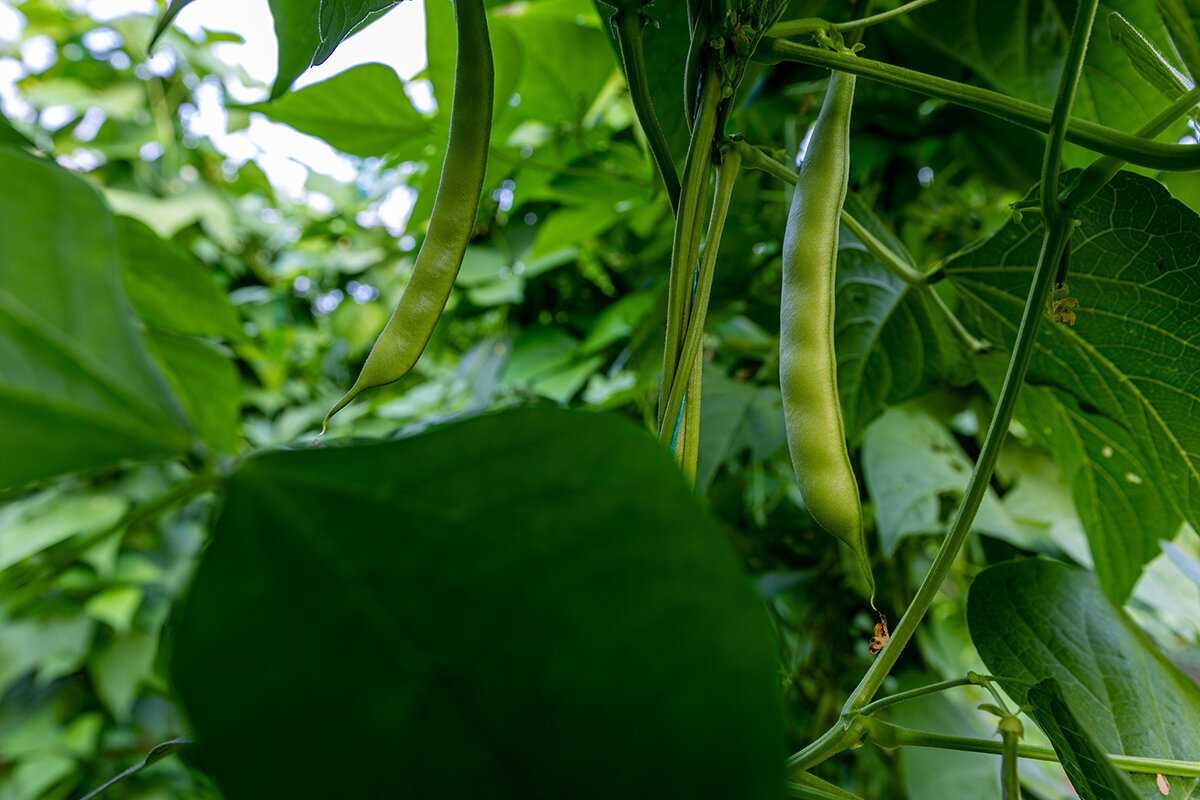
Bloomcabin field manual 14 · protected vegetable growing
How to Grow Green Beans in a Greenhouse
French beans are rewarding under glass, but warmth alone is not enough. Give them warming compost, an open root zone, a clear route for growth, moving air through flowering, consistent moisture without saturation and regular picking before the pods become coarse.
Choose your crop route
Select dwarf beans for a quick, low crop, a concentrated harvest and flexible succession sowing. Select climbing beans for extended picking, efficient use of floor space and a greenhouse side or end wall that can carry a purposeful support system.
01 / operating principle
A greenhouse extends the season—but must not become a hot, still room.
Greenhouse French beans make particular sense where spring conditions remain cold and wet, summer rain keeps outdoor foliage damp, or an exposed garden delays growth. Under cover, you can warm the bed more reliably, shelter young plants from wind, direct water to their roots and maintain a useful picking season as outdoor conditions become less dependable.
A greenhouse is also an amplifier. It intensifies warmth, light, evaporation and the humidity that follows irrigation, as well as every consequence of overcrowding. A crop that would pause outdoors may shed flowers inside a closed structure on a bright summer afternoon. The objective is not a sealed tropical room, but a well-routed environment that steadies the roots while allowing excess heat and humid air to escape.
For British gardeners, the useful season depends on local conditions. In northern, coastal and exposed gardens, cover can make a late-spring sowing considerably more dependable. In warmer southern locations, the greater challenge may be controlling heat during flowering. An unheated greenhouse becomes usable earlier than an outdoor plot, but it does not guarantee mild April nights. Local weather still determines sowing time; the structure simply makes the margins of the summer season more productive.
Roof ventilation, practical shading and genuine walking room are growing equipment rather than decorative extras. Consider the Classic Aluminium Greenhouse when planning ventilation, access and vertical growing space around a productive vegetable crop.
02 / habit selection
Choose the plant’s architecture before choosing the variety name.
Low circuit
Dwarf beans
- Footprint Low, broad and reachable.
- Support Usually minimal.
- Timing Quick first crop.
- Harvest Concentrated flush.
- Placement Sunny, ventilated bed edge.
Same crop · different routing
Vertical circuit
Climbing beans
- Footprint Narrow below, tall above.
- Support Strong canes or strings.
- Timing Slower to establish.
- Harvest Long, continuous run.
- Placement Side bed or end wall.
Choose dwarf French beans when you want a compact crop that matures relatively quickly, when a low bed is easier to manage or when a defined succession schedule matters more than one extended harvest. Most dwarf varieties form low, largely self-supporting plants and produce a generous but concentrated flush. A second sowing two to three weeks after the first is the simplest way to extend the household supply.
Give dwarf beans room rather than packing them into a dense green carpet. Allow roughly 15 cm between plants, using blocks or double rows that remain reachable from the path. Their support requirement is modest, but their leaves still need an air route. A broad low bay or front border edge often works well because you can inspect the foliage, water at soil level and avoid trapping humidity within the planting.
Choose climbing French beans when useful height is available and you want sustained picking from a smaller root-zone footprint. They take time to build their vertical framework, but can continue flowering and producing over a long period when the support is secure, every stem remains reachable and greenhouse heat does not interrupt flower set.
Install canes, tensioned strings or another vertical system before sowing. Climbing beans twine readily, but they should not be asked to stabilise an improvised structure once their roots are established. A warm side, end wall or dedicated full-height border is practical. Keep stems away from doors and working roof vents, and retain a clear path for watering, inspection and harvesting.
03 / sowing sequence
Begin with warm compost and an open root zone.
1Warm compost.
2Sow directly.
3Around 5 cm deep.
4Leave clearance.
5Moist, never soaked.
Direct greenhouse sowing or sowing into deep modules from late spring is usually more dependable than forcing a very early crop. Do not plant merely because the greenhouse air feels pleasant at midday; the root zone and nights must also be reliably mild. Bean seed is large and quick in warm compost but impatient with cold saturation. Chilly, airless conditions can lead to delayed emergence, weak seedlings or rotting seed that never establishes cleanly.
Sow each bean around 5 cm deep, while following any specific instructions on the packet. In modules or small pots, sow one seed per cell to minimise disturbance. Allow about 15 cm between dwarf plants in the final position. Give each climber its own cane or string station, with enough clearance for leaves and pods. Whatever the arrangement, preserve a genuine access edge rather than filling every visible patch of soil.
Prepare a fertile, free-draining greenhouse bed with mature garden compost, or use good-quality peat-free compost in containers. Beans do not need to be driven with rich feed. They associate with nitrogen-fixing bacteria once healthy roots develop, but that does not mean exhausted soil can be ignored. Excessive nitrogen commonly creates abundant foliage at the expense of flowers and pods, so begin with balanced soil preparation and feed only where the growing system genuinely requires it.
Moisten the sowing medium evenly before planting. It should hold together when squeezed but should not glisten, puddle or leave seed in airless wetness. Water after sowing, then maintain gentle, even moisture until emergence. Where slugs are troublesome or the final bed remains occupied, deep modules are useful. Plant out while seedlings are still small, before their roots begin circling, and keep the root ball intact because beans dislike unnecessary root disturbance.
04 / greenhouse routing
Make every stem, vent and picking face reachable.
Beans should never become a living barrier between you and the rest of the greenhouse. Their architecture is part of crop health: a stem you can reach is one you will train and pick; an open canopy is easier to inspect; and a bed that leaves the doorway and roof-vent corridor unobstructed is considerably easier to cool during bright weather.
Place climbing beans along one long side or at the far end, choosing the position least likely to shade lower crops. Orientation varies between gardens, so observe where the strongest light falls rather than applying a rigid rule. Preserve both the path of light and your own route through the greenhouse. Dense foliage above staging or across a doorway soon becomes awkward, overheated and difficult to harvest.
Overhead route planTall crop · low crop · clear route
Climbing-bean bed
Vertical support
Vent corridor
Dwarf-bean block
Door + path
Keep the central route open.
Climbing beans earn the tall zone because the crop is easier to manage when you can see the supports, reach both faces and pick without stepping through another bed. One disciplined row may be enough for a compact greenhouse. Fix canes, an A-frame or tensioned strings before seedlings climb, using an independent, secure arrangement that will not shift under the combined load of watered foliage and mature pods.
The greenhouse itself should support this working choreography. A Classic Aluminium Greenhouse provides a practical rectangular format for borders, central access, roof ventilation and a dedicated vertical-growing edge. When comparing dimensions and arrangements, consider how you will open vents, carry a watering can and reach behind mature foliage—not simply how many plants fit on the plan. The Classic Aluminium Greenhouse can help relate the structure to this crop route.
05 / water, feed, air
Three controls that must work together.
Beans need a consistent root-zone rhythm rather than a feast-or-famine cycle. Rain cannot correct missed irrigation under glass, while dense foliage may conceal drying soil below. Inspect before watering. A finger pushed several centimetres into the compost, or a careful check with a hand trowel, gives more useful information than the colour of the surface alone. Containers require more frequent attention than greenhouse borders.
Water
Water thoroughly at soil level rather than repeatedly wetting only the surface. Increase attention from flowering through pod swelling, when moisture stress affects both yield and texture. Drip irrigation or a carefully aimed watering can keeps foliage and flowers drier than overhead watering. Consistent moisture does not mean constant wetness: saturated compost excludes air from the root zone and can leave plants yellowing or wilting despite apparently plentiful water.
Feed
A well-prepared ground bed enriched with mature compost will usually need no regular feeding. Container-grown plants are different because their reserves are finite. Once the first flowers appear, apply a potassium-rich liquid feed about every fortnight, following the product label. Avoid generous nitrogen-rich feeds before or during flowering. They can produce an impressive leaf canopy while delaying flowers, reducing pod set and making ventilation more difficult.
Airflow
Vent early, before the greenhouse has already become hot. On a mild day, roof vents may provide sufficient exchange; in bright or humid weather, combine them with an open door or lower opening to create a route for rising warm air. Automatic vent openers are useful, but they complement rather than replace daily checks. Aim for steady air exchange through the canopy, not a harsh draught that dries young plants.
Canopy
Guide climbing stems onto their supports while they are young. When leaders reach the top, pinch out their tips to keep the crop at a pickable height and encourage lower side growth. Do not strip leaves aggressively because they power the crop. Remove only damaged foliage, leaves lying persistently on damp soil and occasional congested growth. With dwarf beans, correct initial spacing is more effective than trying to prune overcrowding later.
06 / thermal control
Flower set is the system most likely to fail in heat.
French beans enjoy summer warmth, but their flowers are vulnerable to hot, dry, still conditions. RHS guidance notes that greenhouse plants may be damaged as temperatures rise beyond about 27°C. Treat heat as a prompt for action, not a reading to watch passively.
Cold, wet compostSlow
Warm, bright conditionsProductive
Around 27°CVent now
Above 27°CFlower set at risk
01 · Vent
Exchange warm air.
Exchange warm air.
02 · Shade
Soften peak sunshine.
Soften peak sunshine.
03 · Water
Steady the roots.
Steady the roots.
04 · Watch
Inspect the flowers.
Inspect the flowers.
Open roof vents and doors before sunshine has fully loaded the greenhouse with heat. Prevention is easier than trying to cool a structure after its frame, paths and beds have stored warmth. As temperatures build beyond about 27°C, flowers may produce less viable pollen or abort, particularly when roots are also dry. A vigorous plant with falling blossom needs environmental correction first, not an extra dose of fertiliser.
Use temporary shade netting, blinds or an appropriate greenhouse shading treatment during the hottest periods rather than creating permanent gloom. Beans still require strong light to continue flowering. Water early enough for the crop to enter a hot afternoon with an evenly moist root zone, while avoiding wet foliage late in the day. For design context on integrating ventilation, shading and dependable working access, review the Classic Aluminium Greenhouse and plan environmental controls into the growing space before the support framework and mature foliage restrict your options.
07 / fault-finding manual
Read each symptom by where it appears.
Not every imperfect bean is diseased, and not every yellow leaf needs fertiliser. Pause, inspect the complete plant and trace the likely cause through moisture, airflow, temperature and pest activity. Remove seriously affected material promptly, but avoid assuming that every blemish requires a spray. Accurate observation is the most useful first treatment.
LeafCurling, stickiness or bronzing
Likely signals: Aphids may cluster on soft shoot tips, leaving curled leaves, sticky honeydew and visible cast skins. Fine pale stippling, bleaching, bronze colour or delicate webbing beneath leaves points more strongly towards spider mites, which are favoured by hot, dry and still greenhouse conditions.
First response: Inspect leaf undersides and shoot tips regularly. Remove badly affected leaves and deal with small pest populations promptly. Correct drought stress and improve ventilation where mites are suspected. If a treatment is needed, use only a product specifically approved and labelled for the pest and edible bean crop, following all current label directions.
FlowerBlossom drop or poor set
Likely signals: Heat and dry roots are the first suspects under glass, especially when flowering coincides with bright weather and temperatures above about 27°C. Excess nitrogen, insufficient light from overcrowding and stagnant air around a dense canopy can also produce vigorous foliage with disappointingly few pods.
First response: Record maximum and minimum temperatures over several days, open vents earlier, add only the temporary shading required and check moisture at root depth. Do not answer blossom drop with a strong nitrogen feed. Once the environmental signal is corrected, later flowers can remain on the plant and resume production.
PodTough, swollen or misshapen
Likely signals: Tough or visibly bulging pods are usually a harvesting problem: the seeds have begun enlarging and the pod is moving beyond its tender stage. Stringy texture, sparse filling or distorted pods can also reflect heat or uneven moisture during rapid development. Hidden pods are particularly common within a dense climbing-bean curtain.
First response: Pick every two or three days during peak production and inspect both faces of the row. Stabilise irrigation and harvest while conditions are cool, handling pods gently. Examine nearby leaves and shoot tips for pest evidence rather than automatically treating the symptom as a nutrient deficiency.
Root & stemYellowing, wilt or soft lesions
Likely signals: Slow growth, yellowing or wilting in wet compost suggests a poorly aerated root zone. Dense foliage, saturated soil and stale air also favour fungal and bacterial problems. Look for soft or water-soaked lesions, collapsing tissue or unusual white growth, and check whether containers are draining freely rather than remaining wet around the roots.
First response: Remove seriously infected plants and clear fallen petals, leaves and pods. Improve spacing, drainage and ventilation, and water at soil level rather than over the canopy. Do not immediately replant beans into a bed associated with a serious recurring disease. If the symptoms remain uncertain, seek an accurate horticultural diagnosis instead of applying treatments at random.
08 / harvest feedback loop
Pick tender Before seeds bulge.
Clear mature pods Renew flowering.
Pick early.
Pick often.
Pick often.
Check both faces Find concealed pods.
Cool promptly Protect pod quality.
Harvest French beans when the pods are smooth, crisp and tender, before individual seeds create obvious bulges. Many varieties are ready at roughly 15–20 cm, although the cultivar and preferred texture matter more than a ruler. A good pod should snap cleanly. Removing mature pods signals that seed production is incomplete, encouraging further flowering instead of allowing concealed pods to divert the plant’s energy into ripening seed.
Dwarf beans often deliver one generous wave, so a second sowing two to three weeks after the first can extend their season. Climbing beans respond to regular picking over a longer period. Walk the crop route every two or three days at peak production, gently lifting foliage and checking both sides. Carry a shallow basket to avoid crushing the pods, then use, chill, freeze or preserve the harvest promptly to retain its crisp quality.
09 / crop removal and soil reset
End the crop cleanly, then give the bed a new assignment.
When production slows and autumn light weakens, gather the final usable pods and cut healthy plants at soil level. Their roots can remain briefly in the border, avoiding unnecessary disturbance, but clear visible pods, yellow leaves, fallen flowers and support ties. Remove diseased foliage from the greenhouse rather than adding it to a home compost heap. Where a serious root or stem problem occurred, remove the affected root system where practical and clean the surrounding area carefully.
Beans are legumes, but they should not be treated as a complete fertiliser programme for the next crop. Their association with nitrogen-fixing bacteria is useful, yet much of the crop’s stored nutrient leaves in harvested pods and removed foliage. Add mature compost according to the bed’s condition and rotate away from beans where disease has appeared. Cooler-season salads, oriental leaves or an appropriate green manure can follow, depending on light and the wider greenhouse plan.
Close-down checklist
- +Strip supports and wash reusable canes, clips, pots and tools before storing them.
- +Remove fallen pods, spent flowers and leaves from paths, borders and beneath staging.
- +Inspect drainage before replanting; correct compacted or persistently wet areas rather than concealing them beneath fresh compost.
- +Review which ventilation routine, watering interval, crop position or variety made the greatest difference.
- +Plan the next crop around available light and height, not simply the space vacated by the beans.
For a greenhouse format that can accommodate clear paths, opening vents and disciplined vertical crop supports, explore the Classic Aluminium Greenhouse.
10 / greenhouse bean FAQ
Practical answers before the next sowing.
Can you grow green beans year-round in a greenhouse?
Not ordinarily in an unheated UK greenhouse. French beans are tender summer plants that need bright conditions and reliably mild nights. A greenhouse can bring the useful season forward and protect a later crop, but it does not turn beans into winter vegetables. Treat an unheated structure as a place that warms sooner, not as a guarantee against spring frost or cold, wet compost.
Are dwarf or climbing beans better for a small greenhouse?
Choose climbing French beans when you have secure vertical support and want the longest harvest from a narrow floor area. Choose dwarf beans when height is limited, a quick crop is required or staggered sowings suit the plan. In a compact structure, one disciplined climbing row may use space more efficiently than several crowded dwarf rows, provided it does not shade other crops or obstruct ventilation.
Do French beans need hand pollination in a greenhouse?
No. French beans are generally self-pollinating and do not normally require hand pollination. Poor pod set under glass is more likely to result from excessive heat, dry roots, insufficient light or stagnant air within an overcrowded canopy. Improve the environment and review feeding before assuming that pollination itself is failing.
How often should greenhouse beans be watered?
Water according to root-zone moisture, weather, plant size and whether the crop occupies a container or border—not to a fixed daily timetable. Check each morning during warm weather and water deeply at the base as the upper compost begins to dry. Maintain especially consistent moisture through flowering and pod swelling, but always preserve air within the root zone.
Why are my bean plants all leaves and no pods?
Common causes include excessive nitrogen, inadequate light caused by crowding and heat during flowering. Check whether the greenhouse has remained above about 27°C, whether flowers are dropping and whether the crop received a rich nitrogen feed. Open the vents and door early, stabilise watering and avoid adding further high-nitrogen fertiliser.
Can I grow green beans in greenhouse containers?
Yes. Dwarf French beans are especially suitable, provided the container is broad enough, drains freely and receives consistent watering. Climbing beans need a substantial pot and a support secured independently against the mature crop’s weight. Containers dry much faster than greenhouse borders, so check them frequently and begin a potassium-rich liquid feed every fortnight after the first flowers appear, following the label.
Sources & further reading
Technical references behind this UK field manual.
More from Bloomcabin: Bloomcabin UK greenhouse setup guide · Bloomcabin’s guide to custom aluminium greenhouses · Bloomcabin aluminium greenhouse and colour guide
- Royal Horticultural Society — How to grow French beans
UK guidance covering sowing, planting, supports, watering, feeding, harvesting and French bean types. - Garden Organic — How to grow French beans
Organic growing advice on sowing, crop establishment, regular care, common problems and harvesting French beans. - RHS — Greenhouse ventilation and shading
Practical guidance on controlling summer temperature, maintaining airflow and applying appropriate greenhouse shading. - RHS — June greenhouse advice
Seasonal UK advice for ventilation, damping down, watering, shading and greenhouse crop care. - University of Minnesota Extension — Growing beans
Further horticultural context on bean planting, crop care, harvesting and common pest or disease symptoms. - RHS French bean growing guide
UK reference for warm-season bean culture, support, feeding, watering and continued harvesting.
Master switch
Give your bean crop a greenhouse designed around its route.
Whether the plan calls for a compact block of dwarf beans or a productive wall of climbing plants, configure the structure around the essentials: opening ventilation, dependable light, a clear working path, consistent irrigation and secure vertical space. The result is not simply greater shelter, but a calmer and more productive growing system.
Classic Aluminium Greenhouse