
How to grow peas in a greenhouse
Greenhouse growing / cool-season edition
How to grow peasin a greenhouse
A greenhouse does not turn peas into a summer crop. It gives this cool-season vegetable a more composed beginning, shelter from difficult weather and an earlier harvest before sustained summer warmth takes over.
I. Cool-season overture
The best greenhouse pea crop is not forced into abundance by warmth. It is composed around restraint: a cool root run, moist but aerated soil, early support, moving air and prompt harvesting. Put those notes in order and peas become an elegant use of the greenhouse while tomatoes, peppers and cucumbers are still waiting in the wings.
Use the greenhouse to extend the season
Across much of the UK, peas are most obliging from late winter into spring. Under glass, sowing can begin while outdoor beds remain cold, sodden or awkward to prepare. The aim is not a tropical interior, but a protected and workable growing bay where plants can establish early and finish before persistent summer heat takes over.
An unheated greenhouse is particularly useful. It moderates wind and heavy rain, shelters young seedlings from sharp weather and provides a dry place to prepare soil and install support. Bright spring sunshine can raise temperatures surprisingly quickly, however, so ventilation matters from the first true leaves onwards.
Sow directly or use modules
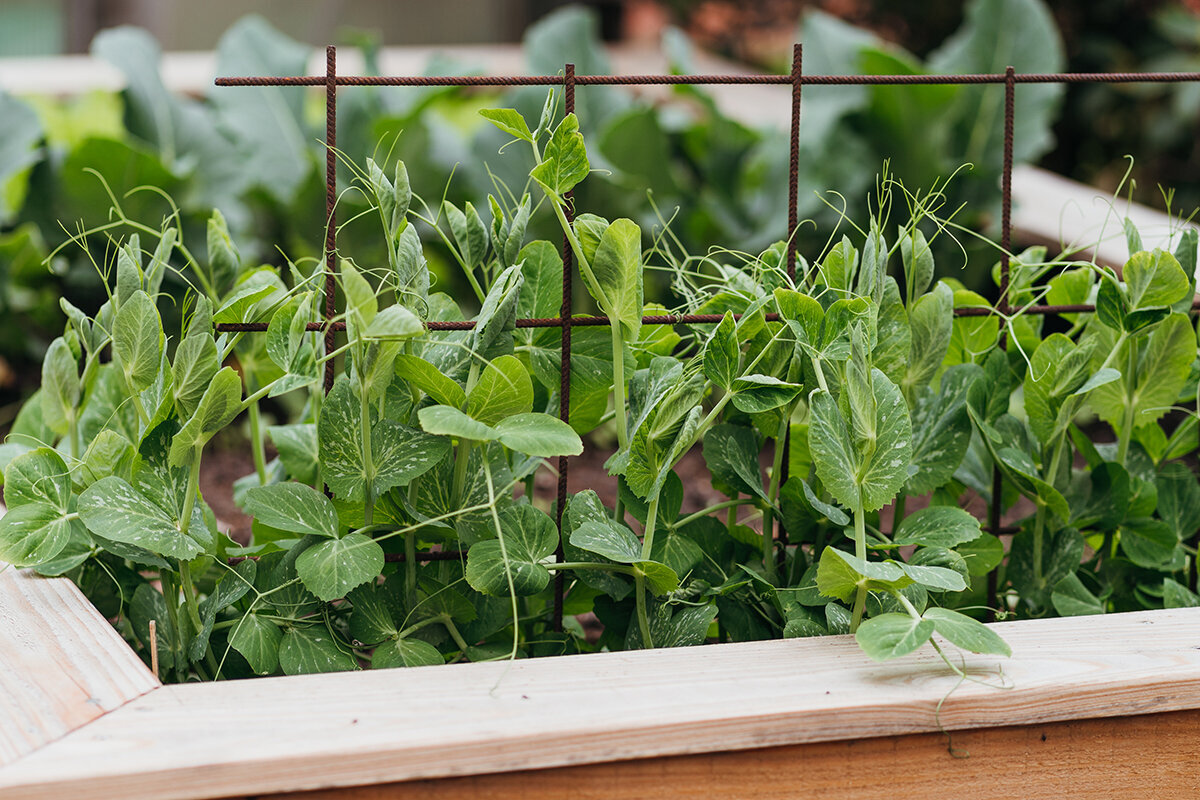
Peas prefer minimal root disturbance, making a deep greenhouse border or generous trough with excellent drainage an excellent choice. Direct sowing allows roots to establish where plants will crop, while netting or twiggy support can be installed before the first tendrils begin searching for a hold.
Modules are useful if mice are troublesome, the border remains too wet or precise spacing matters. Sow one or two seeds in deep cells and transplant while plants are young. Avoid allowing roots to circle or dry out; direct sowing remains the simplest option whenever bed conditions permit.
Design around a short season
Treat peas as a deliberate cool-season interlude rather than a permanent resident. A well-planned greenhouse can move cleanly from peas to fruiting summer crops. For a durable structure with practical access, glazing and ventilation, explore the Classic Aluminium Greenhouse.
Give peas a bright, airy position during February, March and April. As late spring advances, clear that valuable space for tomatoes, peppers or cucumbers that genuinely benefit from the increasing warmth.
II. Select the voice
Shelling peas, mangetout, sugar snaps and dwarf varieties each need a different place.
All are forms of Pisum sativum, but they offer different harvests and occupy the greenhouse differently. Choose according to how you want to eat them, then ensure their mature habit suits the available height, support and picking access.
Shelling peasGrow the pods for the peas inside. Pick when they are rounded and well filled but remain bright and tender, then shell promptly for maximum sweetness.
Mangetout peasHarvest the flat edible pods before the peas visibly swell. Their quick picking rhythm and crisp texture suit stir-fries, salads and eating raw.
Sugar snapsHarvest when pods are plump yet glossy, crisp and succulent. They are a particularly satisfying greenhouse choice for grazing, salads and frequent picking.
Dwarf varietiesCompact plants, usually around 45–75cm tall depending on variety, crop within a relatively concentrated period. They suit low bays, deep troughs and greenhouses requiring a quick seasonal changeover.
III. Sowing cadence
Plant into soil that is cool, workable and freely draining.
In an unheated UK greenhouse, late February to April is the most dependable main sowing window, adjusted for region, light and the rate at which the structure warms. Do not mistake one sunny afternoon for suitable root conditions: cold, saturated compost encourages poor emergence. A cultivated border that does not smear when handled, or a deep container filled with fresh, free-draining peat-free compost, provides a sound beginning.
Clear debris and confirm drainage.
Sow at the appropriate depth and water.
Maintain even, restrained moisture.
Complete support and ventilate early.
Consider a short second sowing.
Prepare without overfeeding. Remove old roots and fallen foliage, remedy obvious drainage problems and incorporate a modest quantity of finished compost where the soil needs better structure. A greenhouse border previously used for hungry summer crops may already contain ample fertility, so do not treat every pea sowing as an invitation to apply complete fertiliser or nitrogen-rich manure.
Sow directly and consistently. For direct sowing, make a drill around 5cm deep and space seeds approximately 5–10cm apart, or follow the packet instructions for your variety. Firm the soil gently to establish close contact with moisture, then water the root zone thoroughly rather than repeatedly wetting only the surface.
Let cool weather determine the pace. Germination may take longer in a cool greenhouse. Resist disturbing the row after only a few days unless there is clear evidence of flooding, fungal trouble or mouse damage. The objective is evenly moist, oxygenated soil—not a cold and waterlogged root zone.
Install support before plants request it. Tendrils search for fine points of contact soon after seedlings establish. Completing the support at sowing time avoids later root disturbance, prevents tender stems from being snapped and keeps the growing bay orderly from the outset.
Repeat sowings modestly. Two or three short sowings, perhaps seven to fourteen days apart, can extend harvesting more gracefully than one oversized row. Stop sowing when the likely weather will bring sustained greenhouse heat before the youngest plants can flower and fill pods successfully.
pea root active nodules plant sugars
Root sugars support compatible rhizobia; active nodules primarily serve the pea itself.
IV. Root exchange
Peas are legumes, but not a free fertiliser factory.
Pea roots can develop nodules with compatible Rhizobium bacteria. In this partnership, the plant supplies energy-rich sugars while the bacteria convert atmospheric nitrogen into a form the pea can use. If peas or related legumes have rarely occupied the border, a fresh pea-specific inoculant may be worth considering, particularly in new growing media. It is not compulsory in every British garden, because many established soils already contain compatible bacteria.
The important correction is that nodulation benefits the living pea first. Do not assume a standing row will continuously provide free nitrogen to neighbouring greenhouse crops.
Excess nitrogen can promote soft, lush foliage at the expense of balanced flowering and cropping. Improve the soil with compost where structure and moisture management need attention, but add other nutrients only when there is a clear reason. Long-used greenhouse borders can accumulate fertility through repeated applications of manure, compost and fertiliser, so another generous feed may create problems rather than solve them.
If curiosity permits, lift one expendable plant carefully after several weeks and inspect its roots for nodules. Their absence is not a reason to pour on nitrogen. Instead, consider drainage, compaction, soil condition, inoculant freshness and whether the correct bacterial group was used. Healthy roots, steady moisture and suitable growing media matter more than a heavy fertiliser application.
V. Support duet
Give tendrils something fine enough to answer.
Peas climb with tendrils rather than tightly wrapping their stems around canes. One coarse post is therefore insufficient. Pea netting, twiggy hazel, narrow mesh or strings arranged with cross ties provide the frequent, fine contacts tendrils can grasp.
Compact
Dwarf peas
Usually 45–75cm. Use low netting, pea sticks or twiggy branches.
Support
Install at sowing time.
Provide frequent, fine points of contact.
Keep foliage clear of glazing.
Climbing
Tall peas
Often 1.2–1.8m. Use vertical mesh with comfortable picking access.
Dwarf or compact peas
Compact peas may appear self-supporting until a heavy pod set, watering or their reach towards the light pulls the row apart. Short pea sticks, low netting or a ring of twiggy branches is normally sufficient. The aim is not to force the plants into a formal wall, but to keep pods away from wet compost, preserve a clear path and let air move through the canopy.
- Reserve a bed edge, trough or lower greenhouse position.
- Keep paths clear for regular harvesting.
- Allow a hand’s width between crowded groups of plants.
Central specification
Fasten mesh to independent ground anchors, a suitable bed frame or a well-braced cane structure rather than delicate glazing bars. Select a support that can be removed and cleaned after cropping. Leave enough room behind the foliage for air movement, glass cleaning and a hand to reach pods without crushing stems.
Tall climbing peas
For varieties reaching 1.2–1.8m, use a taut vertical net, well-braced cane frame or double-sided pea fence. Position it so pods can be harvested from at least one side without pressing damp foliage against the glass. The location should remain airy while still receiving the valuable light available in early spring.
- Keep foliage away from roof vents and automatic opening mechanisms.
- Choose removable support for a clean seasonal changeover.
- Do not let an exuberant vine turn the central greenhouse aisle into a dead end.
A greenhouse with roof vents, practical access and a clean, strong frame makes seasonal crop sequencing easier. The Classic Aluminium Greenhouse provides a refined setting in which ventilation, support height and a dedicated cool-season growing bay can be planned carefully.
Water deeply enough to reach the roots. Vent early enough to keep foliage dry.
Peas need consistent moisture, particularly when flowers open and pods begin to swell. In a greenhouse, rain no longer provides that consistency, so examine the root zone rather than following the calendar. Check beneath the surface with a finger; when the soil begins to dry at root level, water thoroughly instead of offering frequent shallow splashes that dampen only the upper centimetre.
A watering can directed beneath the canopy, drip irrigation or a slow hose at soil level is preferable to overhead watering. Wet foliage combined with stagnant air encourages disease. Open roof vents early on bright mornings and use the door whenever outdoor conditions allow. Air should move gently through the crop without exposing tender vines to a harsh draught.
A light organic mulch can moderate evaporation in a greenhouse border once seedlings are established, but keep it clear of stems. Containers need particular attention because their limited volume warms and dries faster. Use drainage holes, water thoroughly as the upper layer dries and empty any saucer rather than allowing roots to remain in cold standing water.
For a purpose-built structure with controllable ventilation and practical growing access, consider the Classic Aluminium Greenhouse before planning the first border, container row or removable pea trellis.
VI. Flower-to-pod nocturne
Flowers are self-pollinating. The real greenhouse question is climate.
Pea flowers are largely self-pollinating, so hand pollination is seldom required. This makes the crop well suited to protected growing, provided the atmosphere remains cool and the roots do not swing between drought and saturation. When flowers appear, resist heavy feeding or needless intervention. Instead, water well at first flower, maintain fresh air and protect the stable conditions that allow flowers to set and pods to lengthen.
Long, cool spring days favour flowering. A greenhouse that heats rapidly on a bright late-spring afternoon can push the crop beyond its comfort just as it reaches this important stage. Open doors and roof vents before temperatures surge, apply only modest shading when solar gain is severe and water the root zone before it becomes stressfully dry.
Air movement remains important even for a self-pollinating crop. It limits persistent leaf wetness, moderates humidity within dense foliage and makes regular inspection easier, allowing the first signs of mildew, pests or heat stress to be noticed promptly.
The edible progression
1. Flower
Cool air and evenly moist roots.
Cool air and evenly moist roots.
2. Pod set
The narrow pod begins lengthening.
The narrow pod begins lengthening.
3. Flat pod
The mangetout harvest stage.
The mangetout harvest stage.
4. Filled pod
Sugar snap or shelling stage.
Sugar snap or shelling stage.
Harvest timing is not merely cosmetic. Mangetout becomes fibrous when allowed to fill; sugar snaps lose crisp sweetness as pods dull and toughen; shelling peas become increasingly starchy as their seeds enlarge. Frequent picking encourages further flowers while the weather remains favourable.
Inspect plants every day or two at peak production. Pods can pass from ideal to overmature quickly during a bright, warm spell. The best harvesting rhythm is regular and calm: pick everything ready, cool it promptly and leave younger pods undisturbed to complete their development.
VII. Heat crescendo
When the greenhouse warms, peas tell you to change the plan.
13–21°CSteady growth and tender pods.
21–27°CVent early and monitor moisture.
27°C+Prepare for the seasonal exit.
Within moderate conditions, peas generally grow steadily, flowers remain productive and evenly watered pods stay tender. As greenhouse afternoons repeatedly approach the mid-twenties, become more deliberate: open vents and doors earlier, water before the root zone dries and harvest frequently. The crop may continue producing, but its margin for heat and moisture stress is narrowing.
The RHS advises using ventilation and shading to keep greenhouse temperatures below about 25–27°C where possible and notes that plant damage can develop above 27°C. Ventilation, minimal shading and an early, thorough watering can soften short hot spells, but none turns peas into a summer crop. If heat persists and flowers abort, harvest what is ready and clear the bay for summer planting.
VIII. Harvest encore
Pick on the pod’s terms, not yours.
Peas are most generous when harvested repeatedly and used or cooled quickly. Take a bowl into the greenhouse every two or three days during peak production, beginning with lower stems where pods often mature first. Hold the stem with one hand and lift the pod with the other; pulling single-handedly can tear a tender vine from its support or disturb shallow roots.
Harvest in the morning where possible, especially before a warm day. Freshly picked peas offer fleeting sweetness, so eat them promptly or refrigerate them without delay. The difference is particularly noticeable with shelling peas, whose sugars begin moving towards starch after picking.
Mangetout peasPick long, flat and glossy edible pods before the seeds swell visibly. They should remain tender along the seam and snap cleanly.
Sugar snapsPick when pods are plump, glossy and crisp but before they become dull, markedly bulging or stringy. Their finest stage often arrives earlier than expected.
Shelling peasPick when pods are full and rounded but still bright green, then shell them promptly. Pale or wrinkled pods usually contain peas already becoming starchier.
Pea shootsOn vigorous plants, take only a few tender tips early in growth. Repeatedly removing shoots will reduce the performance of plants intended to produce a substantial pod crop.
Succession strip: Make a short second sowing seven to fourteen days after the first only while the coming weather still promises cool growing conditions. When greenhouse afternoons regularly approach 27°C, transfer the bay to tomatoes, peppers, cucumbers or another warmth-loving crop rather than asking peas to perform through sustained summer heat.
IX. End-of-season crop exit
Finish cleanly, then prepare for the next movement.
When cropping slows and summer heat is taking control, cut the vines just above soil level instead of pulling out the entire root system. This leaves fine roots and nodules to decompose gradually with less disturbance to the border. Remove foliage, fallen pods and support debris promptly. Diseased material should be kept out of an ordinary cool compost heap, while healthy top growth can be composted.
Inspect and clean the support, sweep old petals and leaves from corners and check irrigation before summer planting begins. If peas have repeatedly struggled in the same greenhouse border, rotate away from peas and beans. Refresh soil with compost for structure where necessary rather than assuming that more fertiliser will correct the underlying problem.
Questions from the potting bench
Greenhouse pea FAQ
Can peas grow in an unheated greenhouse?
Yes. An unheated greenhouse is particularly useful for late-winter and spring peas because it provides shelter from heavy rain, wind and some frost while allowing the soil to warm and dry earlier than an outdoor bed. Keep conditions bright and cool. Protect small plants with horticultural fleece during a hard cold spell or temporarily shelter module-grown seedlings.
Do greenhouse peas need pollinators?
Usually not. Pea flowers are largely self-pollinating, so attracting insects or hand pollinating is rarely the priority. Concentrate instead on cool, stable conditions, even root moisture and gentle ventilation that prevents the leafy canopy from remaining damp and stagnant.
How often should greenhouse peas be watered?
There is no fixed timetable because sunlight, container volume, soil and ventilation all affect drying. Check beneath the surface and water thoroughly when the root zone begins to dry. Pay particular attention when the first flowers open and again as pods swell, but never maintain permanently saturated conditions.
Should peas receive a high-nitrogen feed?
Not by default. Peas can form a nitrogen-fixing partnership with compatible rhizobia, while excess nitrogen may encourage leafy growth at the expense of flowers. Use compost modestly to improve soil structure. Container peas may benefit from a dilute high-potassium liquid feed from first flower, but always follow the label and avoid routine nitrogen-heavy feeding.
What support is best for greenhouse sugar snaps?
Use vertical pea netting, slim mesh, twiggy hazel or strings arranged with cross ties close enough for tendrils to catch. Install the support when sowing. It should be stable, removable after cropping and positioned so that pods can be picked without pressing wet foliage against the greenhouse glazing.
Why have my pea pods become tough?
Heat stress, inconsistent watering and delayed harvesting can all produce disappointing pods. Pick mangetout while flat, sugar snaps while glossy and crisp, and shelling peas when filled but still fresh green. Inspect the crop every two or three days in bright weather; frequent picking is an essential part of quality control.
Sources and further reading
Grounded in horticultural guidance
More from Bloomcabin: UK greenhouse setup and layout guide · greenhouse design options · aluminium greenhouse FAQs
- Royal Horticultural Society — pea growing guide: UK guidance covering sowing, planting, support, crop care and harvesting garden peas.
- Royal Horticultural Society — watering vegetables and fruit: practical advice on root-zone moisture, watering methods, timing and efficient crop care.
- Royal Horticultural Society — greenhouse ventilation and shading: temperature control, ventilation, shading and managing solar gain under glass.
- AHDB — incorporating grain legumes into crop rotations: evidence-led context for legumes, nitrogen use, crop residues and responsible rotation planning.
- Annals of Botany — heat-stress abortion in pea flowers: research examining how high temperatures disrupt pea buds, flowering and successful reproductive development.
- Frontiers in Plant Science — heat tolerance in peas: a scientific review of pea heat stress, plant responses and reproductive sensitivity.
- RHS advice on growing peas: additional UK guidance on cultivar choice, sowing windows, support, watering and picking quality.
Finale
Reserve a cool bay for spring’s sweetest crop.
A pea crop asks for less drama than a summer greenhouse and rewards thoughtful timing with pods worth eating before they reach the kitchen. Create an airy shoulder-season growing space with clear access, dependable support and ventilation that can respond promptly to bright British spring days.
Practical note: plan peas in a bright, airy position, retain clear access for frequent picking and preserve space for the warmth-loving crops that follow.
